Published: July 20, 2026 | Author: Liam Foster
Why you can trust this Miran Ruins guide
I first came across Miran by accident. A friend in Urumqi mentioned a fragment of wall painting, recovered from a site called Miran Ruins Xinjiang, that showed a winged child holding a garland. The image pulled me south. Over two trips, in autumn 2023 and again in spring 2025, I used Ruoqiang town as my base and tried to reach the site itself. What I learned, from museum keepers in Urumqi and from a local driver whose family has farmed the Ruoqiang oasis for generations, is that Miran is less a tourist stop than a story about how far west met east. This guide is built on those conversations and on the published work of the archaeologists who studied the site, including Aurel Stein, who first dug it more than a century ago.
| Item | Detail |
|---|---|
| Location | Ruoqiang County (Charklik), southeast Xinjiang, near the Lop Nur edge |
| Distance from Ruoqiang town | About 40 km northeast, reached by a rough track |
| Period of occupation | Roughly 2nd century BCE to 5th century CE |
| What makes it special | Hellenistic Buddhist frescoes with cupids and garlands |
| First excavated by | Aurel Stein, 1906 and 1907 |
| Where the murals are now | National Museum, New Delhi (largest group); some in the British Museum, London |
| Access today | Protected reserve; permit required, seldom granted to casual visitors |
| Best base town | Ruoqiang (Charklik) |
Our visit: standing at the edge of the forbidden oasis
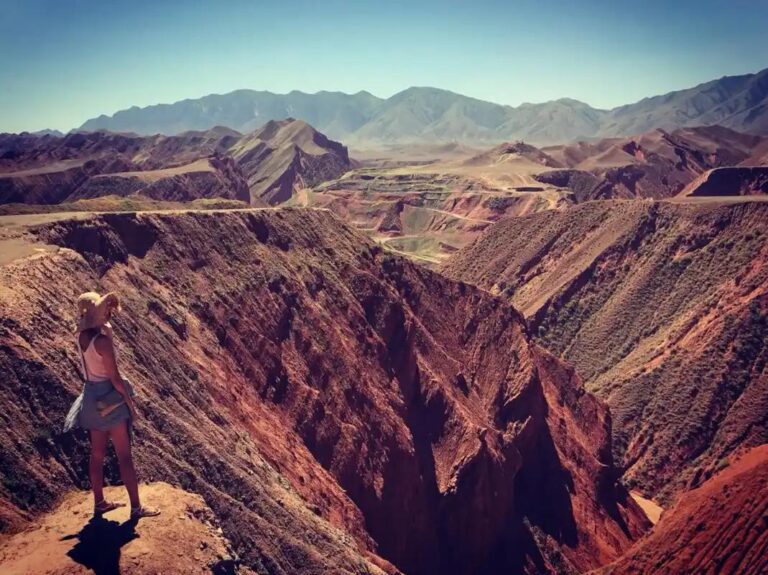
Reyim picked me up at the Ruoqiang airport before dawn on the second trip. The road runs northeast out of Charklik, the county seat, past fields of red dates and then into bare gravel. After about forty kilometres the tarmac ended and we followed a straight line of packed earth toward a low line of hills. This is where Miran sits, on a former branch of the Ruoqiang River that once fed an oasis garden at the eastern edge of the Taklamakan.
We did not get far. A checkpoint, little more than a hut and a barrier, stopped us. Miran lies inside a protected archaeological reserve, and entry is by permit only, handed out in small numbers and almost never to casual visitors. Reyim had expected this. He parked, and we walked a short way up a ridge where, on a clear day, you can make out the square outline of the old rampart and the hump of the central stupa against the sand. No signs, no ticket booth, no path. Just wind and the shape of a lost town.
That view told me more than any brochure. Miran is not a place you tour. It is a place you understand from its objects, most of which now live in museums far from the desert.
What Miran actually is
Miran was an oasis settlement on the southern branch of the Silk Road, active roughly from the second century BCE into the early centuries CE. It sat within the sphere of the Shanshan kingdom, the polity that grew after the older Loulan kingdom moved south when its lake began to fail. A branch river kept the town alive, and a community of Buddhist monks built and maintained the site for centuries.
The layout is what you would expect of a defended Silk Road town: a roughly square fortification, a large stupa at its heart, and a cluster of monastery buildings with rows of small cells where monks lived and copied texts. The rooms are mud brick, now melted by weather into soft walls, but the plan is still readable from the air and from the ground if you know where to look. Stein also found wooden documents here, written in the Kharoshthi script used across the Gandhara region, a small but firm clue that the town’s paperwork followed the same westward tradition as its art.
The frescoes that surprised the world
The reason Miran matters sits on the walls of one of its monasteries. When Aurel Stein excavated here in 1906 and 1907, he found paintings of figures that looked nothing like the Buddhist art of central China. They had rounded faces, flowing drapery, and wings. Some hold garlands; others are clearly cupids, the erotes of Greek and Roman painting. Scholars read these as a direct echo of the Hellenistic world, carried east through Gandhara and then across the mountains along the Silk Road.
In plain terms: Miran may hold the easternmost examples of classical Western painting anywhere. The monks who commissioned them were Buddhist, but the hand that painted them belonged to a tradition born in the Mediterranean. That mix is the whole point of the site.
Stein removed most of the painted panels. They are now held in the National Museum in New Delhi, with a few pieces in the British Museum in London. This is the awkward truth of Silk Road archaeology: much of what was found left the region in the colonial era. I think it is better to say so plainly than to pretend the murals are still on the wall.
How to get to Miran
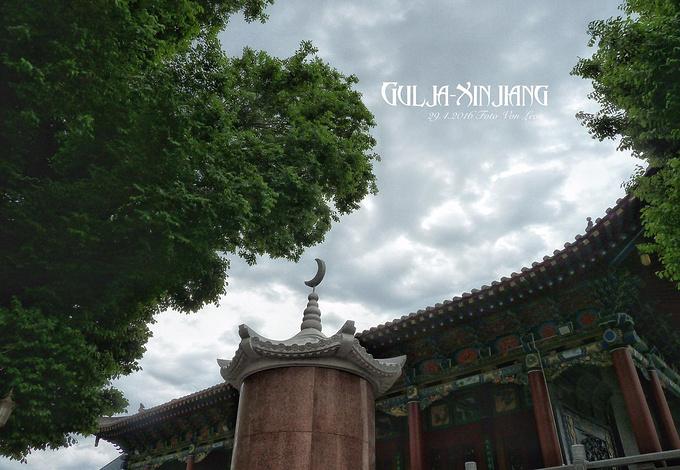
The practical gateway is Ruoqiang, also called Charklik, in the southeast of Xinjiang. You can fly there from Urumqi on a short domestic hop, or take the train, which is slower but cheap and lets you watch the landscape flatten into desert. From Ruoqiang town the site is about forty kilometres out, reached by a rough track rather than a road. A standard car will not manage it after rain, and even a 4×4 needs a local who knows the route.
Unless you hold a research or official permit, you will not pass the checkpoint. Plan your trip around the museums instead, and treat any drive toward Miran as a scenic excursion that stops at the barrier. For wider context on moving around the region, our Xinjiang high-speed rail guide covers the trains that reach the nearest cities.
Best time to go
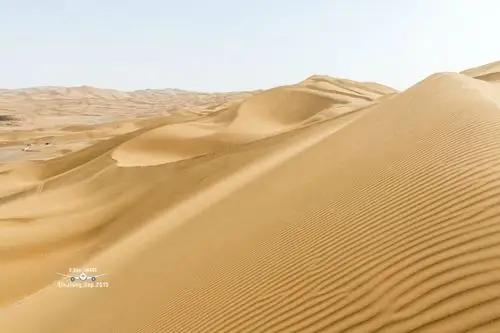
Ruoqiang sits in a cold desert climate. Summer is brutally hot, often above 40 C, and the wind throws grit into everything. I went in October the first time and found clear, dry days around 20 C, which made the drive comfortable. Spring, late April into May, is the other window, though dust storms roll through and can close the road without warning. Avoid deep winter unless you are used to minus-fifteen nights and empty towns.
Where to stay
Ruoqiang town has a handful of mid-range hotels, clean and functional, where a room runs roughly 200 to 350 yuan a night. Do not expect international chains. Eat at the night market, sleep early, and leave at first light. If you want a bigger base with more choice, Korla, the regional capital to the north, is the next step up; our Korla travel guide explains how to use it as a hub. For the desert-edge context, the nearby Ruoqiang and Lop Nur guide is the closest companion to this one.
Food in Ruoqiang
The oasis grows excellent red dates, and in autumn the town smells of them drying. Try laghman noodles at a hole-in-the-wall near the bazaar, and the local melon, which is small and sweet. Roadside kebab stands open after dark. Nothing fancy, all good.
Practical tips before you go
- Carry your passport. The checkpoint near Miran checks ID, and you will need it for the hotel and any permit enquiry.
- Bring water and fuel. There is nothing between Ruoqiang and the site. Fill the tank in town.
- Tell the Ruoqiang Culture and Tourism bureau if you are a researcher. Permits, when granted, come through them, not at the gate.
- Manage expectations. Most visitors see Miran through its museum objects, not the ruins themselves.
- Download maps offline. Signal fades within kilometres of the town edge.
A sample one-day plan from Ruoqiang
Morning: Fly or train into Ruoqiang, drop bags at the hotel, walk the bazaar. Midday: Drive northeast toward the Miran checkpoint with a local driver; stop at the ridge for the view of the rampart and stupa. Afternoon: Return to town, visit the small local museum if open, and eat red dates fresh from the stall. Evening: Laghman and kebab at the night market, early night. If you want the murals themselves, build a separate day in Urumqi at the Xinjiang Museum, which holds fragments from the site.
Seeing the real Miran: the museum route
Because the site is closed, the best way to meet Miran is through its objects. The Xinjiang Museum in Urumqi displays recovered fragments and explains the Hellenistic link. For the full painted panels, the National Museum in New Delhi is the place, and the British Museum in London holds a few related pieces. Treat these as the actual destination; the desert is the footnote.
Miran also belongs to the longer Buddhist story of the region. Our Kizil Grottoes guide and the Silk Road history overview show how that art moved along the routes Miran stood on. For the wider lost-city context, the Loulan guide pairs naturally with this one.
Frequently asked questions
Can I visit Miran Ruins independently? Not usually. The site is a protected reserve, and entry needs a permit issued through local authorities. Most travellers see the objects in museums instead.
Why are the Miran frescoes in India? Aurel Stein removed the painted panels during his 1906 to 1907 excavation. The largest group is now in the National Museum, New Delhi.
How far is Miran from Ruoqiang town? Roughly forty kilometres northeast, reached by a rough track rather than a paved road.
What makes Miran different from Loulan or Kizil? Loulan is a separate lost kingdom to the north; Kizil is a cave complex with later Buddhist painting. Miran’s claim is the Hellenistic, classically Western style of its murals.
Is Ruoqiang worth a trip on its own? For most visitors, no. It makes sense as part of a southern Xinjiang route, or as the launch point for Miran and Lop Nur research.
Miran is not the only place where a Buddhist kingdom simply stopped. On the northern rim of the Taklamakan, Subashi Ruins outside Kuqa tells a similar story in standing walls rather than wall paintings.
Disclaimer
This guide reflects the writer’s personal visits in 2023 and 2025 and publicly available archaeological sources. Access rules, permit policy, and site conditions in Ruoqiang change, and the Miran reserve may be fully closed without notice. Confirm the current situation with the Ruoqiang Culture and Tourism Bureau before you travel, and respect all restricted zones. The author and publisher are not responsible for any loss, delay, or denied entry resulting from reliance on this information.
About the author
Liam Foster is a travel writer who has spent four seasons on the roads of Xinjiang, from the Ili valleys to the Taklamakan edge. He prefers slow trips, local drivers, and honest notes about what a place is really like. He writes for XinjiangAttractions.com and has contributed to regional guidebooks. Questions and corrections are welcome through the site’s contact page.