Published: August 19, 2026 | Author: Karl Huang, Xinjiang travel writer based between Urumqi and the Ili Valley
The reason Yining swan spring works at all is plumbing, not scenery. Springs feed this patch of wetland in Yingtamu, out in Yining County, and the water leaves the ground around eight to ten degrees Celsius. When the rest of the Ili Valley locks up under ice in December, this pool keeps moving. Whooper swans work that out faster than tourists do, and hundreds of them spend the cold months paddling around a place the size of a village pond.
I have been out there three times across two winters, once badly and twice well. What follows comes from those visits and from the drivers who shuttle photographers before dawn. Where I am unsure about a number, I say so rather than round it into something that sounds confident. Ticket arrangements and access rules here have changed more than once since the site got popular, which matters more than any photograph I can describe.
Quick facts before you book a winter flight
| Official name | Ili Swan Spring Wetland Park, Yingtamu, Yining County (Gulja), Ili Kazakh Autonomous Prefecture |
| Distance from Yining city | Roughly 38 km; 45 to 60 minutes by car on winter roads |
| Season | Swans arrive from about November, most leave by late February or March |
| Peak numbers | Midwinter, roughly late December through January |
| Best hour | The first ninety minutes after sunrise, which in January is close to 09:30 Beijing time |
| Species | Whooper swan (Cygnus cygnus), a Class II state-protected species in China, plus mallards and other ducks |
| Entry | A modest fee has been charged in recent seasons; confirm current arrangements locally |
| Typical air temperature | Minus 10 to minus 25 degrees Celsius at dawn in January |
| Time needed | Two to three hours on site, as a half-day trip from town |
The morning I mistimed it, and the morning I didn’t
My first attempt was a lazy one. We had eaten a long breakfast in Yining, left town around ten, and reached the wetland near eleven. The light was flat and high, most of the swans had drifted to the far side of the water, and the steam that everybody comes here for had burned off an hour earlier. I stood on the boardwalk in a thin jacket, took a few dull frames of white birds on grey water, and drove back annoyed at myself.
The following January I did it properly. My driver picked me up at 07:40, which felt absurd until I remembered that all of China runs on Beijing time and the sun over the Ili Valley does not care. We parked in the dark and walked in as the sky went from charcoal to washed-out pink. The air was around minus nineteen. Because the spring water was so much warmer, mist rolled off the surface in slow sheets and the swans moved through it in and out of visibility. Two local men brought horses down to drink at the edge of the open water, which is routine here and explains most of the horse-and-swan photographs you will have seen.
The difference between those mornings was not gear or luck. It was arriving before the sun climbed high enough to close the temperature gap that makes the mist. That is the whole trick, and it is why I no longer visit this place at an hour with daylight already in it.
Getting to Yining swan spring
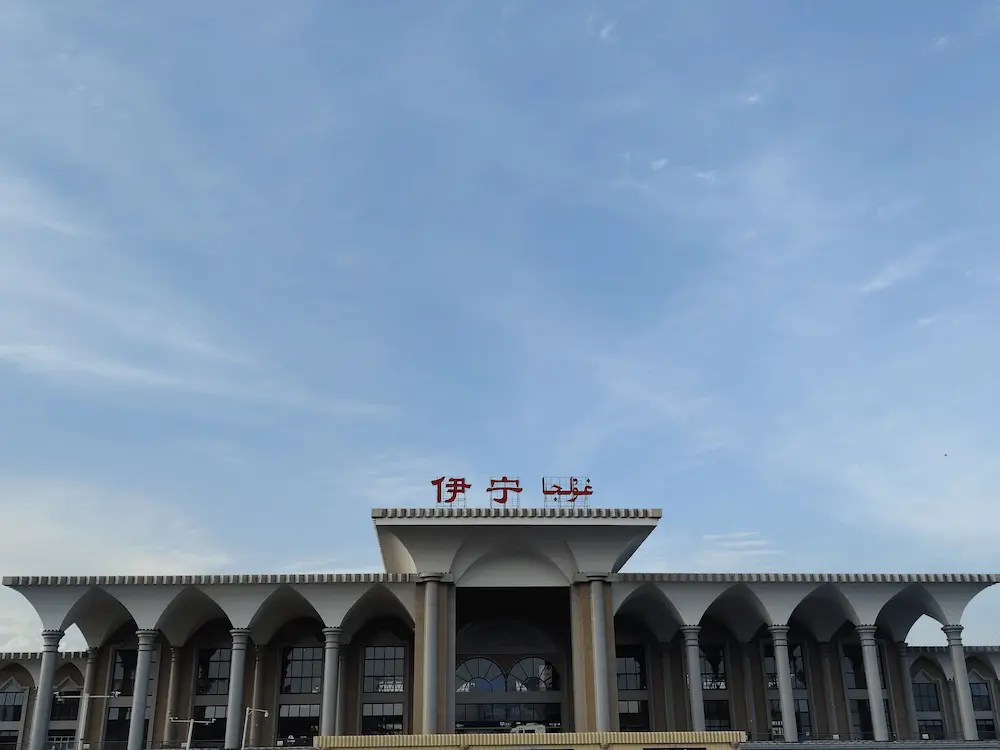
Reach the region first, then worry about the last 38 kilometres. Flights into Yining Airport from Urumqi take a little over an hour and run several times daily, which is what most winter visitors use. The overnight sleeper train is cheaper and eats most of a night; I have slept fine on it twice, but it puts you into town tired on the day you most want to be up at seven.
For the wetland itself there is no useful public transport at the hour you need. Options, ranked:
- Charter a car and driver for the morning. Ask your hotel the night before, agree on a 07:30 pickup, and confirm the driver will wait rather than drop and vanish. Half-day winter rates were reasonable, and one car split between three people beats two taxis.
- Ride-hailing apps. They work inside Yining city, but at 07:30 in January your chances of a driver accepting a run into the county are unpredictable, and getting back is worse. A backup, not a plan.
- Self-drive. Reasonable if you are already touring, and I have written about renting a car elsewhere. Insist on proper winter tyres, not all-season rubber, and treat rural side roads as compacted ice until proven otherwise.
The route runs east from Yining through the county seat and out onto farm roads. Signage in the last few kilometres is thin in Chinese and absent in English, so save the destination in a mapping app in Chinese characters before you set off.
Which weeks actually deliver swans and steam
Two variables have to line up: the birds must be present, and the air must be much colder than the water.
November. Early arrivals show up, numbers are still building, hard frosts are not guaranteed. You may get swans without mist. Quiet and cheap, though.
Late December to January. The window I would fly for. Numbers peak and dawn temperatures sit below minus fifteen, which is where the steam becomes obvious rather than wispy. Chinese New Year lands in this band some years and brings photographers in volume, so check the date before booking.
February. Still cold, still productive, birds thinning out towards the end. My favourite compromise if you dislike crowds.
March onward. Mostly over. For a spring trip I would point you at the shoulder season rather than a wetland with no swans on it.
One clarification, because readers mix these up constantly. This is not the same swan site as Bayanbulak’s Swan Lake, which is a summer breeding ground on a high grassland several hundred kilometres away in Bayingolin. Bayanbulak in June, Yingtamu in January. Different season, different prefecture, different trip.
Photographing whooper swans without wrecking the morning
Bird photography here is unusually forgiving because the water is small and the birds are used to people on the viewing areas. That does not make it easy.
Bring reach. Something in the 300mm to 600mm range on a full-frame body covers most of what you want; my 100-400 zoom handled it, with cropping. Carry a wide lens too, because the mist-and-mountains context shots held up better than my tight portraits.
Shoot into the light for the first half hour. Backlit steam separates the birds from the background and produces the glow that makes these photographs work. Metering will want to underexpose everything, so I dial in positive compensation and accept blown highlights in the mist.
Cold does two things to your kit. Batteries die roughly twice as fast, so carry spares against your body. And lenses fog when you move them between heated cars and freezing air, or worse, back into a warm room. I keep gear in the boot rather than the cabin, and bag the camera before going indoors so condensation forms on plastic instead of glass.
If you are building a broader itinerary around animals, my separate piece on wildlife watching across Xinjiang covers the less accessible species.
The rules here are not decoration
Whooper swans are protected under China’s list of key protected wild animals, and this wetland is a managed site rather than an open field. Things I watched people get wrong:
Do not feed the birds. Bread and biscuits are bad for waterfowl and staff will stop you. Managers do organised supplementary feeding during hard freezes; that is not an invitation to hand out snacks.
Do not fly a drone. Rotors over a wintering flock cause exactly the panic you would expect, and drone operation in China requires real-name registration through the civil aviation authority’s UOM system before you reach any site-specific rules. Leave it in the hotel.
Stay behind the fencing. Every metre you gain by stepping over a rail pushes birds further out and ruins the view for everyone behind you.
Skip the flash and keep your voice down. Sound carries absurdly well across cold water.
Dressing for minus twenty-five
This is a standing-still activity in serious cold, which is harder on the body than hiking at the same temperature. My kit, refined after the first miserable attempt:
- A long down parka reaching mid-thigh. A city puffer is not enough.
- Two layers on the legs, the outer one windproof. My jeans-only morning was a mistake I made once.
- Insulated boots a half size up, plus wool socks. Thin socks in tight boots freeze your toes faster.
- Liner gloves under mittens, so you can work a camera dial without bare skin on metal.
- Chemical hand warmers, which double as battery warmers.
- A hat over the ears and something over the face. At minus twenty with any breeze, exposed cheeks sting within minutes.
Check forecasts through the China Meteorological Administration at weather.com.cn two days out. You want a clear, still, very cold morning. Overcast and mild means less mist.
Beds and hot food back in Yining
Almost nobody stays out at the wetland, and I would not recommend trying. Yining city has the hotel supply, the food, and the heating, and a 40-minute drive at dawn is a fair trade for that.
Mid-range business hotels near the centre are plentiful and cheap in winter, well under peak-summer rates. What I check for in January is not the star rating but whether the heating works and whether the hot water holds up early, because you will be showering at unusual hours.
The food is the consolation prize for the cold. Ili in winter leans on things that warm you from the inside: hand-pulled laghman in a thick sauce, mutton pilaf, samsa straight out of the tandoor wall, and milky salted tea I did not appreciate until I came in from an hour of standing on ice. The Kazakh cold-weather specialities are worth seeking out here, particularly smoked horse meat and horse sausage, which appear on menus around town in a way they do not elsewhere in the region. The Six Star Street area, with its Russian-influenced houses and bakeries, is where I end up for coffee in the afternoon.
A three-day Ili winter plan
Day one. Fly into Yining in the morning. Walk the Kazanqi neighbourhood while there is light, book your driver for 07:30, eat early, and buy hand warmers before the shops close.
Day two. Out at 07:30, on site before sunrise, shoot the mist window until the light hardens around 11:00. Back for a late lunch and a nap, then Six Star Street in the afternoon.
Day three. Return to the wetland if the forecast promises a colder morning, or drive two hours west to Sayram Lake for frozen shoreline, or take a gentler day in Qapqal across the river. With a week instead of three days, my guide to a winter trip in northern Xinjiang strings these together with the Altay snow villages.
Yining swan spring: questions readers keep sending
Are the swans reliably there, or is it a gamble? The birds are reliable in midwinter; the mist is not. Counts quoted locally have run from a few dozen early in the season into the hundreds at peak. Arrive in January and you will see swans. Seeing them wrapped in steam depends on the morning’s temperature.
Can I visit without a car? Not comfortably. Nothing scheduled gets you there before sunrise. Share a chartered car if cost is the issue.
How long should I stay on site? Two to three hours. The good light is gone by late morning, and standing in that cold past its usefulness is how people end up unwell for the rest of the trip.
Is it suitable for children? Older children who tolerate cold and can stay quiet, yes. Toddlers, no. Indoor shelter is limited and the wait before sunrise is genuinely uncomfortable.
What about the ticket price? I paid a small fee in the tens of yuan, but the arrangement has been revised more than once as visitor numbers grew. Verify before you go rather than trusting any published figure, including mine.
Disclaimer
Details here reflect my own visits across two winters and were accurate as I recorded them. Entry fees, access rules, protected-area boundaries and transport schedules in Xinjiang change with little notice, and conservation restrictions at this wetland may tighten in any given season. Confirm current conditions through the Xinjiang Culture and Tourism Department at xinjiangtour.gov.cn or with your accommodation before travelling. Nothing here guarantees a wildlife sighting.
About the author
Karl Huang has spent close to a decade travelling and writing in Xinjiang, splitting his time between Urumqi and the Ili Valley. He has visited the Yingtamu wetland three times in winter, twice with photographers who knew far more about waterfowl than he did, and once at the wrong hour. He writes for independent travellers who prefer to know where a plan can fail.