Published: July 29, 2026 | Author: Marlene Kowalski, reviewed and edited by the Xinjiang Attractions editorial team
I delivered mail on foot in Winnipeg for 26 years. When the windchill hits minus 40 and you still have four blocks of flyers to drop, you learn what winter actually is. So when my husband Ron suggested we spend part of January in northern Xinjiang, I did not flinch at the forecast. What I wanted to know was whether Xinjiang winter adventures offered anything besides ski hills, because neither of us skis and we had no intention of starting at 61. The short answer, after seventeen days there: yes, and the ice is the star, not the snow. This guide covers blue ice at Sayram Lake, sleigh rides in Hemu, a frozen-lake fishing festival, hot springs in genuinely silly temperatures, and all the cold-weather logistics we tested with our own numb fingers. Prices and schedules are from our January 2026 trip; winter operations change year to year, so confirm locally before building plans around any single event.
Quick reference: Xinjiang winter adventures at a glance
| Item | Details (January 2026) |
|---|---|
| Season | Mid-December to late February; blue ice best late December to February |
| Temperatures | Urumqi -12 to -20°C; Altay region -25 to -35°C; Turpan around -5 to -10°C |
| Key experiences | Sayram Lake blue ice, Hemu and Kanas snow villages, Ulungur Lake winter fishing festival, Wenquan hot springs |
| Typical costs | Hemu winter entry + transfer about 180 RMB; horse sleigh 200-400 RMB; hotels 30-50% below summer rates |
| Daylight | Roughly 09:40 sunrise to 18:30 sunset (Beijing time) in the north |
| Biggest constraint | Road closures after storms; distances between sights stay enormous |
One planning note up front: this article is deliberately not about downhill skiing. Xinjiang has serious resorts near Urumqi and Altay, and if that is your goal they deserve their own research. We were after everything else winter offers, and it turned out to be plenty.
Sayram Lake: the blue ice is real, with one catch
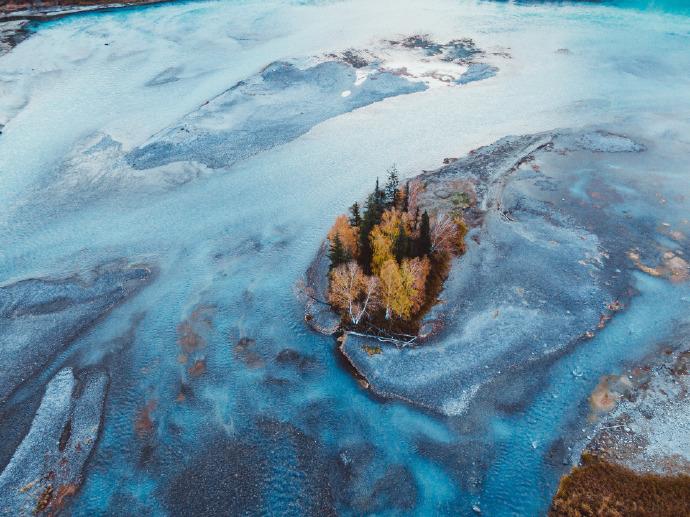
Sayram Lake sits at 2,071 metres beside the G30 expressway, about 90 minutes past Jinghe if the road is clear. In deep winter the lake freezes into sheets of cracked, layered ice that glows blue where the wind has swept the snow off. Ron, who has skated on Manitoba lakes his whole life, stood on the shore and said it was the best lake ice he had ever seen, and he does not hand out compliments to ice.
The catch is snow cover. Blue ice needs wind and cold but not much fresh snowfall, because a few centimetres of powder hides everything. We got lucky on a clear day in late January after a windy week. A German couple at our Urumqi hotel had visited two weeks earlier, right after a storm, and saw a flat white plain. If blue ice is your main reason for coming, build two or three flexible days around it rather than a single drive-by, and check recent visitor photos on Chinese social apps before committing to the detour.
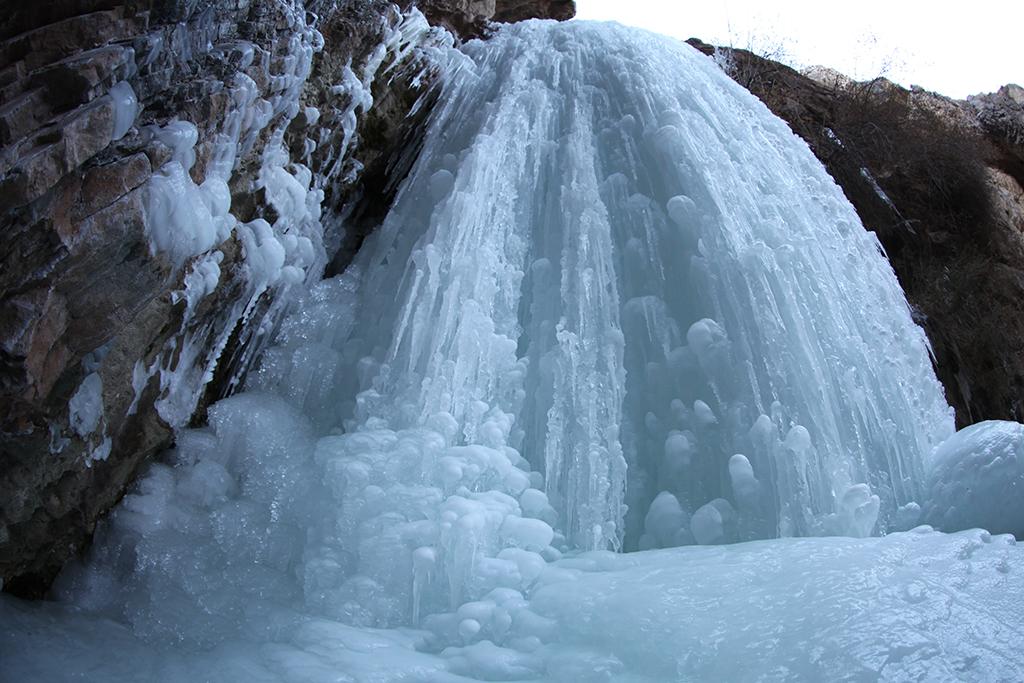
Walking on the ice is officially restricted in some sections and casually ignored in others. We stayed within sight of the marked shoreline areas where other visitors and staff were present. The ice groans and cracks as it expands, which is normal, but pressure ridges are not, so treat any raised seam as a no-go line. Nobody is coming quickly if things go wrong out there; our travel insurance notes explain why remote-area coverage matters more in Xinjiang than in most of China.
Hemu and Kanas: snow village season
Hemu village in winter is the reason our trip existed. I saw a photo of its log houses under a metre of snow, chimney smoke standing straight up in the cold, and booked flights the same week. The reality matched the photo, which almost never happens.
Access takes commitment. We flew Urumqi to Altay, took a shared van to Burqin, stayed one night, then caught the plowed mountain road in. In winter you switch to park transfer vehicles for the final stretch, and after heavy storms the road closes entirely, sometimes for a day or two. Our driver treated the closure schedule as a fact of life, like tides. Build slack into your itinerary and do not plan a tight connection on the back end.
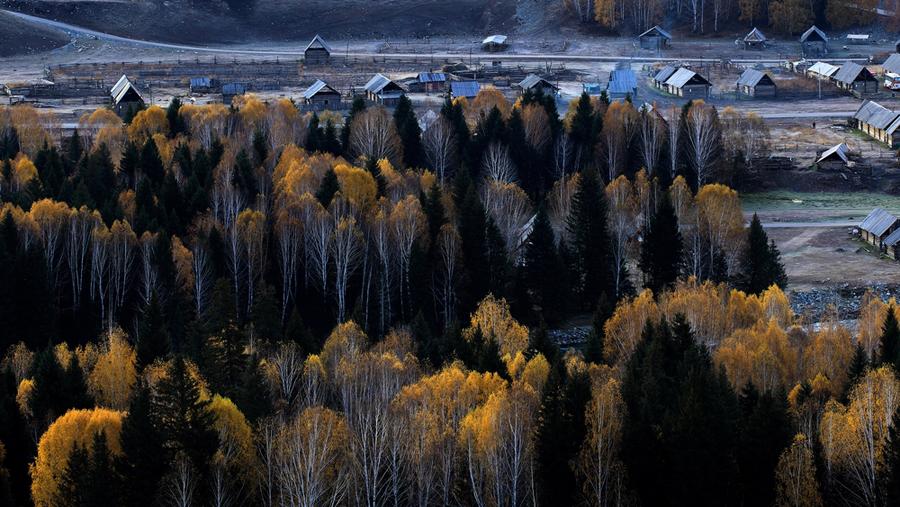
Inside the village, the classic activity is the horse-drawn sleigh, a wooden sledge the locals call ma la pali. We paid 300 RMB for about two hours through the birch forest along the river, wrapped in a blanket that smelled reassuringly of horse. Our Tuvan driver spoke little Mandarin and less English, and communicated mostly by pointing at ravens. It was the best 300 RMB of the trip. You can also climb the viewing platform above the village at sunrise, which at these latitudes mercifully happens near 09:40 Beijing time, so no alpine start required. If you want context on the herding cultures of this region before you go, our guide to Kazakh culture in the Tianshan is a good primer, though Hemu itself is largely Tuvan and Kazakh mixed.
Kanas Lake, a further transfer north, freezes completely and the viewing decks stay open on a reduced schedule. Honestly, we preferred Hemu. Kanas in winter is a long ride for scenery you partly saw on the way, while Hemu is a place you inhabit. If you only have time for one, pick the village.
The Ulungur Lake winter fishing festival
In mid-January, Fuhai county on Ulungur Lake holds a winter fishing festival where teams cut holes through ice more than half a metre thick and drag nets under the surface, a technique with a long local history. We rearranged four days to catch it and I am glad we did, with reservations. The net-hauling itself is genuinely dramatic. Thousands of kilograms of fish come up steaming through a hole in a frozen lake while crowds cheer in minus 28. Around that core event sits a fairly commercial ring of food stalls, ice sculptures and a fish auction where the first fish sells for absurd ceremonial money.
Dates float around mid-January and are announced locally, sometimes late. If you cannot confirm dates, Fuhai and the lake are still worth a stop in winter for the ice scenery alone; our separate guide to Fuhai and Ulungur Lake covers the area in other seasons too.
Hot springs when your hair freezes
Wenquan county, west of Sayram Lake near the border mountains, is named for its hot springs, and soaking outdoors at minus 25 is an experience I now measure other experiences against. Your body sits in 40-degree water while your eyebrows grow frost. My hair froze into a crunchy helmet within minutes, which the local grandmothers found extremely funny, and one of them mimed at me to dunk it, which was correct advice. Facilities range from municipal pools to hotel spas; we paid 68 RMB each at a mid-range place. Read our full Wenquan hot springs guide for the practical details, and note the winter road from Sayram can be icy enough that drivers refuse it after storms.
What about ice on the mountains?
A note for the ambitious: winter is not the season to get close to Xinjiang’s glaciers. Approach roads close, and the accessible viewing areas around Tianchi and the Duku corridor are either shut or dangerous. If frozen mountains are your interest, read our glacier hiking guide and plan a summer trip instead. Tianchi Lake itself does run a winter scenic program with snow activities on a reduced schedule, covered in our Tianchi Lake guide, and it makes an easy day trip from Urumqi when the weather cooperates.
Getting around in winter
We flew between hubs and hired drivers locally, which in January is not a luxury but the baseline. Long-distance buses run reduced winter schedules, trains are reliable but stations sit far from the actual sights, and self-driving on ice with rental-car summer tires is a bad bet for foreigners unfamiliar with the roads. Distances that look casual on a map are brutal in practice; check our driving distances guide before assuming you can combine Altay and Ili in one short trip. Budget roughly 600-800 RMB per day for a car with driver in the north in winter. Flights, on the other hand, were cheap: Urumqi to Altay cost us 410 RMB each, booked five days out.
When to go
Mid-December through late February is the working window. January is coldest and most photogenic. Late February softens slightly and crowds thin after the Spring Festival wave, but blue ice may already be snow-covered. Speaking of Spring Festival: it moves the whole country, and hotel prices in tourist villages spike for that week. Our holidays and crowds guide maps the dates worth avoiding.
Where to stay and what to eat
In Hemu we stayed in a guesthouse with a wood-fired heated brick platform bed, 260 RMB per night in January against a quoted 600+ in September. City hotels discount similarly. The one non-negotiable is confirming heating works before you pay; our Burqin hotel room was warm as toast, but a place we walked away from clearly was not.
Winter food in the north leans hard into exactly what you want it to: hand-pulled laghman noodles for 20-25 RMB, mutton soup that costs 30 RMB and rebuilds your will to live, and skewers grilled outdoors by men dressed like arctic explorers, 5 RMB each. In Fuhai, eat the fish; ours came braised and cost 88 RMB for a fish that fed three. For overall trip budgeting, our cost breakdown has full numbers, though note winter runs cheaper than the figures there except for car hire.
Cold-weather tips from a professional
Twenty-six years of Winnipeg mail routes taught me things the guidebooks skip. Phone batteries die fast below minus 20, so keep the phone in an inside pocket against your body and carry a power bank in another warm pocket, not in your bag. Layer with a windproof shell over wool, not one giant parka, because you will move between minus 30 outdoors and plus 26 interiors twenty times a day. Buy chemical toe warmers before leaving Urumqi, where outdoor shops stock them cheaply; village shops may not. Sunglasses matter more than in summer, since snow glare at this latitude is vicious. And drink more water than you think you need. Cold air is desert-dry, and both of us had cracked lips by day three despite knowing better.
Our 8-day northern winter route
Day 1: Arrive Urumqi, buy toe warmers and any missing gear. Day 2: Fly to Altay, van to Burqin, overnight. Days 3-4: Hemu village, sleigh ride, sunrise platform. Day 5: Return to Burqin, continue to Fuhai for the fishing festival window. Day 6: Festival day, evening van back toward Altay, fly to Urumqi. Day 7: Long drive or bus to Sayram Lake area, overnight near Jinghe. Day 8: Blue ice morning at Sayram, hot springs at Wenquan if roads allow, return. It is a full schedule, and every leg needs a weather buffer. With twelve days instead of eight, you could do this without ever feeling hunted by the clock.
Xinjiang winter adventures FAQ
Is winter travel in Xinjiang safe for independent travelers? Broadly yes, with the caveat that cold and distance punish sloppy planning. Hire drivers for icy rural roads, keep buffer days, and carry warm layers even on short outings.
How cold does it actually get? Altay region regularly sits between minus 25 and minus 35 in January, with colder snaps. Urumqi is milder, Turpan milder still. These are Winnipeg-grade temperatures; respect them but do not fear them.
Can I see the Sayram blue ice on a day trip from Urumqi? Technically, but it is around 500 km each way and you gamble everything on one day’s snow conditions. An overnight near Jinghe with a flexible morning is far more sensible.
Do attractions close in winter? Many operate reduced schedules rather than closing: Kanas, Hemu and Tianchi all run winter programs. Some canyon and mountain sites shut completely. Confirm the week before, not the month before.
Is it cheaper than summer? Hotels and flights, substantially. Car hire costs the same or more. Overall we spent about 30% less per day than our research suggested a September trip would cost.
Disclaimer
We visited Xinjiang in January 2026 and paid for all transport, accommodation, activities and meals ourselves. We have no commercial relationship with any operator, hotel or venue named here. Winter travel involves genuine risks including extreme cold, road closures and thin ice; conditions vary year to year and this article is general information, not safety advice. Verify ice conditions, road status and event dates locally, and check that your travel insurance covers winter activities and remote regions before you go.
About the author: Marlene Kowalski spent 26 years as a letter carrier in Winnipeg, Canada, a city where minus 40 windchill is a normal Tuesday, and has spent her retirement seeking out cold places on purpose, from Yellowknife to Harbin to the Altay mountains. She traveled through northern Xinjiang with her husband Ron in January 2026. This article was fact-checked and edited by the Xinjiang Attractions editorial team.