Published: July 29, 2026 | Author: Margaret Ellison, reviewed and edited by the Xinjiang Attractions editorial team
Let me save you some money before we go any further: if a tour operator promises you a snow leopard sighting in Xinjiang, close the tab. I spent twelve days in May 2025 doing exactly the kind of Xinjiang wildlife watching trip that brochures love to oversell, and the most honest thing I can tell you is which animals you will realistically see, which ones you almost certainly will not, and why the trip is still absolutely worth taking. Wild horses grazing in heat shimmer, several hundred whooper swans on a high mountain marsh, an ibex that made my husband drop his sandwich. That was our actual scorecard.
A word on why you might trust me. I taught secondary school biology in Yorkshire for thirty-one years, and I have volunteered on Wetland Bird Survey counts for the British Trust for Ornithology since 2003. I am not a big-lens professional. I am a woman in her sixties with 8×42 binoculars, a battered spotting scope, and a husband named Geoff who keeps the sighting list. We paid for every part of this trip ourselves.
Quick reference: Xinjiang wildlife watching at a glance
| Question | Short answer |
|---|---|
| Star species you can realistically see | Przewalski’s horses, goitered gazelles, whooper swans, marmots, ibex (with luck) |
| Snow leopard odds on a tourist trip | Effectively zero, be suspicious of anyone claiming otherwise |
| Best two sites | Kalamaili reserve area (G216 highway) and Bayanbulak Grassland |
| Best months | May to June for breeding birds, September for gazelle herds and cooler light |
| Daily budget with driver | 700 to 900 RMB for the car, plus 300 to 500 RMB per person for beds, food, tickets |
| Essential kit | Binoculars, sun cover, more water than you think, patience by the litre |
What twelve days actually produced
Our route ran Urumqi, north along the G216 through the Kalamaili area, back down to the Junggar Basin edge, then southwest to Bayanbulak, with a slow return over the mountains. Geoff’s list finished at 87 bird species and 9 mammals. For context, a similar length trip in a British spring might produce 130 birds, so the totals here are lower, but the quality is different. Nothing at home bounces across a stony plain at 60 kilometres an hour the way a goitered gazelle does.
The single best hour came on day three. Our driver Adil pulled onto a gravel viewpoint north of Wucaiwan, pointed at what I took to be scattered rocks, and said one word: horses. Through the scope the rocks resolved into nine Przewalski’s horses, dun coats, stiff dark manes, one foal pressed against its mother’s flank. I counted them twice because my hands were not entirely steady. These are the only truly wild horses left on earth, extinct in the wild by the late 1960s and reintroduced here from zoo-bred stock starting in the 1980s. Seeing them from a public highway pullout, no special permit, no staged feeding, felt close to miraculous.
Wild horse Xinjiang: how to do Kalamaili properly
The Kalamaili Ungulate Nature Reserve covers a vast slab of semi-desert east of the G216, roughly between Wucaiwan and Qitai county. You cannot simply drive into the core reserve, and you do not need to. The reintroduced horses, along with goitered gazelles and the occasional kulan (Asiatic wild ass), range across country visible from the public road. The method is unglamorous: drive slowly, stop at every rise, scan for ten minutes, repeat. Adil charged us 700 RMB a day with the car and thought we were mildly unhinged, but by the second day he was spotting gazelles before Geoff was.
Two practical warnings. First, distances are brutal and there is almost no shade or services on some stretches, so carry double the water you expect to drink. Second, heat shimmer after about 10 a.m. in summer turns every distant animal into soup. Dawn starts are not optional here, they are the whole game. If you would rather see horses from a saddle than a car window, that is a different trip entirely, and I wrote up notes from friends who tried it in our companion piece on horse trekking along nomad routes.
Swans, marmots and the Bayanbulak marshes
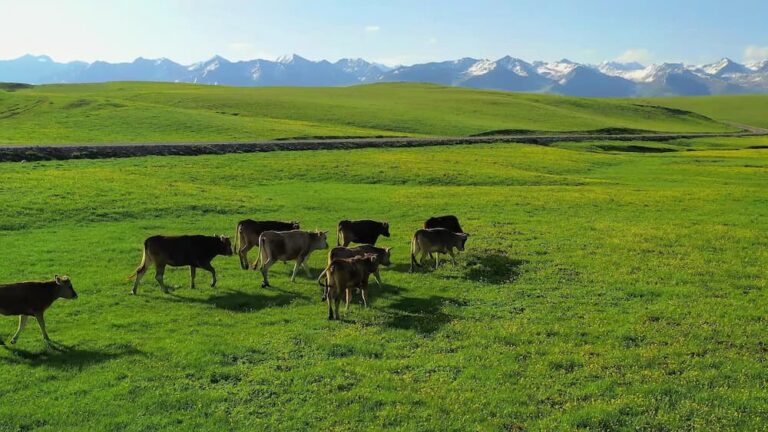
Bayanbulak Grassland sits at about 2,400 metres in a mountain basin, and its Swan Lake is the largest breeding ground for whooper swans in China. We visited in late May, which is prime time. The park runs a shuttle from the gate to boardwalks over the marsh, entry plus bus came to around 280 RMB each, and the wind coming off the snow line cut straight through my supposedly windproof jacket. Geoff had forgotten his gloves in the guesthouse and complained in a low mutter for two hours, which I mention so you pack better than we did.
The swans themselves need no embellishment. Several hundred birds, some on nests, calls carrying across the water like out-of-tune brass. Around them we picked up demoiselle cranes, ruddy shelducks, citrine wagtails and a hunting saker falcon. The famous Nine-Turn River viewpoint at sunset is genuinely worth the crowd. If you want the site’s full logistics, our separate Bayanbulak Grassland guide covers tickets and transport in detail.
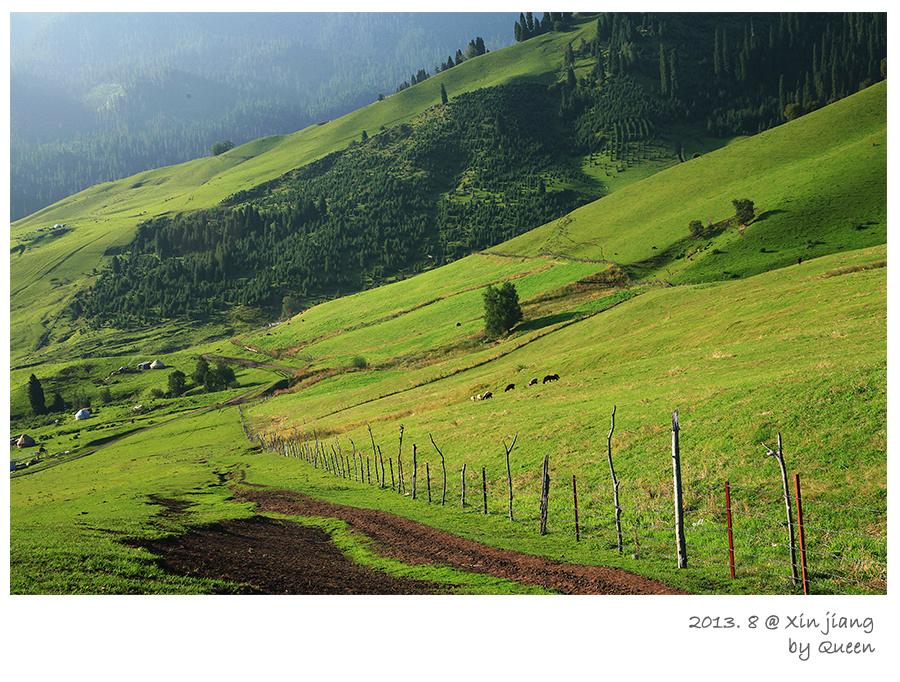
On the grassland fringes, the most reliable mammal is the grey marmot. They stand upright by their burrows like small disapproving colonels and whistle when you get within a hundred metres. Kazakh herders we met through a homestay treated our marmot enthusiasm with great patience; one teenager told Geoff, truthfully, that he had never once considered looking at a marmot on purpose. That evening around the stove is described better by people who know the culture than I can manage, so I will point you to the site’s piece on Kazakh culture in the Tianshan.
The snow leopard question, answered honestly
Xinjiang holds one of the healthiest snow leopard populations in China, concentrated in ranges like Tomur in the western Tianshan. You will see the cat on murals, bottled water labels and airport souvenirs. You will not see it on a holiday. Researchers using camera traps sometimes wait months for a single image. The handful of places worldwide where tourists genuinely encounter snow leopards involve dedicated multi-week winter expeditions with professional spotters, and Xinjiang currently has no equivalent open to foreign visitors. Any operator here who guarantees a sighting is selling you either a fenced animal or a disappointment. I regard saying this plainly as more useful than another paragraph of maybe-possibly.
About those camels
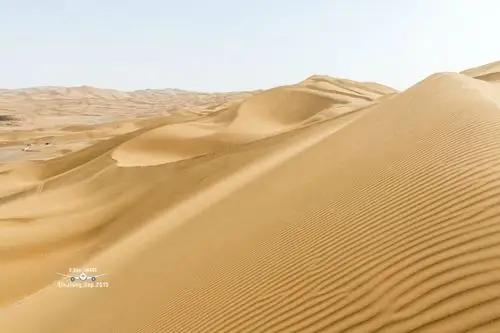
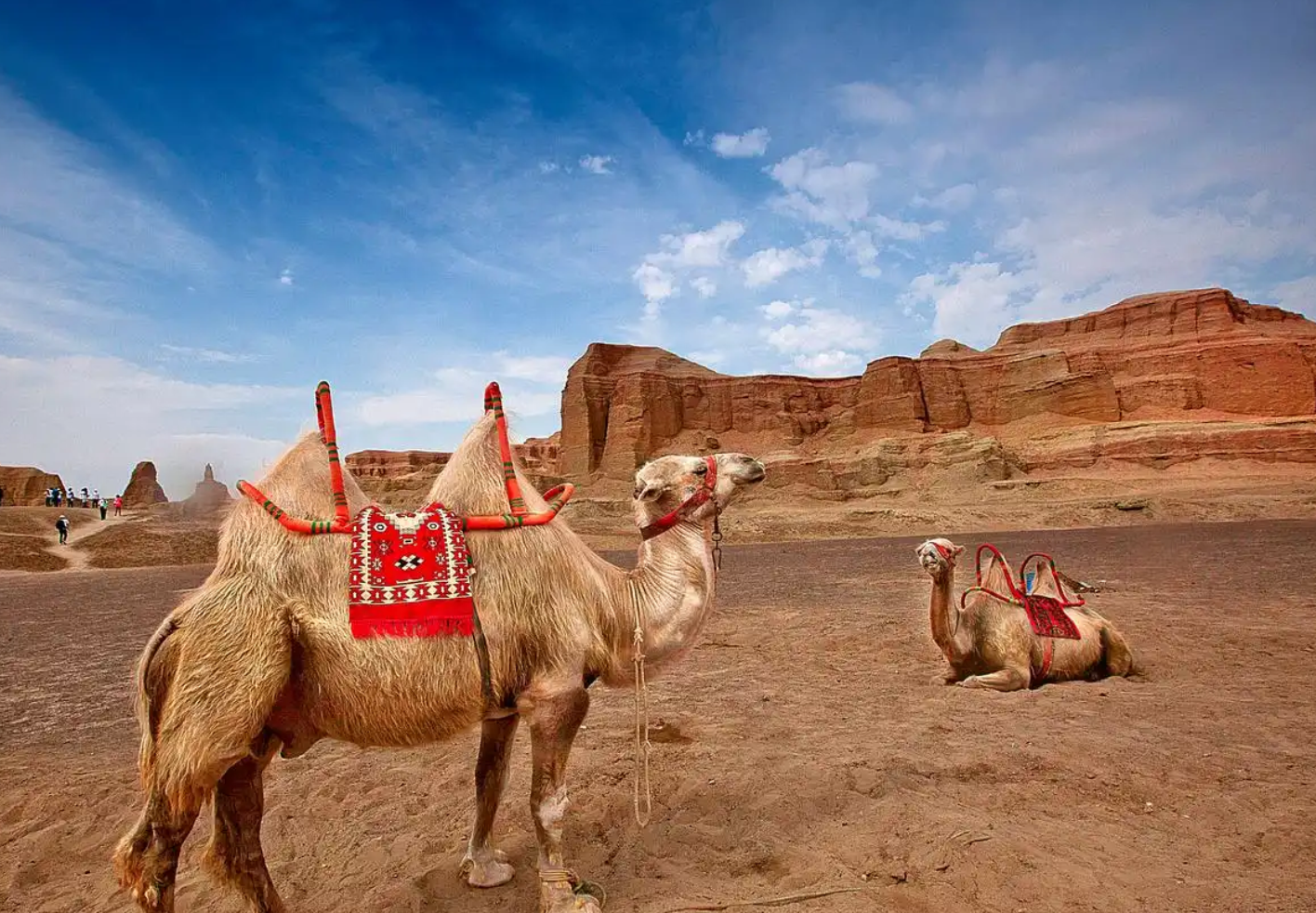
The wild Bactrian camel is one of the rarest large mammals on the planet, hanging on around the Lop Nur reserve in the southeast, which is closed to tourism, full stop. Every camel you will actually meet, including the ones we rode past dunes on the Junggar edge, is domestic. They are still splendid animals, all haughty eyelashes and complaint, but do not let anyone label a farm camel as wildlife. The dunes themselves, and the strange silence of the Gurbantunggut Desert, justify the detour on their own terms.
Getting there and around
Urumqi is the hub, with direct flights from most major Chinese cities. There is no practical public transport for the Kalamaili stretch, so a hired car with driver is the default; we arranged Adil through our Urumqi hotel two days ahead. Bayanbulak is reachable via Korla or the mountain roads from the Ili side. Self-driving is possible for confident travellers, though fuel stops are far apart on the G216 and police checkpoints want passports handy. Budget-wise, our whole twelve days came in around 1,400 RMB per person per day all-in, which sits at the comfortable end of the ranges in this site’s Xinjiang cost breakdown.
When to go
May and June are best for breeding birds at Bayanbulak and for foals at Kalamaili. September brings gazelles into larger groups, golden light and fewer tourists. July and August work but mean heat shimmer in the lowlands and peak crowds at scenic areas. Winter watching is a specialist affair: the swans leave, roads close without warning, and temperatures on the steppe can hit minus 30.
Where we stayed
Nothing here is a wildlife lodge in the African sense. Expect ordinary business hotels in Urumqi and Korla (200 to 400 RMB), simple guesthouses in Bayanbulak town (ours was 180 RMB, spotless, hot water in the evenings only), and one Kazakh homestay in a yurt that remains the trip’s warmest memory. Book grassland accommodation ahead in July and August; in May we walked in everywhere.
What we ate
Laghman noodles became our default field lunch, 20 to 25 RMB and reliably good even in one-street towns. In Bayanbulak the local yogurt with honey converted Geoff, a man who calls yogurt “wet cheese.” Dried apricots and walnuts from any bazaar are the perfect scanning-stop snack, since they survive a hot dashboard better than chocolate ever will.
Practical tips for Xinjiang wildlife watching
Bring your own optics, since nothing is rentable locally; 8×42 binoculars minimum, a scope if you are serious about the horses. Load the Merlin app’s China pack before arrival, as connectivity on the steppe is patchy. Keep 100 metres or more from any wild animal, and never feed marmots, which can carry disease. Drones are banned in and around the reserves, and rangers do enforce it. Check whether your travel insurance covers remote-area activities, a detail this site’s insurance and safety guide treats properly. And if your route climbs toward passes above 3,000 metres, skim the altitude sickness guide first; Bayanbulak’s elevation alone gave me a mild headache on night one.
A ten-day sample itinerary
Day 1: Arrive Urumqi, confirm driver, buy water and snacks. Day 2 to 4: North on the G216, dawn scanning for Xinjiang animals around Kalamaili, nights in Fuyun or roadside county towns. Day 5: Junggar dune edge, domestic camels, night drive back toward Urumqi. Day 6: Travel day to Korla. Day 7 to 8: Bayanbulak, Swan Lake boardwalks at opening time, Nine-Turn River sunset. Day 9: Grassland edges for marmots and raptors, homestay night. Day 10: Return to Urumqi. Hikers could bolt on any of the routes in the Xinjiang hiking guide, though I would rather sit still and let the animals do the walking.
Xinjiang wildlife watching FAQ
Can I see snow leopards in Xinjiang? Realistically no. There is currently no legitimate tourist infrastructure for snow leopard viewing here, and guaranteed-sighting offers should be treated as red flags.
Where is the best place to see wild horses in Xinjiang? The Kalamaili area along the G216 north of Wucaiwan. Scan at dawn from public pullouts with binoculars or a scope.
Do I need a permit? Not for the sites in this article. Border-adjacent regions elsewhere in Xinjiang do require permits, so check your full route.
Is it suitable for children? Yes, with the caveat that success means long quiet car hours. Our best family sighting recipe: marmots, which perform reliably and at close range.
Are there organised wildlife tours in English? Very few. Most visitors assemble the trip themselves with a hired driver, which worked well for us.
Disclaimer: This article reflects our personal trip in May 2025. Prices, road conditions, park rules and animal movements change, sometimes quickly, so verify details locally before committing money. Wildlife viewing involves remote travel with limited rescue services; assess your own fitness and insurance cover. We have no commercial relationship with any driver, guesthouse or park mentioned, and we paid all costs ourselves.
About the author: Margaret Ellison is a retired biology teacher from Yorkshire, England, and a long-term volunteer surveyor for the British Trust for Ornithology’s Wetland Bird Survey. She travelled through northern Xinjiang with her husband in May 2025. This article was fact-checked and edited for publication by Karl Huang and the Xinjiang Attractions editorial team.