Published: August 19, 2026 | Author: Karl Huang
Most people who write about Jiadengyu treat it as a footnote to Kanas Lake. That is a mistake. If you are planning a trip to the Kanas scenic area in northern Xinjiang, Jiadengyu is the place you will actually arrive at, sleep in, and transfer through long before you ever see the lake. I learned this the hard way on my second trip to Altay, when I assumed I could drive straight to the water and ended up parking my rental 30 kilometres short, surrounded by a hundred other confused travellers doing the same thing. This guide is built from that experience plus the logistics that the official ticket office does not explain clearly.
The settlement is more than a bus terminal. There are short signed forest walks along the Jiadengyu River where locals ride out on horses in the early morning, and a cluster of shops selling dried apricots, walnuts, and the same thick wool socks every northern-Xinjiang town seems to stock. We spent our first evening not at the lake but on one of those walks, and it turned out to be the calmest hour of the whole trip: no tickets, no queues, just spruce and moving water. If your schedule is tight and you only pass through, you miss the one part of the Kanas experience that costs nothing.
Why Jiadengyu Matters for Your Kanas Trip
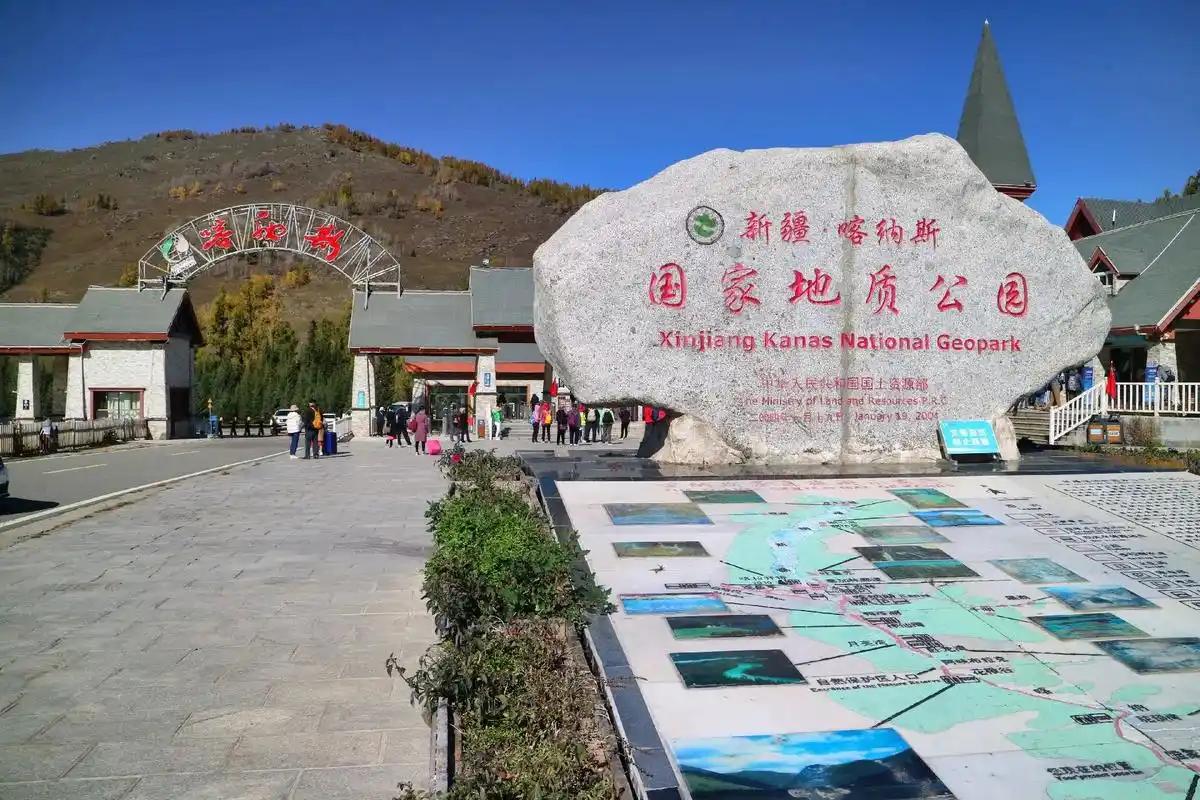
Jiadengyu (贾登峪) is a forested valley in Altay Prefecture and the main reception base for Kanas National Geological Park. Every coach, shuttle, and tour group entering the core Kanas area funnels through here. The scenic administration does not let private cars into the protected zone during the main season, so you leave your vehicle at the Jiadengyu parking lot and board the managed shuttle buses (区间车). In practice, Jiadengyu is less a destination than a mandatory waypoint: you buy your combined ticket, clear security, and queue for the bus that climbs the switchbacks to the lake.
The ticket itself deserves a paragraph, because the options confuse first-timers. You can buy a single Kanas entry, or a combined pass that also covers Hemu and Baihaba — and most multi-day visitors should take the combined one, since the savings beat buying each gate separately. The pass is dated, not timed, which means you can re-enter across consecutive days if you are looping through the region. Keep the paper or the QR code on your phone; the scanners at each gate are unforgiving and a dead battery at the Baihaba checkpoint is a genuine problem we watched happen to another group.
| Fact | Detail |
|---|---|
| Location | Altay Prefecture, northern Xinjiang, near Burqin County |
| Role | Main transfer hub, ticket centre, and lodging base for Kanas |
| Distance to Kanas Lake | About 30 km by shuttle bus |
| Elevation | Roughly 1,370 m, surrounded by spruce and pine forest |
| Private cars | Not allowed into the core Kanas area; park and take the shuttle |
| Best months | June to September; late September to early October for golden larches |
| Worst crowding | July and the National Day holiday (early October) |
| Typical stay | Hotels, guesthouses, and yurts; one night is standard |
What It Actually Feels Like: Our Arrival
We rolled into Jiadengyu from Burqin around seven in the evening, after a long day on the road. The first thing that hits you is the smell: cold mountain air thick with resin from the spruce trees, mixed with woodsmoke from the dinner kitchens. The second thing is the scale of the place. The reception centre is huge, with separate lanes for individual travellers, tour groups, and the shuttle boarding gates. We had booked a timber lodge ahead of time, which saved us, because the walk-up desk was quoting rooms at more than double the online rate.
That night the temperature dropped close to freezing even though it was summer. We walked along the Jiadengyu River, a fast grey-green stream threading through the forest, and listened to nothing but water and wind. The next morning we were at the shuttle gate by 8 a.m. — and we were still behind three tour buses. The lesson stuck with me: Jiadengyu rewards the early riser and punishes the casual planner.
Getting to Jiadengyu
The usual launch town is Burqin, about 140 km away on a paved mountain highway (roughly 2.5 to 3 hours by coach). Most travellers overnight in Burqin and take a morning bus up to Jiadengyu. If you are starting from Urumqi, driving is close to 1,000 km and not worth attempting in a single push; most people fly to Altay or Kanas airport and rent a car from there, or take the overnight sleeper coach. The mountain road from Burqin climbs steadily and the final stretch winds through forest, so budget more time than the distance implies — our driver allowed four hours and used most of it.
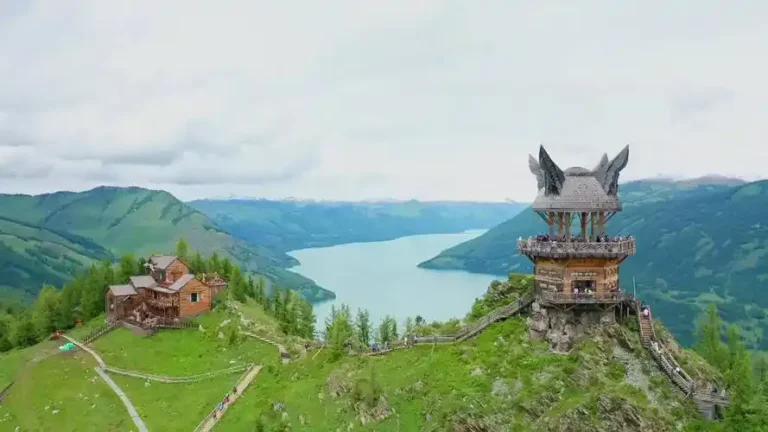
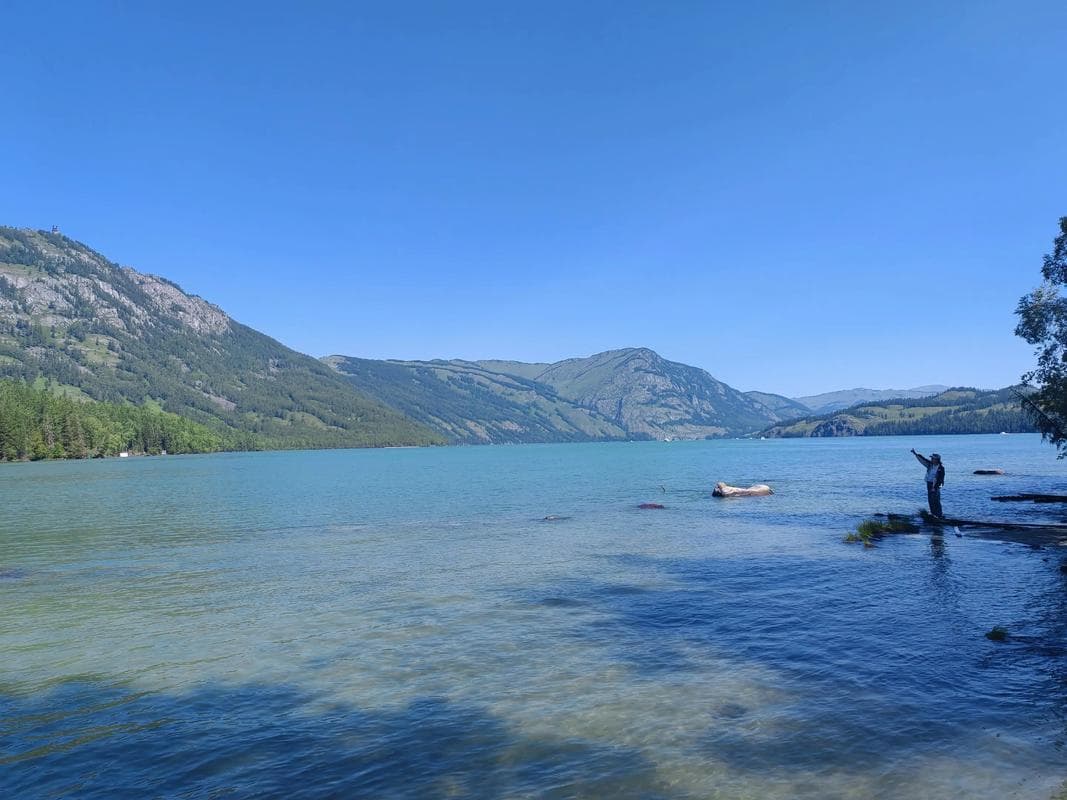
Inside Jiadengyu you buy the combined Kanas ticket plus the shuttle fare; the shuttle is not optional, it is the only sanctioned transport into the lake zone. The ride itself runs about 30 km and takes 40 to 50 minutes over a series of switchbacks. The first glimpse of Kanas comes suddenly through a gap in the trees, and the bus usually slows just long enough for the carriage to lift its phones. Hold your camera ready, but do not expect a stop — the driver keeps moving to the terminal where you change for the lakeside boardwalks.
For the wider loop, the Jiadengyu–Hemu road connects onward to Hemu Village in about an hour, and a separate border permit lets you continue to Baihaba, a quiet border settlement. Many visitors string all three together over two or three days.
Best Time to Be There
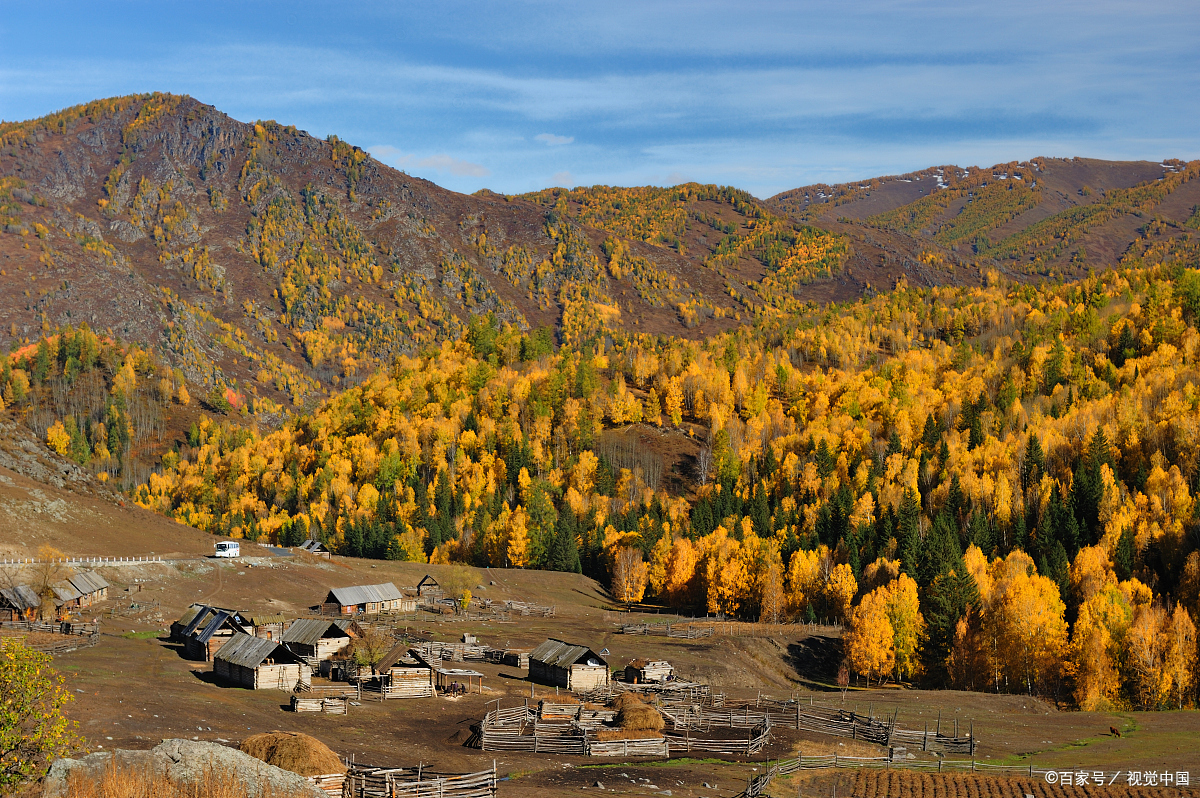
June brings lush green meadows and manageable crowds. July and August are warm but busy with domestic tour groups. The window that draws photographers is late September to early October, when the Siberian larches turn gold against the dark spruce — but that same window overlaps with the National Day holiday, so the shuttles get jammed. If you want colour without the crush, aim for the last week of September and check the larch status with the park before you commit. Winter access is limited; some roads and shuttle lines close, and only the well-prepared should attempt it.
Where to Sleep
Jiadengyu has the densest cluster of lodging in the Kanas region: timber hotels, budget guesthouses, and seasonal yurts. Quality varies a lot, and prices swing hard with the season — a room that costs a modest sum in June can triple during the October holiday. We stayed in a timber lodge a short walk from the river; basic but warm, with a real heater and a thick quilt. Book at least a few weeks ahead for peak season, and confirm your reservation by phone, because the online calendar fills fast and some properties overbook.
The yurt camps are the memorable option if you do not mind shared bathrooms and thin walls. We considered one but chose the lodge for the heater; a fellow traveller who took the yurt said the stars were unreal and the 6 a.m. cold was brutal. Either way, ask whether breakfast is included before you pay, because not every rate covers it and the add-on cost creeps up. If you are travelling with the wider Altay circuit, you might also look at Altay City or Koktokay as alternative bases, though neither puts you as close to the Kanas gate as Jiadengyu does.
Eating in the Gateway
The restaurant rows at Jiadengyu serve the standard Altay roster: laghman noodles, pilaf with carrot and lamb, steamed manty dumplings, and grilled river fish (the local trout farming operation supplies most of it). Prices run higher than in Burqin because everything is trucked in, so expect to pay a premium for a simple bowl of noodles. The food is hearty rather than refined, which is exactly what you want after a cold day outdoors. Carry some snacks and water for the shuttle queues, because options inside the scenic area are thinner and more expensive.
One dinner stands out from the trip: we ordered grilled local trout and a plate of manty, and the owner brought out a bowl of salted yoghurt we had not asked for but badly needed after a long day. Portions are generous and the cooking is unfussy. Vegetarians will struggle — nearly every main features lamb or fish — so pack a few staples if you avoid meat. A hot plate of laghman at the end of a freezing shuttle day does more for morale than any viewpoint, and that is a lesson worth carrying into the rest of the region.
Practical Tips We Wish We Knew
- Buy your ticket and shuttle pass online in advance through the official Kanas platform; the on-site queue moves slowly in peak season.
- Arrive at the shuttle gate before 8 a.m. to stay ahead of the tour buses that leave Burqin at dawn.
- Bring warm layers even in July — nights at 1,370 m get cold, and the shuttles are not heated.
- Keep your boarding slip handy; controllers check it at multiple points along the route.
- Carry some cash; small vendors and the yurt kitchens do not always take mobile payments reliably.
- For the Kanas Lake travel guide and the full loop, build in buffer days so a weather delay does not wreck your permit timing.
A Three-Day Altay Loop Through Jiadengyu
Day 1: Fly or drive to Burqin, explore the colourful river town, then take the afternoon coach up to Jiadengyu and sleep there. Day 2: Early shuttle to Kanas Lake, walk the boardwalks at Gandengyu and the Three Bays, then continue by road to Hemu for the night. Day 3: If you have the border permit, add Baihaba in the morning, then descend back through Jiadengyu to Burqin. This节奏 keeps the long transfers off your shoulders and puts you at the lake before the worst of the crowds.
Frequently Asked Questions
Can I drive my own car into Kanas? No. During the main season private vehicles are barred from the core scenic area. You park at Jiadengyu and ride the managed shuttle.
Do I need a border permit for Jiadengyu itself? No. The permit is only required for Baihaba, which sits near the national boundary. You can arrange it in Burqin or at the relevant office with your passport.
Is one night enough? For most travellers, yes — one night at Jiadengyu plus a day at the lake works. If you are adding Hemu and Baihaba, plan two or three nights across the loop.
Is it worth staying overnight instead of a day trip from Burqin? Absolutely, if you want early access and calmer light at the lake. Day-trippers from Burqin arrive later and leave earlier, missing the quiet morning hours.
Disclaimer
Opening dates, ticket prices, shuttle schedules, and border-permit rules for the Kanas area change from season to season and have shifted repeatedly in recent years. The details above reflect our visit and standard practice, but treat them as a planning starting point rather than a guarantee. Always confirm current rules with the official Xinjiang tourism authority and your booked lodging before you travel, especially for winter and holiday periods.
About the author
Karl Huang is a travel writer focused on northwestern China. He has spent multiple seasons along the Xinjiang–Altay corridor, including several transfers through Jiadengyu to Kanas, Hemu, and Baihaba. His reporting favours practical logistics over postcard summaries, and he verifies border and permit rules with official sources before publishing.