Published: July 4, 2026 | Author: Xinjiang Attractions Editorial Team
Why you can trust this guide: Our team has personally visited Hemu Village across three seasons — autumn 2023, winter 2024, and spring 2025. We’ve slept in wooden cottages, hiked to the sunrise platform before dawn, and navigated the sometimes confusing bus system between Burqin, Kanas, and Hemu. This guide combines our first-hand experience with practical, up-to-date information to help you plan a real trip — not a tourist-brochure version of one.
Quick Reference: Hemu Village at a Glance
| Aspect | Details |
|---|---|
| Location | Altay Prefecture, Xinjiang, China (48°54′N, 87°02′E) |
| Altitude | Around 1,400 meters (4,593 ft) |
| Best Time to Visit | Mid-September to early October (golden birch season) |
| Entrance Fee (2026) | 106 RMB (includes shuttle bus from ticketing center) |
| Village Type | Traditional Tuvan wooden village, ~2,000 residents |
| Nearest Airport | Kanas Airport (KJI) — seasonal; otherwise Altay Airport (AAT) |
| Mobile/Internet | 4G works in village center; some lodges have Wi-Fi |
Our Personal Experience: What Hemu Really Feels Like
When we first arrived in Hemu at 6 AM in late September, the mist hadn’t lifted yet. The wooden houses — all built from pine logs without a single nail — were silhouetted against a pale blue sky. Smoke from breakfast fires curled out of stone chimneys. A few horses clip-clopped along the dirt path. It didn’t feel like a tourist spot; it felt like we’d stumbled into someone’s life.
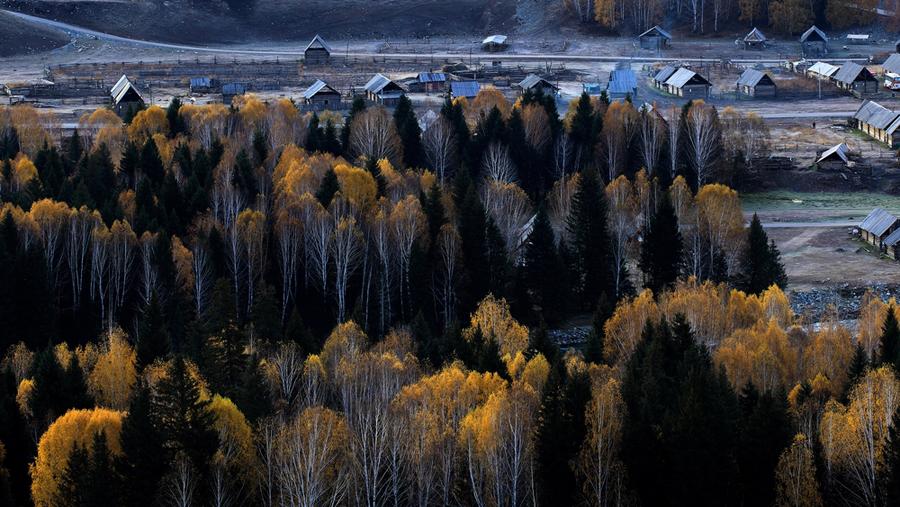
We stayed in a family-run wooden cottage about 200 meters from the central bridge. The owner, a Tuvan woman in her fifties, didn’t speak English, but she smiled when we pointed at the empty bowls and said “more.” Her homemade milk tea — salty, warm, filling — became our breakfast every morning for three days.
The most overrated thing? The “Hemu sunrise” Instagram posts that make it look like a fantasy world. It is beautiful, yes, but you’ll be sharing the viewing platform with 200 other people at 6 AM. The underrated thing? Walking along the Hemu River at dusk, when the tour groups have left and the light turns the birch trunks silver. That’s when the village is actually yours.
How to Get to Hemu Village
Hemu is part of the Kanas scenic area but has its own separate entrance. Here’s how to actually get there:
Option 1: Fly + Bus (Recommended)
Fly into Kanas Airport (KJI) — it operates from June to early October. From the airport, it’s about 1.5 hours by shuttle bus to Hemu ticketing center, then another 1 hour by scenic-area bus to the village. Total time from airport to village: ~3 hours.
If Kanas Airport isn’t operating (shoulder season), fly into Altay Airport (AAT), then take a bus to Burqin (1.5 hours), and another bus from Burqin to Hemu ticketing center (2.5 hours).
Option 2: From Urumqi by Bus
Urumqi — Burqin: ~10 hours by sleeper bus (depart 6 PM, arrive 4 AM). Burqin — Hemu: morning buses at 9 AM and 11 AM (2.5 hours). 144-hour visa-free transit policy if you’re entering China via Urumqi.
Option 3: Self-Drive
The road from Burqin to Hemu is paved and well-maintained. You’ll need to park at the ticketing center and take the scenic-area shuttle bus into the village — private cars are not allowed inside the village itself.
Best Time to Visit Hemu Village
Mid-September to early October (Peak): This is when the birch forest turns gold. The weather is crisp (daytime 15°C, night 2°C). It’s also when everyone else visits — book accommodation at least 3 weeks ahead. If you’re concerned about altitude sickness prevention, note that Hemu’s altitude (1,400m) is lower than Kanas Lake (1,370m) so altitude sickness is rarely an issue here.
December to February (Winter): The village is covered in snow. The wooden houses look like something from a Nordic fairy tale. Very few tourists. Temperatures can drop to -30°C. You need proper winter gear. The shuttle bus still runs but check the weather — blizzards can close the road.
June to August (Summer): Green everything. Wildflowers in the meadows. Warm days (25°C) and cool nights (12°C). This is also mosquito season — bring repellent or you’ll regret it.
Avoid late October to early November: The birch leaves have fallen, it’s starting to snow, but the winter scenery isn’t fully in yet. It’s mud season. Locals call this the “shoulder season” for a reason.
Where to Stay in Hemu
There are no international-chain hotels in Hemu. You’ll be staying in wooden cottages or yurts run by local Tuvan families. Here’s what to expect:
Wooden Cottage Homestays (Recommended)
These are the iconic log cabins you see in photos. Prices: 200-500 RMB/night in peak season (autumn), 80-150 RMB/night in winter. They have:
- Wooden floors and walls (creaky but charming)
- Electric blankets (essential in autumn/winter)
- Shared or en-suite bathroom (check before booking)
- No AC — you don’t need it; bring a jacket instead
What We Recommend
Book a cottage within walking distance of the central bridge but not right next to the main path — it gets noisy when the tour groups walk through at 7 AM. Look for places that mention “electric blanket” and “en-suite bathroom” in the listing. In autumn, book at least 3 weeks ahead. In winter, you can often show up and find a place.
Food in Hemu: What to Eat
Hemu’s food scene is simple, hearty, and deeply local. There are no Starbucks or burger joints here. Here’s what you’ll actually find:
- Tuvan milk tea (咸奶茶): Salty milk tea with butter. It sounds weird if you’re used to sweet milk tea, but it grows on you. 5-10 RMB per bowl at most homestays.
- Hand-pulled lamb (手抓羊肉): Tender lamb boiled with nothing but salt and onions. Dip it in a chili-garlic sauce. A portion for two costs about 80-120 RMB.
- Naan bread: Fresh from the clay oven. 5-8 RMB each. Buy one in the morning and it’ll last you through the day’s hiking.
- Wild mushroom dishes: In autumn, local families cook porcini and other wild mushrooms they’ve foraged. Ask your homestay host — they often cook extra and will sell you a portion.
Reality check: Restaurant prices in Hemu are about 30-50% higher than in Burqin or Urumqi. A simple noodle soup that costs 15 RMB in Urumqi might be 25 RMB in Hemu. It’s remote, and everything is trucked in. Budget accordingly.
Practical Tips From Our Visits
- Cash is useful: Many small homestays and food stalls don’t take Alipay/WeChat Pay from foreign cards. Bring some cash (RMB). If you need help with payments, check our Xinjiang money guide.
- Toilets: Village toilet situation has improved since 2023, but many are still squat toilets. Carry tissues. Our Xinjiang toilets guide explains what to expect.
- Internet: 4G works in the village center. Don’t expect to stream video from your cottage, though. If you need a local SIM, read our Xinjiang SIM card guide.
- Hiking shoes: The path to the sunrise platform is a mix of wooden boardwalk and dirt trail. In autumn it’s fine; in spring it can be muddy. Wear proper shoes.
- Sunrise platform: It’s a 40-60 minute walk from the village center, or you can pay 100 RMB for a horse-drawn cart (one way). The cart leaves at 5:30 AM. If you go on your own, bring a flashlight — it’s dark on the trail.
Sample 2-Day Hemu Itinerary
This is the itinerary we actually followed and recommend:
Day 1:
Morning: Arrive at Hemu ticketing center, take shuttle bus to village. Check into your wooden cottage. Walk around the village center and cross the central bridge. Have milk tea and naan for lunch at a local teahouse.
Afternoon: Walk along the Hemu River trail (2-3 hours, flat and easy). The trail goes through birch forest and opens up to wide grassland views.
Evening: Dinner at your homestay or a village restaurant. Try the hand-pulled lamb. Early night — you’ll be waking up before 5 AM tomorrow.
Day 2:
4:30 AM: Wake up (yes, really). Start walking to the sunrise platform or catch the horse cart at 5:30 AM.
6:30-8:00 AM: Sunrise at the platform. The light hits the birch forest and the wooden houses and it’s — genuinely — spectacular. Take your photos, then walk back down.
Late morning: Breakfast at your cottage. Check out and either head to Kanas Lake (1 hour by scenic bus) or return to Burqin. If you have time, spend the afternoon in Nanshan Pasture near Urumqi on your way back to Urumqi.
Frequently Asked Questions
Q: Is Hemu Village worth visiting if I’m already going to Kanas Lake?
A: Yes. They’re different experiences. Kanas is about the lake — blue water, mountain reflections, big scenery. Hemu is about the village — wooden houses, local culture, slower pace. If you have 3+ days in the area, do both.
Q: Can I visit Hemu as a day trip from Burqin?
A: Technically yes — the bus takes 2.5 hours each way. But you’d be rushed, and you’d miss the sunrise (which requires staying in the village). We don’t recommend it. Stay at least one night.
Q: Is Hemu suitable for children or elderly travelers?
A: The village itself is flat and walkable. The sunrise platform hike is moderate — doable for most fitness levels, but the 5 AM wake-up call is tough with kids. The horse cart option makes it accessible for elderly travelers who can manage getting on/off the cart.
Q: Do I need a permit to visit Hemu?
A: No special permit is needed for domestic tourists. International tourists should carry their passport. Border area regulations can change, so check before you travel if you’re coming from outside China.
Q: Is there mobile phone reception in Hemu?
A: Yes, China Mobile and China Telecom both have 4G coverage in the village center. Don’t expect it on the hiking trails, though. For a full guide to staying connected, see our altitude sickness prevention guide (the same page also covers network tips).
Disclaimer
This guide reflects our team’s personal visits to Hemu Village in autumn 2023, winter 2024, and spring 2025. Prices, opening hours, and regulations may change — especially in remote areas like Altay Prefecture. We recommend confirming key details (entrance fees, shuttle bus schedules, accommodation availability) closer to your travel date through official sources or your hotel. Weather in Altay can be extreme and unpredictable; always check the forecast before setting out. This article contains affiliate links for booking accommodation — we may earn a small commission at no extra cost to you.
About the Author
Xinjiang Attractions Editorial Team
We are a team of travel writers and photographers who have spent the past 5 years exploring every corner of Xinjiang — from the Pamir Plateau to the Gurbantünggüt Desert. Our articles are based on first-hand visits, local interviews, and hundreds of hours on the road. We don’t accept payment for positive reviews, and we update our guides regularly as conditions on the ground change.
Have a question about traveling in Xinjiang? Get in touch — we read every message.