Published: August 4, 2026 | Author: Marek Dvořák, former fleet coordinator and long-distance driver
Every time someone asks me about Xinjiang car rental, the conversation starts in the wrong place. They want to know which SUV to book. What they should be asking is whether they are legally allowed to sit behind the wheel at all, and what happens to their deposit six weeks after they fly home. I spent nine years running a small vehicle fleet in Central Europe before I ever set foot in China, so paperwork is the part I notice first. On two trips through Xinjiang, one with a rented sedan out of Urumqi and one with a hired car and driver through the south, the driving itself was the easy half. The counter was where things got interesting.
This guide covers the transaction: licences, deposits, insurance small print, fuel station procedure, checkpoints with a rental vehicle, and the return. If you want distances between towns and what the tarmac actually feels like, we already published a separate piece on driving distances and road conditions. Read both before you book anything.
Quick reference: Xinjiang car rental at a glance
| Item | What to expect |
|---|---|
| Foreign licence alone | Not valid for driving in mainland China |
| International Driving Permit | Not recognised in mainland China |
| Usual workaround | Temporary Chinese permit, or rent a car with a driver |
| Compact sedan, per day | Roughly ¥150 to ¥300 in low season, more in July and August |
| SUV, per day | Roughly ¥300 to ¥600, peak-season pricing can double |
| Security deposit | Commonly ¥2,000 to ¥10,000, held against the card |
| Car with driver | Often ¥600 to ¥1,200 per day including the driver’s costs |
| One-way drop-off | Frequently charged, occasionally refused outright |
| Deposit release | Typically two to four weeks after return |
Prices move with season and with how far in advance you book. Treat the table as a planning range, not a quote.
The licence question, answered honestly
A foreign driving licence does not permit you to drive in mainland China, and the International Driving Permit that works across much of the world is not accepted here either. This surprises people who have driven in a dozen countries on an IDP. It caught out a German couple I met over breakfast in Urumqi who had prepaid a week-long booking and discovered the problem at the counter.
The legitimate route for a short-term visitor is a temporary Chinese driving permit, issued by a local vehicle administration office. In broad terms you need your passport with a valid entry stamp, your home licence with a certified Chinese translation, passport photos, a basic medical and eyesight check, and in some places a short test on Chinese traffic rules. The permit is usually tied to the length of your stay.
Here is my honest caveat: the availability, the processing time and the documents demanded vary by city and they change. What one office in eastern China handles in an afternoon may take longer, or work differently, in Urumqi. Do not book a non-refundable car on the assumption you can sort this out after landing. Contact the vehicle administration office in the city where you intend to collect the vehicle, and confirm current requirements alongside your visa and permit paperwork.
Which is why most foreign visitors I have met in Xinjiang end up doing what I did on my second trip: renting the car with a driver attached. It costs more per day than a bare rental, though once you add fuel, tolls, parking and the mental load of navigating checkpoints in a language you cannot read, the gap narrows.
Booking: where the cars actually are
The rental fleet in Xinjiang concentrates in Urumqi, with smaller operations in Kashgar, Yining, Korla and Altay. Urumqi airport has the widest choice and the most competition on price. If you are flying in, our airport guide explains where the arrival halls put you in relation to the pickup desks.
Booking happens mostly through Chinese apps and websites. Some accept international cards, many prefer a domestic payment method, and a few will simply fail at checkout with a foreign passport number in the name field. Two practical habits saved me time. First, book at least two weeks out for July and August, when domestic self-drive tourism absorbs most of the fleet. Second, get the confirmation in writing with the exact vehicle class, the deposit figure, the insurance tier and the drop-off location spelled out. A screenshot of an app page has settled more than one disagreement at a counter for me.
At the counter: deposits and the inspection
Chinese renters often get deposits waived through a domestic credit-scoring system. Foreign visitors usually do not qualify, so budget for the full amount to be blocked on your card. On a mid-range SUV that can be ¥5,000 or more sitting frozen for the length of your trip and well beyond it. Check that your card limit can absorb the hold on top of hotels and flights.
The inspection is the ten minutes that decide whether you argue later. I walk the car with the phone camera rolling and narrate what I see: every scratch, the wheel rims, the windscreen, the bumper corners, the interior. Then I photograph the odometer, the fuel gauge, and the boot with the spare wheel and jack visible. On my Urumqi pickup the spare was flat. The counter swapped it without argument, but only because I checked before signing.
Insurance, and the exclusions that matter in Xinjiang
Rental quotes usually bundle the compulsory traffic insurance plus a commercial third-party layer, then sell you a damage waiver on top. Buy the waiver. Then read what it excludes, because the standard exclusions line up uncomfortably well with Xinjiang driving conditions.
- Glass and tyres. Frequently excluded. Gravel flung by a passing truck on a repair section is the single most common damage I have seen.
- Undercarriage. Often excluded. Relevant the moment you leave sealed road for a lakeside track.
- Unpaved roads. Many contracts void cover entirely off tarmac. If your plan includes rough side roads, ask directly and get the answer in writing.
- Border zones. Some contracts restrict where the vehicle may go. Ask before you plan anything close to a frontier area.
- Deductible. Even with the waiver there may be an excess. Find the number.
I add a dashcam to every rental I take anywhere. In China it is close to standard equipment and it is worth asking whether the car has one fitted and working.
Fuel stations work differently here
This is the detail that trips up first-timers more than anything else. Petrol stations across Xinjiang operate under a security procedure. You typically pull into a holding area at the gate, staff check identification, passengers may be asked to step out and walk through a side entrance while the driver takes the car to the pump, and station staff handle the nozzle rather than the customer. Add ten to twenty minutes per stop and more if a convoy of trucks arrived before you.
Two consequences for planning. Fill up when you reach half a tank rather than when the warning light comes on, particularly on the desert stretches of the Tarim Basin where the gap between stations can be long. And carry your passport in your hand, not in the boot, because you will be showing it.
Checkpoints, tolls and speed enforcement
You will pass through vehicle checkpoints, more of them in the south than the north. Keep three things reachable from the driver’s seat: your passport, the temporary permit, and the vehicle registration document that lives in the car. Add the rental agreement. Officers sometimes want to see why your name does not match the registered owner, and producing the contract turns a five-minute question into a thirty-second one.
Expressway tolls are usually handled by an electronic tag fitted to the car, with the total settled against your deposit at return. Ask how tolls are charged so the deduction is not a surprise.
Average-speed enforcement is widespread. Cameras record you entering a section and leaving it, then calculate whether you covered the distance faster than the limit allows. Slowing down for the camera you can see does nothing. On some routes you also receive a timed card at a control point, and arriving at the next point too early is evidence in itself. Drive the limit and add the time to your schedule. Xinjiang distances are long enough that the temptation is real, which is exactly why the enforcement exists.
Seasonal limits that break itineraries
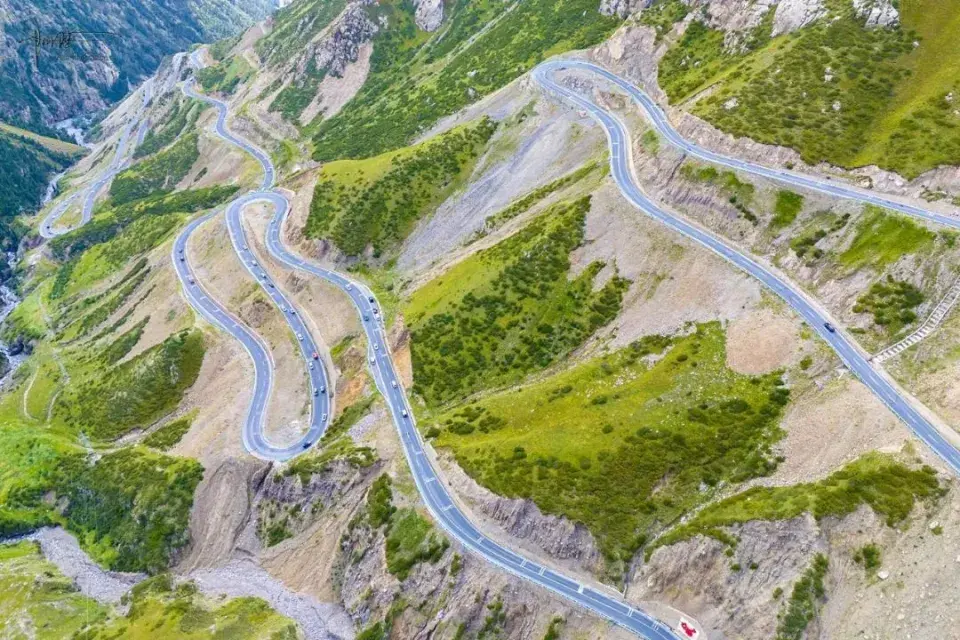
The mountain roads that make a self-drive worth doing are not open year-round. The Duku Highway across the Tianshan closes for the cold months and reopens in early summer, with the exact dates announced each year according to snow and repair work. Passes can also shut for days at a time after a storm, in season. If your route depends on one crossing with no alternative, build a spare day into the plan and check conditions locally the evening before rather than trusting a schedule you read months earlier. Our season-by-season guide sets out the broader pattern.
In winter, ask specifically whether the car has winter tyres. Do not assume.
Returning the car and getting your money back
Refuel to the level stated in the contract and keep the receipt. Wash the car if you have been on dusty roads, because a cleaning charge for desert dust is cheaper to avoid than to dispute. Photograph the vehicle again at handover, all four corners plus the odometer, and get a signed return note.
Then wait. Deposits in China are commonly held for a couple of weeks and sometimes a month, because traffic violations recorded by camera take time to filter through and the company wants the fines settled from your money rather than theirs. This is normal. It is also why I keep every photograph until the refund lands.
One-way rentals deserve a separate warning. Dropping a car in Kashgar that you collected in Urumqi means the company must move it roughly 1,500 kilometres back, and the fee reflects that. Some operators refuse the arrangement between north and south altogether. If a one-way is central to your plan, confirm it before you pay, and price the alternative of a return loop against flying one leg. Our cost breakdown is a useful sanity check here.
A realistic six-day self-drive, logistics included
- Day 0. Arrive Urumqi. Do not collect the car. Sleep, and let jet lag pass before you drive.
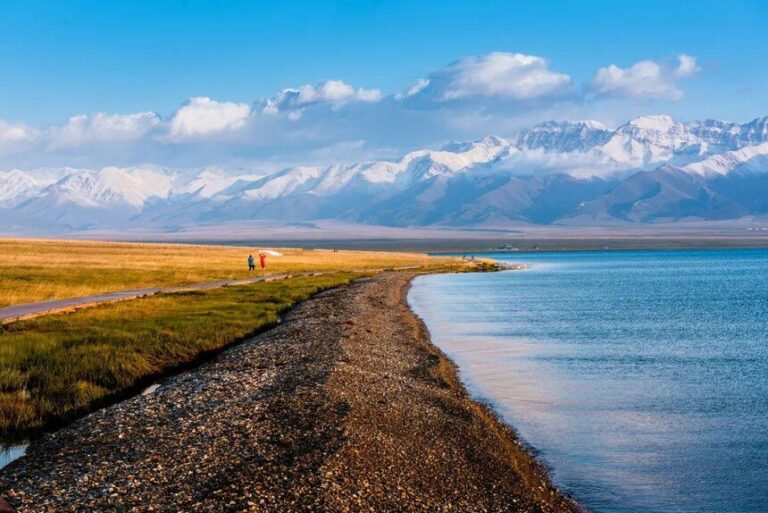
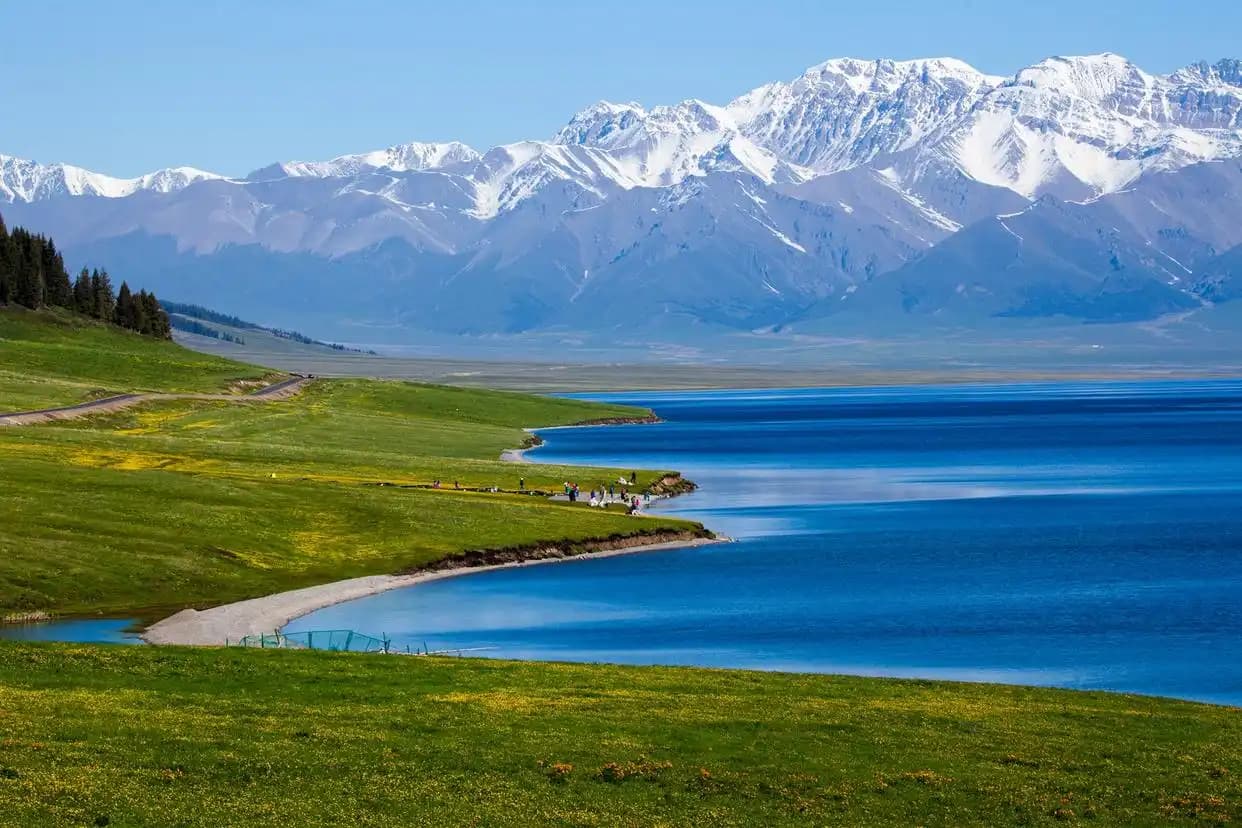
- Day 1. Collect mid-morning after the counter rush. Inspect, photograph, then drive a short first leg to Sayram Lake with a fuel stop to learn the station routine while you are still fresh.
- Day 2. Sayram Lake to Yining. Short driving day. Buy a physical map as a backup.
- Day 3. Ili valley side roads. Confirm your insurance covers unsealed surfaces before you take any of them.
- Day 4. The mountain crossing, if the season allows. Full tank before you start climbing, because services in between are thin.
- Day 5. Down to Bayanbulak or Kuqa depending on the road. Slow day, plenty of stops.
- Day 6. Return leg with a buffer of three hours. Refuel, wash, hand back before the office closes.
Six days is enough for one region. Trying to cover north and south by car in a week means spending the week in the car. If your time is short, combine a rental in one region with the coach network or a flight for the long transfer, an approach we set out in the seven-day itinerary.
Frequently asked questions
Can I drive in Xinjiang on my home licence?
No. A foreign licence on its own does not authorise driving in mainland China, and an International Driving Permit is not recognised. You need a Chinese licence or a temporary permit obtained locally.
Is hiring a car with a driver much more expensive?
Per day, yes. Across a whole trip the difference shrinks once fuel, tolls, parking and your own time are counted, and the driver handles checkpoints and fuel stations for you.
Do I need a four-wheel drive?
For sealed roads between the main sights, no. A sedan is fine and cheaper to fuel. Choose ground clearance only if your route genuinely includes rough tracks, and check the insurance covers them.
Can I take a rental car to the Khunjerab Pass?
Treat that area as a special case with its own permit and access rules that also apply to vehicles. See our Karakoram Highway guide and verify current requirements before committing.
How long until my deposit comes back?
Plan for two to four weeks. Keep your handover photographs and the signed return note until it arrives.
What if I have an accident?
Call the rental company’s emergency line first and follow their instructions, then the traffic police. Photograph positions before anything is moved, unless the vehicles are blocking a live traffic lane.
Disclaimer
Licensing rules, insurance terms, rental prices and seasonal road openings change, and requirements can differ between cities within Xinjiang. Everything above reflects two personal trips plus fleet-management experience elsewhere, not legal advice. Confirm current licence procedures with the relevant vehicle administration office and current road status with local authorities before you travel or pay a deposit. This article is independent and no rental company has paid for or reviewed its contents.
About the author
Marek Dvořák spent nine years coordinating a small commercial vehicle fleet in Central Europe, where contracts, deposits and damage disputes were a daily part of the job. He has travelled in Xinjiang twice, once self-driving a rented sedan through the northern loop out of Urumqi and once with a hired car and driver in the south, and has driven professionally in eleven countries. He writes about the paperwork side of travel because it is the part most guides skip.