Published: August 4, 2026 | Author: Li Wen, Xinjiang Attractions field team | Reviewed by: Adrian Voss, overland travel editor
Xinjiang transportation is best understood as four separate networks that happen to share one map: a surprisingly good airline system, a slow but cheap railway, a coach network that reaches places the other two ignore, and roads that are either excellent or seasonal. Choosing well matters more here than almost anywhere else in China, because the penalty for choosing badly is measured in days rather than hours. Our field team has moved roughly 40,000 km inside the region since 2019, in every one of those four ways, including a few we would not repeat.
This page is the overview. Where a topic deserves its own treatment, we link to the detailed guide rather than compress it into a paragraph. If you have not yet worked out how you are arriving in the region at all, start with how to get to Xinjiang and come back here for the internal legs.
Start With the Distances, Not the Timetable
The single most common planning mistake we see is treating Xinjiang as one destination. It covers about 1.66 million square kilometres, roughly a sixth of China and larger than Iran. Urumqi to Kashgar is about the same as London to Rome, and both cities are inside the same provincial-level unit. Below are the reference distances we plan around.
| Route | Distance | Fastest realistic option | Slowest common option |
|---|---|---|---|
| Urumqi → Turpan | 190 km | Train, 1h | Bus, 3h |
| Urumqi → Yining (Yili) | 690 km | Flight, 1h20 | Sleeper train, 11h |
| Urumqi → Altay / Kanas area | 660 km | Flight, 1h20 | Bus, 12h |
| Urumqi → Kashgar | 1,450 km | Flight, 2h | Bus, 18-20h |
| Urumqi → Hotan | 1,500 km | Flight, 2h | Sleeper train, ~20h |
| Kashgar → Hotan | 500 km | Flight, 1h | Bus, 6-7h |
Which Mode to Use, and When
After enough trips you stop asking which mode is best and start asking which one is least wrong for a specific leg. This is the table we use.
| Mode | Typical cost | Where it wins | Where it fails |
|---|---|---|---|
| Domestic flight | ¥400-1,500 | Any leg over 800 km; saves a full day | Weather delays in winter; airports sit outside town |
| Train | ¥100-500 | Urumqi-Turpan corridor; overnight sleepers | Few lines in the far south and west |
| Long-distance bus | ¥60-400 | County towns with no airport or station | Comfort, and schedules that thin out after midday |
| Rental or hired car | ¥200-1,000/day | Scenic routes, grassland, anywhere off the trunk lines | Cost for solo travellers; seasonal mountain closures |
A rule that has held up well for us: fly the long legs, drive the scenic ones, and use trains and buses to stitch the two together. Trying to do a whole trip by one mode is how itineraries fall apart.
Flying Between Cities
Xinjiang has more civil airports than any other provincial-level region in China, over twenty of them, and most feed through Urumqi Diwopu. That hub-and-spoke shape is worth knowing: a Kashgar to Yining trip that looks short on the map usually routes back through Urumqi and eats most of a day. Fares move a lot with season, and we have paid both ¥480 and ¥1,420 for the same Urumqi to Kashgar seat in different months. Two to four weeks ahead is the sweet spot outside peak season.
Winter brings fog and snow delays, particularly on the northern spokes into Altay and Kanas. If a delayed arrival would break a connection, build in a buffer night. Our Xinjiang airport guide covers terminal layouts, transfer times and the ground transport at each field.
Trains: The Overnight Sleeper Is Still the Workhorse
The rail map has grown quickly, and the Urumqi to Turpan run is now a genuinely fast trip at roughly an hour. Beyond that corridor, most journeys are conventional services rather than high-speed, and the overnight sleeper remains the practical choice. A soft sleeper from Urumqi to Kashgar costs a fraction of the flight and removes a hotel night from the budget, which is why we still book it when the schedule allows.

Bring your passport, allow extra time for station security, and do not count on buying same-day tickets in July and August. Full route and class detail is in our Xinjiang rail guide.
Long-Distance Buses Fill the Gaps
Buses are the least glamorous option and the one we end up recommending most often to travellers going beyond the standard circuit. County seats, grassland junctions and mountain towns frequently have no airport and no station, and the coach is simply how people get there. Fares are low, the vehicles range from modern to elderly, and departures cluster in the morning. Our guide to Xinjiang long-distance buses goes into stations, booking, luggage rules and what the overnight services are actually like.
Driving Yourself
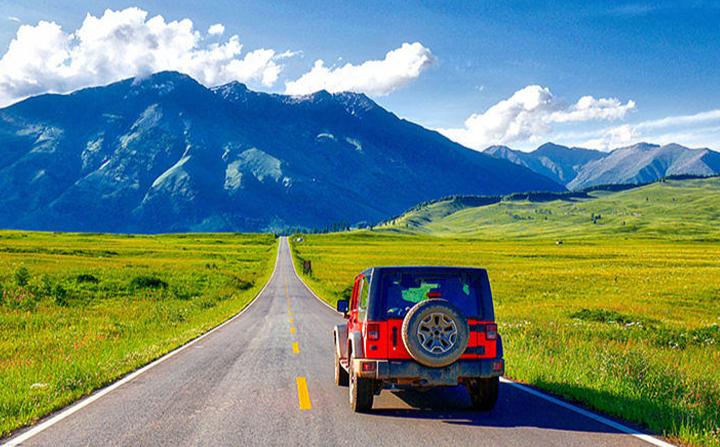
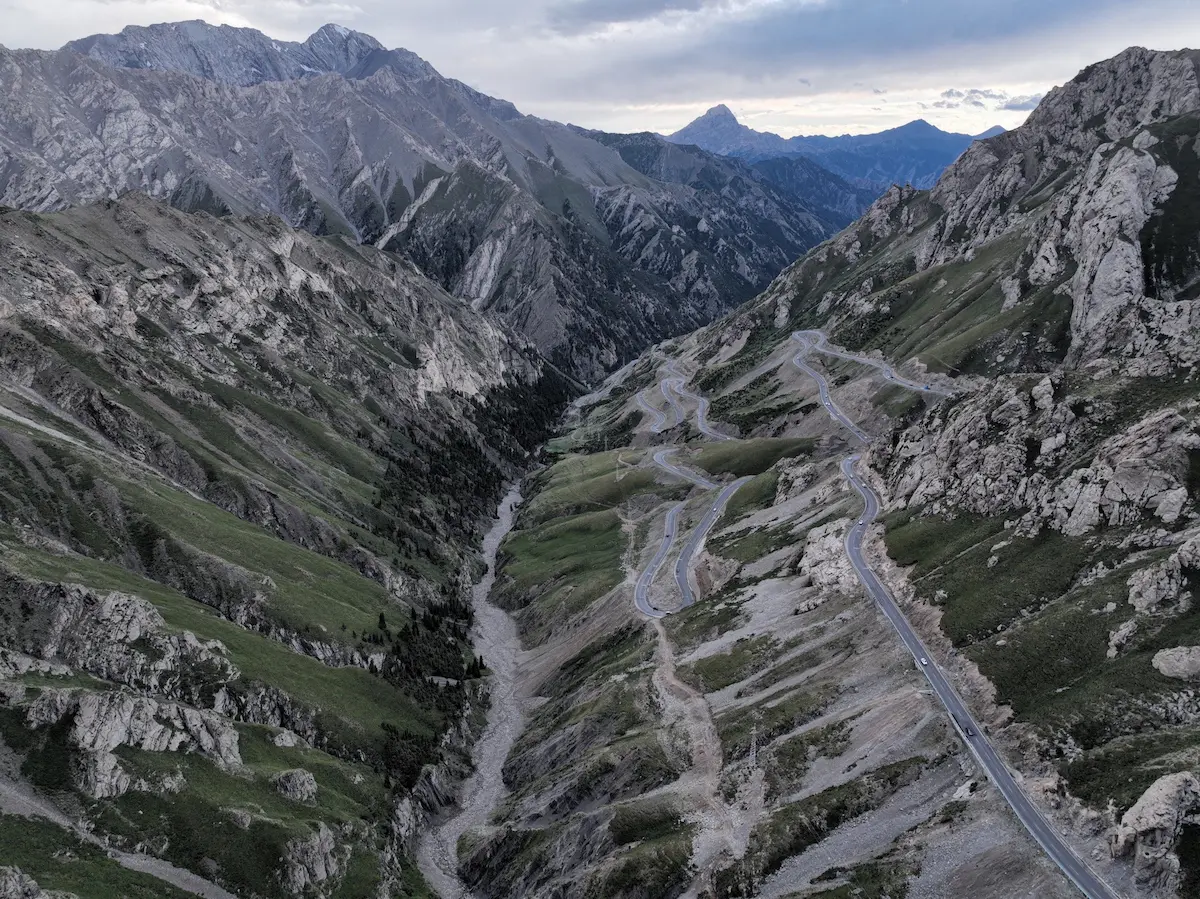
Self-drive unlocks the parts of Xinjiang that public transport cannot reach, and on routes like the Duku Highway the road is the attraction rather than the connection. The trade-offs are real: a foreign licence is not valid on its own, fuel stations can be far apart in the south, and speed enforcement is constant and unforgiving. Many visitors end up hiring a car with a driver instead, which costs more per day but removes the paperwork and the navigation.
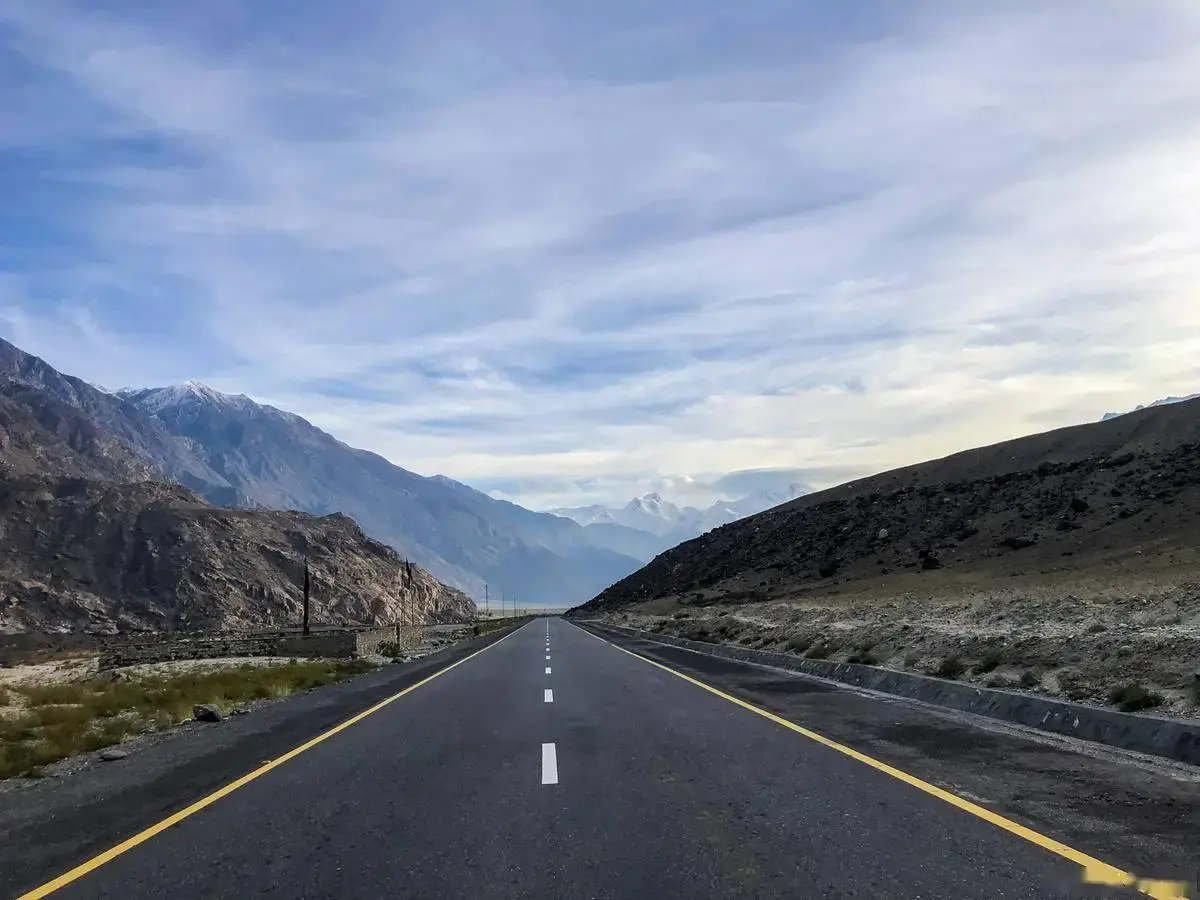
Mountain roads open and close by season, and the Duku in particular is usually shut well into spring. Licensing, deposits, insurance and the seasonal calendar are covered in renting a car in Xinjiang.
Getting Around Inside Cities
City transport is the easy part. Urumqi has a metro line running north to south, plenty of metered taxis starting around ¥10, and ride-hailing that works normally. Smaller cities including Kashgar, Turpan and Hotan rely on hailed taxis with lower starting fares, and in the old quarters walking beats everything. Electric bikes and three-wheelers cover the middle distance cheaply.
Two practical notes. Security checkpoints are routine, so carry your passport at all times rather than leaving it at the hotel. And mobile payment is close to universal in cities, though small towns can still be awkward for foreign cards, which we cover in money and payments.
How We Actually Plan a Two-Week Route
A structure that has worked repeatedly, and which avoids doubling back through Urumqi more than once:
- Days 1-2: Arrive Urumqi, adjust to the time offset, train out to Turpan and back.
- Days 3-6: Fly north to Altay, then car or bus to Kanas and the surrounding villages.
- Days 7-8: Return to Urumqi, overnight, then fly south.
- Days 9-12: Kashgar as a base, with a hired car for the Pamir road.
- Days 13-14: Hotan by road or short flight, then fly home from Urumqi.
Note how much flying that involves. Visitors who insist on surface travel throughout should plan three weeks for the same ground, or cut the itinerary to either the north or the south. The north versus south comparison is the right place to make that call.
Costs, Booking and Documents for Xinjiang Transportation
Budgeting is straightforward once you accept that internal flights dominate the total. For a two-week trip with three internal flights, one sleeper train and a few days of hired car, our transport line has typically landed between ¥3,500 and ¥5,500 per person. Cutting the flights roughly halves that and adds four or five days.
- Passport: required for flights, trains, long-distance buses, hotels and checkpoints. Carry it, do not pack it.
- Booking window: two to four weeks for flights; earlier for July, August and the first week of October.
- Buffer days: one per week of travel, more in winter.
- Timing: the season shapes what is even open, so read best time to visit Xinjiang before locking dates.
For everything that does not fit under transport, our general travel tips collects the rest of the practical ground.
Frequently Asked Questions
Do I need a permit to travel around Xinjiang?
Ordinary tourist areas need no special permit beyond your Chinese visa. Some border zones, including parts of the Pamir and stretches near international frontiers, do require a border permit, usually arranged locally through a travel agency or your accommodation with a day or two of notice.
Is it better to fly or take the train between Urumqi and Kashgar?
Fly if your time matters, take the sleeper if your budget does. The flight is two hours against twelve to fifteen by rail, but the sleeper costs a quarter as much and saves a hotel night. We have done both and choose based on how many days are left.
Can I use ride-hailing apps in Xinjiang?
Yes in Urumqi and the larger cities, where the usual apps work as they do elsewhere in China. In smaller towns hailing a taxi on the street is faster, and drivers may not use the app at all.
Are the mountain roads open all year?
No. High routes such as the Duku Highway close through winter and often do not reopen until early summer, with exact dates set locally each year. Never plan a trip around a mountain road without checking its current status.
How much time should I allow for a first trip?
Ten days is the practical minimum for either the north or the south. Two weeks lets you see both without rushing, provided you use internal flights for the long legs.
Once you are inside a city, the rules change: metered cabs, Didi through Alipay, Urumqi’s metro and old-town three-wheelers each have their own quirks. We cover all of it in Xinjiang ride-hailing and taxis.
Disclaimer
Fares, schedules, road openings and permit requirements in Xinjiang change frequently and are often decided locally. Prices above are ranges observed by our team on trips made between 2019 and 2026 and are given for planning only, not as quotations. Confirm current departures, seasonal road status and any border-area requirements with operators, local authorities or your accommodation before travelling. We are an independent travel publication and receive no commission from airlines, rail operators, bus companies or car rental firms.
About the Author
Li Wen has covered overland travel in western China since 2016 and has made eleven research trips to Xinjiang, seven of them relying primarily on public transport. She has used the region’s air, rail, coach and road networks across all four prefectural clusters, including the southern desert rim and the Pamir approach. This guide was reviewed by Adrian Voss, our overland travel editor, who cross-checked route timings and station information against operator notices at Urumqi, Kashgar and Yining. Reader corrections are welcome and are used to update our transport coverage each season.