Published: 30 September 2026 | Author: Karl Huang
Most visitors treat Hami as a railway stop on the way deeper into Xinjiang and never step off the train. We made that mistake on our first trip in 2021, then went back three more times to fix it. An eastern Xinjiang itinerary that links Hami, Barkol and Yiwu into a single five-day loop turns that whistle-stop into the most varied week of travel in the whole region. One morning you are eating cold melon in the Gobi; three days later you are standing in a yurt beside a salt lake while snow lights up the mountains behind it.
This guide comes from those four trips between 2021 and 2025. It is not a list of sights with star ratings. It is the route we actually drove, the places we would repeat, the mistakes we made, and the rough costs so you can decide whether the loop fits your own plans.
| Item | What we found |
|---|---|
| Loop shape | A triangle: Hami → Barkol (north) → back to Hami → Yiwu (north-east) → Hami |
| Total driving | Roughly 640 km of paved road, plus local wandering |
| Best window | Late May to early October; grassland is green, melons are in season |
| Getting in | Lanxin high-speed rail to Hami (~3 h from Urumqi) or fly to Hami Yizhou Airport |
| Where we slept | City hotel in Hami, a yurt at Barkol Lake, county hotels otherwise |
| Rough per-person cost | About 2,500–3,500 yuan for five days, excluding travel to Hami |
Planning an eastern Xinjiang itinerary: how this five-day loop is laid out
The loop is a rough triangle with Hami at the bottom. From Hami you climb north over the Eastern Tianshan to Barkol, come back down, then head north-east to Yiwu County, and return to Hami to leave. We kept Hami as the base for two nights and used Barkol and Yiwu as out-and-back legs rather than trying to connect them directly, because the direct Barkol–Yiwu mountain road is rough and slow. Five days let us do each leg without a single dawn-to-dusk push.
What makes the loop worth the effort is the contrast. Hami sits in the Gobi and is famous for its melons. Barkol, two hours north, is cold grassland and a saltwater lake. Yiwu, farther round the ranges, is greener than both and full of forests and a colour-changing salt lake. You cover three different Xinjiangs in one short week.
Day 1 — Arriving in Hami and the old town after dark
We rolled into Hami on the 22:40 sleeper from Urumqi and the station square was nearly empty. That is the practical way in: the Lanxin high-speed line puts Hami about three hours from Urumqi, and the old city is a short taxi ride from the station. If you fly, Hami Yizhou Airport has daily flights from Urumqi and a few from elsewhere.
We used the first evening only to walk the Hami old town and eat. The Hui quarter near the old gate has small noodle shops that stay open late, and a melon seller cut one open for five yuan and let us taste before paying. Do not underestimate how good a cold Hami melon tastes at midnight in the desert. We booked a simple hotel within walking distance of the railway station and slept early, because the next day starts with a long drive south.
Day 2 — The Gobi south: melons, the devil city and a long straight road
The payoff for the southern leg is Hami Devil City, about 110 km south of the city in the Gobi. It is the largest yardang (wind-eroded) landform in Xinjiang, and the ticket was around 45 yuan when we last went. We hired a car in Hami for the day rather than joining a tour, partly because the road south is one of those straight desert highways where you want to stop whenever the light changes.
On the way back we stopped at a roadside melon field where the farmer sold us a small Hami melon for the price of a soft drink and told us, correctly, that the best ones are picked in August. If you time the loop for late summer, the south Gobi smells of ripening fruit. We were there in June and it was still sweet. The red sandstone outcrops along this stretch are the same arid-east geology you see across Turpan and the eastern basins, and they make the flat drive worth the camera.
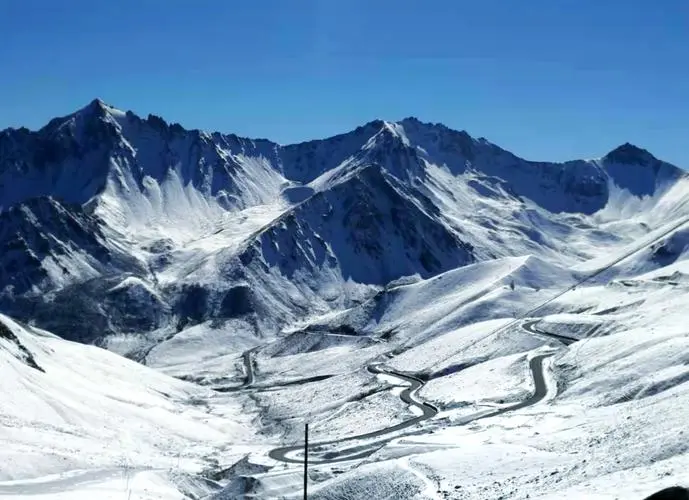
Day 3 — Crossing the Eastern Tianshan to Barkol’s grassland
This is the day the weather changes. You leave the dry basin and climb the Eastern Tianshan; within an hour the air turns cool and the land turns green. Barkol is roughly 150 km north of Hami and the drive takes about two hours over a paved pass that can close in heavy snow between November and March. We crossed in September and met only a handful of cars.
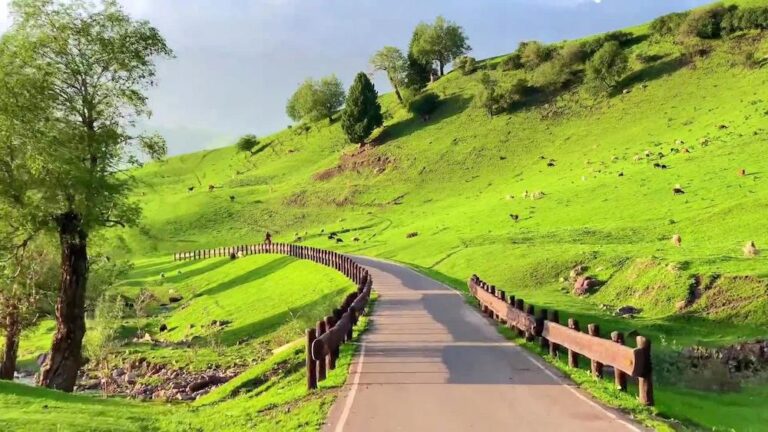
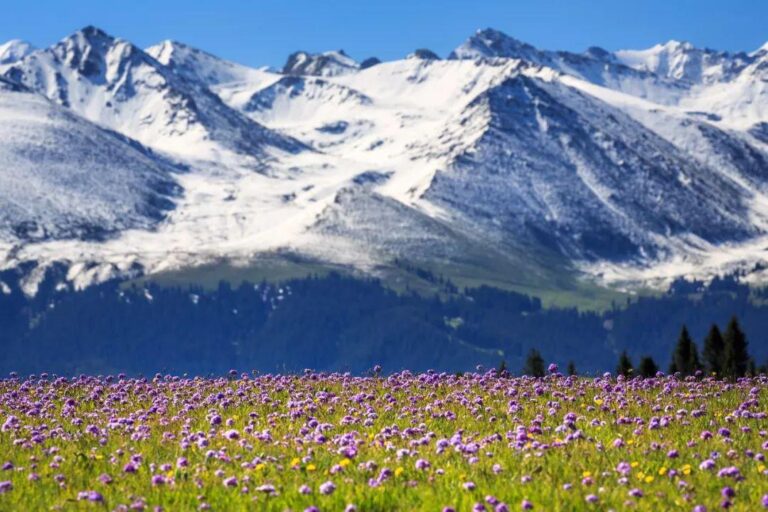
Barkol grassland is one of the better-known pastures in Xinjiang, and it earns it. Wide slopes, herds of sheep, and a horizon closed by snow-streaked peaks. We spent the afternoon simply driving the rim road and stopping whenever a herd moved across the road. If you have read about Barkol grassland elsewhere, the photos are accurate; what they miss is the cold, which surprised us even in early autumn.
Day 4 — Barkol Lake, the garrison town and a night in a yurt
Barkol Lake sits a short drive from the town, a shallow saltwater lake at about 1,650 m. It is not a swimming lake and the shore is muddy, but the reflection of the mountains is the reason people come. We arrived mid-morning and walked the western shore where the wind keeps the water moving.
The town itself has a Qing-dynasty garrison layout, with a restored drum tower and the old prefect’s office that you can walk through in half an hour. We ate mutton menbing (a flatbread stuffed with meat) at a corner shop and ordered the wrong thing the first time, then corrected it. For the night we chose a yurt camp by the lake rather than a hotel. It cost a fraction of a city room, stayed warm once the stove was lit, and let us watch the stars without light pollution. Book ahead in July and August; outside peak season you can usually just turn up.
Day 5 — Yiwu’s green corner and the drive back
Yiwu County lies north-east of Hami and is the greenest stop on the loop, which is why locals call it the region’s green corner. The drive is roughly 170 km and took us about two and a half hours. The headline sight is Huan Cai Lake, a salt lake that shifts colour with the weather and the light, from grey to pink to a deep red. We caught it grey with a line of pink at the far shore, and that was enough.
Yiwu also has singing sand dunes, a glacier-fed river system, and poplar forests at Naomaohu that turn gold in autumn. We did not have time for all of it in one day, so we picked the lake and a short walk among the relic beacon towers that line the old northern Silk Road corridor, then drove back to Hami for the night. If you want more detail on the county itself, Yiwu County covers the individual sights in depth.
What the five days cost, roughly
For two people sharing, our loop ran about 5,000–7,000 yuan all in, or 2,500–3,500 per person, not counting the train or flight to Hami. Breakdown: car hire for three days was the biggest line, around 900–1,200 yuan; hotels in Hami ran 200–400 a night; the Barkol yurt was 150–300; meals were cheap, 30–60 per person; fuel for the ~640 km loop was around 400–500; and park tickets were minor except the devil city at about 45. Melons were effectively free. Prices move, so treat these as a planning range, not a quote.
Driving the loop yourself versus joining a tour
We drove ourselves and would do it again, because the joy of the loop is stopping wherever the light hits. But self-drive means you must fuel up in Hami before each leg: the remote stretches have few stations, and we met one traveller who had to be towed after misjudging the distance to Barkol. If you would rather not drive, Hami-based agencies run the Barkol leg as a day trip, and some combine Barkol and Yiwu over two days. The trade-off is less freedom at the lake and the dunes. Either way, base yourself in Hami and treat Barkol and Yiwu as returns, not a through-route.
The mistakes we made on the Eastern Loop
First, we once tried the Barkol–Yiwu direct mountain road on a map and gave up after 40 km of broken surface; the via-Hami route is longer but reliable. Second, we under-packed for Barkol’s cold and bought a second jacket we did not need to bring. Third, we arrived at the devil city past 17:00 and the light was already going; go in the morning or stay for sunset, but do not arrive at noon when the glare is flat. None of these ruined the trip, but each cost us time.
A note on seasons and road conditions
Late May to early October is the window we would give anyone. The grassland is green, the melon is in season, and the passes are clear. We have also been in late September and found it cold but empty, which we liked. Winter is possible and the lake freezes, but the Eastern Tianshan pass can close after snow, and several guesthouses shut. Check the road status with your hotel before setting out in the off-season; we learned to ask the night before rather than discover a closure at the foot of the pass.
Questions people ask about the Hami–Barkol–Yiwu loop
Is five days enough? Yes for the three bases. You see Hami, Barkol Lake and Yiwu without rushing, though Yiwu’s outer sights (glacier, poplar forest) need a sixth day if you want them all.
Can I do it by public bus? Buses run Hami–Barkol and Hami–Yiwu, but they are slow and leave you stranded at each end. The loop really wants a car.
Do I need a permit? No border permit is needed for Hami, Barkol or Yiwu. They are interior counties, not border zones.
Is the food halal? Almost entirely. The region is Muslim-majority, and even the noodle shops we found were halal. Vegetarians do fine on noodles, flatbreads and melon, with fewer hot-dish options.
Karl Huang is a Xinjiang-based travel writer who has covered the region’s eastern corridors across four personal trips between 2021 and 2025. He prefers slow, self-driven routes and writes from what he actually saw, ate and paid for, not from brochures.