Published: July 23, 2026 | Author: Gulnar Osman, Xinjiang-based food writer
Ask anyone who grew up here what August tastes like and you will get the same answer twice: cold melon eaten off a pocketknife, juice running down to the elbow. The Hami melon in Xinjiang is not a garnish or a health-food afterthought. It is the reward for surviving a 40-degree afternoon, and locals treat it with the seriousness other places reserve for wine. I have spent a decade writing about food across the region, and melon season is the one stretch of the calendar I refuse to travel away from.
This guide covers what the fruit actually tastes like, where and when to find the good stuff, how to pick a ripe one without getting cheated, and how to eat it the way families here do. I have tried to keep the tourist-brochure adjectives out of it and stick to what I have seen in the fields and markets myself.
Quick reference: Hami melon and Xinjiang watermelon at a glance
| Detail | What to know |
|---|---|
| Peak season | Mid-July to early September (earlier in Turpan, later in Altay) |
| Best-known growing areas | Hami, Turpan, Shanshan, Shihezi, Bacheng near Kashgar |
| Price (2024-2026) | Roughly 3-8 RMB per jin (500g) at local markets in season |
| Famous varieties | Golden Queen (Jinhuang hou), Xizhoumi No.25, Emerald (Cuimi) |
| How to carry it home | Whole melons in mesh bags; airlines allow them in checked luggage |
Why the Hami melon in Xinjiang tastes different
The short version is sunlight and dry air. Turpan sits in a basin below sea level and can top 45 degrees in July, while nights cool off fast. That gap between day heat and night chill is what pushes sugar into the flesh instead of letting the plant burn it off. Add irrigation from the old karez underground channels and soil that drains almost too well, and you get fruit that measures far higher on the sugar scale than melons grown in humid coastal provinces.
People outside the region often lump every netted melon together and call it “Hami melon.” Locally the word covers dozens of cultivars, and a farmer in Shanshan will happily spend ten minutes explaining why his Golden Queen beats the neighbor’s. Some are firm and crisp like a pear; others are so soft the spoon barely meets resistance. The watermelon side of the story is quieter but just as good: Xinjiang watermelon tends to be thin-rinded, deep red, and almost aggressively sweet.
When we visited the fields: a Shanshan melon morning
In August 2023 a grower named Abdukerim let me walk his plots outside Shanshan county at six in the morning, before the heat made it unbearable. He was thumping melons with two fingers and rejecting maybe one in five without slowing down. When I asked how he knew, he laughed and cut one open on the spot. The flesh was the color of a sunset and the seeds slid out clean. We ate it standing between the rows, and I understood why he would not sell the culls to me at any price. That single melon reset my idea of what the fruit could be.
Two summers later, in a Turpan courtyard, a host cooled watermelons in a bucket of well water instead of a fridge because, she said, ice makes the flavor go flat. She was right. Chilled but not frozen, the watermelon tasted rounder, less like sugar water and more like fruit.
How to pick a ripe one without getting cheated
Vendors expect you to test the fruit, so do not be shy. For a Hami melon, look for a slightly sunken, well-healed stem end and a faint sweet smell right at that spot. Press gently near the blossom end; a little give means ripe, rock-hard usually means picked too early. The netting should stand out in relief rather than lie flat.
For Xinjiang watermelon, the old thumb-flick test genuinely works here: a deep, hollow drum sound is good, a dull thud is not. Ask the seller to cut a triangular plug so you can see the color before you commit to a whole one; most will do it happily during peak season. If someone refuses even a look, walk to the next stall. There are always more.
Where and when to buy
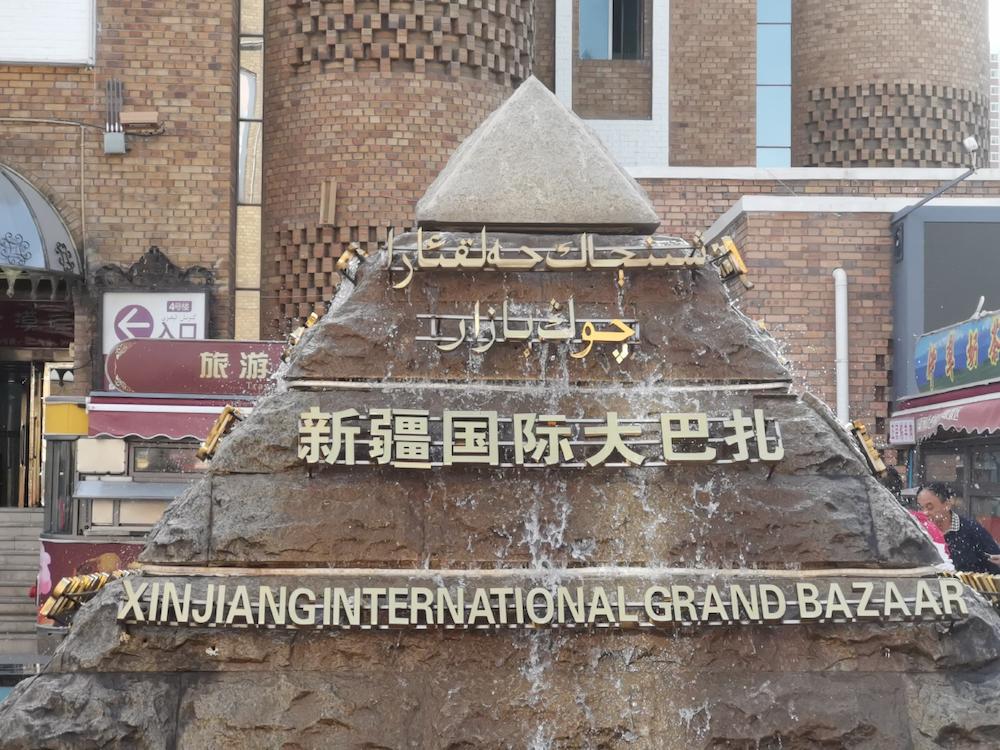
Turpan and Shanshan hit their stride first, usually from mid-July. The high-altitude fields around Altay and the northern belt run later, into September, so if you arrive in early autumn head north rather than assuming you have missed the season entirely. In the cities, the fruit sections of the big bazaars are the easy option, and the Urumqi International Bazaar keeps stalls stacked with melons all summer. For a rawer, cheaper experience, the neighborhood markets where residents actually shop beat the tourist rows every time; I have written more about those in the guide to Xinjiang food markets.
If you want to understand the fruit at its source, the town of Hami, the melon city itself, makes an easy stop on the eastern rail line and leans hard into its namesake.

How locals actually eat it
At home the melon comes out after a heavy meal of polo pilaf or lamb, cut into long crescents and passed around on a shared plate. No forks. You hold the rind and work along the flesh, and the cook keeps the best center wedges for guests. Nobody rushes it. Watermelon gets the same treatment, sometimes with a plate of naan alongside because the bread soaks up the juice.
Beyond the fresh fruit, melon turns up dried into chewy strips sold next to raisins and apricots. If you are stocking up on those, my separate piece on Xinjiang dried fruits and nuts covers what travels well. For the wider table around the melon plate, the Xinjiang food guide fills in the rest.
Practical tips for travelers
- Buy small if you are on the move. A whole melon is heavy and awkward. Many stalls sell pre-cut halves wrapped in film for exactly this reason.
- Bargaining is light in season. Prices are low anyway; rounding down a jiao or two is normal, hard haggling is not.
- Mind your stomach. Very sweet, very cold melon eaten by the kilo can upset a traveler not used to it. Pace yourself the first day.
- Flying home? Whole melons ride fine in checked bags if boxed. Ask the vendor to pack one in a mesh sleeve and a cardboard box; many do this daily for departing customers.
- Watch the weight scam. Confirm the price is per jin, not per melon, and glance at the scale. It is rare but not unheard of near the busiest tourist stalls.
A simple melon-season day
Here is a loose plan I have followed more than once in Turpan during August:
- Early morning: visit a grape or melon field on the edge of town before the heat, ideally with a local contact.
- Midday: retreat indoors for lunch and a slice of chilled melon; the streets empty out for good reason.
- Late afternoon: browse the town bazaar, taste-test a few varieties, and buy your favorite to eat that night.
- Evening: melon and naan on a shaded terrace as it finally cools. That is the whole itinerary, and it is enough.
Frequently asked questions
Is Hami melon the same as cantaloupe? They are cousins. Hami melon is a distinct group of netted muskmelons; some varieties look and taste close to cantaloupe, others are crisper and less musky.
When exactly does melon season peak? Roughly mid-July through early September, starting earlier in low, hot Turpan and Shanshan and finishing later in the cooler north.
Can I bring a melon back on a plane? Yes, in checked luggage, boxed. It is not allowed in the cabin as a loose item, and juice can leak, so pack it properly.
Is the tap water used to cool melon safe? Cooling a whole, unopened melon in well or tap water is fine; just wash the rind before cutting and use clean water for anything you drink.
What is the sweetest variety? Locals argue endlessly, but Golden Queen and Xizhoumi No.25 are the names that come up most often for pure sugar.
Disclaimer
Prices, harvest timing, and variety availability shift year to year with weather; the figures here reflect market conditions I observed between 2019 and 2026 and should be treated as a guide, not a guarantee. Fruit is a natural product and quality varies stall to stall. Always taste before buying a large quantity, and check current airline rules before packing whole melons for a flight.
About the author: Gulnar Osman is a food writer based in Urumqi who has spent more than ten years documenting the markets, orchards, and home kitchens of Xinjiang. She has walked melon fields in Turpan, Shanshan, and Hami and eaten her share of the culls the farmers would not sell. She writes about regional food for travelers who want the real thing rather than the postcard version.