Published: 30 October 2026 | Author: Karl Huang
Most travel calendars list Xinjiang’s festivals as a single row: the big religious holidays. They miss the part that actually shaped our three seasons on the road. The region celebrates its Xinjiang festivals around the land itself — the week the apricot trees turn pink, the fortnight the lavender rows go purple, the few days in late August when Turpan’s vineyards open to strangers. This guide comes from those trips, cross-checked against dates published by county tourism offices and state media (China Daily, Xinhua, Tianshannet). I have kept the practical bits you cannot get from a poster.
| Festival | Where | Typical time | What pulls people in |
|---|---|---|---|
| Toksun Apricot Blossom | Toksun, Turpan Basin | late Mar – early Apr | pink orchards, folk costume shows, sheep races |
| Huocheng Lavender | Huocheng, Ili | mid–late Jun | purple fields, oil festival, heritage market |
| Mountain Flower Festival | Yumin, Kalajun, Jiangbulake | Apr – Jul | wildflower meadows, honey stalls |
| Turpan Grape Festival | Grape Valley, Turpan | mid–late Aug | 550 grape varieties, Muqam concerts |
| Korla Pear Harvest | Korla | Sep | fragrant pear picking, orchard fairs |
| Hami Melon Fair | Hami | summer | melon tastings, night markets |
Why the Fields Set Xinjiang’s Festival Clock
Xinjiang’s growing season is short and fierce. Cold winters give way to a few intense months of bloom and harvest, and the communities that live off the land have turned those moments into public celebrations. The religious calendar matters too — Nowruz on the spring equinox, the Eid holidays later in the year — but if you want to understand how the region actually marks time, follow the fruit. A village that is quiet in May is shoulder-to-shoulder in June when the lavender is cut. We planned two of our three trips around exactly that rhythm, and it changed what we saw.
The Earliest Spring: Apricot Blossoms in the Turpan Basin
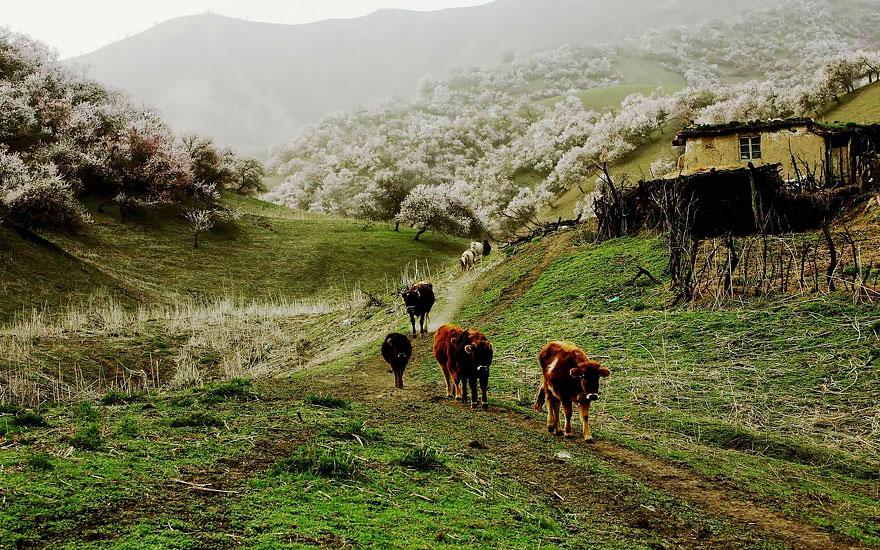
The Turpan depression sits at roughly zero elevation, and a quirk of warm air dropping off the surrounding ranges pushes its spring a full month ahead of the Ili valleys to the north. That is why Toksun County, on the western edge of the basin, calls itself “Xinjiang’s first spring” (新疆第一春). Its apricot blossom season ran from 20 March to 10 April in 2026, with the opening ceremony on 20 March at Nanhu village in Xia Township. Local figures put the orchards at roughly 61,000 mu — about 6.1 million square metres — and peak bloom lands between 20 March and 1 April.
We arrived on a Tuesday, parked at the village edge, and walked into a pink haze before eight in the morning. The organizers have moved the event from “look at flowers” to “play among flowers”: naan baking, pottery throwing, Uyghur embroidery, Etles silk tie-dye, evening iron-flower performances where molten metal is struck into sparks, plus horse racing and folk dances. None of it is staged for one person; it is a county holiday that happens to welcome visitors. Bring a windproof layer. The same wind that carved the nearby stone forest never really stops in March, and the day-to-night temperature swing passes fifteen degrees.
If the blossom timing interests you, our Toksun apricot blossom season guide covers the windy gap and the stone forest nearby.
Lavender in Late June: Huocheng’s Purple Sea
Huocheng County, in the Ili Kazakh Autonomous Prefecture, grows more lavender than anywhere else in China — on the order of 60,000 mu. The plant arrived from France in the 1960s as a cold-hardy trial crop and found a second home at roughly the same latitude as Provence. The bloom comes in two short waves, and the festival is timed to bracket the peak, usually through June. In 2025 Xinhua reported the lavender tourism festival opening on 14 June with cultural performances, sports events and an intangible-heritage market.
We drove the standard loop — Yining, then west to the lavender country, then on to Sayram Lake and the Guozigou Bridge — and the smell hit us a kilometre before the first field. By early July the flowers are cut for oil, so the purple is gone; miss the window and you find stubble. A weekday morning before nine gives you the rows to yourself and the best light. Most of the manor fields are working farms, so park respectfully and do not walk the crop.
When the Mountain Flowers Open: Yumin, Kalajun and Jiangbulake
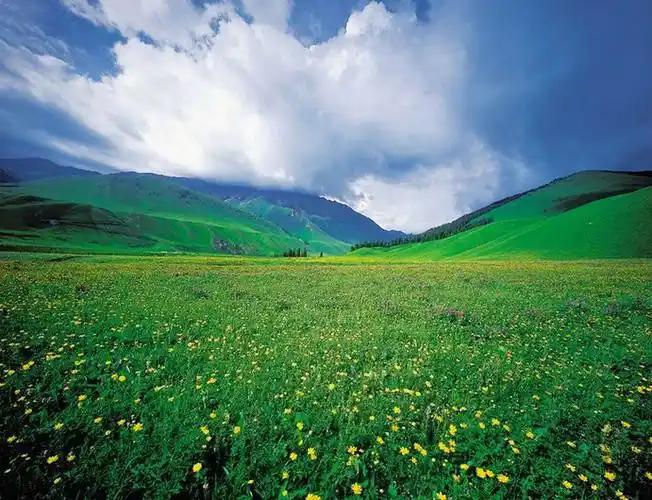
Through late spring and summer the grasslands of northern Xinjiang run their own flower festival, one county after another. Yumin’s Barlik Mountain is known for the longest blooming season; Kalajun and Nalati draw the tour buses; Jiangbulake, over in Qitai, pairs its wildflower meadows with wheat terraces that turn gold in late July. The mountain-flower season rolls almost seamlessly into the wheat harvest, so a single late-summer drive can catch both.
The first time we stood in a Jiangbulake wheat field the wind moved the crop like water. If you want the broader picture, our Jiangbulake wheat grasslands guide explains how the terraces work and when the gold peaks.
The Grape Festival of Turpan: Late August in Grape Valley
The Turpan Grape Festival was launched in 1990 to mark 2,100 years of the Silk Road, and it has run every August since. Recent editions have shifted dates slightly — the 2025 festival opened on 8 August, the 2026 edition is set for 22–24 August — but it always lands in mid to late August and lasts three or four days. Turpan plants around 42,000 hectares of grapes across more than 500 varieties, so the festival is less a single event than a county-wide open house in Grape Valley.
What you actually do there: walk the shaded trellises and taste dozens of varieties for free, watch grape-bunch auctions and eating contests, sit in on open-air concerts of the UNESCO-listed Twelve Muqam, tour the Karez underground irrigation channels, and try the local sand therapy. We joined a sunset picnic under the vines and stayed until the call to the evening prayer faded. It is hot — properly hot — so sun gear is not optional. For the fruit itself, our Turpan grape harvest guide goes deeper on which batches ripen when.
Pears, Melons and the Northern Orchard Fairs
Two northern oasis towns build their celebrations around a single fruit. Korla’s fragrant pear (库山特香梁) is small, juicy and aromatic enough to travel badly but taste extraordinary fresh; the harvest fairs cluster in September when the trees are heavy. Hami, out toward the eastern gate, turns its famous melon into summer tastings and night-market stalls. Neither is a packaged spectacle — they are working orchards that open their gates for a few weeks, and the honest pleasure is standing in line with locals for a slice.
What a Harvest Fair Actually Feels Like to a Visitor
The first thing that surprised us was the noise. A harvest fair is a market first: speakers, children, the sizzle of lamb over coals, someone’s phone playing a louder song than the last. The second surprise was how welcome standing-and-watching felt. Nobody pushed us to buy; a vendor would hand over a wedge of melon, watch us react, and move on. Weekday mornings are calm enough to photograph the stalls. Weekends are a different animal — arrive before ten or accept the crowd. The wild apricot valleys of Gongliu gave us that same rhythm in April, blossoms replacing the fruit.
The Roads That Open the Season
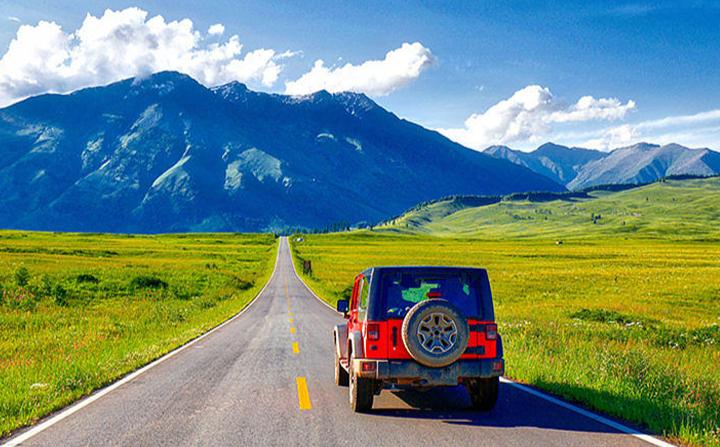
Almost every festival on this list sits in a county town a couple of hours by car from a prefecture hub — Urumqi, Yining, or Turpan. High-speed rail reaches Turpan; everywhere else wants a hired driver or a rental. The trick is not the distance but the window. Bloom and harvest dates are short, so the road that matters is the one you take on the right week. We learned to book the hotel first, then build the rest of the route backward from the festival date.
What You’ll Eat at a Harvest Fair
Food is the point. At a grape festival you eat grapes until they lose meaning, then discover raisins, grape jam and a local wine. Pear and melon fairs are simpler — a slice, a napkin, repeat. The apricot blossom fairs lean savoury: naan pulled from the oven, hand-pulled laghman, polo fragrant with carrot and lamb. If your trip overlaps the spring equinox you may also meet Nowruz stew, a slow porridge of lamb, lentils and more than twenty other ingredients that marks the new year for Uyghur, Kazakh and Tajik communities alike.
A Traveller’s Note on Dates That Wander
Here is the honest part. The lunar-based holidays move by weeks year to year, and even the harvest festivals shift with the weather — a cold May pushes everything back. We confirm every date with the county tourism office or a licensed operator before building a trip, and you should too. The week of the National Day holiday (early October) swells every destination, while most of these festivals sit in the quieter shoulders of the season. Our month-by-month best-time guide lays out the crowding pattern across the year.
A Ten-Day Xinjiang Festivals Route Through the Ripening Year
You cannot catch them all in one visit, and pretending otherwise ruins the trip. Pick a season. A summer loop works like this: three days in Turpan for the grape festival, then a flight or train to Yining and two days around the Huocheng lavender, then two days drifting the Ili grasslands, then north to the Korla pear orchards. A spring loop flips it: Toksun apricot blossoms first, then the mountain-flower meadows, then lavender as June opens. Both are realistic; neither needs a guide company if you can drive or hire one. For the Ili blossom country specifically, our Huocheng lavender fields guide has the timing down to the week.
Questions Travellers Ask About Xinjiang’s Harvest Festivals
Are foreign visitors welcome? Yes. These are public, county-level celebrations. Nobody checks papers at a blossom fair.
Do I need a permit? Not for the oasis and grassland towns in this list. The one exception is Tashkurgan and other border counties, which need a border permit regardless of season.
Which single festival suits a first trip? The Turpan Grape Festival. It is the most accessible, has the most to do, and sits in a town with real infrastructure.
Can I take photos? Generally yes. Ask before a close-up of someone’s face, and skip the shot if a stallholder waves you off.
A Note on Accuracy and Visiting Responsibly
The dates here come from public sources — China Daily’s 2025 roundup of Xinjiang festivals, Xinhua’s coverage of the 2025 Huocheng lavender festival, and Tianshannet’s annual events listing — cross-checked where we could against county announcements. Festivals move. We are not affiliated with any organizer, and we have not been paid to mention a town. Treat this as a planning frame, confirm the current year’s schedule, and travel lightly.
About the Person Who Wrote This Guide
Karl Huang has driven and ridden across Xinjiang across three growing seasons, chasing bloom and harvest from the Turpan basin to the Ili grasslands. This guide combines those first-hand visits with figures verified against official and state-media sources. Corrections and updates are welcome.