Published: August 13, 2026 | Author: Karl Huang
Why you can trust this Toksun Xinjiang guide
Most travel pages about Toksun Xinjiang repeat the same two facts: apricots and wind. We spent three days there in early April, driving in from Turpan and sleeping in the county town, and what we learned on the ground turned out to be more useful than any brochure. This article draws on that trip plus conversations with a local orchard family and the staff at the county tourism desk. When we give you a number, it came from a sign, a ticket office, or a person we spoke with. Where we are unsure, we say so.
Toksun at a glance
| Detail | What to expect |
|---|---|
| Where it is | Toksun County, Turpan Prefecture, about 50 km west of Turpan city and 250 km southeast of Urumqi |
| Best reason to come | Apricot blossom season (late March to mid-April) and the open, wind-swept plains |
| Best time to visit | Early April for blossoms; September to October for harvest and cooler weather |
| How to arrive | Car or bus from Turpan (about 1 hour); train to Toksun station; highway G30 runs straight through |
| Summer heat | Often above 38°C from June to August, close to the Turpan basin record |
| Typical stay | Half a day to one night if basing in Turpan; two nights if you want the slow version |
What it actually felt like on the ground
We reached Toksun around 4 p.m. after a morning in Turpan. The first thing that hits you is not a sight but a force: the wind. Locals call the stretch west of the county the wind corridor, and the plains are lined with hundreds of white turbines that turn even on calm-looking days. Our driver, who grew up in the area, said spring gusts can shut the highway. He was not exaggerating — we watched a roadside sign bend almost horizontal.
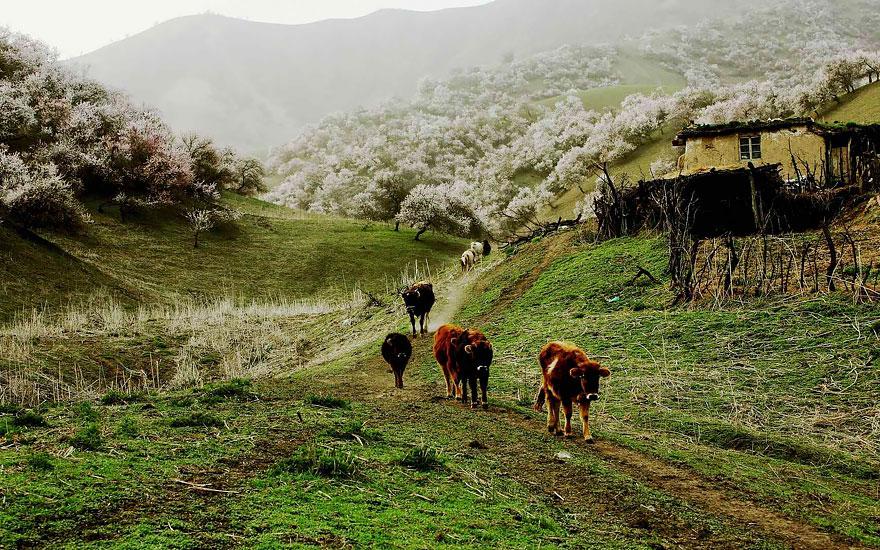
The reason people make the trip, though, is the apricot trees. In early April the orchard rows on the lower slopes shift from bare grey to pale pink within roughly ten days, and the county puts on a blossom festival. We joined a family from Urumqi at an orchard outside town. The owner, a woman in her sixties, poured weak sweet tea and handed each of us a small dried apricot from last year’s crop. “The fresh ones are two weeks away,” she said. “But the trees right now are the show.” She was right.
We drove out to the wind-farm viewing stretch on the second afternoon. You cannot climb the turbines, but pulling over and standing among them is worth ten minutes: the low rhythmic whoosh is constant, and the blades throw moving shadows across the gravel. Our driver mentioned that on the windiest days the power company slows the rotors to protect them, which is the only time the plain goes quiet. It is a strange, industrial kind of beautiful that you do not get at the postcard lakes up north.
Back in the county town that evening, the blossom festival had set up a small night market. Stalls sold grilled corn, apricot juice, and the same noodles we had at lunch. It was local and unpolished, the kind of scene the big guidebooks skip, and it is the part of Toksun we remember best.
Getting to Toksun
Toksun sits on the Lianyungang–Khorgos corridor (G30), so self-driving is the easiest option. From Turpan city it is a straight 50 km, about an hour on a good day and longer when wind throws dust across the road. Buses leave Turpan bus station through the day; we paid under 20 yuan for the ride. There is also a railway stop, Toksun station, on the line between Turpan and Korla, though service is limited and you should check the current schedule before planning around it.
If you are starting from Urumqi, budget about three hours each way by car (roughly 250 km on the G30), which makes Toksun a long day trip rather than a natural overnight from the north. Renting a car with a driver is common and removes the worry about fuel and the occasional closure; we paid around 600 yuan for a Turpan-based driver for the day, which included waiting time at the orchard and the wind plain.
If you are building a Turpan loop, pair this with the older sites nearby. Our Turpan City Guide covers where to sleep and eat in the prefecture capital, and the Tuyoq Valley, a short drive south, is the single best half-day trip from either town.
Best time to go
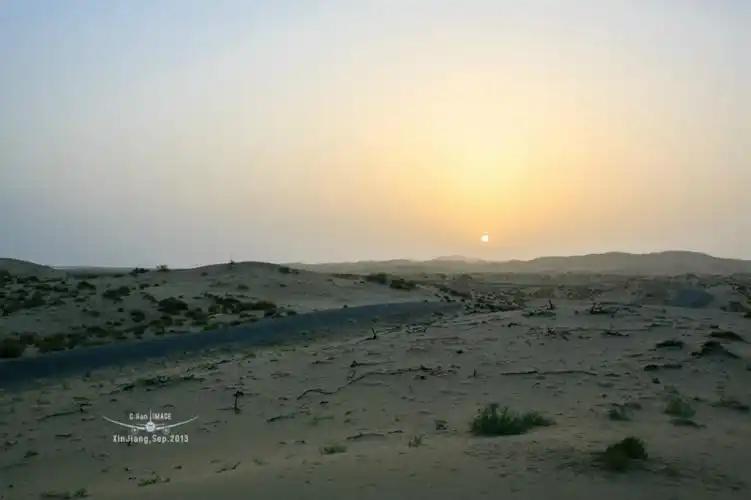
The blossom window is short and weather-dependent. In 2024 the trees peaked around April 5; in a warm year it can be late March. If apricots are your goal, watch local news or the county tourism account in mid-March and book loose. For everything else, September and October are kinder — the heat drops, the grapes and melons come in, and the wind eases a little. Our longer best time to visit Xinjiang breakdown explains how the seasons shift across the region.
To be concrete: March is still winter-cold and brown; the first blossoms usually open in the last week of March; early April is peak pink; mid-April the petals drop and green fruit sets in; May through August is hot and flat; September and October bring the harvest and the most comfortable walking weather; November to February is cold and very quiet. If your only goal is the blossom, target the final week of March through the first week of April and keep plans flexible.
Where to stay
The county town has a handful of mid-range hotels and a few guesthouses; none are luxury, but they are clean and cheap, usually 150–250 yuan a night. We stayed one night and slept fine. Most foreign visitors base in Turpan and day-trip, which is sensible because Turpan has better restaurants and more reliable hot water. If you want the blossom at first light without a 5 a.m. drive, though, sleeping in Toksun is worth it.
During the festival weekend rooms in the county town fill up, so book ahead if you are coming then. Do not expect elevators or English signage; do expect a thermos of hot water in the room and a squat or sit toilet depending on the building. We found the front-desk staff helpful even with no shared language, using a phone translation app for the basics.
What to eat
Toksun has a quiet claim to fame among Xinjiang drivers: the Toksun banmian (我克迅挂面), a plate of hand-pulled noodles with stir-fried vegetables and meat that road stops here have perfected. We ate one at a highway spot for 18 yuan and it was the best version of the dish on the whole trip. Beyond that, expect lamb skewers, samsa (烶包子), plov (抓饭), and of course fresh and dried apricots in season. The dried ones travel well and make a good souvenir.
Apricots show up in more forms than you expect: dried, as a jam, pressed into a sour juice, and folded into naan. Try the white apricot (白杰) if you see it — smaller and sweeter than the orange kind. Melons from the Turpan basin are in season from July, and if you like heat, ask for the chili oil on the noodles; we did, and regretted it slightly, which is its own kind of memory. Vegetarians do fine here too, since the plain banmian without meat is on every menu.
Practical tips before you go
- Wind is the real hazard, not safety. Bring a jacket even in April; a 30 km/h gust feels cold against 20°C sun.
- Carry cash. Small orchards and roadside noodle stops often have no card machine or a QR code that rejects foreign cards.
- Fill fuel before leaving Turpan. Stations are sparse and the wind corridor is not where you want to run low.
- Blossom dates move. Do not book non-refundable rooms months out expecting pink trees on a fixed day.
- Sun protection is non-negotiable. The basin reflects light off bare earth; we burned in one afternoon.
A simple one-day plan
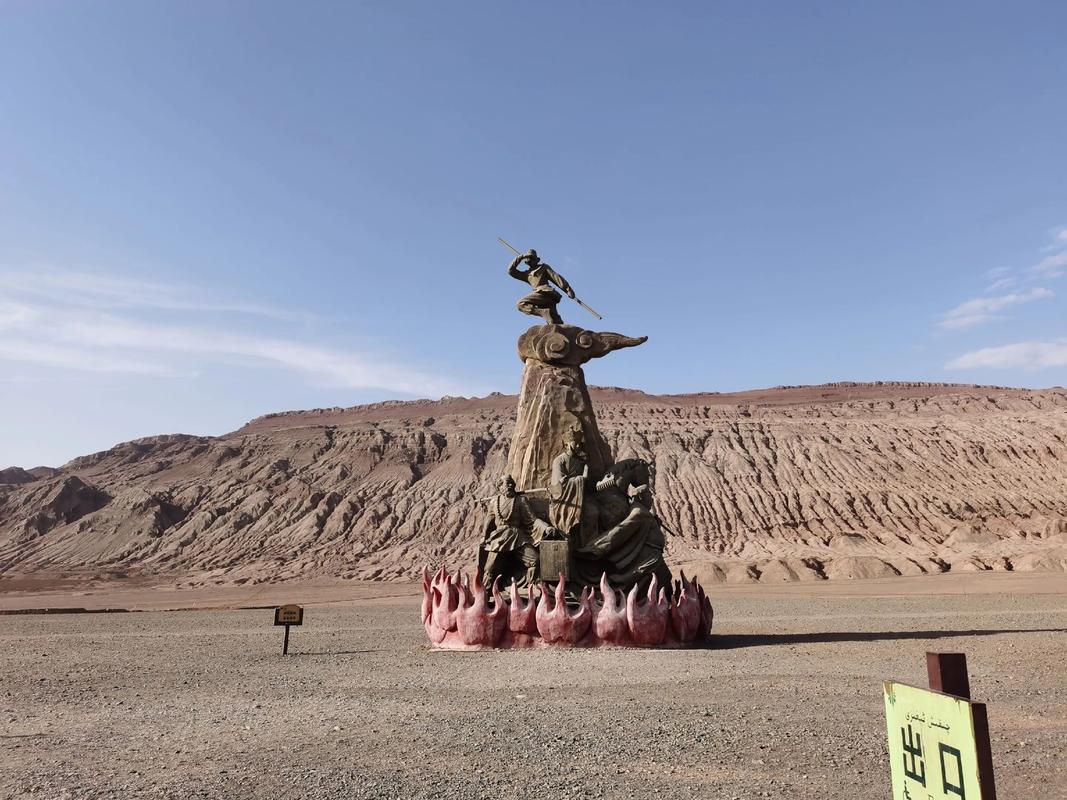
If you are coming from Turpan: leave after breakfast, reach Toksun by late morning, walk an orchard row and drink tea with a family, eat banmian for lunch, then drive the wind-farm plain and catch the Flaming Mountains light on the way back. If you have a second day, add Tuyoq Valley and the Karez irrigation villages. The Dabancheng wind farms south of Urumqi show the same turbine country from the northern side if your route runs that way.
For a relaxed two-day version: Day 1 covers the orchard, the night market, and a sunset on the plain; Day 2 starts with the Flaming Mountains from the Toksun side, loops through Tuyoq Valley for lunch, and returns to Turpan in the late afternoon. This pace let us actually talk to people instead of ticking boxes, which is the point of a small county like this.
Frequently asked questions
Is Toksun worth visiting on its own?
For most travelers, no — it fits as a half-day stop on a Turpan loop. The apricot blossom festival is the one time it justifies a night.
Can I see apricot blossoms without a car?
Yes, buses run from Turpan, but the orchards sit a few km from the town center, so you will want a local taxi or a joined tour for the last stretch.
How windy is it really?
Windy enough that highway closures happen in spring. The turbines are not decorative; this is one of China’s main wind-power zones.
How many days do I need?
One full day from Turpan covers the orchard, the noodles, and the wind plain. Add a second for Tuyoq and the Karez villages without rushing.
Is English spoken?
Rarely outside Turpan city. A translation app and a screenshot of your destination in Chinese cover most situations.
Is it safe?
Yes. The challenge is weather and distance, not personal security. Standard Xinjiang summer heat advice applies if you come in July or August.
A note on accuracy
This guide reflects a single spring visit and publicly available information at the time of writing. Prices, bus times, and blossom dates change year to year. Confirm key details with the county tourism office or your hotel before you travel, and treat any figure here as a planning estimate rather than a guarantee.
About the author
Karl Huang is a travel writer focused on northwest China. He has driven more than 8,000 km across Xinjiang, from the Ili valleys to the Turpan basin, and writes from first-hand trips rather than second-hand summaries. He can be reached through the Xinjiang Attractions editorial desk.