Published: July 26, 2026 | Author: Marcus Reid, overland travel writer (three trips through the Tian Shan grasslands since 2017)
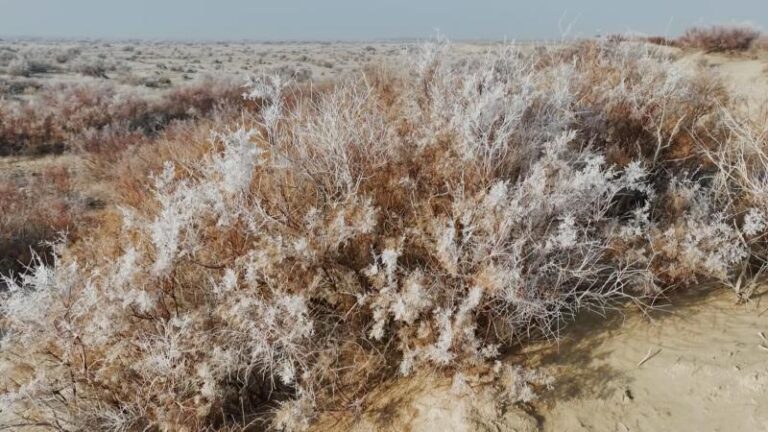
Most travellers who end up in Bayanbulak have no idea they passed through Hejing to get there. That is a shame, because this quiet county town is more than a fuel stop on the way to the grassland. This Hejing travel guide is built from my own drives across the Kaidu valley, and it covers what the county actually offers, how to reach the famous Swan Lake beyond it, and the small logistical details that trip up first-timers. Hejing (和静) sits in the Bayingolin Mongol Autonomous Prefecture in southern Xinjiang, and it is the administrative and physical doorway to one of the largest alpine grasslands in the country.
Why Hejing is worth more than a drive-through
Hejing is the largest county in Xinjiang by land area, stretching from the low Korla plains up into the folds of the Tian Shan. Its population is a mix of Uyghur, Han, and — unusually for this part of the region — a large community of Torghut Mongols. The Torghuts are the descendants of the group that made the epic 1771 return march from the Volga steppe back to Qing China, a journey remembered locally as the Eastern Return. When I first visited in 2017 I expected a generic county seat; instead I found a small museum, a memorial to that migration, and shopfronts where you can still hear Mongolian spoken alongside Uyghur and Mandarin.
The town itself is compact and workable in an afternoon. What makes Hejing matter to travellers is geography: it controls the road up the Kaidu River into Bayanbulak, so almost everyone heading to the grassland from the Korla side comes through here.
Quick reference
| Detail | Information |
|---|---|
| Location | Bayingolin Mongol Autonomous Prefecture, southern Xinjiang |
| County town elevation | ~1,200 m (Bayanbulak grassland ~2,500 m) |
| Nearest hub | Korla (about 2.5–3 hours by road) |
| Main draw | Gateway to Bayanbulak Grassland & Swan Lake reserve |
| Best months | June to early September |
| Local communities | Uyghur, Torghut Mongol, Han |
| Rail | Hejing station on the Southern Xinjiang line |
What I actually did on the ground
On my most recent trip, in the summer of 2024, I based myself in Hejing for a night before pushing up to the grassland. I ate hand-pulled laghman at a family-run place near the bus station, wandered over to the Torghut memorial, and spent an hour at the small county museum where the migration story is laid out with maps and old photographs. It is not a polished big-city attraction, but it gave real context to why there are Mongol yurts on the pastures a few hours uphill.
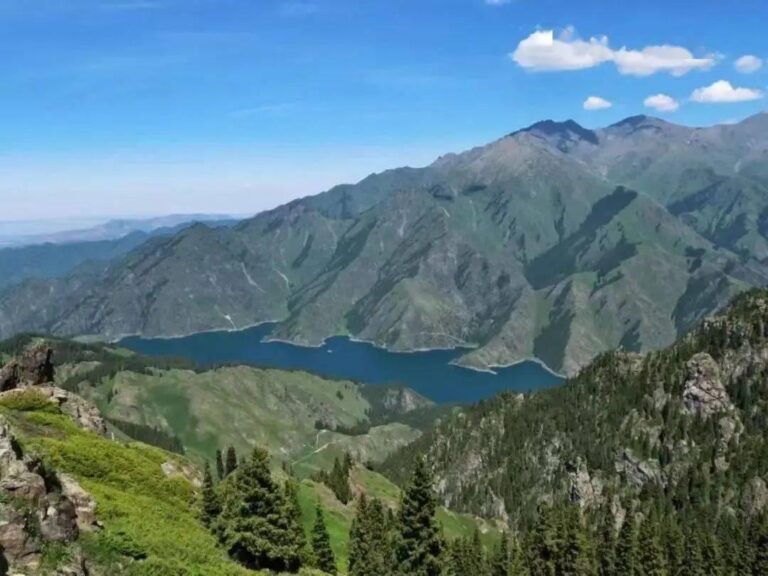
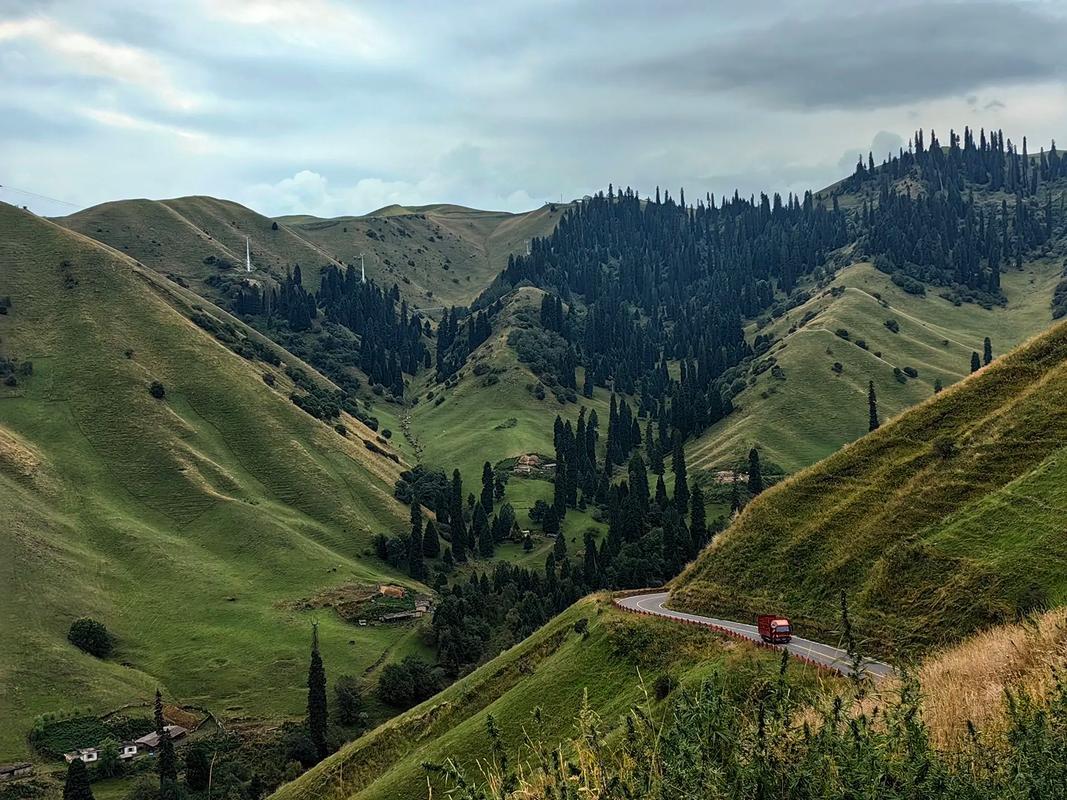
The drive out of town is where things get memorable. The road climbs steadily along the Kaidu River, the same river that folklore ties to the Journey to the West legend. As you gain altitude the farmland gives way to spruce forest, then to open pasture dotted with horses. By the time you reach the Bayanbulak plateau the air is thin and noticeably colder, even in July.
Bayanbulak: the reason most people come
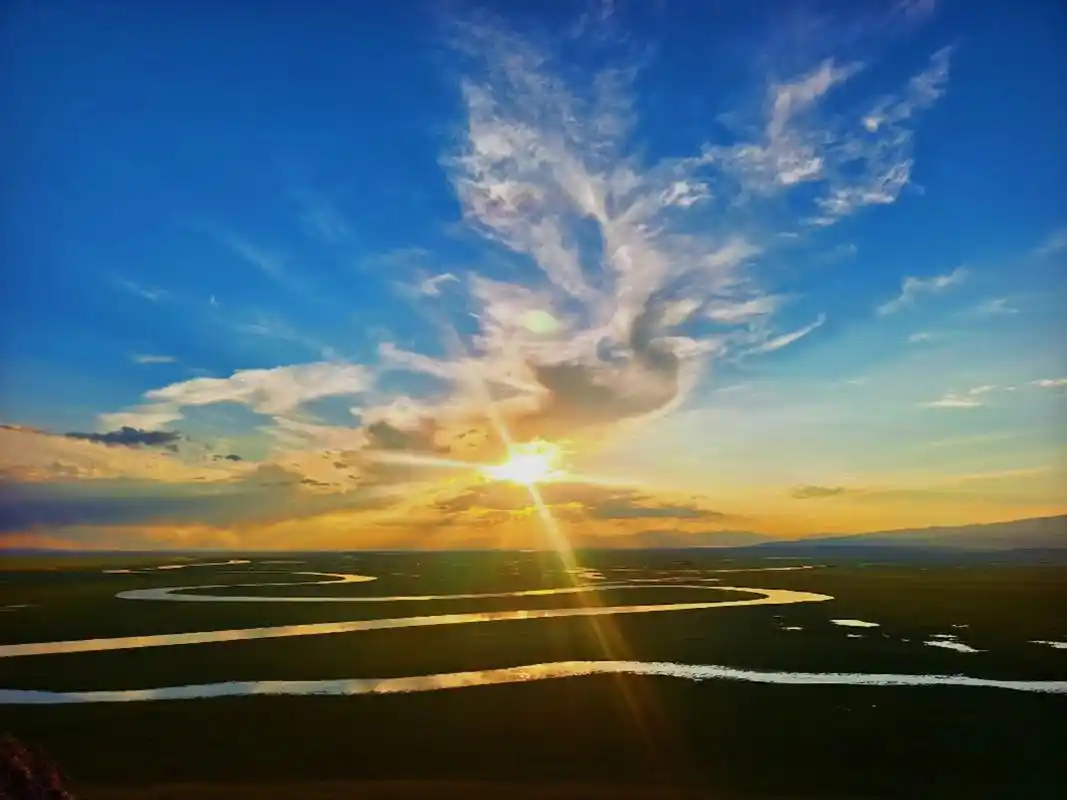
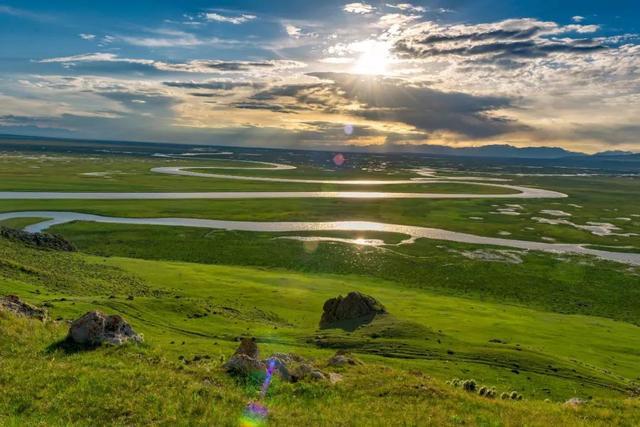
Bayanbulak Grassland spreads across a high basin ringed by mountains. Two sights anchor a visit. The first is the Swan Lake reserve, a protected wetland where whooper swans breed in summer — bring binoculars, because the birds keep their distance and the boardwalks hold you back from the marsh. The second, and the one that stuck with me, is the Nine Bends of the Kaidu River. At sunset the river meanders so tightly across the flat grassland that you can see the sun reflected in several bends at once. I got there about forty minutes before sundown, which was just enough time to climb the viewing platform and settle in before the light turned.
Practical note: inside the scenic area you move around on official shuttle buses, not your own car, and the distances between stops are large. Budget most of a day if you want to see both the Swan Lake area and the river bends without rushing.
Getting there
Most travellers approach from Korla, the capital of southern Xinjiang, which has the nearest airport and good rail links. From Korla it is a scenic road trip of roughly two and a half to three hours up to Hejing, then another two to three hours climbing to the Bayanbulak plateau. If you are coming from the north, there is a spectacular alternative: the mountain road down from Nalati in the Ili valley crosses a high pass into the grassland, linking two of the region’s great pastures in a single day of driving. Hejing also sits on the Southern Xinjiang rail line, so you can arrive by train and pick up a car or join a tour locally.
Best time to visit
The window is short. June to early September is when the grassland is green, the swans are present, and the passes are reliably open. July brings the Bayanbulak Nadam fair, with horse racing and wrestling, though it also brings the biggest crowds and the highest room prices. I prefer late August: the wildflowers are past their peak but the light is softer and the tour buses thin out. Outside summer the high country is bitterly cold and largely shut down, so this is not a shoulder-season destination.
Where to stay
You have two honest options. Hejing county town has ordinary but clean business hotels, useful if you want a proper shower and a warm room before an early start. Up on the grassland, accommodation is basic — guesthouses in Bayanbulak town and yurt-style stays run by herding families. The yurts are the experience, but manage your expectations: shared facilities, thin walls, and cold nights. I have done both and would say sleep in Hejing if comfort matters to you, and spend one night in a yurt only if you genuinely want the atmosphere.
Food worth trying
Hejing’s food leans Uyghur and Mongol. Look for laghman (hand-pulled noodles), lamb dumplings, and freshly baked nang bread in the county town. On the grassland the Mongol influence shows: milk tea, dried curd, and mutton cooked simply. If you are offered fresh yoghurt at a herder’s yurt, take it — it is tart, thick, and nothing like the supermarket version.
Practical tips
- Carry cash. Mobile payment works in town but can be patchy on the grassland.
- Pack a warm layer even in midsummer; nights on the plateau drop close to freezing.
- Fill your fuel tank in Hejing before heading up — stations are sparse beyond.
- The plateau sits around 2,500 m. If you feel the altitude, slow down and hydrate. See my notes on travelling across Xinjiang’s regions for pacing ideas.
- Book grassland accommodation ahead in July; rooms genuinely sell out around the Nadam fair.
A sample two-day plan
Day 1: Drive from Korla to Hejing in the morning. Visit the Torghut memorial and county museum, eat lunch in town, then continue up the Kaidu valley to Bayanbulak, arriving in time to catch the Nine Bends at sunset. Overnight in Bayanbulak town or a yurt.
Day 2: Early start at the Swan Lake reserve for birdwatching, a slow morning on the grassland, then either return to Korla or take the mountain road over to the Ili valley grasslands if you are continuing north.
Frequently asked questions
Is Hejing worth stopping in, or should I go straight to Bayanbulak?
Stop for at least a few hours. The Torghut history and county museum add real depth to the grassland trip, and it is the last good place to refuel and stock up.
Can I drive my own car into Bayanbulak?
You reach the scenic area by car, but inside you switch to official shuttle buses to move between the Swan Lake and river-bend viewpoints.
How high is the grassland?
Around 2,500 metres. Most people feel only mild effects, but nights are cold and the sun is strong.
What is the single best sight?
For me, the Nine Bends of the Kaidu River at sunset. Arrive early and stay past the moment the sun drops.
Disclaimer
Details such as road conditions, shuttle arrangements, opening seasons, and prices change from year to year. This guide reflects my own visits and research and is intended for general planning. Please confirm current conditions with local operators or the scenic area before you travel.
About the author
Marcus Reid is an overland travel writer focused on Central Asia and western China. He has driven the Tian Shan grassland routes on three separate trips since 2017, including two crossings between the Ili valley and Bayanbulak. He writes from first-hand experience rather than press trips.