Published: August 13, 2026 | Author: Karl Huang
If you have ever searched for the Xinjiang time zone, you have probably found two answers that seem to contradict each other. One says the region is two hours behind Beijing. The other says it isn’t, because all of China keeps a single national clock. Both are, in their own way, true. This is the guide we wish someone had handed us before our first trip, written after three visits and a few avoidable mistakes involving locked bank doors and a nearly-missed train.
Why the Xinjiang time zone feels two hours off
The fact to hold onto: the entire country, Xinjiang included, officially uses Beijing Time (UTC+8). There is no separate legal time zone on any map or timetable. What actually differs is how daily life is lived inside that single clock. Xinjiang sits far to the west, around the longitude of UTC+6 by the sun. So while the numbers on every phone and ticket say Beijing Time, the rhythm of the streets runs roughly two hours later. Once that clicks, the rest is just learning where the gap shows up.
The reason goes back to geography. China is wide — stretching across roughly five solar time zones from east to west — but since the mid-20th century the country has kept one standard time centered on Beijing. Xinjiang’s western edge sits about 30 degrees of longitude from the capital, which works out to roughly two hours of solar difference. So when the official clock reads noon in Urumqi, the sun is where it would be around 10 a.m. in Beijing. Locals simply built their day around the sun rather than the number, and the habit stuck.
Quick reference: Beijing Time vs local rhythm
| What | On the schedule | What it feels like locally |
|---|---|---|
| Trains, flights, long-distance buses | Beijing Time (UTC+8) | Use exactly as printed |
| Government offices, banks, many schools | Open about 2 hours later (often 10:00–19:00) | Aligned with the sun, not the capital |
| Summer sunrise / sunset in Urumqi | ~06:30 / ~21:45 | Feels like 04:30 / 19:45 by the sun |
| Restaurant dinner service | Peaks around 20:30–21:30 | Locals sit down while it is still light |
| Your phone and laptop | Auto-set to Beijing Time | Do not change it — everyone reads the same number |
What it felt like on the ground
We landed at Urumqi Diwopu International Airport on a June evening. The crew announced arrival at 22:10 Beijing Time. Stepping outside, the sky was still a deep, clear blue — not the navy you would expect close to ten at night. Our taxi driver, hearing we wanted dinner, said simply: “Good, everything is just opening.” He was right. The ride-hailing apps worked exactly like they do at home, but the city’s pulse was shifted. We ate at 23:00 and the plaza was busy.
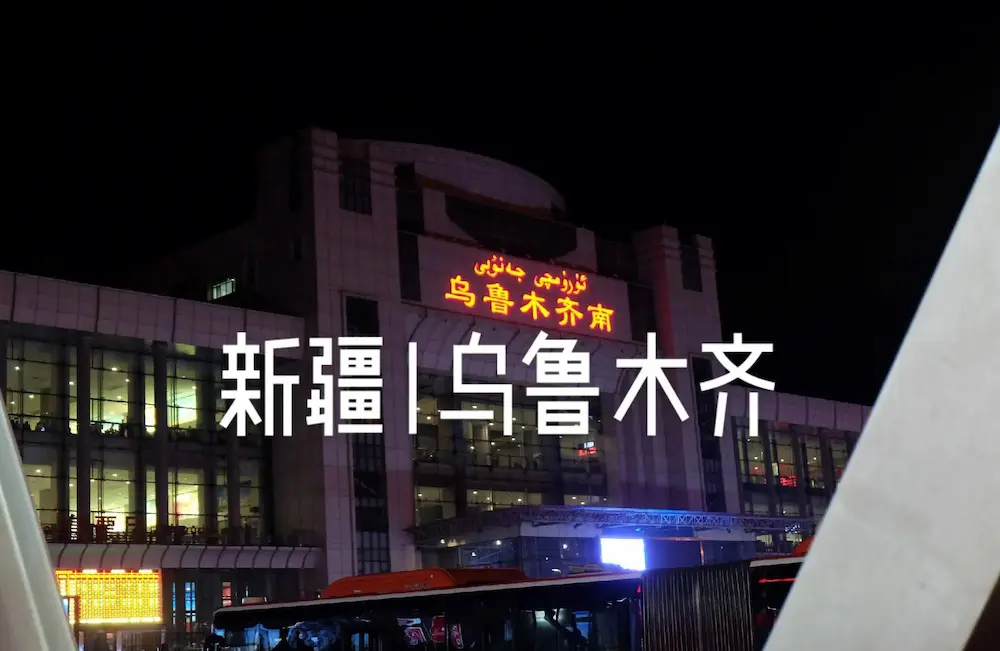
The gap is easiest to feel at a train station. When your ticket says departure 08:00, it means 08:00 Beijing Time, full stop. Live on “Xinjiang time” and you will watch your train leave without you. We kept one phone showing both clocks and checked every departure against the printed slip.
Our first real mistake came on day two. A bank we needed was, according to a map app, open “09:00–17:00.” We arrived at 09:20 to a shuttered door and a security guard who smiled and held up two fingers — meaning, we slowly understood, not 2 p.m., but “come back two hours later.” By the third city we had stopped fighting it. We treated every printed business hour as a soft suggestion and every transport hour as absolute law.
How the time gap affects transportation
All public transport here runs on Beijing Time. That is non-negotiable, and honestly useful once you accept it: a train from Urumqi to Kashgar, a flight to Yining, a long-distance bus — every printed time is UTC+8. The same rule holds in Kashgar, Yining, and the far south: every city keeps Beijing Time on paper and shifts its habits by about two hours. Don’t assume the south runs differently; it doesn’t. The only confusion appears in the soft parts of the day. When a tour says “we leave at 9,” confirm whether that is the operator’s Beijing-Time habit or their own local 9. When in doubt, ask and write it down.
Golden hour comes late — plan your camera time
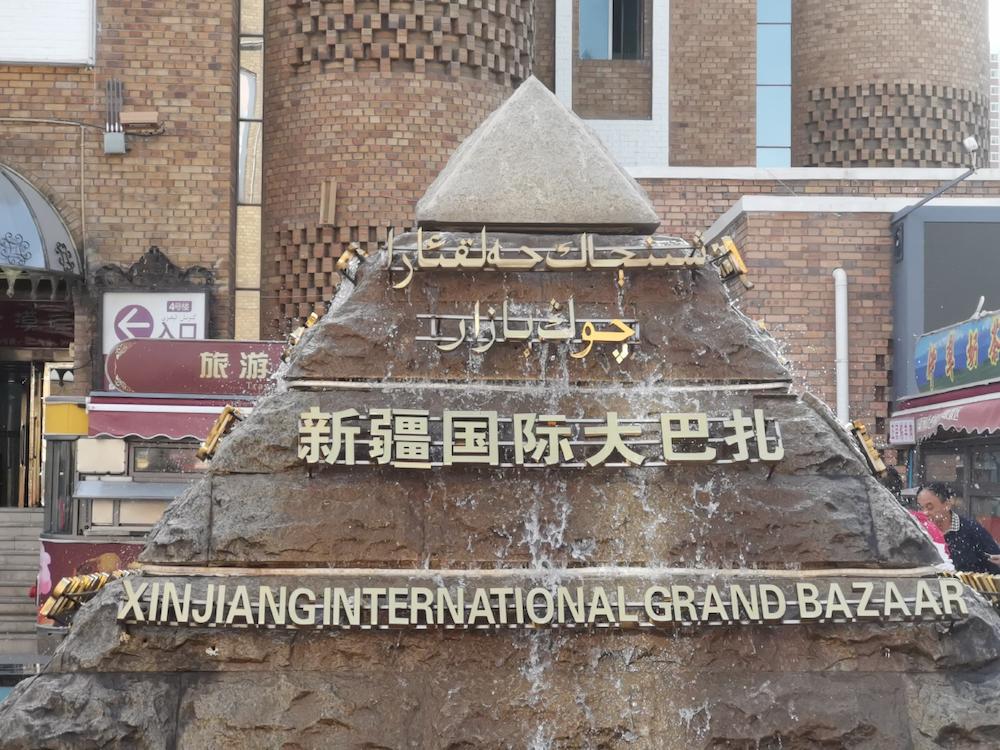
For photographers the shift is a quiet bonus. Because the sun sets near 22:00 in summer, golden hour across the north arrives around 20:00 to 21:00 Beijing Time. On our last trip we photographed the bazaar’s tilework in warm light at 21:15 and still had a usable hour of dusk afterward. If you plan a day out to Changji or the open steppe, build that late light into the schedule instead of racing the clock — the best frames often happen after most tour buses have gone.
Best time of day (and year) to be out
Because Xinjiang lies so far west, summer daylight runs long. In Urumqi and the north, the sun can still be up at 22:00 Beijing Time. That is a real gift for travelers: finish a late lunch and you still have four hours of light for a slow walk through the older blocks or a drive to the outskirts. The trade-off is the early morning — do not expect shops to stir before 10:00. Spring and autumn are the most comfortable seasons overall, and the long evenings make them feel even longer. Winter is the opposite: short days, an early sunset, and a schedule that compresses into fewer daylight hours.
Accommodation: check-in runs on the printed time
Hotels follow Beijing Time for check-in and check-out, usually 14:00 in and 12:00 out. What shifts is the breakfast window. Many buffets open around 07:30 to 10:00 Beijing Time, but in smaller towns the kitchen may not be fully moving until closer to 09:00. If you have an early flight, tell the front desk the night before. We once assumed a 06:30 breakfast and found only coffee and hard-boiled eggs until 07:00, then learned the cook arrived at 07:30 on local habit.
Food: dinner is a late, social affair
This is where the two-hour shift is most pleasant. Restaurants in Urumqi, Kashgar, and Yining hit their stride after 20:30. A family planning around public holidays should note that holiday evenings get especially busy, and dinner tables turn over late. We came to like the pace: a long, unhurried meal that starts only once the light is finally low, often stretching past 22:00 without anyone hurrying.
Practical tips to avoid confusion
- Keep your phone on Beijing Time. Everyone reads the same numbers; the gap is in behavior, not the clock.
- For anything official — trains, flights, appointments — trust the printed time exactly.
- For casual plans, like “let’s meet at 8” with a local, clarify, then add two hours in your head.
- Carry a paper or screenshot of departure times; do not trust memory to hold the shift.
- In summer, plan sightseeing for the long evening light; in winter the sun sets early and the late schedule compresses.
A sample day in Urumqi (written in Beijing Time)
Here is how a relaxed day actually looked for us, in Beijing Time so it matches your ticket and hotel:
- 09:30 — Wake; skies already bright. Most shops still warming up.
- 11:00 — Walk the International Bazaar area as it comes alive.
- 13:30 — Late lunch (this is local “lunchtime”).
- 16:00 — Airport or train transfer if leaving; otherwise a drive to the outskirts.
- 20:30 — Dinner; the city is at its most energetic.
- 22:30 — Still light in June; an evening stroll before bed.
Frequently asked questions
Is Xinjiang on a different time zone from Beijing?
No. Officially the whole country uses Beijing Time (UTC+8). Xinjiang’s “local time” is an informal two-hour shift in daily habits, not a legal time zone.
Will my phone show the right time?
Yes. Phones auto-sync to Beijing Time across China. Keep it that way so your schedule matches transport and hotels.
Do trains really leave on Beijing Time?
They do. Every printed departure is UTC+8. The two-hour gap only matters in casual, local arrangements.
How should I set my watch?
Leave it on Beijing Time. If you want a local reference, note the two-hour offset on paper rather than changing the device — changing it just creates a second number to confuse yourself with.
Does “Xinjiang Time” still appear anywhere?
You may hear older residents mention it, and some local habit runs on the shifted clock, but all official schedules, broadcasts, and transport use Beijing Time. Trust the printed number.
Is it true the sun sets at 10 p.m.?
In summer, yes — around 21:45 to 22:00 Beijing Time in the north. It is one of the most surprising parts of a first visit, and the reason we now plan evening shoots.
Disclaimer
This article reflects our travel observations and is meant as practical guidance, not official legal or scheduling advice. Timekeeping practices, business hours, and transport schedules can change, and individual establishments set their own hours. Always confirm departure times and opening hours directly with the provider before you travel. We are not responsible for missed connections arising from a misread schedule.
About the author
Karl Huang is a travel writer who has spent multiple seasons exploring Xinjiang by train, bus, and rental car. He focuses on the small, practical details — clocks, queues, meal times — that make a first trip run smoothly. His writing on Xinjiang has appeared across several travel guides and websites.