Published: August 22, 2026 | Author: Xinjiang Attractions Editorial Team
Why you can trust this guide
EV charging in Xinjiang is not the gamble it was three years ago, but it still rewards people who plan. We are a small travel team that has driven the region in both gasoline rentals and a borrowed electric car, and this piece pulls together what actually happened on those trips rather than what a brochure claims. Where we state a figure, it comes from State Grid Xinjiang, the operators TELD and Star Charge, or our own dashcam logs. Where we are unsure, we say so plainly.
If you are mapping out a self-drive Xinjiang guide, the charging question usually arrives second, right after “how far can I get.” Here is the straight answer, based on real road time and a couple of mistakes we would rather you avoid.
| Item | What to expect |
|---|---|
| Network coverage | All prefecture cities plus most county towns; fast chargers on the G30 and G7 expressways |
| Typical gap | 150 to 250 km on expressways, about 120 km once you leave them |
| Best season | June to September, when the Duku Highway is open and batteries perform better |
| Connectors | GB/T standard; dual GB/T piles are now common |
| Useful apps | State Grid (网上国网), TELD, Star Charge, Amap, Baidu Maps |
| Cost | Roughly 0.8 to 1.4 yuan per kWh at public stations |
EV charging in Xinjiang: what the network looks like
The region covers about 1.66 million square kilometers, roughly a sixth of China’s landmass, so the network is built around the two things that matter most to a driver: the highways and the county seats. State Grid Xinjiang has put charging piles in every prefecture-level city and the large majority of county towns. Along the G30 Lianhuo Expressway, which runs east-west through Turpan, Urumqi and Shihezi, the major service areas now carry fast chargers. The G7 Beijing-Xinjiang expressway in the north is similarly covered, and the newer piles are dual-standard GB/T so they fit almost any China-market EV.
The catch is spacing. Between two towns you may see 150 to 250 kilometers of open road with no charger, and that gap widens once you leave the main expressways for a scenic detour. TELD and Star Charge fill in the cities, and their apps, plus Amap and Baidu Maps, will show live availability. We learned to screenshot the next three charging points before losing signal in the mountains, because the map that looked complete in the city was suddenly blank at 3,000 meters.
What it is actually like: our Duku Highway run
Last July we took a rented electric sedan with a 60 kWh battery from Urumqi south toward the Duku Highway. The night before, we spent an hour failing to register the State Grid app because the verification text never arrived on a foreign SIM, and only sorted it the next morning at the rental desk with a local number. That small delay is the kind of thing that ruins a tight schedule, so do the app setup on renting a car in Xinjiang day, not when you are already behind the wheel.
We charged to 100% at a shopping-mall pile in Urumqi, left with about 410 kilometers of displayed range, and drove to Dushanzi. The first surprise was how ordinary it felt: the charger at the Dushanzi service area worked on the first tap of the app, and we walked to a noodle shop while it climbed from 22% to 80% in just under an hour.

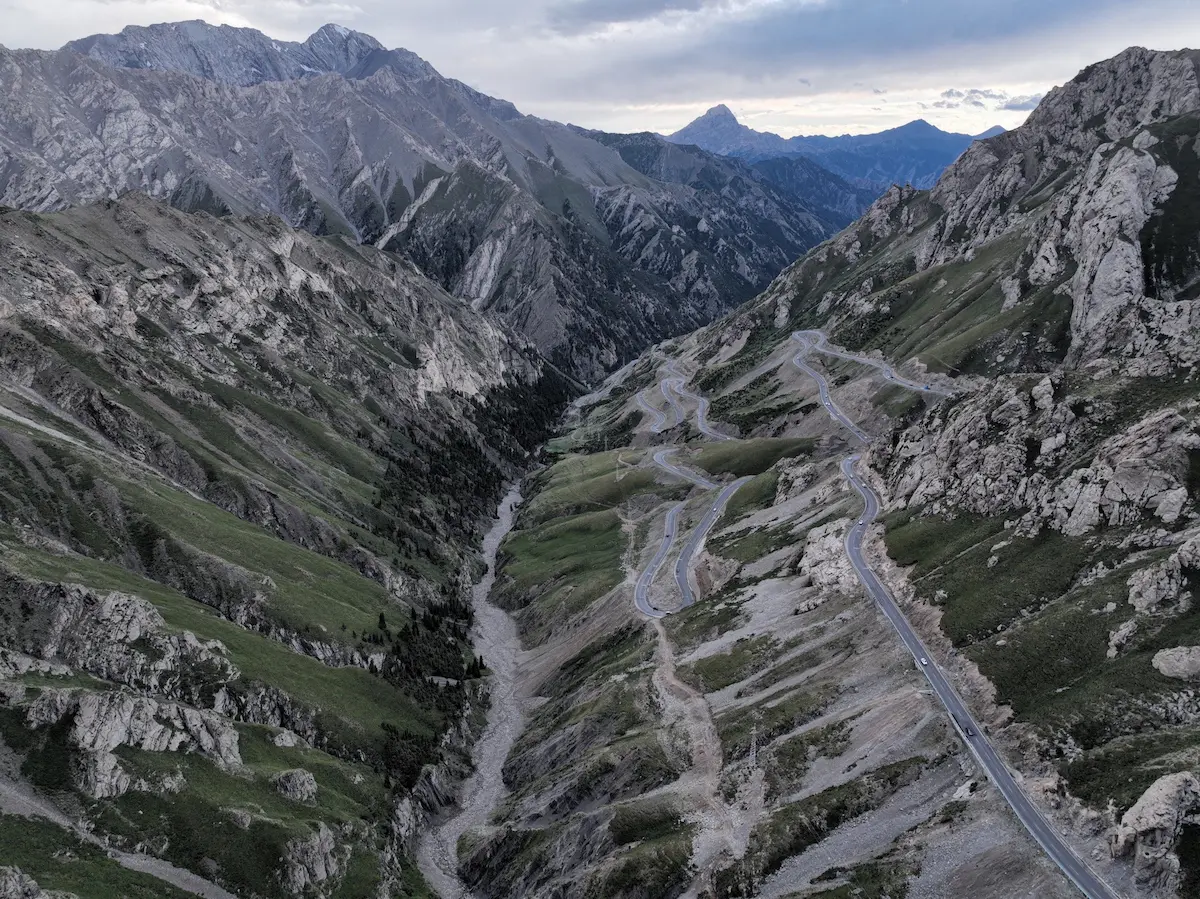
The hard part came at the Hashiligen Pass, around 3,400 meters. The displayed range dropped faster than the odometer because of the climb and a cold morning, and we reached the northern trailhead with 19% left. A gasoline car would not have noticed. We are not claiming it was dangerous, only that the margin was thinner than the map suggested. We charged again in a county town that evening, slowly, on a pile behind the guesthouse, and the descent the next day actually recovered some range through regen braking, which felt like a small refund on a worried evening.
Charging speed: why 80 percent is the real ceiling
On paper a 60 kWh pack sounds like it should fill in forty minutes, and the first eighty percent does come quickly on a good fast charger, often in under an hour. The last twenty percent is the expensive part: the charger deliberately slows to protect the battery, so going from 80% to 100% can take as long as the first eighty. We stopped aiming for full. Rolling in at 20%, charging to 80%, and leaving saved us roughly half an hour each stop, and on a multi-day loop those hours add up. Plan your day around reaching the next town at 15 to 25% rather than crawling the last stretch at 5%, and your trip will feel calmer.
Best time to drive an EV here
Summer, from June through September, is the safe window. Roads like the Duku Highway open only when the snow clears, usually in early June, and close again by late September or early October. Battery performance is also better in warmth; a cold January morning in the north can cut your real range by about a third, and the cabin heater draws from the same pack that moves the car. If you come in winter, plan chargers every 120 kilometers and keep the heat modest, or you will be the person charging twice a day while everyone else is out walking.
For driving distances and road conditions, summer also means fewer closed passes and more service areas running at full staffing, which matters more for an EV than a gasoline car because your backup options are thinner out on the plateau.
Where to charge overnight
Most mid-size hotels in prefecture capitals now have at least one wallbox, but do not assume the guesthouse in a small county will. We started calling ahead after one night when the only pile in town was reserved for a local delivery fleet, and we ended up slow-charging at a roadside station for two hours instead of sleeping. When you book, ask specifically for a charging spot and confirm the connector type. In a place like Korla or Yining you will have choices; in a smaller county along the southern loop, the one pile may be the only game in town, so timing it around your arrival is worth a phone call before you set off.
The southern route toward Kashgar
If your loop bends south toward Kashgar and the Pamir, the picture changes. The G3012 connects the southern cities, and the main towns have chargers, but the final stretch onto the Pamir Plateau is long and high, with fewer options. We have not taken an EV all the way to Tashkurgan, and we would not pretend otherwise; for that leg a gasoline car or a tour vehicle is still the easier call. Treat the EV as brilliant for the northern and central loop, and switch modes for the remote borderland where the next plug might be a long way off.
Food stops that double as charging breaks
The pleasant discovery was that chargers and good meals overlap. A fast charge takes 30 to 50 minutes, exactly the time for a plate of laghman and a cup of milk tea. In Dushanzi, Korla and Yining we found chargers next to night markets, so the car topped up while we ate. Build your meal breaks around the charging plan and the day moves smoothly, instead of treating charging as a separate chore that eats into your sightseeing time.
Practical tips we wish we had known
Carry the State Grid app and at least one operator app before you leave the city; registration needs a Chinese phone number. Keep a physical cable even if the car usually charges with its own, because a slow pile behind a hotel may expect you to bring one. Download offline maps, because signal dies on the passes. Tell the rental company you intend to charge, since some contracts limit battery state or add a fee for fast charging, and read that clause before you sign rather than discovering it at the return desk.
One honest caveat for overseas visitors: China uses the GB/T standard, and the easiest way to drive here is still a locally rented EV with a Chinese driving permit. If you are arriving from abroad, the practical route is often to fly or take the Xinjiang high-speed rail within the region and rent an EV for a loop, rather than bringing your own car across the border.
A sample 4-day EV loop
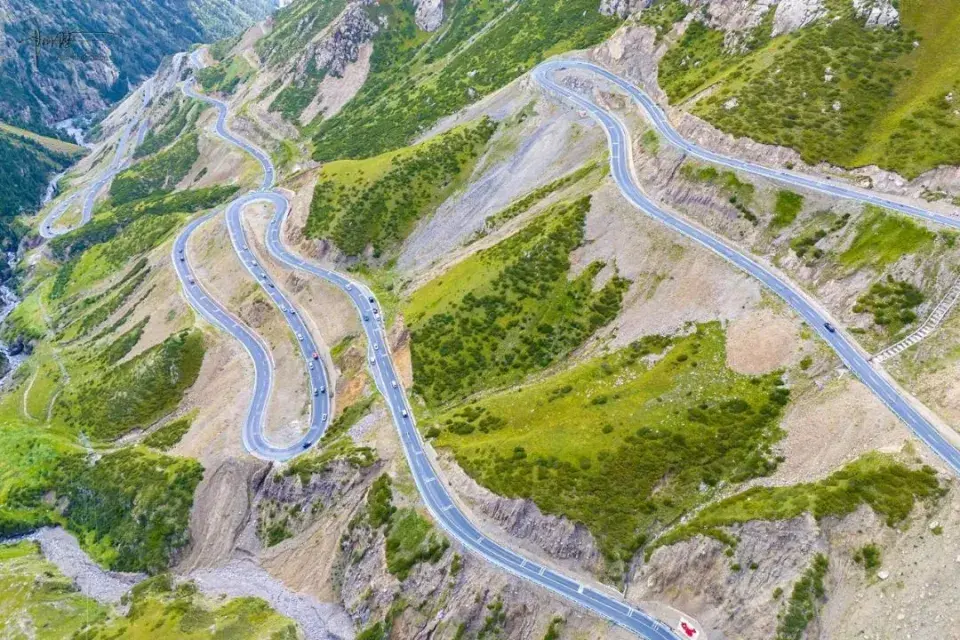
Day 1: Urumqi to Dushanzi, charge at the city mall and the service area, about 250 kilometers. Day 2: drive the northern Duku section to Nalati, charging in the evening at a county town, roughly 230 kilometers of climbing road. Day 3: loop back via the G30, charging at Shihezi, a relaxed 300 kilometers. Day 4: return to Urumqi with a final top-up, around 140 kilometers. Total distance near 900 kilometers, with four planned charging stops and one spare. We kept the spare because weather closed a pass on a friend’s trip a week later, and the spare turned out to be the only thing that saved their day.
For the bigger picture of arriving in the region, see how to get to Xinjiang, which covers flights, trains and the roads that meet these chargers.
Frequently asked questions
Can a foreign tourist charge an EV in Xinjiang?
Technically yes, if you are driving a China-market EV with a Chinese driving permit and a local SIM for the apps. In practice most overseas visitors rent an EV after arriving, rather than importing their own car, because of the GB/T standard and the permit rules.
How many kilometers can I trust between chargers?
On the main expressways, plan for a charger every 150 to 250 kilometers. Off the expressways, treat 120 kilometers as a safer ceiling, and less in winter when the battery is working harder.
Do I need my own cable?
Most public fast chargers have a tethered cable, but a backup Type-2-to-GB/T cable saved us once at a slow pile behind a hotel. Carry one if your rental does not supply it, because you will not find a shop open at ten at night in a county town.
Is charging expensive?
Public rates run roughly 0.8 to 1.4 yuan per kWh depending on the operator and time of day, noticeably cheaper than gasoline for the same distance. The saving is real on a long loop, even after you pay the rental premium for an EV.
Can I charge at the scenic spots themselves?
Usually not. The big attractions rarely have public chargers, so treat the nearby county town as your charging base and make the scenic drive a there-and-back on a full battery. Plan the loop so the sightseeing sits between two towns you already intended to charge in.
Disclaimer
This guide reflects our own trips and publicly reported infrastructure up to 2026. Charging locations, app requirements and road openings change, especially with weather and seasonal closures. Always verify the current status of any charger and pass before you travel, and follow local signs and official advice. We are not responsible for changes in availability or for any travel disruption. Driving in Xinjiang involves long distances and remote conditions; plan conservatively and keep a gasoline backup plan in mind for the far south.
About the author
The Xinjiang Attractions Editorial Team is a group of writers and drivers who have covered the region’s roads, passes and towns across multiple seasons. We combine on-the-ground travel with data from State Grid Xinjiang and the major charging operators to give visitors practical, honest guidance. Questions or corrections are welcome through our contact page.