Published: August 27, 2026 | Author: Karl Huang
Most visitors arrive in Xinjiang for the snow peaks and the deserts, but the Xinjiang sunflower fields caught us off guard on a northbound drive in early August. For roughly three weeks each summer the flat plains around Tacheng turn into a single sheet of gold that runs straight to the horizon. This page is built from our own repeat trips through the region, cross-checked against local agricultural and tourism information, so you can work out exactly where to point the car and which dates actually matter before you book anything.
Why you can trust this guide
We first drove the Tacheng Plain in 2019, the same year the Kuitun–Tacheng railway opened and made the area far easier to reach. Since then we have timed three separate August trips around the bloom, spoken with two Bingtuan (Production and Construction Corps) farm managers about sowing schedules, and photographed the fields in every kind of light. The timing advice below comes from those conversations and from the regional weather records, not from a brochure. Where we are not certain — for example the exact day a specific village plants — we say so, because guessing wrong means you miss the gold entirely.
Quick reference
| Item | Detail |
|---|---|
| Best bloom window | Late July to late August; peak roughly August 5–20 |
| Core region | Tacheng Prefecture (Emin, Yumin, Tacheng city) on the northern Junggar edge |
| Nearest airport | Tacheng Airport (TCG), with flights from Urumqi |
| Train | Kuitun–Tacheng line; Urumqi to Tacheng in about 9–10 hours |
| Drive time from Urumqi | Approx. 8–9 hours (roughly 550 km via the G3015) |
| Entry cost | Free to view from roads and verges; fields are private farmland |
| Photo permit | Not required from public roads; ask before stepping onto a planted field |
Our first morning among the blooms
We rolled out of Tacheng city a little before 6 a.m. on a Tuesday, chasing the soft light. The road north toward Emin is dead straight and the land is so flat you see the sunrise long before you feel it. At first the fields were green — wheat, corn, the usual — and then, without any warning, the green simply ended and the gold began. Row after row of sunflower heads, all of them turned the same direction, facing the rising sun. My travel companion, who grew up in a city, just said “oh” and stopped the car. We stood there for twenty minutes and watched the light move across the petals. That is the version of Xinjiang almost no tourist poster shows you.
Where the Xinjiang sunflower fields actually are
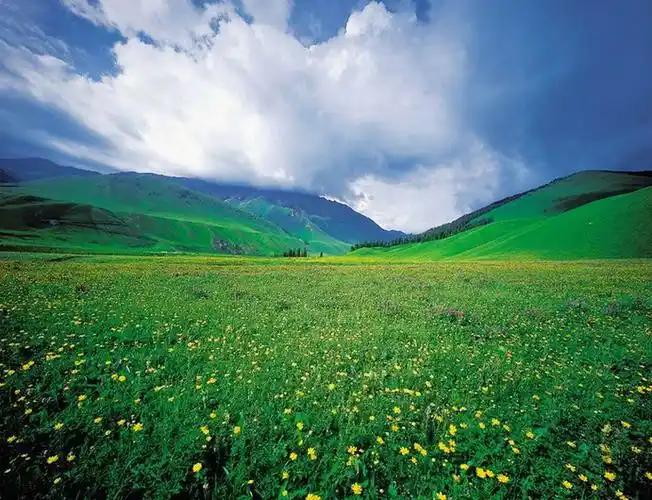
The heart of it is the Tacheng Plain, a broad, fertile sweep shared by Emin County (Dorbiljin), Yumin County, and Tacheng city itself. This corner of Xinjiang sits on the northwestern edge of the Junggar Basin, with enough rainfall and good soil that large-scale oilseed sunflower has been grown here for decades. You do not need a specific “scenic area” ticket. The fields are the crop, and they line the highways.
Beyond Tacheng, sunflowers show up in two other places worth knowing. The Bingtuan reclamation farms around Shihezi and Wujiaqu (north of Urumqi, in Changji Prefecture) plant enormous oilseed blocks — less pretty for tourists because they are fenced and remote, but genuinely vast. And the wider Ili Valley carries scattered fields too, often mixed with corn and the famous lavender near Huocheng. If your route already covers Ili, you will spot sunflowers without detouring.
Getting to the fields
Flying is the easy option: Tacheng Airport has daily services from Urumqi, and from the terminal you are thirty minutes from the first roadside gold. The train is slower but scenic — the Kuitun–Tacheng railway threads north past reclamation farms and small Kazakh settlements, and a soft sleeper gets you there overnight.
We prefer to drive. From Urumqi you take the G3015 (the Kuytun–Tacheng expressway) almost the whole way; it is a long, dull haul of eight or nine hours, so we normally break it at Tacheng town itself or in Karamay. Once you are north of Toli County the fields start appearing, and from there every junction is a coin toss between two good views.
When they bloom (the window that matters)
This is the one detail that decides the whole trip, so read it twice. Sunflowers in this region are planted in waves from April through June, which spreads the bloom across late July, August, and into early September. The reliable peak — when the largest area is flowering at once — lands in the first three weeks of August. We have hit perfect gold on August 8 and again on August 17 in different years.
Two cautions. First, a hot spell pushes the bloom earlier and a cool, wet spring delays it; the difference can be a week either way. Second, oilseed varieties are cut for harvest the moment the backs of the heads turn brown, so a field that was perfect on Monday can be stubble by Friday. If you are serious about photography, call your guesthouse a day or two ahead and ask what the fields look like. The regional best-time guide for Xinjiang covers the weather side in more depth.
Where to stay
Tacheng city is the logical base: a quiet, leafy town with a surprising Russian and Kazakh street food scene, plus a handful of clean business hotels in the 200–400 yuan range. Emin County works if you want to be deeper in the plain and closer to the widest fields at dawn, though the hotel pickings are thinner. We have slept in both and would choose Tacheng for the food and Emin for the sunrise. Either way, book ahead in early August — the bloom weeks are when the region’s own travelers show up, and rooms tighten.
What to eat nearby
You are in luck, because the plain that grows sunflowers also grows good eating. Sunflower seeds themselves are the obvious local snack: buy them roasted and still warm from a roadside stand, and plan to crack them with your teeth the way everyone here does. Around Tacheng the Russian and Kazakh influence is real — fried pastries, tangy dairy, and hearty meat soups sit alongside the usual Xinjiang staples of dapanji (big-plate chicken) and polo (pilaf). We ate a memorable lamb stew in a cinder-block cafe in Yumin that had no sign and no menu, just a point at the pot.
Photography: how to shoot a field without ruining it
The light is the whole game. Sunflowers track the sun, so at dawn the faces point east and catch warm, low rake; by midday they are flat and washed out; at dusk they turn west into another soft glow. We shoot almost exclusively in the first hour after sunrise and the last hour before sunset. A polarizing filter kills the haze and deepens the sky, and a wide lens on the ground (not from standing height) makes the rows rush toward you.
The single most important rule is boring but true: do not walk into a planted field. These are someone’s harvest and a single trampled row is real money to a farmer. Shoot from the verge, the access track, or a raised road shoulder. Our longer Xinjiang photography guide goes into the ethics and the gear if you want the full version.
Practical tips before you go
- Fuel up north of Toli. Once you are on the plain, petrol stations thin out and some only take cash or a Chinese card.
- Bring repellent. August is mosquito prime time in the low, damp fields, and they are not shy.
- Sun protection is non-negotiable. There is no shade on a sunflower plain and UV at this latitude is harsh by 11 a.m.
- Ask before you step in. A wave and a smile at the farmer usually gets a nod; ignoring the crop gets you chased off.
- Carry water and snacks. The prettiest stretches are far from the nearest shop.
A three-day Tacheng sunflower loop
Day 1 – Arrive and scout. Fly or train to Tacheng, pick up a car, and drive the ring road north of the city at dusk just to see which fields are flowering. Eat in town.
Day 2 – The full plain. Leave before 6 a.m. for Emin, shoot the dawn bloom, then work south through Yumin. Stop wherever the gold looks best. Sleep in Emin if you want a second sunrise, or drive back to Tacheng for dinner.
Day 3 – Lavender and a slow return. Swing past Huocheng’s purple rows on the way south (see below), then either fly out from Tacheng or start the long drive back toward Urumqi. We normally add a night in Yining to break the return and sample the Ili Valley properly.
Other summer blooms worth the detour
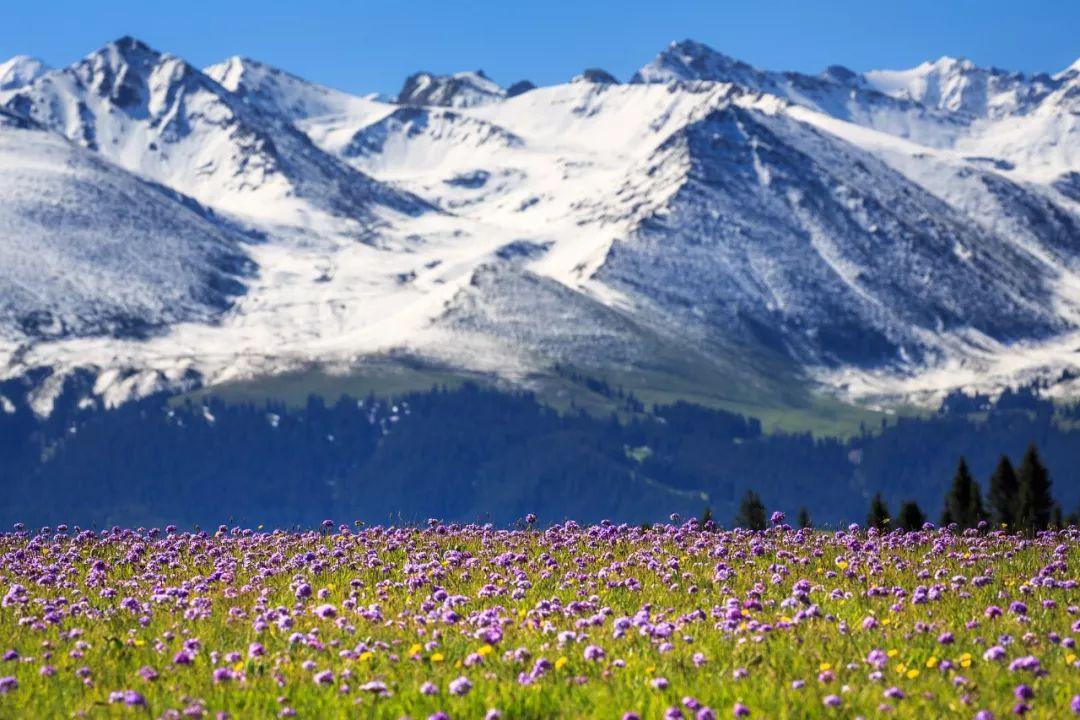
If you are already up north in August, two other flower fields sit within a half-day of the sunflowers and are worth a look — though neither is a sunflower, so don’t confuse the photos later. The Huocheng lavender fields spread a solid purple sea in late June and July and sit on the southern Ili Valley, an easy add-on if your loop bends toward Yining. And Zhaosu, farther south, lays down yellow rapeseed (canola) acres in July — a different plant, but the same kind of horizon-filling gold if your dates miss the sunflower peak.
Frequently asked questions
Are the sunflower fields an official attraction? No. They are working farmland. You view them from roads and verges for free; there is no gate, no ticket, and no tour bus.
Can I visit outside August? The gold is an August thing. In July the plants are chest-high and green; by September most oilseed blocks are already cut. If you want flowers in another month, look at the lavender (June–July) or the Ili apricot and tulip blossoms in spring.
Is it worth flying all the way to Tacheng just for this? Only if you already love road trips and rural China. Pair it with Yining, the Ili Valley, or the Karamay–Tacheng route and it becomes a brilliant northern loop. As a standalone, it is a long way to come for a field.
Will my phone get signal? Tacheng city and the main highways are fine. Deep in the plain, between villages, expect patches of nothing — download your maps offline before you leave the city.
Disclaimer
Bloom dates shift with the weather and with each farm’s planting plan, so treat the August window as a strong likelihood rather than a guarantee. We are not affiliated with any farm, hotel, or transport operator mentioned here, and we paid our own way on every trip. Road and rail schedules change; confirm times with the operator before you travel. Photography on private land is at the owner’s discretion — when in doubt, stay on the verge.
About the author
Karl Huang is a travel writer who has spent the last several summers driving northern Xinjiang, from the Ili Valley to the Tacheng Plain. He focuses on practical, first-hand guidance for independent travelers and has contributed field reports on the region’s lesser-known seasons and routes. When he is not on the road, he maintains detailed timing notes so readers do not waste a 550 km drive on the wrong week.