Published: August 27, 2026 | Author: Karl Huang We had spent the previous week in the Ili Valley and wanted somewhere the tour buses had not reached; Yumin was exactly that, and the fuel was the only price of admission.
Why a Quiet Border County Earned a Spot on Our Map
When we started documenting Xinjiang’s less-visited corners, Yumin County kept showing up as a single thin line on the map- a sliver of land pressed against the Kazakhstan frontier in Tacheng Prefecture. No airport of its own, no bullet-train stop, no postcard lake. We drove the 65 kilometers up from Tacheng one May morning mostly out of curiosity, and left convinced it was one of the most honest spring trips in the north.
This is not a place you come to for luxury or landmarks. It is a place you come to stand on a hillside while thousands of small wild tulips open toward a cold wind, listen to Kazakh herders call their sheep, and visit a border post made famous by a single poplar tree. If you want a real, unstaged slice of northern Xinjiang, Yumin delivers it.
Yumin County at a Glance
| Item | Detail |
|---|---|
| Location | Tacheng Prefecture, northern Xinjiang, bordering Kazakhstan |
| County seat | Yumin Town |
| Famous for | Wild tulips (Tulipa yuminensis), wild almond forests, the Little White Poplar sentry post |
| Best season | Late April to mid-May (flower bloom); June-August for green pastures |
| Nearest airport | Tacheng Airport (TPE), about 70 km |
| Typical visit | 1-2 days as a side trip from Tacheng |
| Foreign traveler note | Border-area permit rules apply; verify before you go |
Our Morning on the Tulip Slope
We reached the lower slopes of the Bolor Mountains about an hour before noon. The tulips were not the tall Dutch kind you picture from a garden centre. They were short, maybe ten centimetres high, with pointed red-and-yellow petals, growing in loose clumps across the dry hillside among last year’s grass. Our driver, who grew up in the next village, called them “Yumin tulips” and said the whole hill goes red for about two weeks if the spring is warm.
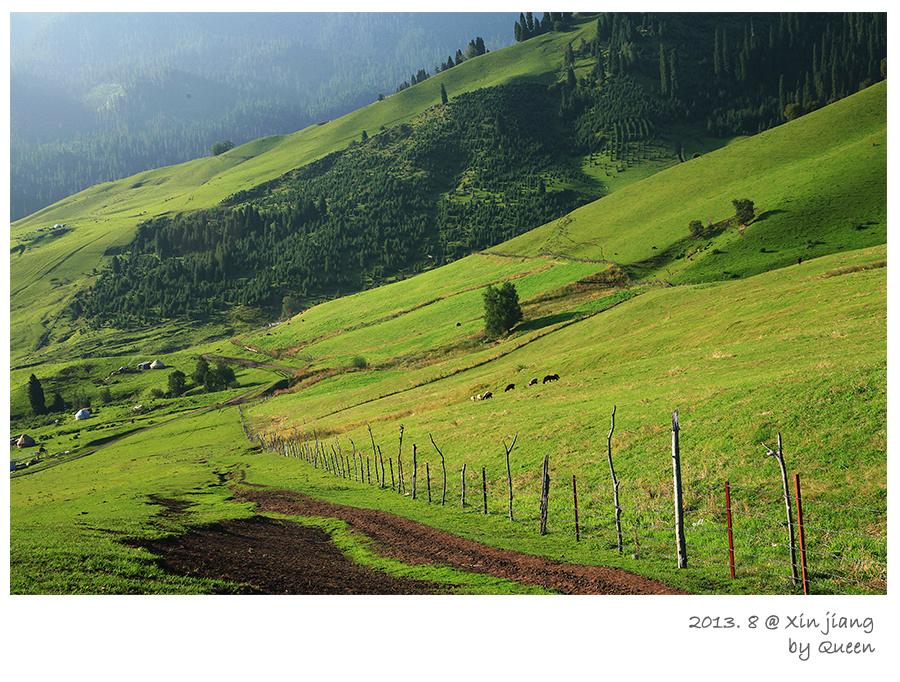
What surprised us most was the silence. No ticket booth at the spot we visited, no rope lines, just a dirt track and a few other cars with Xinjiang plates. A family from Karamay had unfolded a sheet and was eating watermelon. A Kazakh teenager rode past on a motorcycle, herding a handful of sheep back toward the valley. That is the version of Xinjiang most guidebooks skip, and it is the version worth the drive.
Lower down, the same range holds a wild almond forest- a relict grove that flowers a shade later, in soft pink-white. We walked a short loop through it the next morning. If you time it right, you get tulips first and almond blossom a week later.
Getting to Yumin
Yumin has no train station, so almost everyone arrives through Tacheng. The practical routes:
- Fly to Tacheng. Tacheng Airport runs regular flights from Urumqi; from the terminal it is a straight 60-70 km drive north to Yumin Town, about 70-90 minutes by car or taxi.
- Long-distance bus. Buses run from Urumqi’s bus stations to Tacheng and on to Yumin, but budget a full day on the road. We do not recommend it if you are short on time.
- Self-drive. If you already have a car for a northern circuit, Yumin sits neatly on a Tacheng-Bortala arc. The G219 and connecting county roads are paved and quiet, and our Xinjiang border crossings overview explains the permit picture for the wider region.
Inside the county, distances are short and a local car or the infrequent shuttle is enough. We hired a driver for the day through our Tacheng guesthouse for a few hundred yuan, which solved both transport and the language gap.
When the Slopes Turn Red: Timing Your Visit
The single reason to plan around a date is the bloom. The wild tulips open in late April and peak across the first two weeks of May, weather depending. A warm spring pushes it earlier; a late frost delays it. The county times its mountain-flower festival to the bloom, with a weekend of food stalls and music in the town square, but the hillside itself is free and uncrowded on weekdays.
If you miss the flowers, come in summer. The pastures turn green, the herders move up with their yurts, and the same slopes are good for walking and picnics. Winters are long and cold here and most flower sites are inaccessible, so we would not plan a dedicated Yumin trip between November and March.
For the wider region, our best time to visit Xinjiang guide breaks down each month and helps you stitch Yumin into a spring or early-summer route without backtracking.
Where to Sleep
Yumin Town has small hotels and family guesthouses rather than international chains. Expect clean, basic rooms, hot water that may run on a timer, and Wi-Fi that works better in the lobby than the bedroom. We paid around 150-220 yuan a night for a double and slept fine. If you want a proper hotel, softer beds, and a wider food choice, stay in Tacheng and make Yumin a day trip.
During the festival weekend rooms fill up, so book ahead if your dates are fixed. Out in the pasture areas there is no hotel; Kazakh yurts occasionally take guests by arrangement, but treat that as an adventure, not a plan.
What We Ate
Yumin food is the plain, filling northern Xinjiang table. At a corner canteen we had plov (hand-pulled rice with carrot and lamb) for 25 yuan, a plate of laghman noodles, and round naan bought warm from a roadside oven. Milk tea came salty and thick, the kind that keeps you warm on a windy hill. In the evening a small grill did lamb skewers over coal.
The Kazakh influence is strong: dairy like kurt (dried salted cheese balls) shows up at herder stalls. If your stomach is cautious, stick to the cooked rice and noodle dishes and bottled water. Nothing we ate made us sick, but we were glad we had carried cash, because the smallest stalls did not take cards. Our budget travel in Xinjiang notes cover the same canteen logic across the region.
Practical Tips Before You Go
- Border-area rules. Yumin sits against the Kazakhstan line. Chinese visitors need a border-region permit for some zones; foreign travelers should check current access rules with the local public-security bureau before relying on a visit, as restrictions change. We planned our walks on open, non-restricted slopes to stay clear of any sensitive line.
- Carry cash. Small stalls and yurt stops often take only cash or local payment apps.
- Dress in layers. May mornings on the slope were near freezing; by noon we were in shirts. The wind is constant.
- Language. Outside Tacheng, English is rare. A translation app and a screenshot of your destination in Chinese helped our driver.
- Respect the land. The tulips are a protected wild species. Do not pick them- photograph, do not gather. The herders ask the same of every visitor.
A Two-Day Spring Itinerary
Day 1. Fly or drive to Tacheng, pick up a car, and roll north to Yumin Town by early afternoon. Settle in, walk the square, and eat plov. If the festival is on, catch the evening music.
Day 2. Leave at 8 a.m. for the Bolor slope while the light is soft. Spend two to three hours among the tulips and the nearby wild-almond grove. Back in town for lunch, then a short visit to the Little White Poplar sentry post and the memorial to martyr Sun Longzhen- a quiet, genuinely local piece of history most tourists never see. Drive back to Tacheng by evening.
If you have a third day, extend toward the Ili Valley or loop west to Bortala and Sayram Lake.
Frequently Asked Questions
Is Yumin worth visiting if I only have a week in Xinjiang? Probably not as a standalone stop- it suits travelers already in Tacheng or on a slow northern loop. Pair it with Tacheng and Bortala to make the detour pay off.
Can I see the tulips without a guide? Yes. The slopes are open and the festival is public. A local driver helps with timing and language more than with access.
Do I need a permit beyond my Xinjiang entry? For Chinese travelers, a border-region permit covers the restricted zones. Foreign visitors should confirm current border-area rules before going, as they are not the same as a standard Xinjiang visit.
Is it safe? The county is calm and the towns are quiet. The only real risks are weather, weak mobile coverage on the slopes, and an empty phone battery- all easy to manage.
Disclaimer
This guide is based on our own May 2025 visit and public information available at the time of writing. Bloom dates, road conditions, opening hours, and border-area access rules change year to year and can shift with little notice. Always confirm permits, transport, and accommodation with official sources before you travel, and follow local guidance on the frontier. We are not responsible for changes that affect your trip.
About the Author
Karl Huang is the founder of this Xinjiang travel resource and has been driving, hiking, and writing about the region since 2019. He prefers uncrowded county roads to famous viewpoints and has a soft spot for places that fit on no postcard. Questions or corrections about this page are welcome- the goal is simply to help you travel the north of Xinjiang more honestly.