Published: August 4, 2026 | Author: Karl Huang, Xinjiang Attractions editorial team
Working out how to get to Xinjiang is the first real planning decision of the trip, and it is a bigger one than most people expect. This is not a place you slot into a weekend. Urumqi sits roughly 2,400 km west of Xi’an and about 3,300 km from Beijing, which means the difference between a good arrival and a rough one is usually decided weeks earlier, at the booking stage. I have made the journey five times since 2019 — twice by air, twice by rail, once by road from Gansu — and each approach left a different impression of the region before I had even unpacked. What follows is what we learned doing it, not a rewrite of an airline timetable.
How to get to Xinjiang at a glance
| Route | Typical duration | Rough one-way cost | Best for |
|---|---|---|---|
| Flight, Beijing/Shanghai to Urumqi (URC) | 4h 30m – 5h 30m | CNY 900–2,200 | Short trips, limited leave |
| Flight, Chengdu/Xi’an to Urumqi | 3h 30m – 4h | CNY 700–1,600 | Best value domestic hop |
| Direct international into Urumqi | Varies by origin | Varies widely | Central Asia, Moscow, some Gulf routes |
| Z-train, Beijing to Urumqi | Around 31–33 hours | CNY 550–1,200 (sleeper) | Travellers who want the transition |
| High-speed rail, Lanzhou to Urumqi | Roughly 11–12 hours | CNY 550–900 | Combining Gansu with Xinjiang |
| Self-drive, G30 from Jiayuguan | 2 days comfortably | Fuel and tolls, CNY 700+ | Silk Road road trips |
| Land border from Kazakhstan or Kyrgyzstan | Half a day to two days | CNY 200–600 | Overlanders on a longer route |
Prices are what we and travelling friends actually paid across 2024 and 2025. Air fares swing hard by season; the July peak can double a February fare on the same route.
Three doors into the region, and how they feel different
Xinjiang has three practical entry vectors: the air corridor, the rail spine that runs along the old Hexi Corridor, and the land routes, which include both the drive in from Gansu and the international ports on the western frontier. People obsess over price when choosing between them. I would argue the more useful question is what state you want to be in when you arrive.
Flying compresses the distance so completely that the region can feel abstract for the first day. You leave a humid eastern city at breakfast and stand in dry desert air by lunch, two time zones’ worth of daylight out of step with your body. The train does the opposite. You watch the green thin out, then the loess, then the gravel plains around Hami, and by the time you arrive the scale has sunk in. On my first trip I flew, and I spent two days feeling like I had teleported. On the second I took the train, and Xinjiang made far more sense.
Flying in: the default, and usually the right call
Urumqi Tianshan International Airport (URC, still called Diwopu by nearly everyone locally) is the region’s hub and handles the overwhelming majority of arrivals. Its expanded terminal has made connections noticeably less stressful than the old cramped setup I remember from 2019. Direct domestic flights run from Beijing, Shanghai, Guangzhou, Chengdu, Xi’an, Zhengzhou, Chongqing and a long list of second-tier cities. Chengdu and Xi’an tend to be the cheapest useful gateways.
International service is more limited than the map suggests. Routes to Central Asian capitals such as Almaty, Tashkent and Bishkek operate with reasonable frequency, along with seasonal or intermittent links to Moscow, Islamabad, Dubai and Istanbul. Schedules here change more often than in eastern China, so a route that existed last spring may not run this autumn. Check the carrier directly rather than trusting an aggregator’s cached data.
Two things worth knowing before you book. First, Kashgar (KHG), Hotan (HTN), Yining (YIN), Karamay and Altay all have airports, and flying straight to Kashgar rather than backtracking through Urumqi can save the better part of a day if the south is your focus. Second, all of Xinjiang runs on Beijing time officially, but daily life in the south runs about two hours behind it. A 09:00 flight out of Kashgar is genuinely early in the local rhythm. Build in extra margin.
If you are weighing the two main options head to head, we broke down the trade-offs in detail in our comparison of taking the train versus flying in Xinjiang.
The long train: 30-plus hours, and worth it once
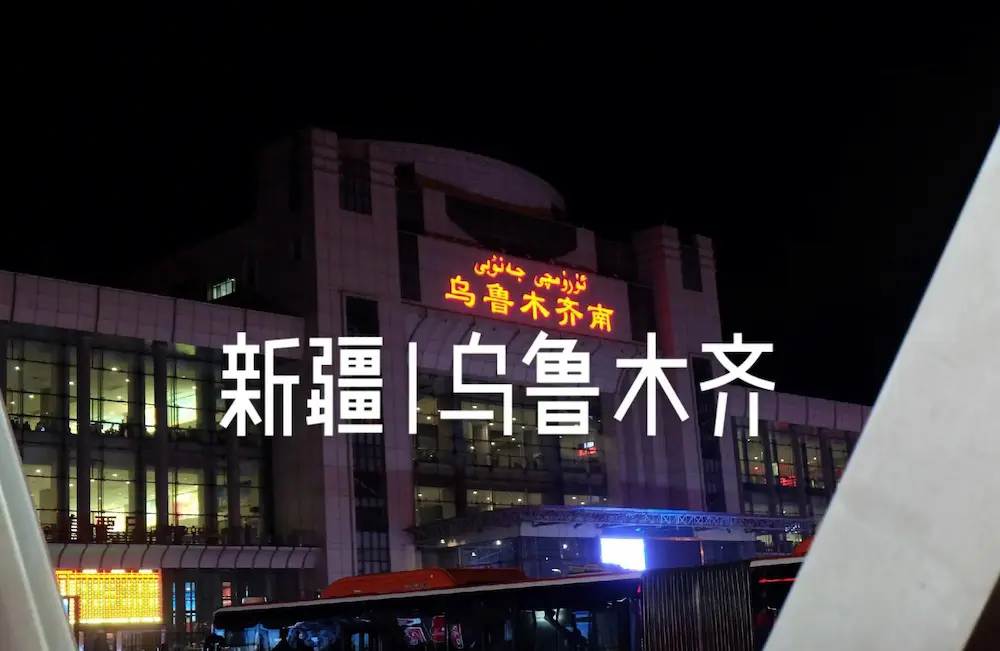
The Z-series overnight services from Beijing West to Urumqi take roughly a day and a half. Booking a soft sleeper (ruanwo, four berths) costs more than a hard sleeper (yingwo, six berths) but the difference in sleep quality over two nights is real. I did the hard sleeper the first time to save about CNY 400 and regretted it by the second morning, mostly because the middle bunk gives you nowhere to sit upright.
A faster and, in my view, better option is to break the journey. Take high-speed rail to Lanzhou or Jiayuguan, spend a night, then continue on the Lanzhou–Xinjiang high-speed line into Turpan and Urumqi. That segment runs through the wind corridor near Dabancheng where the turbines start appearing in their hundreds. It is the most interesting stretch of railway I have travelled in China, and you see none of it from 10,000 metres.
Practical notes on booking. Tickets open 15 days ahead on 12306, sell out fast for summer departures, and foreign passport holders can now book and board with a passport on the app, though the verification step occasionally fails and requires a counter visit. Bring your own food. The dining car exists, it is expensive, and the instant noodle economy on board is a social institution you may as well join. Hot water is always available at the end of each carriage.
Driving in from Gansu on the G30
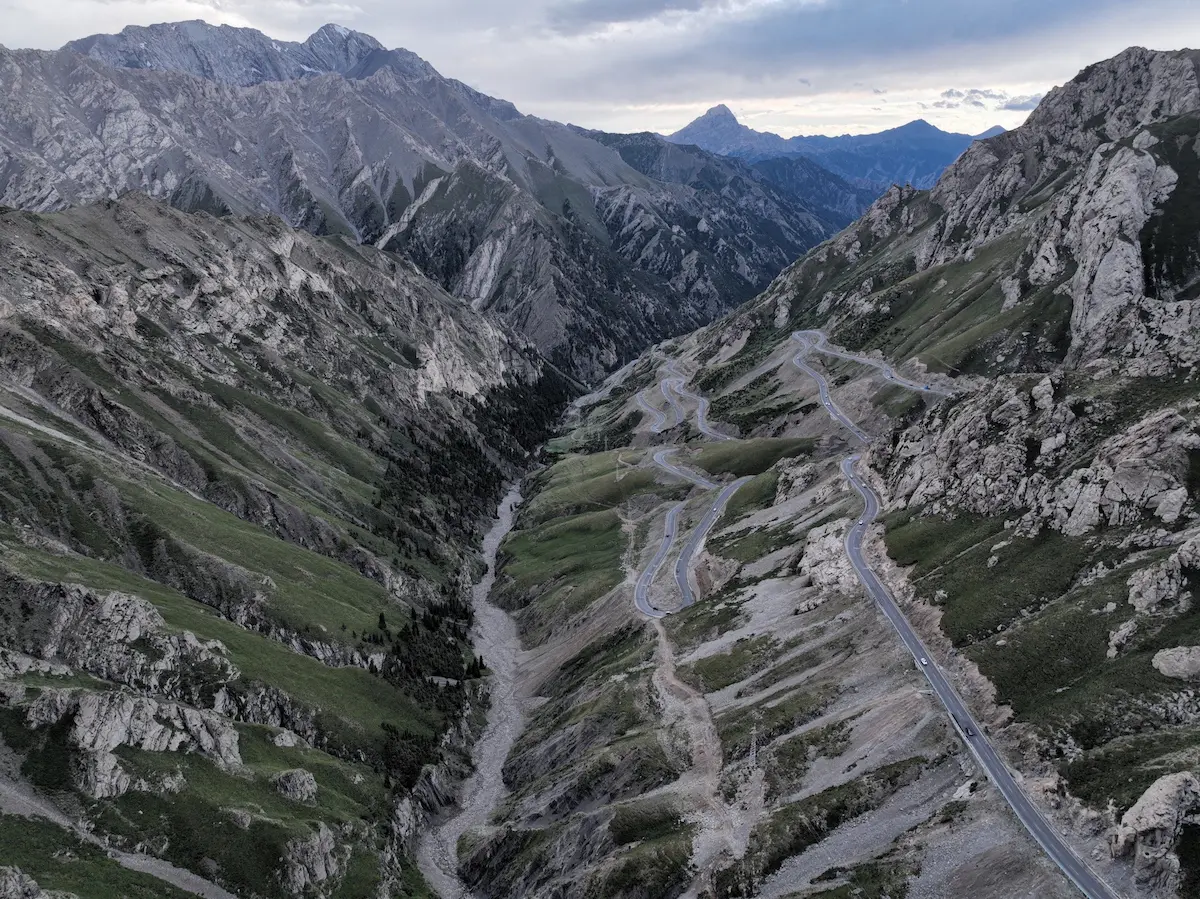
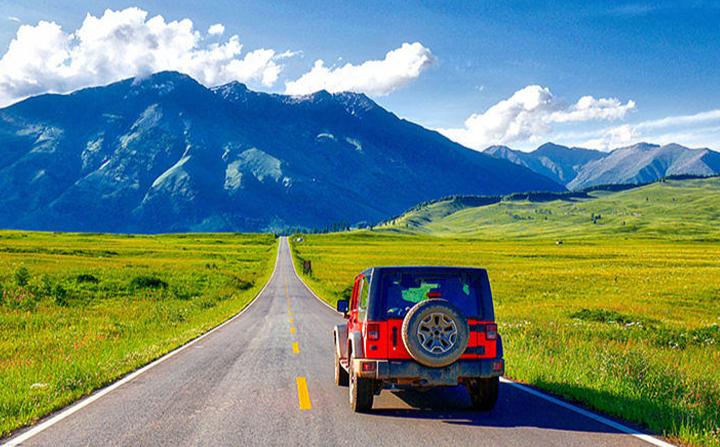
The G30 Lianhuo Expressway crosses into Xinjiang at Xingxingxia, east of Hami, after a long empty run from Jiayuguan. We drove it in October 2024 in a rented SUV and split it over two days with a night in Hami. Doing it in one push is possible and unpleasant.
Foreign drivers face a real obstacle here: an overseas licence alone is not valid, and an International Driving Permit is not recognised in mainland China. You need a temporary Chinese driving permit, which can be arranged at major entry points and some city vehicle offices but takes time and paperwork. Most foreign visitors I know end up hiring a car with a driver instead, which costs more per day but removes the licensing problem, the checkpoint paperwork and the fuel station registration process in one move.
Fuel stations in Xinjiang require identity registration and, in many counties, passengers step out of the vehicle while it is refuelled. It is routine and quick once you know to expect it. Distances between services on the desert stretches can exceed 150 km, so the habit of refuelling at half a tank is a good one.
Land borders and the western frontier
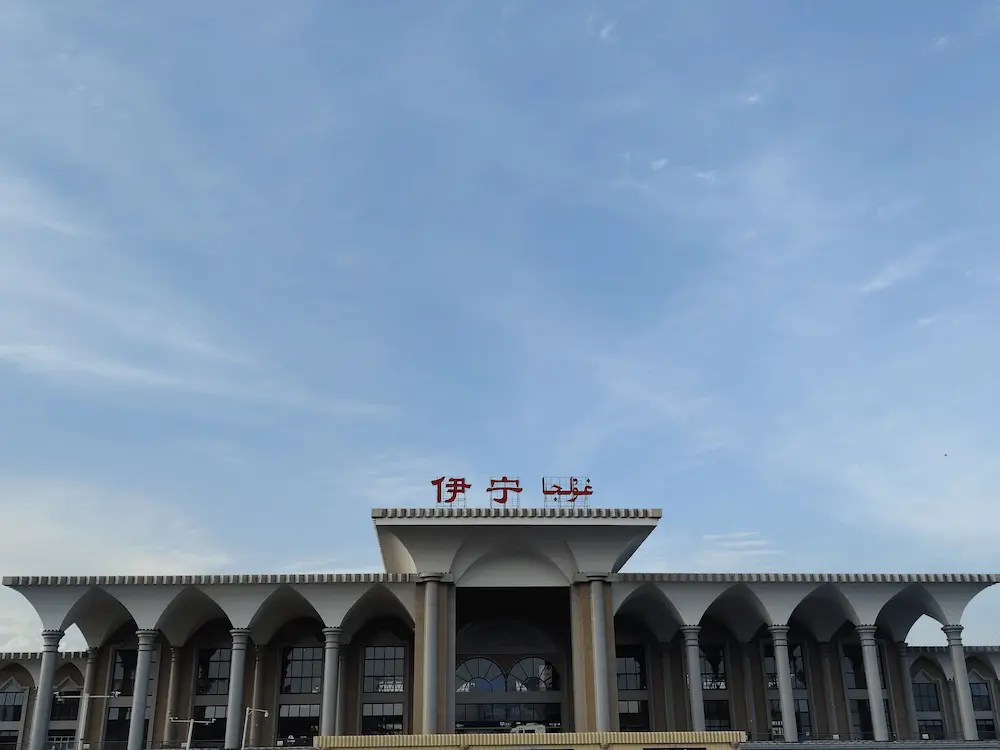
Xinjiang shares boundaries with eight countries, and several ports handle third-country tourists. Khorgos and Alashankou connect to Kazakhstan and are the busiest and most straightforward; Khorgos in particular has a well-worn bus route through to Almaty. Irkeshtam and Torugart link to Kyrgyzstan and are more demanding, with Torugart historically requiring transport arranged on both sides in advance. The Khunjerab Pass into Pakistan sits at 4,693 m and is the highest paved border crossing in the world; access is weather-dependent regardless of the official opening calendar, and we covered that route separately in our Karakoram Highway guide.
Border regulations, opening hours and permitted nationalities at these ports change with little notice. Confirm current status with the relevant embassy or consulate close to your travel date rather than relying on a blog post, including this one. Our overview of visas and permits for foreign tourists in Xinjiang covers the documentation side, and if you are transiting China rather than making a full entry, the visa-free transit policy explained here is worth reading first, since the qualifying ports and durations have been revised more than once.
When to arrive
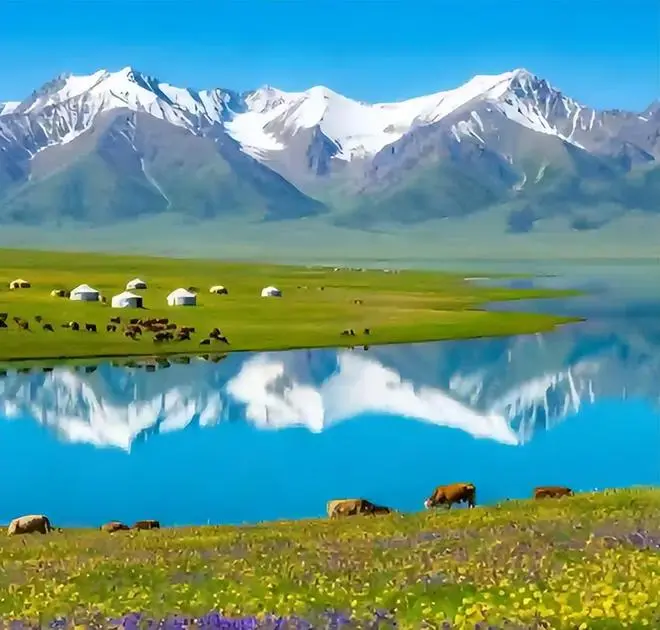
Late May to mid-June and early September to mid-October are the two windows I would pick without hesitating. The grasslands are green in the first, the poplars and Kanas larch turn gold in the second, and neither period carries July’s crowds or prices. July and August bring peak domestic tourism, air fares at their highest and hotel rates in Kashgar and Kanas that can triple.
Winter arrivals are underrated if you are prepared. Flights and rooms are cheap, the Tianshan ski areas near Urumqi are genuinely good, and the light on the desert in January is something else. Some mountain passes, including the Duku Highway, close entirely from around October to June, so a winter plan has to be built around that.
Where to stay your first night
If you land at URC late, stay near the airport or in the Shayibake district rather than pushing straight out to a scenic area. The airport is about 16 km from the city centre, and metro Line 1 plus taxis make it an easy transfer, but arriving somewhere remote after midnight helps nobody. Urumqi’s mid-range chain hotels are reliable and cost CNY 250–450 a night; foreign passport holders should confirm the property is licensed to accept overseas guests when booking, as not all are. Our Urumqi city guide goes into neighbourhoods in more detail.
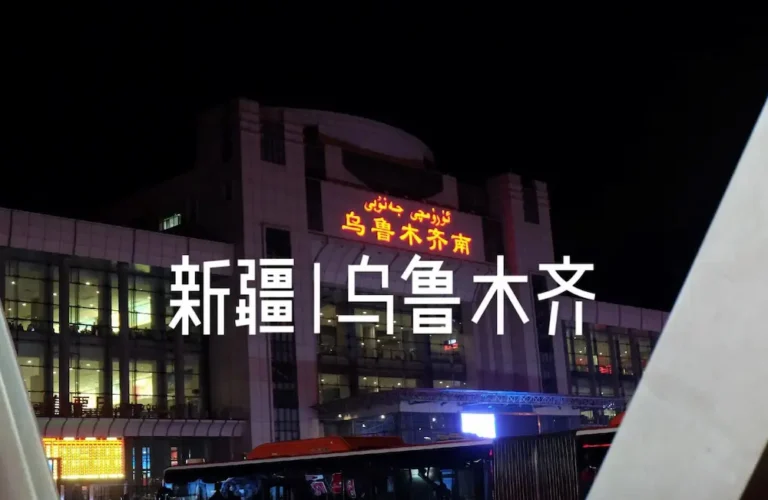
Arriving by train puts you at Urumqi Station or Urumqi South, both with plenty of accommodation within walking distance and both connected to the metro.
What to eat on arrival
The first meal after a long journey matters more than it should. Near Urumqi Station there are dozens of small Uyghur restaurants doing laghman, hand-pulled noodles with peppers, tomato and lamb, for around CNY 25. If you land late and everything looks shut, the samsa and naan stalls tend to stay open longest, and a hot samsa straight from the tandoor after 30 hours of train food is one of the better arrival memories I have. Go easy on the first night if you have come from sea level and plan to head into the mountains soon; heavy lamb plus altitude is a combination I have regretted.
A sample arrival plan
- Day 1: Land at URC in the afternoon. Transfer into the city, sleep near Renmin Square, eat locally. Do not schedule anything else.
- Day 2: Xinjiang Museum in the morning to get the historical context straight, Grand Bazaar in the late afternoon, buy a local SIM if you have not already.
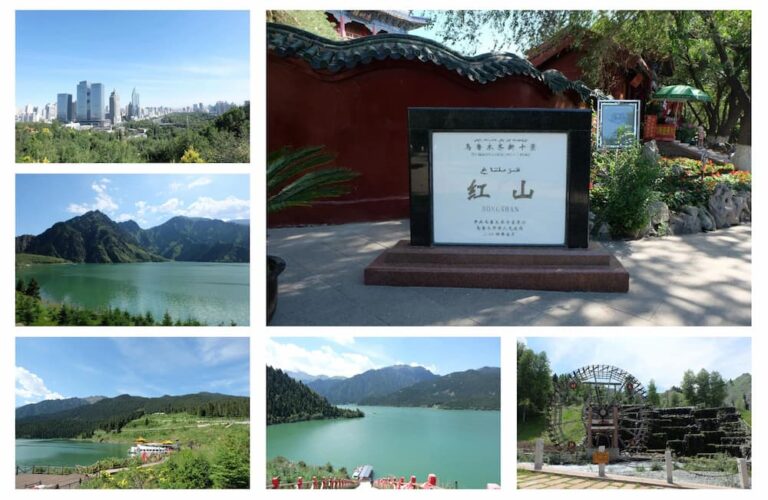
- Day 3: Day trip to Heavenly Lake or Nanshan, or take the morning train to Turpan and start moving west.
Budgeting the trip from here is easier once you know your entry cost; our Xinjiang travel cost breakdown has current figures, and the classic 7-day itinerary picks up exactly where this arrival plan ends.
Practical tips we wish we had known earlier
- Book summer flights and sleeper tickets four to six weeks out. Two weeks is too late for July.
- Carry your passport at all times. Checkpoints between prefectures are routine and go quickly when your documents are in hand.
- Set up mobile payment before you arrive. Cash is accepted but increasingly awkward, and some ticket counters prefer digital.
- Register a local SIM at the airport if you can; roaming data is unreliable in the mountains and useless in some valleys.
- Xinjiang is dry and high. Drink more water than feels necessary on day one, particularly after a flight.
- Domestic flights within Xinjiang are cheap and cover distances that take 12 hours by road. Urumqi to Kashgar by air is under two hours.
FAQ
Can foreign tourists travel to Xinjiang independently in 2026?
Yes. Independent travel is permitted for most nationalities on a standard Chinese visa, with no separate regional permit needed for the main destinations. A few sensitive border zones require additional paperwork, which local agencies can arrange.
What is the cheapest way to get to Xinjiang?
Hard sleeper rail from Xi’an or Lanzhou usually beats flying, especially outside the summer peak. Booking a domestic flight from Chengdu six to eight weeks ahead can occasionally come close on price and saves a day and a half.
Is there a direct international flight to Kashgar?
Service has been intermittent. Most international visitors route through Urumqi or another mainland hub and take the domestic connection onwards.
How long does the train from Beijing to Urumqi take?
Around 31 to 33 hours on Z-series services, which means two nights on board. Breaking the trip in Lanzhou or Jiayuguan makes it far more pleasant.
Do I need to worry about the time difference?
Officially the whole country uses Beijing time. In practice, southern Xinjiang works on an unofficial local time about two hours behind. Always confirm which one a shop, driver or tour operator means.
Disclaimer
Fares, schedules, border opening arrangements and visa rules described here reflect conditions as of August 2026 and our own trips between 2019 and 2025. Transport pricing in Xinjiang is seasonal and can move sharply. Entry requirements for foreign nationals are set by the relevant Chinese authorities and are subject to change without notice. Verify current details with the National Immigration Administration, the 12306 railway service, your airline and your nearest Chinese embassy or consulate before booking. We receive no commission from any operator mentioned.
About the author
Karl Huang has travelled in Xinjiang since 2019, covering the region by air, rail and road across five separate trips totalling more than eleven weeks on the ground. He writes the transport and logistics coverage for Xinjiang Attractions, focusing on the practical detail that gets lost between official timetables and marketing copy. Corrections and updates from readers who have made these journeys recently are welcome.