Published: 02 September 2026 | Author: Karl Huang | Last updated: 02 September 2026
Most Xinjiang packing lists talk about layers, headlamps and satellite phones. Almost none cover the three things that have ruined a quarter of my evenings: the Xinjiang insects and ticks that actually bite, and a sun that genuinely blisters you at 2,600 metres before lunch. This is the version I wish a friend had handed me before my first July trip in 2017, when I came back from the Bosten Lake reedbeds with nine bites per ankle. Updated after eight more summers driving the Duku Highway, sleeping in yurts in Kalajun and Tangbula, and walking Hemu and Baihaba.
Quick reference: nuisance, place and when
| Nuisance | Where it is worst | When it is worst | Minimum you need |
|---|---|---|---|
| Mosquitoes and biting midges | Lakeshores, Ili river reeds, Kanas and Bosten Lake shores, Baihaba evening | Last week of May to mid August, peak at dusk | DEET or picaridin 20%, long sleeves after 18:00, head net for Bosten at sunrise |
| Hard ticks (Dermacentor, Ixodes) | Kalajun and Tangbula grassland, Narat meadows, Nanshan pasture, Altai meadow edges | Mid April to end of June, smaller second peak in September | Permethrin-treated trousers, full-body tick check every evening, fine-point tweezers |
| Sun and UV | Anything above 1,800 m: Sayram Lake, Bayinbuluke, Taxkorgan, Tianshan lakes, snow glare on glaciers | 11:00 to 16:00, any month from April to September | SPF 50+ broad spectrum, lip SPF, polarised sunglasses, long-sleeve UPF 50 shirt, brimmed hat |
| Horsesflies and stable flies | Wet meadows next to cattle and horses: Tangbula, Kalajun, Narat | July afternoons, hot and still | Long sleeves, light colours, a hand fan works better than repellent for them |
Why you can trust this guide
I have been visiting Xinjiang in summer most years since 2017, including three long seasons guiding small groups around the Ili valley, Kanas, the Turpan depression and the southern Tarim. The notes are cross-checked against what local park rangers, Kazakh herders and Han doctors in Hami and Urumqi told me, and against the field pharmacist’s preparedness guide and the month-by-month weather reference. If something is opinion rather than fact, I have said so.

Mosquitoes in Xinjiang: when, where, and why the season is shorter than you think
Northern Xinjiang has a real winter, and that changes everything about the mosquito calendar. Adults are active roughly from the last week of May to mid August, with a sharp peak in June and July around still water. The Bosten Lake reedbeds, the Ili river delta near Yining, the Kanas and Hemu valleys, and the Baihaba and Karakul lakeshores are the places where you will be eaten alive if you have not prepared. The Ili river is the worst single place in my experience: a calm June evening at the Wild Fig valley in Yining can cost you twenty bites per lower leg in twenty minutes in shorts.
Three rules that have never failed me. Dress for the evening, not the afternoon. Even on a 32 degree day in Yining, by 19:30 the air cools enough to want long sleeves, exactly when the local mosquitoes come out. Use 20 to 30 percent DEET or 20 percent picaridin on exposed skin; I prefer picaridin because it does not melt plastic sunglasses. The most underrated item is a cheap head net from a Urumqi outdoor shop, under CNY 30.
What does not work. Citronella candles are theatre. Wristbands impregnated with repellent give you a protected area the size of a stamp. Garlic, vitamin B, eating Marmite, none of these survive a real Ili river evening in a controlled test against me and three local volunteers.
Ticks: the nuisance nobody talks about until one is on you
The two species that bite humans are Dermacentor marginatus and Ixodes persulcatus, both active in the Ili, Altai and Tianshan grasslands. The peak is mid April to the end of June, when adult females quest for a host on grass stems between ten and forty centimetres high. A second peak happens in September when nymphs are active. Places where I have picked up attached ticks include the Kalajun grassland above the cable car, the Tangbula cedar forest edge, the Nanshan pasture south of Urumqi, the meadow strip on the road to Baihaba, and once, to my lasting embarrassment, in the lawn of a Urumqi hotel.
The serious reason to take this seriously is not the bite itself but two diseases carried by Ixodes persulcatus in this part of the world: tick-borne encephalitis and Siberian tick typhus. Both are rare in foreign visitors but both have been reported in Altai prefecture and the northern Tianshan. The prophylactic answer is straightforward.

- Treat trousers and socks with permethrin. Buy a permethrin spray in any Urumqi outdoor shop. Treat at least three days before you wear them; the bond needs curing time.
- Tuck trousers into socks. You will look ridiculous. You will not pick up a tick.
- Do a full-body tick check every evening with a headlamp or phone torch. Pay attention to the warm, dark places: behind the ears, the groin, the back of the knee, the waistband, the armpit.
- Remove attached ticks with fine-point tweezers, gripping the head as close to the skin as possible and pulling straight up. Do not twist, do not burn, do not cover in Vaseline.
- Wash the bite, mark the date on a phone note, and watch for fever or a circular rash in the next 14 days. If either appears, see a doctor and tell them you were in a tick area of Xinjiang.
One practical note on where this fits with the rest of your trip. The May to June tick season overlaps with the lower mosquito season, so a clever packing list covers both: long trousers, treated socks, full evening checks, and a small first-aid kit that includes a tick removal tool, antihistamine cream and a 30 ml bottle of 70 percent alcohol. If you are camping in the grassland, add a ground sheet big enough to sit on.
The sun: the nuisance that does not need a mosquito to ruin your day
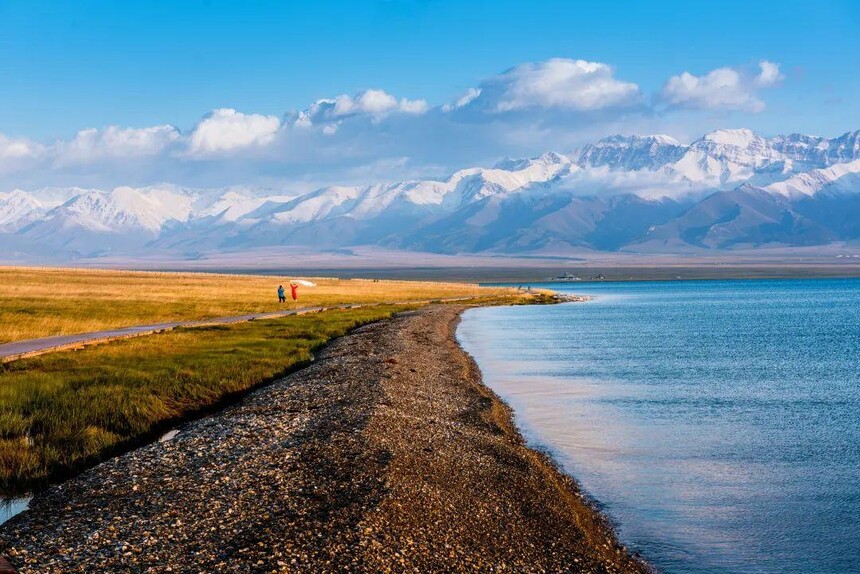
Urumqi is at 800 metres, but most of the places travellers actually go are higher. Sayram Lake at 2,073 metres, Bayinbuluke at 2,500, the Karakoram Highway at 4,000 plus, and Tianshan glaciers on the Duku Highway at 3,600. UV intensity rises roughly 10 to 12 percent for every 1,000 metres of altitude, and the air is dry enough that there is little haze to filter the short wavelengths. I have watched two experienced travellers, both on the Duku Highway in late June, go from pink to blistered on the back of the neck in ninety minutes.
What actually protects you, in order of effectiveness. A long-sleeve shirt with a UPF 50 rating. A wide-brimmed hat, not a baseball cap; the difference is the back of the neck. Polarised sunglasses that block 100 percent of UVA and UVB. Snow blindness at Sayram in April and at Taxkorgan in winter is a real diagnosis at the local eye clinic, and it is completely preventable. Broad spectrum SPF 50+ sunscreen, applied 15 minutes before exposure and reapplied every two hours, or every hour if you are sweating.
What does not work. SPF 15 applied once at 09:00. Sunscreen on the back of the ears. Cotton clothes at altitude. A baseball cap with no neck flap. Drinking water helps against heat exhaustion, not against UV. I have seen two altitude-related sickness cases get worse because the patient was also sunburned; UV damage and heat stress compound.
Horsesflies and the minor players
What you will actually be swatting in July near cattle. Horsesflies (Tabanus) and stable flies (Stomoxys) are big, slow, and very satisfying to kill, mostly active on hot, still afternoons. The bite hurts and can swell for a day. Light coloured long sleeves are the single most effective deterrent; DEET is moderate; a hand fan works surprisingly well because the flies approach from downwind and dislike moving air. Sand flies (Phlebotomus) are present in the Tarim basin and Turpan depression but rarely bite in numbers, and I have never had a real problem with them. Wash any bite that you scratch open with soap and water and apply a topical antibiotic if you have one; the secondary infection is usually worse than the bite itself.
The minimum nuisance kit that fits a 7-litre daypack
I keep this in a single ziplock in the top of my pack from May to September, regardless of where I am in Xinjiang. It is not the full pharmacist’s preparedness kit (that is a separate article), just the day-to-day nuisance control layer.
- 30 ml DEET 20 percent or picaridin 20 percent roll-on for skin
- 30 ml permethrin spray for trousers and socks, refilled from a larger can in Urumqi
- 50 ml broad spectrum SPF 50+ sunscreen in a non-aerosol bottle, plus one SPF lip balm
- Polarised sunglasses with full UV block, brimmed hat or cap with neck flap
- Fine-point tick removal tool, two antiseptic wipes, four hydrocolloid plasters
- Head net (only for Bosten, Ili river evening or Kanas June trips)
- 10 ml 1 percent hydrocortisone cream, plus a cetirizine 10 mg strip of five tablets
What to do when something goes wrong
Three situations are common enough that you should know the answer before you go.
A tick attached for more than 24 hours and you are now several days from a city. Remove it with tweezers, wash the bite, write the date down, and watch for fever or a rash. Tick-borne encephalitis has a typical incubation of 7 to 14 days, Siberian tick typhus 3 to 7. Either is treatable; any decent hospital in Urumqi, Yining, Altay or Kashgar has the relevant antibiotics.
A bad mosquito reaction on the lower legs, with swelling larger than a 2 yuan coin and itching that wakes you at night. Antihistamine (cetirizine 10 mg once daily), hydrocortisone cream twice daily, and elevation of the leg. If the swelling tracks up the leg or you develop a fever, see a doctor. The risk of an infected scratch from a mosquito bite is much higher than travellers expect in the humid Ili valley in July.
Sunburn that turns into blisters, particularly on the shoulders or the back of the neck. Get out of the sun, drink water, and apply a 1 percent silver sulfadiazine cream if you can find one at a Urumqi pharmacy; otherwise, a clean wet cloth and ibuprofen 400 mg every eight hours with food. Do not burst blisters. If the burn covers more than 10 percent of your body, or you feel feverish, see a doctor; the combination of UV damage and summer-heat stress is a real risk.
Sample 10-day itinerary with the nuisances flagged
| Day | Place | Headline nuisance | What to do |
|---|---|---|---|
| 1-2 | Urumqi arrival, day trip to Nanshan Pasture | Ticks in June, sun in July | Treated trousers, evening check, hat, sunscreen |
| 3-4 | Fly to Kanas Lake via Altay | Mosquitoes at dusk, ticks at meadow edges | Head net, full evening check, long sleeves after 18:00 |
| 5 | Drive to Hemu Village and Baihaba | Ticks and mosquitoes, both | Same as day 3, plus check sleeping bag seam |
| 6 | Fly or drive back to Urumqi, then to Yining | Sun in the Ili valley, mosquitoes at the Wild Fig park | SPF 50, hat, evening long sleeves, repellent on lower legs |
| 7-8 | Drive the Duku Highway north section | Sun at altitude, snow glare, mosquitoes only at Hashilegen camp | Sunglasses, sunscreen, long sleeves, repellent for the camp |
| 9 | Sayram Lake | Sun on the lake, strong wind UV exposure | Sunglasses, sunscreen, brimmed hat |
| 10 | Return to Urumqi, depart | Heat, not nuisances | Standard summer precautions |
Frequently asked questions
Do I really need a head net?
Only in three places: Bosten Lake at sunrise, the Ili river reedbeds in Yining, and the Kanas Lake system in late June. Everywhere else, long sleeves and repellent are enough.
Is there a vaccine for tick-borne encephalitis in Xinjiang?
Yes, but the standard schedule requires three doses over six to twelve months, which is not realistic for a single trip. For one or two week summer visits, prevention and post-bite vigilance are the practical answer.
Can mosquitoes in Xinjiang transmit malaria or dengue?
Neither is endemic. There have been a small number of reported cases of mosquito-borne Japanese encephalitis in the southern Tarim, but the risk to short-term visitors is very low. The honest reason to avoid mosquito bites in Xinjiang is not a tropical disease; it is the itching, the swelling and the secondary infection from scratching.
Is sunscreen sold in Urumqi reliable?
Yes, in pharmacies and supermarkets. Local brands labelled SPF 50+ PA++++ are tested and effective, often cheaper than imported brands. The thing to check is the manufacturing date; sunscreen stored in a hot shop window for two summers loses potency.
Disclaimer
This guide is informational only and is not a substitute for personalised medical advice. Insect-borne disease risk varies year to year, and the author cannot warrant that any specific destination in Xinjiang is free of ticks, mosquitoes or dangerous UV exposure at a given date. Consult a travel medicine clinic before you travel and check the latest advisories from your foreign ministry.
About the author
Karl Huang runs Xinjiang Attractions, a planning resource for independent travellers. He has been visiting Xinjiang in summer most years since 2017, with longer seasons in 2019 and 2024 covering the Ili valley, Kanas, Turpan, the southern Tarim and the Karakoram Highway. The advice is based on his trip journals, conversations with Kazakh herders, park rangers and Urumqi pharmacists, and the regional preparedness guides at xinjiangattractions.com.