Published: 01 September 2026 | Author: Karl Huang | Last updated: 01 September 2026
The Tuva people of Kanas are one of the smallest and most easily overlooked communities in Xinjiang. They number only a few thousand people, live in three forest villages at the foot of the Altai Mountains, and most travellers who drive past their wooden log cabins in Kanas and Hemu will never know they were there. I have walked the Hemu-to-Kanas ridge in autumn twice, and the people I kept meeting were the reason I kept going back. This article is a portrait of the people who live in the birch forest between the lake and the Mongolian border, written so visitors go in knowing who they are meeting and what not to do when they stop in a Tuvan home for milk tea.
Quick reference: the Tuva of Kanas at a glance
| Detail | What we are looking at |
|---|---|
| Ethnic classification in China | Counted as part of the Mongolian ethnic group (蒙古族), but locally called Tuvan (图瓦人) |
| Population in the three villages | About 2,000 people (Hemu, Baihaba, Kanas) |
| Language | A Siberian Tuva-like Turkic language, unwritten in everyday use; almost everyone also speaks Mandarin and many speak Kazakh |
| Traditional home | Hand-notched log cabin with a flat or slightly pitched birch-bark roof |
| Livelihood | Seasonal herding (cattle, horses, sheep), haymaking, small-scale guesthouse work, some trapping (now regulated) |
| Beliefs | Largely Tibetan Buddhist, with older shamanic layers; a small Gelug monastery stands near Kanas village |
| Closest kin | The Tuvan people of the Republic of Tuva in the Russian Federation |
| Best time to see village life | June to early October; the villages are nearly empty in deep winter |
Who the Tuvans of the Altai are
The word “Tuva” causes confusion on the first day of any trip into the Altai. There is a Tuvan Republic inside the Russian Federation, capital Kyzyl, with about three hundred thousand Tuvans of its own. The people in the three forest villages around Kanas Lake are not that group. They speak a closely related Turkic language and share the same forest-trapper-herder cultural kit, and most Chinese ethnographers now believe they are descendants of a much older South-Siberian forest culture that once stretched across the Altai-Sayan mountains. The Chinese government classifies them as part of the Mongolian ethnic group for administrative reasons, but locally they call themselves Tuvan (图瓦, Tùwă) and so do their neighbours. The Kanas valley sits inside a long, north-facing pocket of larch, spruce and birch that runs along the Altai ridge and dead-ends at the Mongolian border, and the villages are small enough that everyone knows everyone.
A Turkic language in a Mongol-classified village
When I first asked a Hemu guide what language he spoke at home, he answered in Mandarin and then quietly added that his grandmother still sang in Tuvan. That is the typical pattern: the children speak Mandarin at school, the parents mix Kazakh and Tuvan for everyday work, and the grandmothers keep a small but living vocabulary of ritual words, lullabies and old hunting songs. Tuvan is a Turkic language, closer to Kyrgyz or Kazakh than to Mongolian. There is no widely used Tuvan script in China; Soviet linguists built a Cyrillic-based writing system for the Tuvans of Russia in the 1950s and a Latin-based one in the 1980s, but neither ever reached the villages on this side. A handful of younger people who went to university in Urumqi now write Tuvan words in Pinyin on WeChat, and when I asked three of them whether the language was dying, they all gave the same answer: not in a crisis sense, just getting smaller.
The wooden cabin, and why it is not a Russian log house
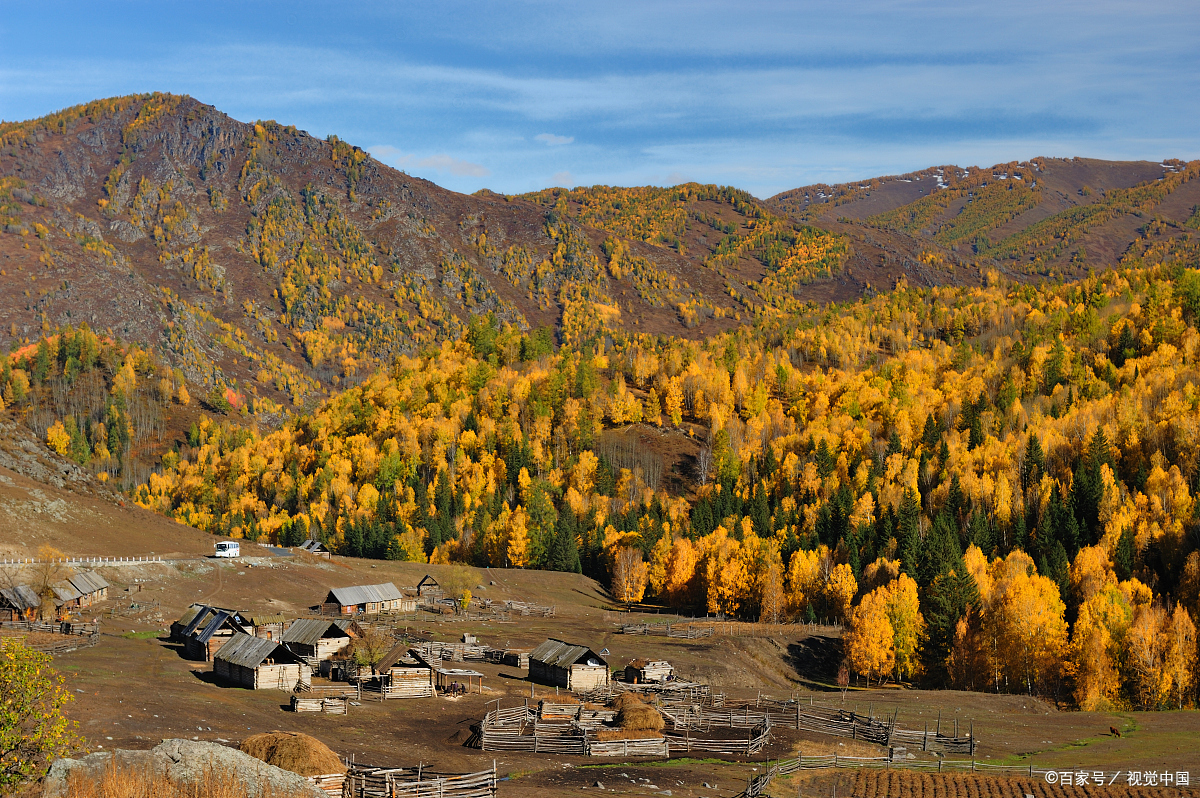
The most visible Tuva artefact is the cabin: long, low, hand-notched logs, a flat or shallow-pitched roof, a single ridge beam and a covered front porch. People sometimes call these “Russian” log houses because they look like dachas in Siberia, but they are a local Altai form. The logs are mostly larch, harvested in late autumn when the sap is down. The corners are saddle-notched, the gaps are stuffed with strips of birch bark and moss, and the roof is layered: round poles, then birch bark, then a thick slab of turf, then small logs. The older cabins I have walked into in Hemu are not the family home any more. They are kept in repair as a place to receive guests, store smoked meat, and host the summer guesthouse trade, while the family itself lives in a brick or tile-roofed house up the slope.

What the open hearth and the felt yurt still mean
Inside the older cabins the centre of the room is a low open hearth (火塘, huǒtáng). The floor is packed earth, the fire is fed with split larch, and the smoke leaves through a small hole in the roof; there is no chimney. The first time I sat in one in late October, the host handed me a copper bowl of salted milk tea and apologised that the room was smoky, which is the polite Tuvan way of saying I had better keep my eyes open. The hearth is the symbolic centre of the household: visitors walk around it, never across it, and the place of honour is the bed-platform to the east of the fire, where the family elder sits. The felt yurt, brought down from the Mongol and Kazakh neighbours, is the second pole of the house, and Tuvan families usually have one in the side yard for the warm months.
Daily life now: herding, hay, the summer guesthouse
The year in the Altai villages still has a strong herder rhythm. In late May the cattle are driven up to the high summer pastures. In June the hay meadows around the villages are cut by hand and dried on long wooden racks. July is the guesthouse peak: families serve meals to travellers, rent out rooms, run horse treks, and the teenagers work as drivers for the Baihaba border permit shuttle. August is the second hay cut and the start of mushroom season. In September the cattle come back down and the larch forest turns gold. By the second week of October the passes usually get their first real snow, and most of the village packs up the cabins and moves to winter quarters in Burqin county seat, about three hours’ drive down the valley.
Beliefs, shamans and the new monastery at Kanas
Most Tuvan families in the three villages are now Tibetan Buddhist, the result of two centuries of contact with Gelug monasteries across the Mongolian border. A working Gelug monastery, Chonghur Si (松哈尔寺), stands in the valley between Kanas village and the lake entrance, and a smaller prayer hall sits in Hemu. The prayer flags, butter lamps, long horns and morning chanting are all standard Gelug practice. Underneath the Buddhist layer, older shamanic practices are still quietly alive: a handful of older women in Baihaba are still called on to read the smoke from juniper twigs when a child is sick or a herd animal dies. When I asked a Baihaba host whether he believed in the mountain spirit, he shrugged: “We do not say we believe. We say we do not forget.”
Music, throat singing and the festival calendar
Tuvan music in the three villages has two halves. The first is the throat-singing tradition (呼麦, khoomei), which the Tuvans of Tuva Republic made world-famous through groups like Huun-Huur-Tu. The Chinese-side Tuvans have a small but real throat-singing tradition, especially in Baihaba, and at least two local families have sons who compete at the Altai throat-singing festivals in Urumqi. The second half is the ballad tradition: long, slow songs about losing horses, leaving home, and the death of small children, mostly held by the oldest women and sung in the cabin at night when the fire is low. The festival calendar follows the Buddhist year. Naadam-style games (horse racing, wrestling, archery) are held at the Kanas valley fair in late June, and a smaller Tsagaan Sar celebration is held in February when the villages are accessible only by snowmobile. Late June is the easiest single window to see Tuvan dress, music and food in one morning.
How to visit a Tuvan village respectfully
Most travellers come for a single morning or a single night, and that is enough. Four small things have worked for me across four trips: always ask before taking a photo of a person, especially an older woman; bring a small gift if you are being hosted in a cabin (dried fruit, biscuits, good tea, chocolate for the kids); eat what the family eats and do not ask for a “special” menu; and never ask the family to put on traditional dress for a photo. Two practical points. Baihaba is the only one of the three villages that sits on the actual Chinese-Mongolian border, and a permit is required to stay overnight there; the permit is free and is arranged in Burqin or Jiadengyu the day before. The Kanas valley is also a national geopark, and the entrance fee plus the shuttle bus into the lake area applies to all visitors.
A three-day Altai circuit that brings you to a Tuva village
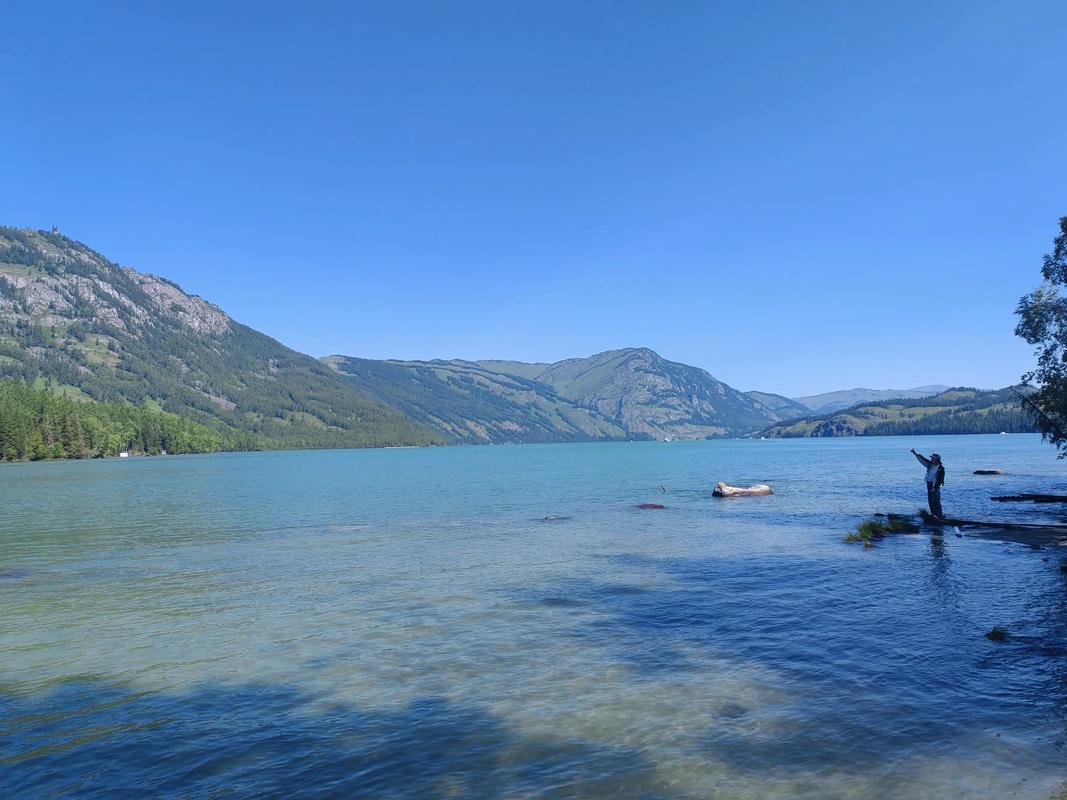
This is the shortest loop I would recommend if the goal is to meet Tuvan people rather than just see the lake. Day 1: drive or take a morning bus from Burqin to Jiadengyu, then a shuttle to Kanas village, check in to a Tuvan-run guesthouse, walk the lake shore in the late afternoon. Day 2: take the morning boat up the lake to the Three Bays, then a local van to Baihaba for the night, with the border permit pre-arranged. Day 3: walk the ridge above Baihaba, return to Hemu in the afternoon, stay a second night in a log cabin, and drive back to Burqin or onward to Koktokay the next morning. Burqin to Kanas is about 130 km of paved road; in winter it is closed to ordinary traffic and the only way in is a snowmobile convoy.
Frequently asked questions
Are the Tuva people of Kanas the same as the Tuvans of Russia?
No, but they are closely related. Both groups speak a Siberian Turkic language, share a forest-trapper-herder culture, and have historically used saddle-notched log cabins. The border between the two communities was drawn in the 18th century and has been mostly closed since then. Modern Tuvans on the Chinese side identify as Chinese citizens of the Mongolian ethnic group, while keeping a strong local identity as Tuva.
Do Tuvan families in Hemu still live in the wooden log cabins?
Many keep the original cabin as a guesthouse, a place for receiving visitors, and a storage shed for smoked meat and dairy, while the family itself lives in a brick or tile-roofed house up the slope. In Baihaba the log cabin is still the main home for several families, especially in the older upper part of the village.
What language should I speak in a Tuvan village?
Mandarin works everywhere. Younger Tuvans will also respond to basic Kazakh or Uyghur. English is patchy and mostly limited to the bigger guesthouses in Hemu.
Can I stay overnight in a Tuvan family home?
Yes, in Hemu and Baihaba, through a Tuvan-run guesthouse. In Baihaba you also need the border permit, which the guesthouse will arrange. A typical family room in 2024 is 250 to 400 CNY per night with breakfast and dinner, and the family meal usually includes salted milk tea, fresh bread, and a meat-and-potato stew.
Disclaimer
This article is a personal portrait of the Tuvan community around Kanas Lake, based on four visits between 2017 and 2024. Population figures and ethnic classifications are drawn from publicly available Chinese government data and from published ethnography, including work cited by the Chinese Academy of Social Sciences. Festival dates, opening times and border permit rules change every year; check the Burqin County Tourist Information Centre or the Jiadengyu ticket office before you travel. The author is a traveller, not an ethnographer, and corrections from readers with deeper knowledge of the community are welcome.
About the author
Karl Huang first walked into a Tuvan log cabin in Hemu in October 2017, and has been back three more times, most recently in early autumn 2024. He writes destination guides based on first-hand route research, interviews with local hosts, and on published ethnography. For this article he also spoke with two Tuvan guesthouse owners in Baihaba, a horse-trek guide from Hemu, and a graduate student in Urumqi documenting Tuvan songs in Pinyin on WeChat.