Published: July 07, 2026 | Author: Karl Huang
The first time I drove the highway west out of Kuqa, Kizil Caves were just a name on a list I half-ignored. My plan was Turpan, or Kashgar, somewhere with a louder reputation. I stopped at Kizil because the road bent that way and a local in Kuqa old town had pressed a finger on the map and said, “You should see the paintings.” He was right. What I found cut into a rust-red cliff above the Muzat River is, by most accounts, the oldest and largest body of Buddhist cave art in Xinjiang — and almost nobody on the usual Xinjiang loop slows down for it.
This guide is the one I wish I’d had: where Kizil actually sits, what the murals and the empty rooms are telling us, how to get there from Kuqa, and what to expect when you stand inside a 1,500-year-old cave with a flashlight. If you want the close visual reading of the frescoes themselves, our companion piece on reading Kizil’s oldest Buddhist murals goes deeper on the imagery.
Quick Reference: Kizil Caves at a Glance
| Aspect | Details |
|---|---|
| Location | Baicheng County, Aksu Prefecture, on the north bank of the Muzat River, about 70 km west of Kuqa |
| Best time to visit | May to October |
| Altitude | around 1,100–1,200 m |
| Our recommended stay | half a day from Kuqa; pair with a full Kuqa day |
| In short | The earliest and largest Buddhist grotto complex in Xinjiang, carved roughly between the 3rd and 8th centuries |
Where Kizil Sits, and Why That Matters
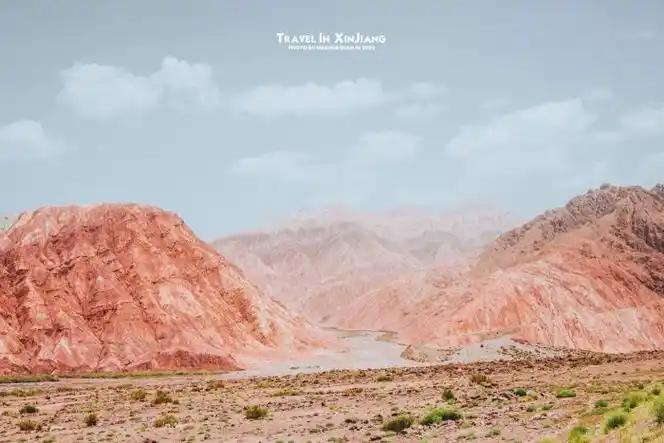
Kizil (克孜尔千佛洞, Kizil Thousand Buddha Caves) lies in Baicheng County, the pass-town between Kuqa and the higher Tianshan. The caves are cut into the cliff on the north bank of the Muzat River, a tributary that drains the snows of the Tian Shan and runs down toward the Tarim Basin. That position is not an accident. Kizil sat on the northern branch of the Silk Road, in the territory of the ancient kingdom of Kucha (Qiuci), one of the great oasis states of the Tarim. Caravans, pilgrims, and monks moved through here, and the wealth and piety of Kucha paid for the caves.
First Impressions: A Cliff Full of Empty Rooms
When I arrived, the thing that hit me was not the color but the emptiness. More than 200 cave chambers are numbered at Kizil, yet only around 80 still hold recognizable murals. The rest are hollowed rooms, some with a square central pillar left standing in the middle, some bare. Standing in the midday heat with the river below and the cliff honeycombed above me, I understood why travelers call it haunting. The caves are cool and dim; you walk a marked loop, and a guide switches on a light in each painted chamber.
The signature layout is the “diamond throne” cave — a main hall with a square pillar down the center. Pilgrims walked clockwise around that pillar, treating it as a stupa. If you only remember one architectural fact about Kizil, make it that: the caves were built to be walked through, not just looked at.
Reading the Art: Kucha Blue, Diamond Thrones, and Jataka Tales
The murals that survive are the reason Kizil matters to art historians. They are painted in a palette dominated by a deep azurite blue that specialists call “Kucha blue” or “Kizil blue,” set against warm ochres and whites. The figures have a recognizable local rhythm — elongated bodies, rounded faces, and a sense of movement borrowed from Central Asian and Gandhara traditions, blended with Persian decorative instinct. Scenes draw on the Jataka tales (stories of the Buddha’s former lives), the life of the historical Buddha, and rows of devotees and apsaras.
For a fuller visual tour of what those paintings depict, see our companion guide to Kizil’s murals. Here I want to focus on the experience of being in the caves and the history around them.
A Kingdom That Gave China a Translator
Kizil cannot be separated from Kucha. In the 4th century, the kingdom produced one of the most important figures in Chinese Buddhism: Kumarajiva (344–413), born in Kucha and later taken to Chang’an, where his sutra translations shaped Chinese Buddhist thought for a thousand years. His story is the human bridge between this red cliff and the temples of inland China. You can read more about the wider cultural layer in our guide to Kuqa and Qiuci culture.
What the Empty Walls Tell Us
The blank patches on many cave walls are not weathering alone. In the early 20th century, expeditions from several countries removed murals and fragments from Kizil. The German Turfan expeditions, led by Albert Grünwedel and Albert von Le Coq between roughly 1906 and 1914, took a large portion; many of those paintings are now held in Berlin’s Museum für Asiatische Kunst, with other pieces in St. Petersburg, Tokyo, and Seoul. Walking the caves today, you see the ghost outlines where sections were cut away. It is a blunt lesson in how much of this art left the cliff.
How to Get to Kizil Caves
Most visitors base themselves in Kuqa, which has both rail and air connections to Urumqi and onward to Kashgar. From Kuqa it is roughly a 70 km drive west toward Baicheng; with a private car or driver the trip takes about 1.5 to 2 hours each way. Public buses run to Baicheng, but the final hop to the cave entrance is easiest with your own transport. I drove it myself and found the road good, though I downloaded an offline map before leaving the highway — signal thins out once you are in the river valley.
The site is ticketed and has a fixed visiting route through the main painted caves. Photography is usually restricted inside the chambers to protect the murals, so expect to remember rather than shoot. Bring water, a hat, and a layer even in summer — the cliff face bakes by midday and cools fast after sunset.
Best Time to Visit and What to Expect
The practical window is May through October, when access roads are clear and the river valley is green rather than frozen. I prefer the shoulder months — late May or September — when the light is softer and the site is quiet. Winters are cold and some services in Baicheng and Kuqa thin out, so I would not plan a first visit then.
Manage expectations: this is not a polished museum. It is a working archaeological and religious site on a cliff. The reward is exactly that raw quality — you are looking at paint applied by hand more than a millennium ago, in the rooms where monks once sat.
A One-Day Itinerary From Kuqa
If you have one full day, leave Kuqa mid-morning, reach Kizil before the worst heat, walk the marked cave loop slowly with a guide, and eat a long lunch in Baicheng or back in Kuqa. On the way back, the Subashi Ruins — the mudbrick shells of another Kucha-era Buddhist monastery complex — make an easy, usually empty add-on, and the old town of Kuqa itself deserves an evening. If Buddhist cave art has hooked you, the Bezeklik Thousand Buddha Caves near Turpan are the natural next stop on the other side of the region.
Frequently Asked Questions
Do I need a guide at Kizil Caves?
Not strictly, but I recommend one. Signage exists, but the caves’ meaning — the central pillars, the Jataka scenes, the missing murals — opens up considerably with a guide who can point to what you are looking at.
When is the best time to visit Kizil Caves?
May to October, with late spring and September my personal picks for light and quiet. Avoid deep winter unless you are ready for cold and reduced services.
Why are so many Kizil murals in Berlin and elsewhere?
Early 20th-century expeditions, especially the German Turfan expeditions, removed large sections of mural from the caves. Significant holdings are now in Berlin, with others in St. Petersburg, Tokyo, and Seoul. The empty walls at Kizil are the visible result.
Is Kizil Caves worth visiting if I’m already in Kuqa?
For me, yes. It is an easy half-day from Kuqa, it is far less crowded than the headline Silk Road sites, and it is genuinely the oldest Buddhist art in Xinjiang. If your interest is the region’s Buddhist past rather than just its landscapes, it is a clear add-on.
Disclaimer
This guide is based on my visits and ongoing research. Opening hours, ticket prices, photography rules, and access roads change, and conservation work sometimes closes chambers. Confirm the important details with official sources before you travel, and use your judgement on remote stretches of Xinjiang.
About the Author
Karl Huang — I am a travel writer and Xinjiang local who has covered the region from the Pamir Plateau to the Gobi. I write from firsthand experience and check my facts against current sources. Questions or tips? Reach out through our contact page.