Published: October 16, 2026 | Author: Karl Huang, Xinjiang Attractions Editorial Team
Most people searching for the Kizil caves want the basics: where they are, and whether the detour from Kuqa is worth half a day. This guide covers that, but its real subject is the paint. We spent an afternoon in the open chambers with a site guide, and this piece explains what those walls actually show, because the murals are stranger than most visitors expect. We also follow the panels that were cut out and shipped abroad a century ago, which explains why so many ceilings show bare, knife-marked plaster today.
A note on method: we visited in person, cross-checked details against the Kizil research institute’s announcements and current ticket listings, and we say so openly wherever sources disagree. For the wider story of the trade routes that created this place, our Silk Road history in Xinjiang guide lays out the timeline first.
Why the Kizil Murals Still Matter
The caves sit in Baicheng County, Aksu Prefecture, on the north bank of the Muzart River, punched into a long crumbling sandstone ridge the locals call Mingwü Dagh. Work began around the third century AD and continued, on and off, into the eighth, which makes Kizil the earliest major Buddhist cave complex in China by the reckoning most scholars use. Dunhuang’s Mogao Caves started a century or more later.
What survives is roughly ten thousand square metres of painting across 236 numbered chambers, made for a kingdom, Kucha, that no longer exists. Kucha spoke its own language, Tocharian B, and grew rich on the northern rim of the Taklamakan. The murals are the kingdom’s loudest surviving voice, and they deserve more attention than the usual “oldest caves in China” headline gives them.
The Caves by the Numbers
| Item | Detail |
|---|---|
| Location | Kizil township, Baicheng County, Aksu; about 67 km west of Kuqa |
| Carved | Roughly 3rd to 8th centuries AD |
| Scale | 236 numbered caves, around 10,000 m² of surviving murals |
| Layout | Four zones: west valley, inner valley, east valley, rear mountain |
| Tickets | About ¥70–90 with guided tour included (listings disagree) |
| Hours | Summer 09:30–19:00, winter 10:00–18:00; closed Mondays |
| Time needed | Half a day from Kuqa, including the drive |
Standing in the Kizil Caves Today: What We Saw
When we visited, the first surprise was the scale, which no photo prepares you for. Chambers are punched into the cliff in rows, linked by open-air walkways and steel stairs, and the valley below runs green for a few hundred metres before the desert takes over. From the platform you can pick out the four zones by eye, with the dense west-valley group nearest the entrance.
Visiting works in small guided batches. Our group was six people with a guide who carried a torch, and the torch mattered, because the chambers are deliberately dim to protect the pigment. She would run the beam slowly across a ceiling, resting it on one square of painting at a time, and the colours came up out of the gloom: a deep mineral blue, a red gone brown at the edges, thin bands of green. If you plan to compare cave sites, our Bezeklik Thousand Buddha Caves guide covers the Turpan alternative.
Two honest disappointments. Many walls show clean rectangles where panels were sawn out, soot-blackened haloes, faces scratched off centuries ago. And the open caves rotate; you might see only five or six chambers in a day. That is still enough, because the surviving painting is concentrated, not scattered.
The Diamond Grid: One Story Per Panel
Kizil’s signature move is its ceiling composition. Painters divided the sloped ceilings of the central-pillar caves into a lattice of rhomboids and filled each diamond with a single complete scene: one jataka tale, one moral episode from the Buddha’s chain of previous lives. A single ceiling can hold a hundred or more panels. Standing under one feels like standing inside a comic strip drawn fourteen centuries ago, each frame self-contained but all marching the same way.
The stories are often blunt. The nine-coloured deer, the monkey king who sacrifices himself for his troop, the prince who feeds a hungry tigress: these are not softened bedtime versions. Our guide pointed out one panel where you can still count the rows of small onlookers crowded around the main action, pressed into a space the size of a postcard. The line work deserves its reputation too: outlines drawn with an even confidence that Chinese writers later praised as “bent iron and coiled silk”.
How the Painters Got Their Blue
The blue is the first thing most visitors comment on, and it has a supply chain behind it. The pigment is ground lapis lazuli carried down from the mines of Badakhshan, in what is now Afghanistan, traded through the oases until it reached this cliff and was worked into plaster by people who never saw the mountain it came from. Painters also used a cheaper azurite for broader fills, and the two blues often sit side by side.
That detail is evidence of how completely Kucha was plugged into continental trade, and one reason art historians treat these rooms as a hinge between Indian, Persian and Chinese painting. When the monk Xuanzang passed through Kucha in the 630s, he recorded that the kingdom’s music excelled all other lands. The painted orchestras back him up: in the music cave, number 38 in the west valley, more than twenty musicians still hold their instruments in rows, angle harps, pipa lutes and panpipes among them.
Three Phases of Painting on the Cliff
Scholars split the murals into broad phases. Early rooms lean on Indian and Central Asian models: heavy bodies, strong outlines, earthy reds. The middle phase is the classic Kizil look, the one with diamond-grid ceilings and confident blue. Later rooms show growing contact with the Chinese heartland, softer modelling and different drapery, as Tang influence moved west into the Tarim.
You do not need dates to enjoy this. Ask the guide, in each chamber, which phase you are in. The answers jump around, because caves were dug and repainted across five centuries, and one wall can carry three centuries of hands.
The Murals That Left for Berlin
Now the harder part of the story. In the early 1900s German expeditions, most famously led by Albert von Le Coq, removed large quantities of mural by sawing them off the walls in sections. The panels were shipped to Berlin, studied, published and displayed. A significant share of that haul was later destroyed when Berlin was bombed in the Second World War. Survivors went into what is now the Museum für Asiatische Kunst, and further Kizil fragments sit in collections in St Petersburg, Tokyo and elsewhere.
So when you see a rectangle of bare plaster, there is a fair chance the matching painting rests in a European or Japanese storeroom, if it survived at all. The upside is technological: Chinese and German teams have spent recent years digitally reuniting the surviving panels with the walls they were cut from, and several chambers have been virtually reconstructed. Visit Berlin after Kizil, as we once did in reverse, and the two halves of the story snap together.
Reaching the Cliffs from Kuqa
Kuqa is the practical base, and the trip is about 67 km each way, call it an hour and a half by car. A chartered car for the day runs roughly ¥400 to 600 and lets you pair the caves with the Subash temple ruins near Kuqa, an open-air monastic site that makes a natural second stop. A hired taxi is cheaper if you only want the caves. A local bus also runs toward Kizil township for a few yuan, followed by a short taxi ride, but the timings eat half your day.
Coming from the west, Baicheng county town is closer than some maps suggest, and it has its own transport options; we cover the county in our Baicheng guide. For most itineraries Kuqa wins on food, hotels and trains.
When to Go, and What the Light Does
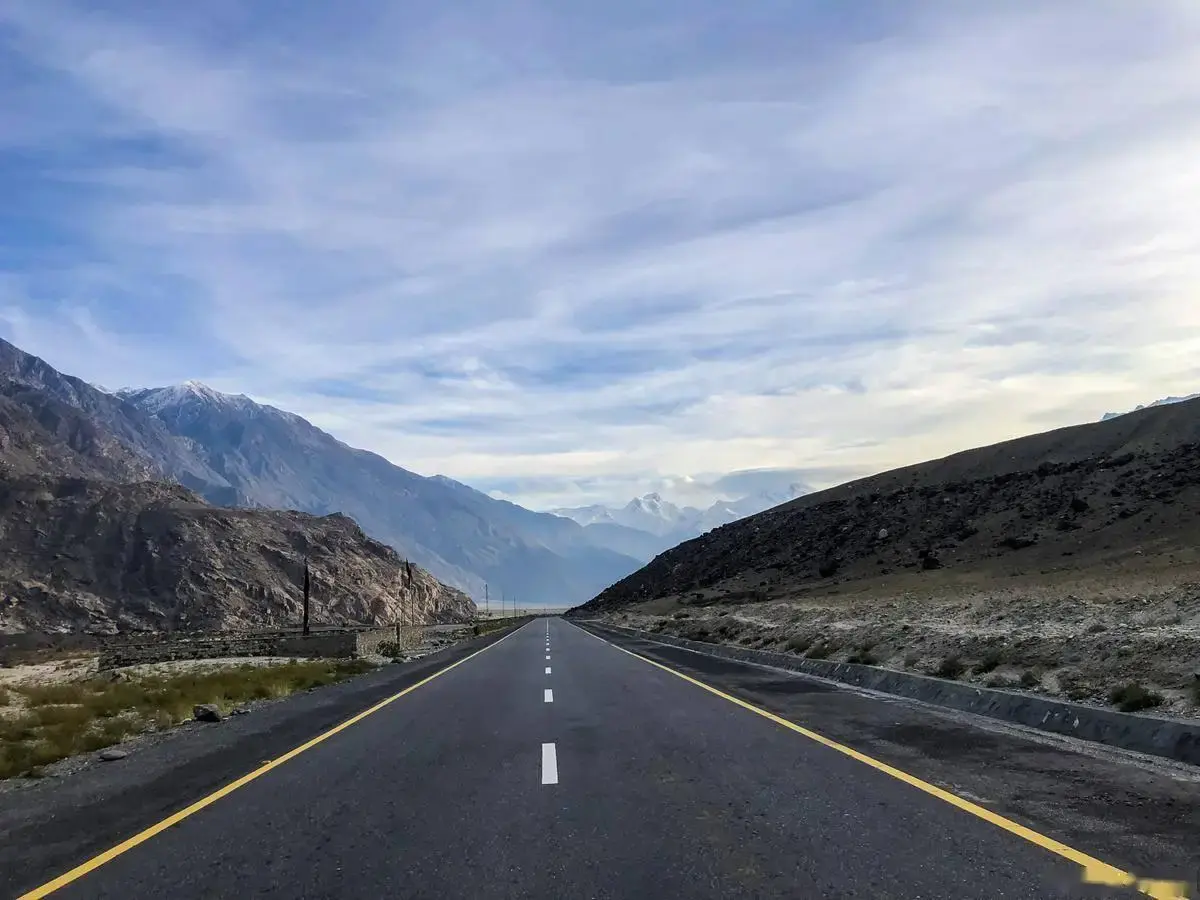
Spring, April into June, and autumn, September into October, are the comfortable windows: warm days, cold mornings, manageable sun. Summer works but mid-afternoon temperatures above 35°C on an exposed cliff walkway are no joke; go at opening time if July or August is your only option. Winter is quiet and the caves stay open on the winter schedule, though the wind on that ridge is real.
Hours run 09:30 to 19:00 in the warm season with last entry at 18:00, and 10:00 to 18:00 from November with last entry at 17:00. The site closes on Mondays except national holidays. Morning batches are calmer than the midday tour-bus window.
Where to Sleep: Kuqa Town or Baicheng
Stay in Kuqa unless you have a reason not to. The town has the region’s deepest hotel bench, from simple business places around ¥150 a night to better four-star options near ¥400, and it sits right on the rail line for the classic overnight train to Urumqi. Baicheng town has comfortable but plainer lodging. Kizil township itself has basic guesthouses only; we would not base there without your own driver.
Eating in Kuqa Between Visits
The caves have no food service, so eat before you go and carry water and a snack for the cliff. Kuqa makes that easy, because the town eats well even by Xinjiang standards.
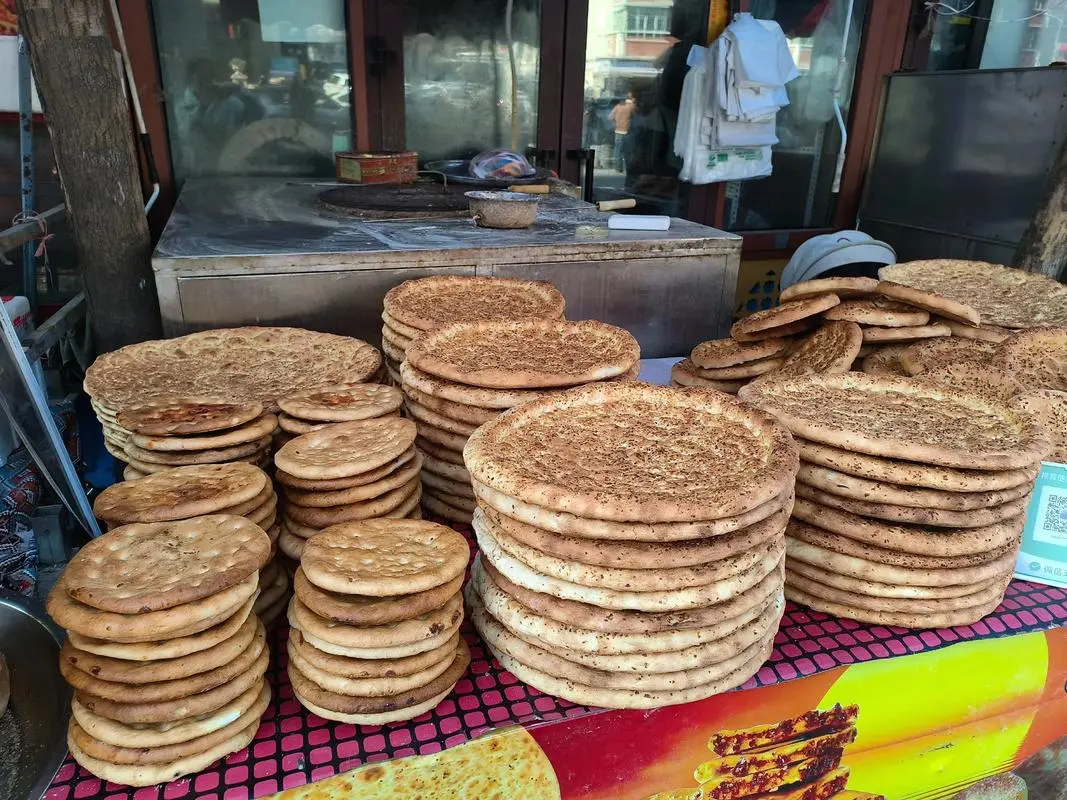
Start with naan, baked against the wall of a tandoor and sold warm from street racks all over town; a fresh one costs a few yuan and travels well in a day pack. Then do noodles: the local hand-pulled laghman, stir-fried with meat and peppers, is the reliable mid-range lunch at roughly ¥20 to 35 a plate.

Rice pilaf arrives at lunch counters piled with lamb and yellow carrot, and baked samsa, thin-skinned buns stuck to the tandoor wall, make the best two-bite snack. We once did the whole trip on naan, samsa and a thermos of tea.
Rules at the Cliff Face
- Photography is mostly a no. Flash is banned everywhere, tripods and selfie sticks too, and most open chambers allow no shooting at all; assume no and enjoy looking.
- You go in with a guide. Batches of about five or six walk through together; independent wandering is not how the site runs.
- Book ahead in season. Real-name booking through the research institute’s online channels is standard, and daily numbers are capped.
- Do not touch anything, including walls that look already ruined. Pigment lifts off plaster with remarkable ease.
- Dress for the ridge: sun protection in summer, a windproof layer outside winter’s obvious kit, shoes that grip steel stairs.
A Half-Day Around the West Valley
Leave Kuqa by 08:30 with breakfast bought the night before. Take the first morning batch through the west-valley group, which holds the best-painted rooms including the music cave; count on 90 minutes to two hours. Walk up to the viewing platform afterwards, then drive back toward the main road and add the Subash ruins if your driver agrees, and be in Kuqa by mid-afternoon for a late lunch, with an evening stroll in the old town if energy allows.
Questions We Hear About the Murals
Are the Kizil caves worth it if I have already seen Mogao?
In our view, yes. Mogao overwhelms with scale; Kizil rewards with strangeness, the diamond grids, the music cave, the visible scars of the murals’ twentieth-century dispersal. For thinking about afterwards, Kizil is arguably the richer of the two.
Can I take photos inside?
Assume no. Flash is banned outright and most chambers prohibit all photography. Save the camera for the walkways and the valley.
How much does it cost?
Budget roughly ¥70 to 90 per person with the guided tour included. Listings currently disagree on the exact figure, so treat that as a range and confirm when booking.
A Note on Tickets, Numbers, and Changes
Disclaimer: This guide is based on our own visit and on sources checked in October 2026. Ticket prices, opening hours, the list of open caves and booking rules all change, and some listings currently disagree with each other. Verify details with the site or your hotel before you travel. We are not responsible for losses caused by outdated information.