Published: August 4, 2026 | Author: Liam Foster, Silk Road archaeology correspondent | Reviewed for accuracy prior to publication
Let me set expectations before you spend half a day driving out here. The Bezeklik Thousand Buddha Caves are one of the most historically important Buddhist sites in Central Asia, and most of what made them important is no longer on the walls. Roughly a century ago the best murals were sawn off and carried to Europe. Knowing that going in changes the visit from a disappointment into something closer to a pilgrimage, which is why this guide leads with it rather than burying it.
Bezeklik Thousand Buddha Caves at a Glance
| Chinese name | 柏孜克里克千佛洞 (Bǎizīkèlǐkè Qiānfódòng) |
|---|---|
| Meaning | Roughly “the place where there are paintings” in Uyghur |
| Location | Mutou Valley, in the Flaming Mountains, around 45 km northeast of Turpan |
| Period | 5th to 14th century; artistic peak under the Gaochang Uyghur Kingdom (9th-13th c.) |
| Caves catalogued | 83 numbered; around 40 retain mural fragments; a small rotating set is open |
| Typical ticket | Approximately ¥40-55 (confirm on arrival, prices are revised periodically) |
| Time needed | 60-90 minutes at the caves themselves |
| Photography | Not permitted inside the caves; fine in the valley and on the terrace |
| Pairs well with | Flaming Mountains, Tuyoq Village, Gaochang Ruins |
Bezeklik sits inside the Turpan Depression, so nothing about the climate is moderate. If you are still assembling the wider route, our Turpan city guide covers where to base yourself and how the sites string together.
Why the Walls Are Mostly Bare: The Part Nobody Mentions
Between 1902 and 1914, four German expeditions worked the Turpan oasis, the later ones led by Albert von Le Coq. At Bezeklik his team used fox-tail saws to cut the painted plaster away from the rock in sections, crated it, and shipped it to Berlin. The haul included the celebrated Praṇidhi scenes, large panels showing the Buddha attended by donors in Persian, Indian, Chinese and Central Asian dress. They are among the clearest surviving pictures of who actually moved along these routes.
The panels that reached the Museum für Völkerkunde were mounted directly onto the walls of the exhibition rooms, which meant they could not be moved to safety later. Allied bombing of Berlin in 1943 and 1944 destroyed a large share of them. Other fragments from the same period ended up in Saint Petersburg, Tokyo, Delhi, Seoul and London, so the site is now scattered across at least half a dozen countries, and a meaningful portion simply no longer exists.
Some earlier damage was local rather than foreign. After Islam became established in the Turpan region, many faces and eyes in the murals were deliberately effaced, and later occupants used some chambers as shelter and storage, adding soot and wear. Bezeklik’s losses accumulated over centuries; the German expeditions were the largest single subtraction, not the only one.
What this means for your visit
You are looking at a stripped site with rectangular scars where panels were removed, patches of surviving colour in corners and ceilings, and reproductions in some chambers. Visitors expecting Dunhuang tend to leave unhappy. Visitors who come for the architecture of the complex, the valley setting, and the specific story of how this material dispersed generally think it was worth the trip. If you want to see quality Xinjiang Buddhist painting still in situ, the Kizil Grottoes near Kuqa have retained considerably more.
What We Actually Saw
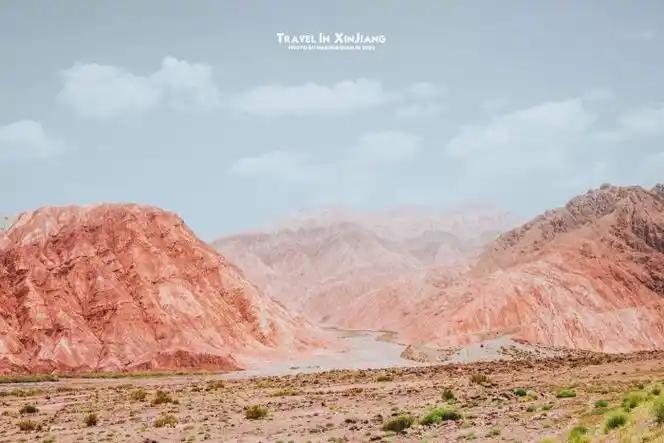
We drove out from Turpan in late September, leaving around eight in the morning to get ahead of the heat, and had the ticket gate almost to ourselves. The approach is the best part. The road drops into Mutou Valley and the landscape switches abruptly from grey gravel plain to a green ribbon of poplars and grapevines running along the stream, with the red sandstone ridges of the Flaming Mountains rising on both sides. The caves are cut into the cliff above that green strip, which is precisely why monks chose the spot: reliable water, defensible position, and separation from the city.
Inside, the chambers are smaller and darker than photographs suggest. Lighting is dim by design and your eyes need a minute in each one. In the third cave we entered, our guide pointed a torch at a ceiling corner and a section of blue and ochre robe appeared, sharp enough to make out the fold lines. That fragment did more for me than any of the reproduction panels. On the terrace outside, information boards show archival photographs of what each chamber held before removal, and standing in an empty room holding a picture of its own contents is a strange, effective piece of museum design.
One practical note from that morning: the walkway between chambers is exposed, and even in September the reflected heat off the rock was significant. By eleven the terrace was uncomfortable. Go early.
Getting to Bezeklik
There is no scheduled public transport to the caves, so you are choosing between a hired car and an organised tour.
| Option | Rough cost | Notes |
|---|---|---|
| Taxi chartered from Turpan | ¥250-400 for a half-day circuit | Agree the waiting time and the full stop list before departing; per-site haggling on the road is unpleasant |
| Turpan day tour | ¥200-350 per person | Usually bundles Flaming Mountains, Bezeklik and Gaochang or Jiaohe; commentary quality varies widely |
| Self-drive | Fuel plus rental | Road is sealed and easy; parking at the site is straightforward |
| Ride-hailing from Turpan | Cheap outbound, unreliable return | Do not count on finding a car back from the valley; arrange a return in advance |
The drive is about an hour each way from central Turpan. Most itineraries treat Bezeklik as one stop in a loop rather than a standalone destination. For how the region connects to the rest of the province, see our Xinjiang transportation guide.
When to Go
Turpan is the hottest place in China and the caves sit in the worst of it.
- April to early June: the strongest window. Warm rather than punishing, and the valley greens up.
- July and August: daytime highs regularly pass 40°C, with ground temperatures far higher. Visit before 10:00 or skip it.
- September to late October: our preference. Grape harvest is finishing, light is good, crowds thin out after early October.
- November to March: cold and quiet. The site stays open but hours shorten and the valley loses its colour.
Building Bezeklik Into a Turpan Day
Bezeklik on its own does not justify the drive for most people. It works well as the second stop on a half-day eastern loop:
- 08:00 Leave Turpan, drive east.
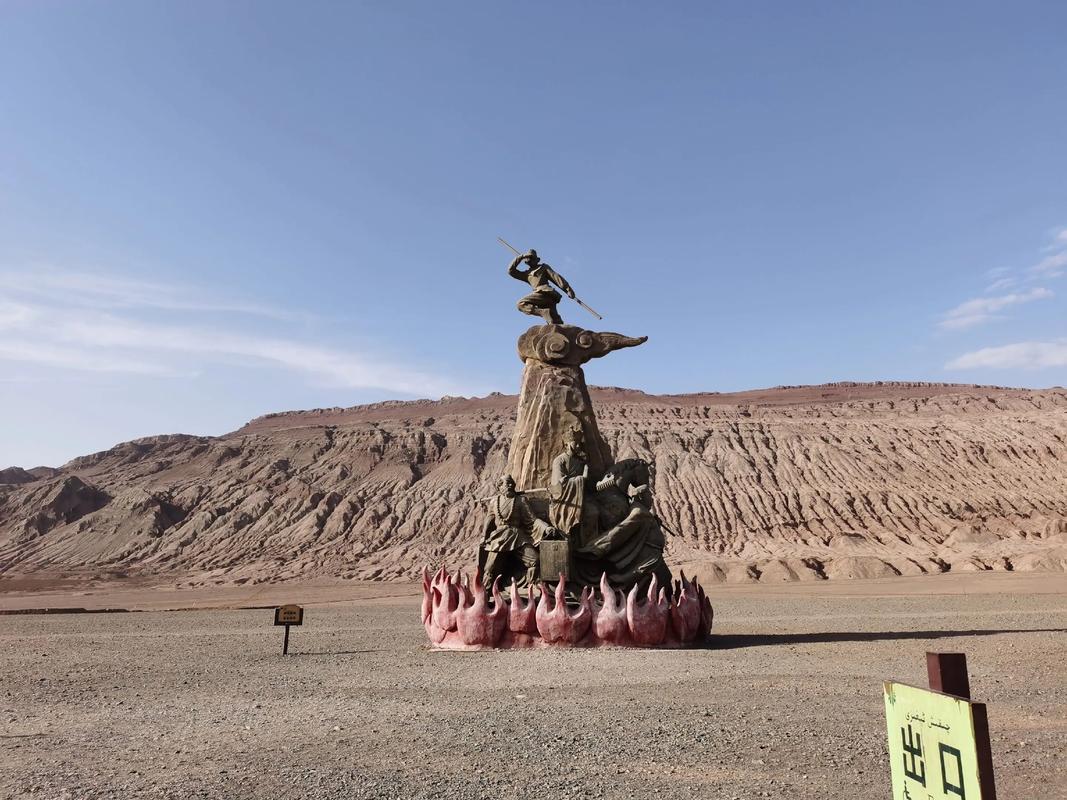
- 08:45 Flaming Mountains viewpoint, 30 minutes, mostly for the photograph and the giant thermometer.
- 09:45 Bezeklik caves, 75 minutes.
- 11:15 Tuyoq Village, an inhabited mud-brick village in a side canyon and a genuine highlight.
- 13:00 Lunch in Tuyoq or back in Turpan.
- 15:30 Gaochang Ruins once the light softens.
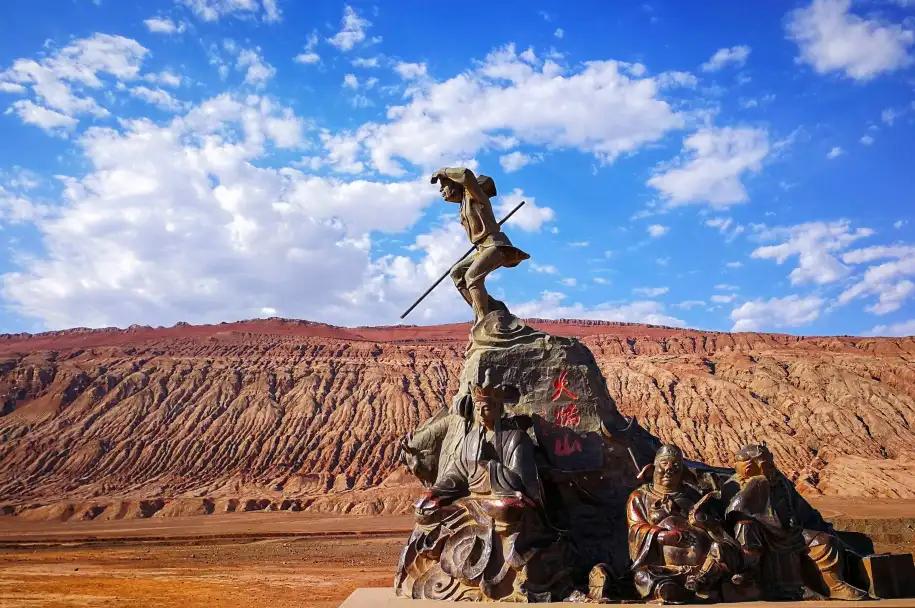
If you only have one full day in the oasis, many travellers get more from Jiaohe Ancient City and the Emin Minaret than from the cave complex. Add Grape Valley in season and the Astana Tombs if burial archaeology interests you.
Practical Notes
- Bring more water than feels sensible. There is limited shade on the terrace and the dry air pulls moisture out faster than you notice.
- Hire or join a guide. Signage is uneven and the site’s meaning is almost entirely historical. Without commentary you are looking at empty rooms.
- Cameras stay outside the chambers. This is enforced. Photograph the valley and the cliff face instead.
- Carry your passport. Standard for travel in the region, including site entry and checkpoints.
- See the Berlin context first if you can. The Xinjiang Museum in Urumqi gives useful grounding in Gaochang-period material culture and makes the caves read better.
- Footwear: stone steps and gravel, nothing technical, but sandals are a poor choice on hot rock.
Frequently Asked Questions
Is Bezeklik worth visiting if the murals were removed?
It depends what you want. As a site of Silk Road history, the setting, the architecture of the complex, and the story of dispersal, yes. As a place to see Buddhist painting, no. Go to Kizil for the painting.
How many caves can you actually enter?
A limited, rotating selection, typically under a dozen, depending on conservation work. Staff will tell you which are open on the day; you cannot request specific chambers.
Where are the Bezeklik murals now?
Mainly Berlin, though many Berlin pieces were destroyed by wartime bombing. Surviving fragments are held in Saint Petersburg, Tokyo, Seoul, Delhi, London and several private collections.
Can I get there by public bus?
Not directly. Buses run along the Turpan-Shanshan corridor but do not serve the valley road. Charter a car or join a tour.
How long should I allow in total?
Four to five hours door to door from Turpan if Bezeklik is your only stop; a full morning if you loop in the Flaming Mountains and Tuyoq.
Is it suitable for children or visitors with limited mobility?
There are stairs and uneven stone surfaces with no lift access, so it is difficult for wheelchair users. Children generally find the empty chambers dull unless a guide tells the story well.
Disclaimer
Ticket prices, opening hours and the set of accessible caves change with conservation schedules and local policy, and the figures here reflect conditions reported in 2026. Confirm current details with the site or your operator before travelling. Historical attributions follow published archaeological scholarship; where dating or provenance is debated among specialists, we have described the mainstream position rather than presenting it as settled.
About the Author
Liam Foster writes on Silk Road archaeology and frontier history for Xinjiang Attractions. He has travelled the Turpan and Kuqa cave circuits on multiple trips and cross-checks site information against museum catalogues and published excavation reports. Related work: Xinjiang Silk Road history, Kizil Grottoes and Loulan Ancient City.