Published: July 21, 2026 | Author: Liam Foster
Most travelers who type Luntai Populus Forest into a search box have no idea what they are about to find. I didn’t either, the first time I drove out of Korla in late October. The Tarim River bends through one of the last great stands of Populus euphratica on earth, and for about three weeks each autumn the whole grove turns the color of old brass. This guide comes from two trips I made to the forest, in 2021 and again in 2024, with notes I scribbled in a Korla hotel at midnight. I am not a tour operator. I just want you to catch the gold before the wind takes it. If the Luntai stands have already dropped, the smaller euphratica groves around Mulei in the east usually hold their colour a few days longer.
Why you can trust this Luntai Populus Forest guide
I have walked the boardwalks, ridden the park’s narrow-gauge train, and eaten too much laghman in Luntai while waiting for the light to change. The practical numbers below, the distances, the ticket ranges, the seasonal window, come from those visits and from the park’s own posted signage. Where I am unsure, I say so. Xinjiang’s ticket prices shift almost every season, so treat any yuan figure here as a starting point rather than a fixed quote.
Quick reference
| Item | Detail |
|---|---|
| Where | Luntai County, Bayingolin Prefecture, southern Xinjiang |
| What | The world’s largest primitive Populus euphratica forest, growing along the Tarim River |
| From Korla | About 75 km to Luntai town, then another 70 km to the park gate |
| Best time | Mid to late October; leaves peak inside a 2–3 week window |
| Cost | Roughly ¥60 to enter, plus about ¥100 for the sightseeing train |
| How to arrive | Fly or take the train to Korla, then hire a car |
| Time needed | One full day out of Korla, with 4–5 hours of round-trip driving |
Our visit: two Octobers in the golden groves
In 2024 I left Korla at 7:30 with a driver named Aziz, a quiet man from a village outside Luntai who has made this run hundreds of times. We reached the park gate at 9:25. The visitor center sells tickets and points you to the train platform, a low concrete strip where a yellow diesel pulls a line of open carriages. The ride runs roughly 13 km into the grove and back, about 90 minutes with a couple of stops. I remember the smell first: wet riverbank, smoke from a herder’s fire, and that dusty-sweet scent the poplars give off when the leaves dry.
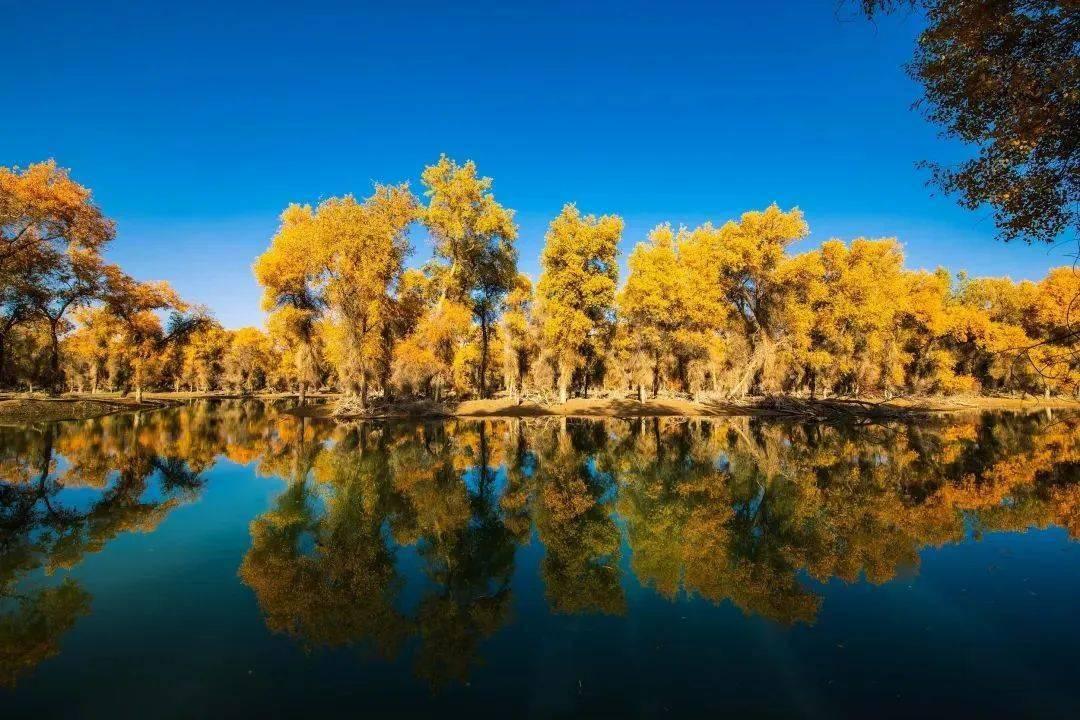
The train lets you off at a viewing platform above a bend in the Tarim. From there the view is the reason people come: thousands of slender trunks, some no thicker than a broom handle, others wide as a doorway, all lit the same impossible yellow against a hard blue sky. A herder stood nearby with two camels and charged ¥20 for a photo. I paid it. My 2021 trip was a week earlier in the month, and the leaves were only half-turned, patchy green and gold, which tells you how narrow the good window is.
One thing the brochures underplay: the forest is alive and dead at once. You will see standing grey skeletons, trunks split and bleached, that local rangers say have been down for centuries. The Populus euphratica earns its old nickname here, the tree that lives a thousand years, dies standing for a thousand, and lies unrotted for a thousand more. I am not vouching for the math. I am vouching for how strange it feels to walk among them.
How to get to Luntai Populus Forest
There is no train station at the forest and no airport closer than Korla. Most visitors fly into Korla (Korla Airport has flights from Urumqi and a few other cities) or arrive on the Xinjiang high-speed rail line that now reaches the city. From Korla you need a car. The road runs south through Luntai county and then east along the desert edge to the park entrance. Aziz quoted me around ¥500 for the day, fuel and waiting time included, which felt fair for a 300 km round trip.
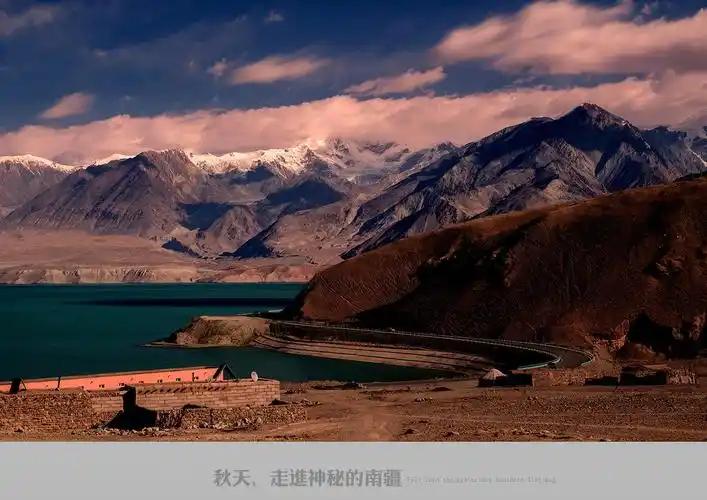
If you are already touring the south, the forest sits neatly on a Korla–Aksu–Kuqa loop. I have written a separate guide to Kuqa and the old Qiuci kingdom that pairs well with this stop, since both are an easy drive from the same base. The desert highway that crosses the Taklamakan also begins near here, at Lunnan, which makes a dramatic add-on if your driver agrees to a short run onto the dunes.
Best time to see the poplars turn gold
Late October is the answer, but the exact week moves with the weather. In a warm autumn the turn comes in the first days of November; after an early cold snap it can peak by October 20. The park gets busy on weekends in that window, and Chinese National Day (early October) is the wrong time entirely, too early for color and too crowded. I aimed for a weekday in the final week of October both times and had the train carriages nearly to myself.

Within a single day, the light is best before 10 in the morning and again after 5 in the evening. Midday washes the gold flat. If you care about photographs, plan to be deep in the grove for the early slot and save the drive back for the harsh middle hours.
Where to stay
Lodging at the park itself is limited to a few basic guesthouses, and I would not build a trip around them. Most people sleep in Luntai town (cheap, functional, forgettable) or, better, in Korla, where the hotels are newer and the food is better. Korla also lets you combine the forest with Bosten Lake, an easy half-day to the northeast, on the same itinerary.
What to eat around Luntai
Luntai sits in melon-and-lamb country. At a corner spot near the bus station I had a plate of banmian, hand-pulled noodles under a dark lamb sauce, for ¥18, and a wedge of local hami melon that tasted like sugar water. Roadside stalls sell roasted seeds and the small dried figs that grow in every southern oasis. None of it is fancy. All of it is the point. If your driver stops at a tuanchan (reclamation settlement) canteen, go in; the polo there, rice steamed with carrot and raisin under lamb, fed three of us for under ¥60.
Practical tips before you go
- Buy the train ticket when you buy entry, not later at the platform. The carriages fill on busy days.
- Bring more water than you think. The Tarim basin is dry, and the walk from the train stop to the river bend is longer than it looks.
- Alight jacket in October. Mornings sit near freezing; afternoons can hit 20°C. Dress in layers.
- Download offline maps. Signal thins out past Luntai, and your driver’s navigation may drop.
- Cash helps at the small stalls. Cards and Alipay work in Korla, less so at the park gate.
- Give the dead trees their due. The grey skeletons photograph better than the live ones at sunrise.
For the wider picture on etiquette, money, and what to pack, my 20 things to know before visiting Xinjiang piece covers the basics that apply across the region.
A sample one-day itinerary
07:30 – Depart Korla with your driver.
09:25 – Arrive at the park, buy entry and train tickets.
09:50 – Board the forest train; ride to the Tarim River viewing platform.
11:00 – Walk the boardwalk, photograph the standing dead trees, camel photo if you like.
12:30 – Train back to the gate; drive into Luntai for laghman lunch.
14:00 – Optional short run onto the desert highway toward Lunnan for dune scenery.
17:00 – Begin the drive back to Korla; arrive before dark around 18:30.
FAQ
Is the Luntai Populus Forest the same as the Tarim Huyanglin Park?
Yes. The forest and the ticketed park share the same grove along the Tarim River; “Huyanglin” simply means poplar forest in Chinese.
Can I visit outside autumn?
You can, and it is nearly empty, but the trees are green in summer and bare grey in winter. The gold is the only version worth the long drive.
Do I need a guide?
Not inside the park, the train and boardwalks are self-explanatory. You do need a car and driver to reach it, since no public transport runs to the gate.
How long does the train ride take?
About 90 minutes round trip with stops. It is the only way deep into the grove, so budget for it.
Disclaimer
This article reflects personal visits made in 2021 and 2024 and information available at the time of writing. Opening hours, ticket prices, and the train schedule change without notice, and the autumn color window shifts with the weather each year. Always confirm current details with the park or your accommodation before you travel, and check the latest entry requirements for Xinjiang. Nothing here is official advice, and the author accepts no responsibility for changes beyond his control.
About the author
Liam Foster is a travel writer based in northwest China. He has spent four autumns in Xinjiang, from the poplar groves of the Tarim to the passes of the Pamir, and prefers slow local drives to packaged tours. He writes for travelers who want the real place, not the brochure version.