Published: 21 July 2026 | Author: Liam Foster
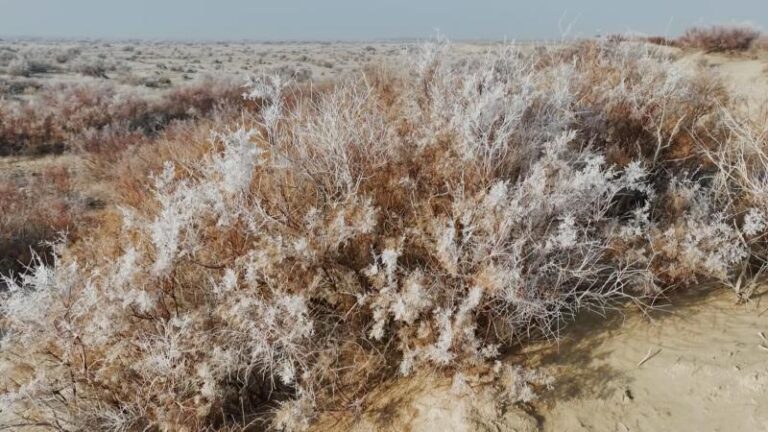
The Mulei Populus Forest sits in a pocket of raw desert in far northeastern Xinjiang, where some of the last wild poplar trees in the region still turn the color of fire each October. I first heard about it from a truck driver on the G7 expressway, and two trips later I am convinced it is one of the most underrated autumn spots in the whole province. This guide comes straight from those visits, plus what I picked up from locals who have walked these groves their entire lives.
Why you can trust this Mulei Populus Forest guide
I am not writing this from a brochure. I drove out to the forest twice, once in the second week of October 2023 and again in late October 2024, the second time with a Mulei-born driver named Serik who grew up in the shadow of the Beita Mountains. We camped near the tree line, ate laghman cooked over a gas stove, and talked to the family who run the ticket stall and have worked the gate for years. Everything below, the distances, the prices, the warnings, reflects what I actually saw. Where something changes year to year, I say so.
Mulei (木垒哈萨克自治县) is a Kazakh autonomous county in Changji Hui Autonomous Prefecture. It sits on the eastern rim of the Junggar Basin, right up against the Mongolian border. The poplar stand here is “primitive,” meaning it was never planted or tended. The trees seeded themselves, died back, and regrew along an old river course for centuries, which is exactly why it feels different from a city park. Xinjiang has a handful of old poplar forests, and Mulei’s is one of the three wild stands locals still talk about, alongside Luntai in the south and Yiwu over near Hami.
Mulei Populus Forest at a glance
| Detail | What to expect |
|---|---|
| Location | Mulei County, Changji Prefecture, about 180 km north of the county town, deep in the desert |
| Best season | Mid to late October, after the National Day crowds have gone |
| Oldest trees | Estimated 400+ years; locals point to a “King Hu Yang” near the center |
| Entry | Around 30 yuan at the gate (confirm on arrival) |
| Nearest airport | Urumqi (URC), or the small Qitai Jiangbulake Airport to the west |
| Lodging at site | None. Stay in Mulei town or drive back toward Urumqi |
| Network | Sporadic. Download offline maps before you leave paved road |
What the forest actually looks like
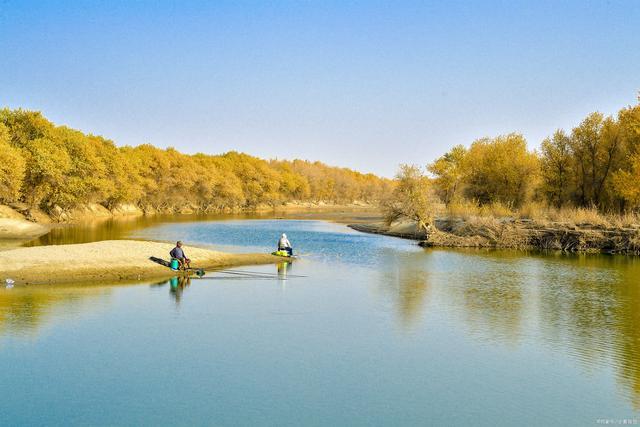
Most people picture a tidy row of golden trees. The real place is messier and better. The grove spreads across low dunes and dry riverbeds, trunks twisted and split, some leaning at impossible angles because the wind never stops. In late October the leaves go from green to yellow to a deep rust, and against the grey desert and the pale blue sky the contrast is hard to describe without sounding like a postcard. On my first morning there the air was so still that I could hear a single branch creak a hundred meters away.
Serik took me to what locals call the King Hu Yang, a hollow, lightning-struck trunk they estimate is more than four centuries old. He said the forest covers tens of thousands of mu, though no one agrees on the exact number, and that a few of the oldest trees only leaf on one side because the other half is dead wood. That half-dead, half-living look is the signature of the poplar. The trees can survive with almost no water for a year, then flush green again the next wet spring. Their roots reach down twenty meters or more to find moisture, which is why a grove can sit in bare sand and still come back to life.
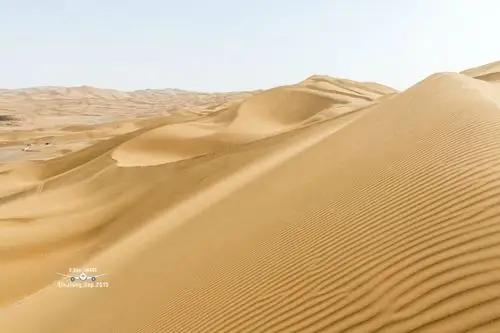
A few kilometers from the grove there is a singing-sand dune. When the wind moves the surface the sand makes a low hum you can feel in your chest, and Serik insisted we stand quiet for a minute to hear it. It is the kind of detail no photo captures, and it is one reason I tell people Mulei is worth the extra drive over the easier forests.
If you want a second, more developed poplar forest with boardwalks and a sightseeing train, the Luntai Tarim Poplar Forest in the south is the comfortable option. Mulei asks more of you and gives back more in return.
Getting to Mulei Populus Forest
There is no train that stops at Mulei, and the forest itself is nowhere near a station. The practical route is to reach Urumqi first, then drive. The high-speed rail network will get you to the Urumqi area from most big cities, and from there it is a straight run north on the G7 Beijing to Urumqi Expressway to Mulei town, roughly 280 km and about 3.5 to 4 hours depending on weather.
A newer option is the Qitai Jiangbulake Airport, which opened in 2024 and handles a small number of regional flights. Qitai borders Mulei, so landing there and driving east can shave an hour or two off the trip, though schedules are thin and change often. I have not flown it myself, so treat that as a lead to check rather than a promise.
From Mulei town the forest is another 180 km of mostly desert track. The last stretch is unpaved and rutted. I would not attempt it in a low sedan. A 4WD or a local driver who knows the route is the safe choice, and Serik’s advice was blunt: go with someone who has done it, because the turn-offs look alike and there are no signs you can trust once you leave the tarmac. On our 2024 trip a tour van ahead of us got stuck in a sand hollow and we spent an hour digging it out, which told me everything about going solo.
Best time to visit
The window is short. The leaves start turning in early October and the best color usually lands in the middle to the end of the month. The National Day holiday, the first week of October, draws domestic tour buses, so if you can, wait until the 10th or later. By early November the leaves are on the ground and the cold sets in hard. I went on the 24th in 2024 and had the central grove almost to myself.
Golden hour is the trick. Mornings are calm and the light is soft; late afternoon the low sun lights the trunks from behind. I shot most of my keepers between 7 and 8 a.m. and again around 6 p.m. Our Xinjiang photography guide covers the wider timing if you are planning a longer shoot trip.
For context on the wider season, autumn in Xinjiang is brief everywhere, which is part of why these poplar groves matter so much to photographers.
Where to stay
There is no lodging at the forest. You sleep either in Mulei town or you drive back toward Urumqi the same day. Mulei town has basic hotels in the 150 to 300 yuan range, clean but plain, and a couple of Kazakh-run guesthouses where you might share a courtyard with a ger. On my second trip we brought a tent and camped just outside the grove, which is allowed in places but check with the gate keepers first, because the wind picks up after dark and sand gets into everything, including the zipper of your bag.
Food on the road
Mulei town has a morning market worth getting up for. I ate laghman for 18 yuan, bought warm naan from a roadside oven, and tried kumis from a Kazakh herder who set up near the market on weekends. Out at the forest there is nothing, so pack water and food in Urumqi or Mulei before you leave the paving. A gas stove and instant noodles beat going hungry when the nearest hot meal is three hours away. Bring more snacks than you think you need; the drive back always takes longer than the drive out.
Practical tips
- Bring more water than you think. The desert is dry and you will not find a shop past Mulei town.
- Night temperatures in late October drop near or below freezing. A real jacket and a sleeping bag rated cold are not optional.
- Download offline maps. Network coverage vanishes once you are on the desert track.
- Fill the fuel tank in Mulei. There are no petrol stations near the forest.
- Wear closed shoes. The ground is sandy, studded with dry branches, and home to the occasional snake.
- Tell someone your plan. The route is remote enough that a breakdown without a phone is a real problem.
Sample itinerary
Day 1: Fly or take the train to Urumqi, rent a 4WD, and drive to Mulei town (about 4 hours). Eat at the night market, sleep in town.
Day 2: Leave by 8 a.m. for the forest, 180 km of mixed road. Arrive midday, walk the grove, photograph the King Hu Yang at golden hour, then camp or drive back.
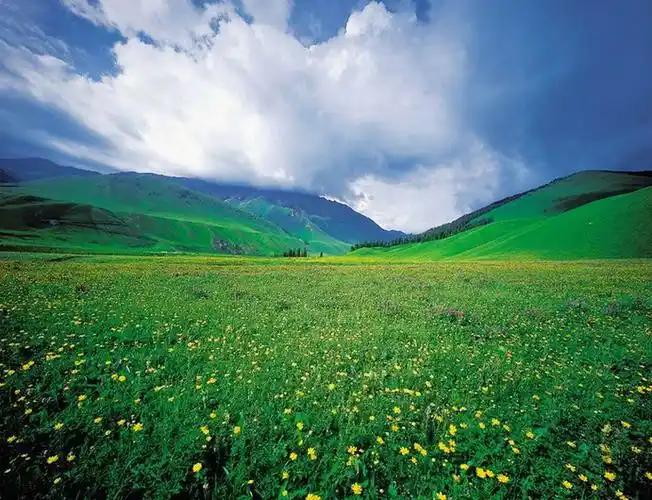
Day 3 (optional): On the way south, stop at the Jiangbulake terraced grassland in neighboring Qitai, or push on to Hami for melons and the eastern edge of the region.
FAQ
Is the Mulei Populus Forest the same as the one in Luntai? No. Luntai’s forest is in the south, inside a developed scenic area with a train. Mulei’s is wild, remote, and in the northeast. They are roughly 1,000 km apart.
Can I visit in summer? You can, but the trees are green and the desert is hot. The gold is an October thing. Summer is better for the grassland and the nearby singing-sand dune.
Do I need a guide? Not formally, but a local driver saves you from getting lost on the desert track and knows which gate is open. I would not go alone as a first-timer.
Is it worth the drive? If you want a quiet, untouched poplar grove and do not mind rough roads, yes. If you want comfort and boardwalks, go to Luntai instead.
Disclaimer
This article is based on personal visits in 2023 and 2024 and on-the-ground advice from local residents. Road conditions, ticket prices, opening dates, and flight schedules in Xinjiang change without notice, and border-area rules can tighten. Confirm everything with the county tourism office or your hotel before you travel, and check the latest official advisories. We are not responsible for changes to access or for anything that goes wrong on the trip.
About the author
Liam Foster is a travel writer who has spent eight seasons on the road in Xinjiang, from the Pamir Plateau to the Altai. He prefers the places most tour buses skip, and he pays his own way so the advice stays honest. He can be reached through the contact page for corrections or updates.