Published: July 13, 2026 | Author: Daniel Foster
Why this Kuqa travel guide is worth your time
Most travelers treat Kuqa (库车) as a fuel-and-go town on the Duku Highway and drive straight through. A proper Kuqa travel guide has to look back about 1,600 years, to when this oasis was Qiuci (龟兹), one of the richest Buddhist kingdoms of the Silk Road and a place where Indian, Persian, and Han Chinese worlds genuinely overlapped. I arrived expecting a dusty Tarim Basin stopover. I left thinking about faded wall paintings, a prince’s palace, and a monk whose translations are still recited in every Chinese temple.
I have spent the last six years writing about Xinjiang, and Kuqa is the town that keeps pulling me back. Everything below comes from my own visits, plus long talks with local guides and the staff at the sites. Where I cite a date or a name, it came from on-site panels and the records at the Silk Road history holdings in Urumqi. I have tried not to dress anything up.
Kuqa at a glance
| Best for | Buddhist cave art, Silk Road history, slow cultural travel away from the big crowds |
|---|---|
| Location | Northern rim of the Tarim Basin, Aksu Prefecture, southern Xinjiang |
| Elevation | About 1,000 metres |
| Historical name | Qiuci (Kucha), one of the 36 kingdoms of the Western Regions |
| Famous son | Kumarajiva (344–413), the monk who shaped Chinese Buddhism |
| Nearest airport | Kuqa Qiuci Airport (KCA) |
| Best months | April to June, and September to October |
| Minimum time | Two full days, not counting the Duku Highway |
What I found walking the old city
The first thing that surprised me was the sound. Kuqa’s older lanes still fall quiet in a way I did not expect from a county seat, and early on a Tuesday the only noise was a man sweeping apricot leaves off a brick path. My friend Niyaz, who grew up two streets from the old mosque, led me past courtyards where grapevines were tied to the eaves and old men sat repairing bicycle tyres. None of it is staged for visitors.
The centre of the story is the Kucha Prince Palace (库车王府). The Qing built the current walled compound in 1759 for the local ruler, and the last prince, Daud Khan, lived here into the 2000s; locals still call him the final prince of China. Inside you walk from a Qing-style reception hall into rooms furnished in a hybrid Uyghur and Han style that you will not see anywhere else. I spent longer than I planned in the small museum wing, which holds photographs of the palace through the last century and a few Kuchean-language fragments behind glass.
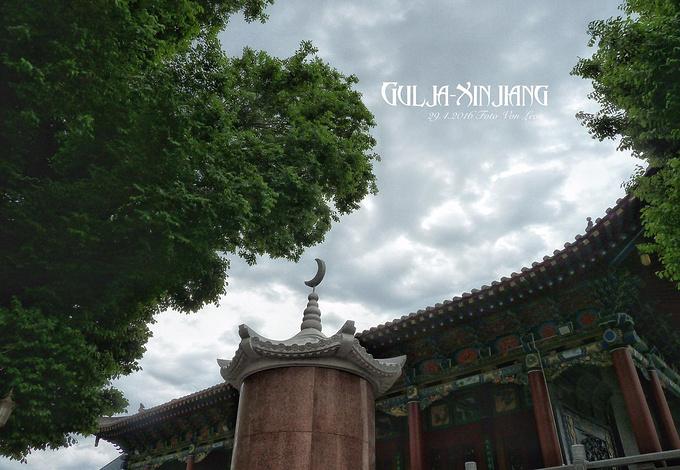
A short walk away, the old bazaar runs on a rhythm that has not changed much since Qiuci was a trading post. The naan ovens sit at the edge of the square, and by mid-morning the air carries smoke and yeast. I bought a round of Uyghur naan still hot enough to sting my fingers, then followed the smell of cumin to a cart selling lamb samsa.
Kizil Caves and the Qiuci painting school
Qiuci’s real claim to fame is underground, about 70 kilometres west of town. The Kizil Caves are the oldest major Buddhist cave complex in Xinjiang, carved between roughly the 3rd and 8th centuries. What stopped me was the blue. The painters used a mineral pigment, a lapis-derived ultramarine, that turned the ceilings into a deep night sky dotted with small Buddhas. The flying figures here have a weight and a swagger you do not find in the later, more restrained caves of the east.
You cannot just wander in. Access is controlled, a guide is required, and some chambers stay closed, so give yourself a morning and arrange it through your hotel the day before. Photography inside is forbidden, which is annoying and also the right call.
Tianshan Grand Canyon, an hour out of town
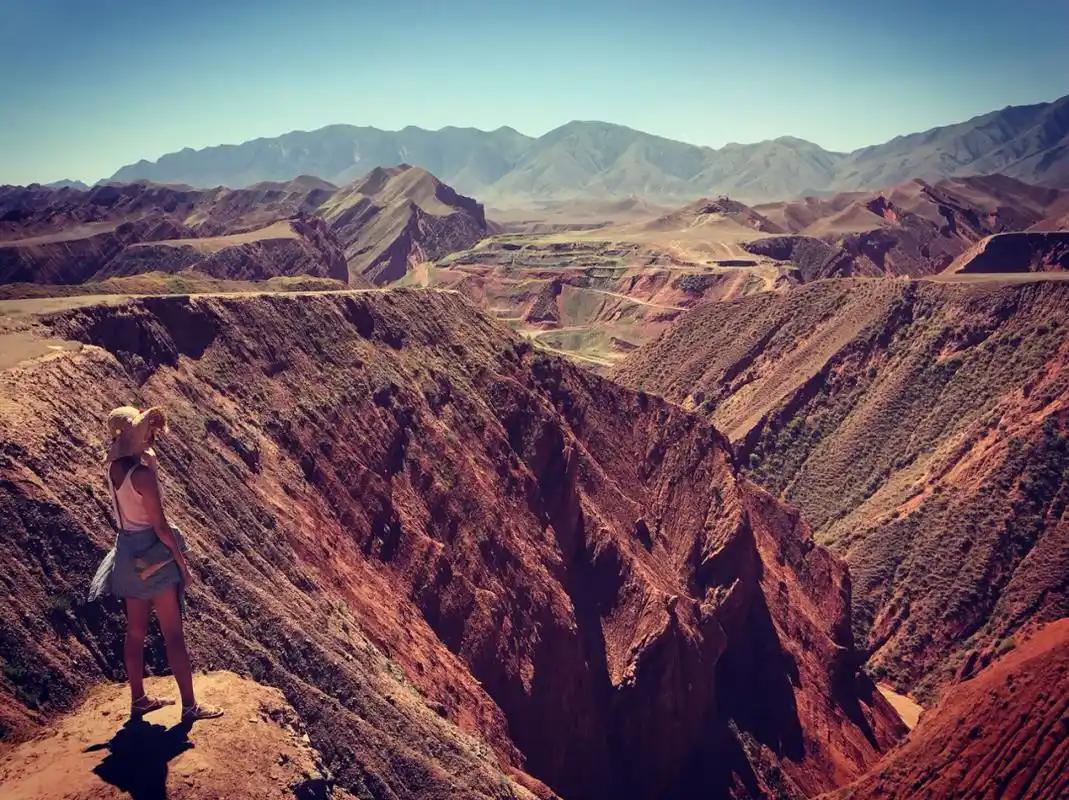
If the caves are the brain of old Qiuci, the Tianshan Grand Canyon (库车大峡谷, also called the Red Cliff Gorge) is its muscle. The road climbs out of the oasis into red sandstone walls that close in until the sky is a thin line. I went at about four in the afternoon, when the light turned the rock the colour of dried plums, and for once I understood why people keep calling this part of the world operatic. Wear proper shoes; the sandy floor slides under you.
Getting to Kuqa
Fly into Kuqa Qiuci Airport (KCA) from Urumqi, Xi’an, Chengdu, and a few other hubs; the terminal is small and you are in town within 20 minutes by car. Trains are the comfortable option from Urumqi: the Southern Xinjiang line reaches Kuqa, and the ride from the capital takes roughly ten to twelve hours, so most people take the overnight sleeper. If you want the full picture of rail times and booking, my Xinjiang high-speed rail guide lays it out station by station.
The road that made Kuqa famous is the Duku Highway (独库公路), which starts at Dushanzi in the north and ends right here in Kuqa. It opens only from about June to September, depending on snow, and it is one of the great drives in the country, dropping from alpine meadow to desert in a single day. I drove the southern half and pulled over perhaps ten times for no reason other than the view changing.
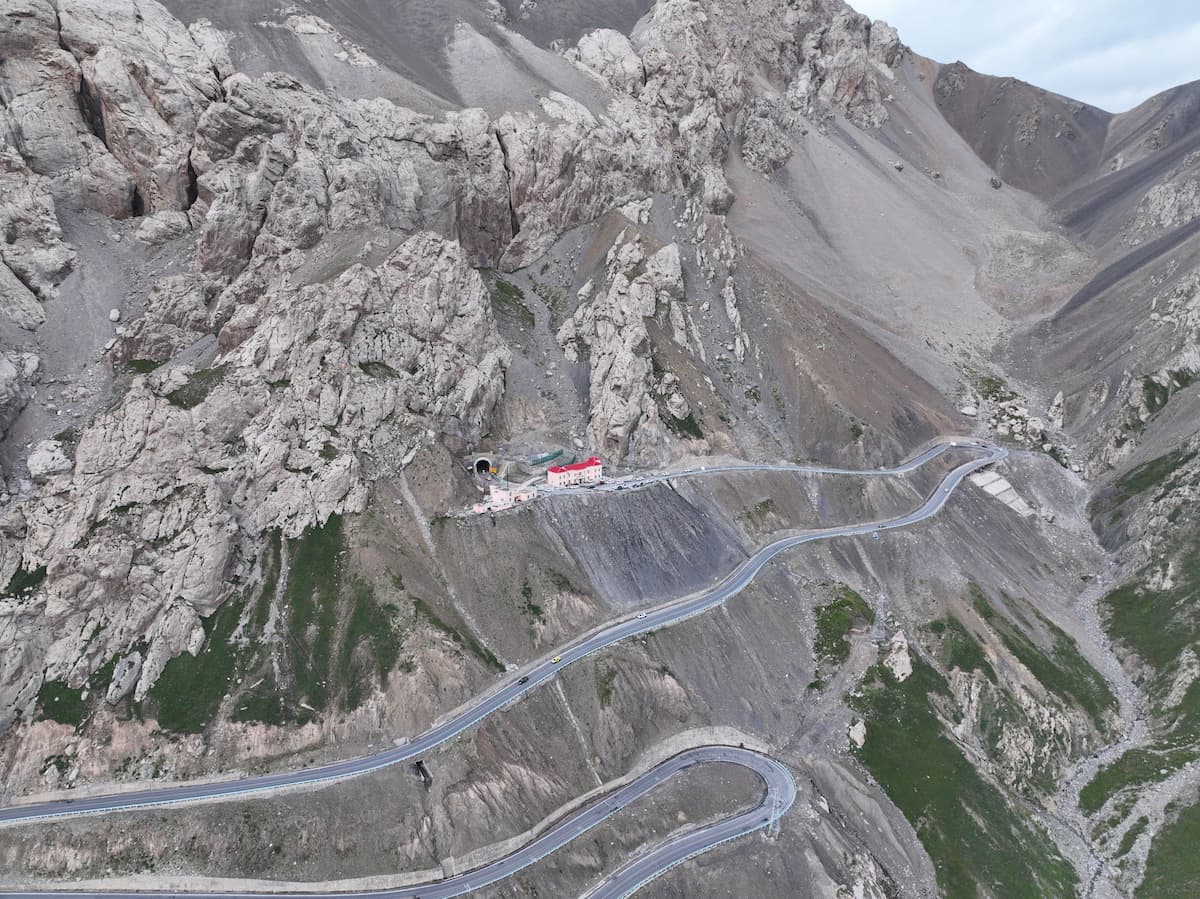
From Kashgar you can come by train or by the G314, a long but straightforward haul across the western Tarim. Buses connect Kuqa with Aksu and Korla if you are moving between oasis towns.
Best time to visit
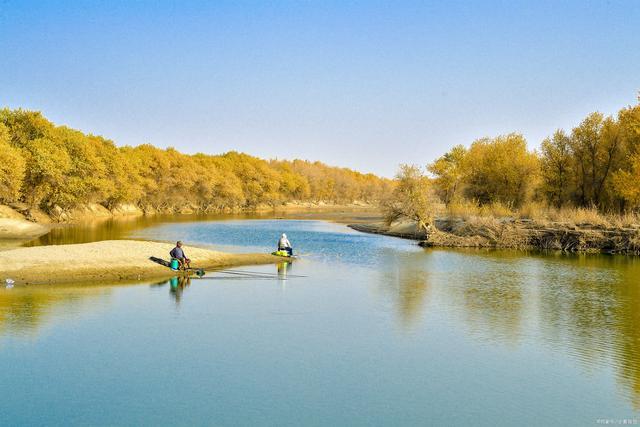
Late spring and early autumn are the windows I would pick. April through June brings mild heat, blooming apricot orchards, and the small white apricots (小白杏) that Kuqa is quietly proud of. September and October are dry, clear, and good for the canyon; the poplar groves (胡杨林) on the edge of the basin turn gold around mid-October. July and August are brutally hot, often above 38°C in the shade, and I would not plan hard walking then. Winter is cold and many sites keep short hours, but the town is calm and cheap.
Where to stay
Kuqa has a solid middle range: familiar Chinese chains and a handful of locally run hotels within walking distance of the old bazaar. I stayed once near the People’s Square and could reach the naan ovens on foot in five minutes, which mattered more than I expected at breakfast. Book ahead in July and August, when the Duku Highway crowds spill into town. For a wider sweep of regions and price bands, my Xinjiang accommodation guide covers the rest of the prefectures.
What to eat in Kuqa
Kuqa’s food is the southern Xinjiang style at its plainest and best. The local Kucha big naan is noticeably larger and softer than the crisp version elsewhere, almost a meal on its own, and during the naan festival in summer the ovens work through the night. Beyond that: lamb samsa from the street carts, hand-pulled laghman with a vinegar kick, pilaf with yellow raisins, and the thin-skinned steamed buns called 薄皮包子. The Uyghur culture guide explains where these dishes sit in daily life, which made my meals feel less like tourist food and more like someone’s ordinary Tuesday.
Practical tips before you go
- Carry your passport. Remote checkpoints are common in southern Xinjiang, and hotels will ask for it at check-in.
- Friday midday is prayer time at the main mosque; the old town goes quiet and some shops close. Plan around it rather than fighting it.
- Arrange Kizil Caves and a car for the day through your hotel a day ahead. Walk-ins fail more often than they succeed.
- The air is bone dry. I went through two litres of water on a canyon walk and still woke up thirsty.
- Bring cash. The bazaar vendors and the smaller noodle joints do not all take phone payments.
- For the wider region, my 20 Xinjiang travel tips cover ID rules, SIM cards, and altitude in one place.
A two-day sample itinerary
Day 1. Morning at the Kucha Prince Palace and its museum wing. Late morning walk through the old lanes to the Friday Mosque (from outside). Lunch on laghman near the bazaar. Afternoon free to sit, photograph the ovens, and buy apricots. Dinner on lamb skewers and naan.
Day 2. Leave by 8:30 for the Kizil Caves with a booked guide; budget three hours there and the drive. Back through town for a late lunch, then the Tianshan Grand Canyon in the soft afternoon light. If the Duku Highway is open and you have a third day, drive north and watch the landscape change under you.
Frequently asked questions
Is Kuqa worth visiting if I only have a week in Xinjiang?
Yes, but it rewards slow travel. If you are rushing Kashgar and the north, Kuqa fits best as an overnight between them rather than a detour.
What exactly was Qiuci culture?
Qiuci was a Buddhist kingdom whose artists, musicians, and translators sat at the crossroads of the Silk Road. Its painting school influenced caves as far as Dunhuang, and its music travelled to the Tang court. The monk Kumarajiva, born here, produced Chinese translations of Buddhist texts that are still standard today.
Can I see the caves on my own?
Not really. Kizil requires a guide and controlled access, and parts stay closed. Treat it as a half-day organised trip from Kuqa.
How do I get from Kashgar to Kuqa?
By train is simplest and comfortable; by road it is a long drive along the G314 across the western Tarim. Either way, budget most of a day.
Disclaimer
This guide reflects my visits and research up to mid-2026. Opening hours, ticket prices, cave-access rules, and Duku Highway opening dates change, sometimes with little notice, and were affected in past years by seasonal and security arrangements. Confirm the current details with the sites, your hotel, or official tourism channels before you travel. I am not a licensed travel agent, and nothing here is formal travel advice; use your own judgement and check live conditions on the ground.
About the author
Daniel Foster is a travel writer based in northwest China. Over six years he has covered the Silk Road towns of Xinjiang on foot and by train, with a soft spot for the small museums nobody sends postcards from. He prefers early mornings, local bread, and itineraries that leave room to get lost. His work focuses on practical, first-hand guidance rather than brochure copy.