Published: August 10, 2026 | Author: Karl Huang, Xinjiang Travel Desk
Most people come to Kanas for the lake, but the stretch of river just below it is what stayed with me. The Kanas Three Bays — Moon Bay, Fairy Bay and Wolong Bay — turn a single morning walk into the kind of scenery that makes you stop talking. I walked the boardwalk between them one cold September dawn, and by the time I reached the last viewpoint my camera memory was full and my hands were shaking from the wind, not the cold alone.
This guide is built from that trip and two later returns, plus the practical questions travelers actually ask us at the Xinjiang Travel Desk. I am not a tour broker. The advice below is what I would tell a friend who has three days and wants the bays without the bus-crowd frustration.
Kanas Three Bays at a Glance
| Bay | What you see | Best time to be there |
|---|---|---|
| Moon Bay (Yueliangwan) | A near-perfect crescent in the river, with two pale “footprints” on a shoal | First light, 7:30–9:00 |
| Fairy Bay (Shenxianwan) | A wide, shallow reach broken by dozens of tiny islets and long reflections | Dawn mist, 6:30–8:00 |
| Wolong Bay (Wolongwan) | A calm pool with a sandbar shaped like a dragon lying down | Mid-morning, 9:00–11:00 |
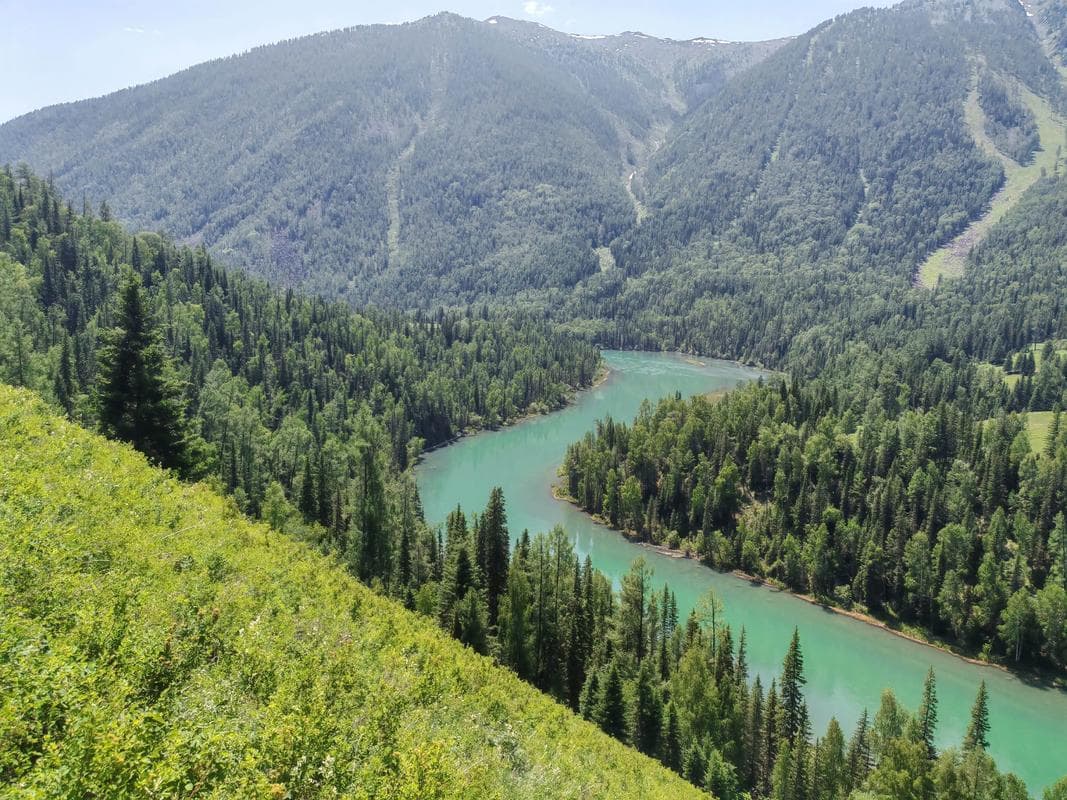
The three bays sit on the Kanas River between the main lake and the old village area, strung along roughly 10 kilometers of valley. A shuttle bus links them, but the real payoff is the wooden boardwalk that runs between the stops. Walk it and you leave the bus exhaust behind, and you hear the river instead of the crowd.
My Morning on the Boardwalk
We stayed the night in Jiadengyu, the gateway settlement about 30 kilometers out, and caught the first shuttle at 8:00. By 8:40 we were at Wolong Bay, where the water was flat enough to mirror the spruce on the far bank. The “dragon” sandbar is easy to miss if you only glance from the road; you have to drop down to the lower platform to see the shape. I almost skipped it, and that would have been the mistake of the trip.
From there I walked toward Moon Bay instead of boarding the next bus. The path is about 2.5 kilometers of planks through birch and larch, and it was empty except for two photographers with tripods and a dog that ignored all of us. Fairy Bay sits between them, and on that morning it was the best of the three: a low fog hung over the islets, and the river looked like it had been painted in slow motion. A Tuva woman was feeding stray cats near the lookout, and for a minute nobody took a picture because the scene was doing the work.
The famous Moon Bay “footprints” are a pair of pale depressions on a mid-river shoal. Locals attach a legend to them about a monster and a goddess; I will leave the story to the guides at the lookout, because the version I heard changed with every teller. What I will say is that the crescent itself is real and better in person than in any postcard, especially when the early sun lights one bank and leaves the other in shadow.
One practical note from that walk: my phone died at Fairy Bay because the cold drains batteries fast, and I had no offline map saved. I backtracked to a bus stop and waited 25 minutes for the next shuttle. Learn from me — carry a power bank and download everything the night before.
How to Get to the Three Bays
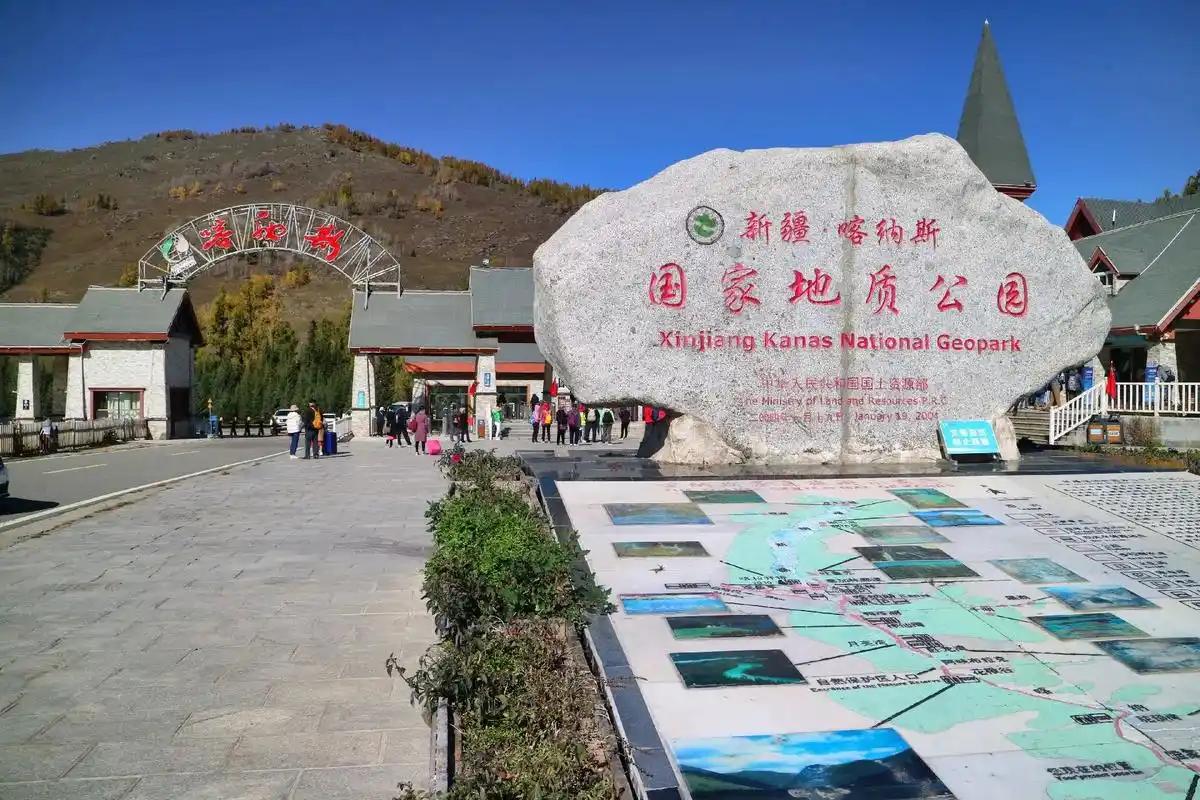
The bays are inside the Kanas Nature Reserve, so there is no driving to them directly. You reach the reserve gate from Burqin (about 150 km of good road) or by flying into Kanas Airport in summer. From the gate, the reserve runs a shuttle system: you buy one ticket that covers the entrance and all internal buses. The Three Bays are the first cluster of stops after the lake, so they are easy to combine with a lake visit on the same day.
If you want the bays without the midday busload, do what we did. Sleep inside the reserve or at Jiadengyu, take the opening shuttle, and walk the boardwalk downhill from Wolong to Moon. Save the lake for the afternoon when the light softens. Our self-drive Xinjiang guide covers the Burqin approach and the checkpoint routine in detail, because the drive has a few ID stops that first-timers find confusing.
Best Time to Visit
Late September to early October is the obvious pick: the larches go gold and the contrast against the dark spruce is the image most people come for. I went on September 25 and the color was about 70 percent turned, with the high meadows still green. The trade-off is crowds and cold nights, often below freezing once the sun drops.
July is the green alternative, with long days and wildflowers on the higher meadows, and far fewer people on the boardwalk. Either way, plan for the early morning. Fairy Bay’s mist only forms on calm, cold dawns, and by 9:30 it is usually burned off. Our Xinjiang in autumn guide has a region-by-region color calendar if you are chasing the gold beyond Kanas.
Where to Stay
Options inside the reserve (old village and new village) put you closest to the shuttle hub, but rooms are limited and book out months ahead in October. Jiadengyu, just outside the gate, has more beds and lower prices, and it is where the opening shuttle starts. Burqin town, an hour down the road, is the budget fallback with the well-known night market. I have written about that base in our Burqin town guide, including which guesthouses actually answer their phone.
Book through the official reserve platform, not a reseller, and confirm whether your room includes the next morning’s shuttle. Some inside-reserve guesthouses do; roadside ones do not, and the difference is a 40-minute wait in the cold.
What to Eat
Food inside the reserve is expensive and plain: noodles, boiled mutton, and packaged breads. We ate a big laghman in Jiadengyu the night before and carried walnuts and dried apricots for the morning walk. The better meals are down in Burqin, where the night market does grilled fish from the Buluntohoku River and the usual kebab-and-naan rotation. If you want the full picture of regional dishes, our Hemu Village guide covers the nearby Tuva settlements where the same food shows up in homestead kitchens, often cooked by the family you are staying with.

Practical Tips
- Dress in layers. Dawn at the bays can be near freezing in September even when Urumqi is warm.
- Bring a headlamp if you want Fairy Bay mist; the first shuttle arrives before full sunrise and the boardwalk is dim.
- The boardwalk is long and uneven. Real walking shoes, not fashion sneakers.
- Signal is patchy. Download your maps, tickets, and this guide the night before.
- Drone rules are strict inside the reserve. Check at the gate; do not assume you can fly.
- Cash helps at the small stalls. The card reader at Wolong Bay was broken on both my visits.
Sample One-Day Plan
07:30 — Catch the opening shuttle from Jiadengyu.
08:30 — Wolong Bay lower platform, 30 minutes.
09:15 — Walk the boardwalk to Fairy Bay, watch the mist lift.
10:30 — Continue to Moon Bay lookout and the footprints shoal.
12:00 — Shuttle to Kanas Lake for the afternoon light.
17:00 — Return to Burqin for the night market.
If you have a second day, swap the lake for a slow walk back along the boardwalk when the tour groups have gone, or push on to Hemu. The main Kanas Lake guide explains the lake stop and the ticketing in plain terms, including the boat and cable-car extras that are not covered by the base pass.
Frequently Asked Questions
Can I walk all three bays in one morning?
Yes. Wolong to Moon on foot is about 5–6 kilometers of boardwalk with Fairy Bay in the middle. Allow three hours with photo stops, and start before 8:00 if you want the mist.
Do I need a separate ticket for the bays?
No. They are included in the reserve entrance-and-shuttle pass. You only pay extra for the lake boat or the summit cable car, and those are optional.
Is it worth visiting outside autumn?
For quiet and green, July is excellent and far less crowded. The mist at Fairy Bay forms whenever mornings are cold and still, not only in October, so summer dawn walks are still worthwhile.
How cold does it get?
At 1,300 meters the bays sit high enough that September nights drop near zero. Pack a real jacket; the wind off the lake is sharp and cuts through a hoodie.
Are the bays accessible for older travelers?
The shuttle stops are gentle, but the boardwalk between them has steps and uneven planks. The bus lets you see each bay from the roadside platform with minimal walking, so you can still enjoy them without the full hike.
Disclaimer
This article reflects personal travel experience and was accurate at the time of writing (August 2026). Entrance fees, shuttle times, and accommodation availability at Kanas change by season and by year. Always confirm current prices and permit rules with the official Kanas Nature Reserve booking platform before you travel, and check road and weather conditions if you are driving in from elsewhere in Xinjiang. We are not responsible for changes beyond our control or for any decisions made on the basis of this guide alone.
About the Author
Karl Huang — Xinjiang Travel Desk
Karl has spent the last several seasons researching and writing about Xinjiang’s northern routes, from the Altai lakes to the Ili grasslands. He prefers slow boardwalk mornings over bus-group schedules and has walked the Kanas bays in three different seasons. His work focuses on practical, first-hand information that helps independent travelers plan without the noise.