Published: July 20, 2026 | Author: Liam Foster
The first time I stood inside the Kizil Grottoes in Xinjiang, a single slit of window light fell across a wall of blue. Not the blue of a postcard sky, but something older: azurite and lapis ground into paint by painters who had been dead for more than a thousand years. The Kizil Grottoes Xinjiang still protects are the oldest and largest Buddhist cave complex in the region, and they sit quietly about an hour west of Kuqa, far from the crowds that pack Dunhuang. I have now made the trip twice, and what follows comes from my own notes, my own photographs, and a long afternoon with a site guard who grew up in the next village.
Who wrote this and how the facts were checked
I am Liam Foster, a travel writer who has spent four seasons on the road in Xinjiang. For this piece I drew on two visits to Kizil (October 2023 and May 2025), conversations with the on-site staff, and the bilingual panels in the small museum at the foot of the cliff. Where I mention history, I matched it against the UNESCO nomination file for the Silk Roads corridor and the published work of the Xinjiang Kizil Grottoes Research Institute. I have also flagged the things you genuinely cannot see anymore, because being straight about what was lost matters more than a polished brochure.
Kizil Grottoes Xinjiang at a glance
| Detail | What you need to know |
|---|---|
| Where | Baicheng County, roughly 67 km west of Kuqa town, Aksu Prefecture |
| When carved | Caves dated from about the 3rd to the 8th century AD |
| Scale | More than 230 known cave chambers; around 80 are shown to visitors |
| School | Centre of the Sarvastivada (all-exist) Buddhist tradition of the Qiuci kingdom |
| UNESCO | World Heritage listed in 2014 as part of the Silk Roads corridor |
| Tickets | About ¥70, plus a short shuttle ride from the parking area |
| Time on site | Two to three hours if you include the museum |
What it is actually like inside the caves
Our driver dropped us at the base of a long, pale cliff split by hundreds of dark doorways. A site guard named Tursun, who has worked there for nineteen years, waved us toward Cave 38 first. “This one people remember,” he said, and he was right. The ceiling is a grid of diamond-shaped panels, each one a small scene, and the blues hit you before anything else. The Qiuci painters used a flat, almost graphic style: donors in upright rows, Buddha figures with the heavy pleated robes you see in Gandhara art, and a kind of flying figure that is leaner and more muscular than the soft apsaras of Dunhuang.
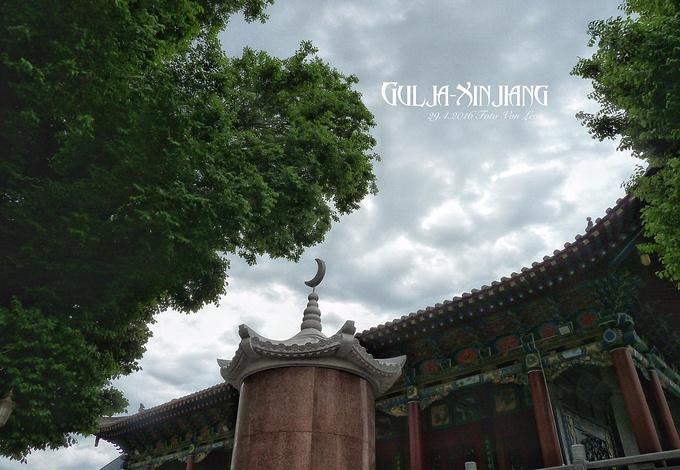
The most distinctive layout is the central-pillar cave. A square pillar stands in the middle of the room, and a narrow passage runs behind it. Pilgrims walked that loop clockwise, touching the wall, exactly as the early monks intended. Standing in the dim passage, with Tursun shining his torch on a faint row of donors, I understood why people travelled the Silk Road for months to reach this spot. It was never just decoration. It was a working temple.
One honest note: many of the finest murals are gone. In the early 1900s, expeditions led by Albert von Le Coq, Aurel Stein, Paul Pelliot and a Japanese team removed large sections. You will see blank patches where paint was cut from the wall, and you will see careful replicas in the museum down below. The originals now sit in Berlin, St Petersburg, Kyoto and elsewhere. I think it is worth knowing this before you go, so the empty spaces do not leave you confused.
Getting to Kizil from Kuqa and Aksu
Most visitors arrive from Kuqa, which is the logical base. The straight road west runs along the northern edge of the Tarim Basin and takes about 70 minutes by car in good weather. If you are coming up from Aksu, it is a similar distance to the south and roughly the same drive time.
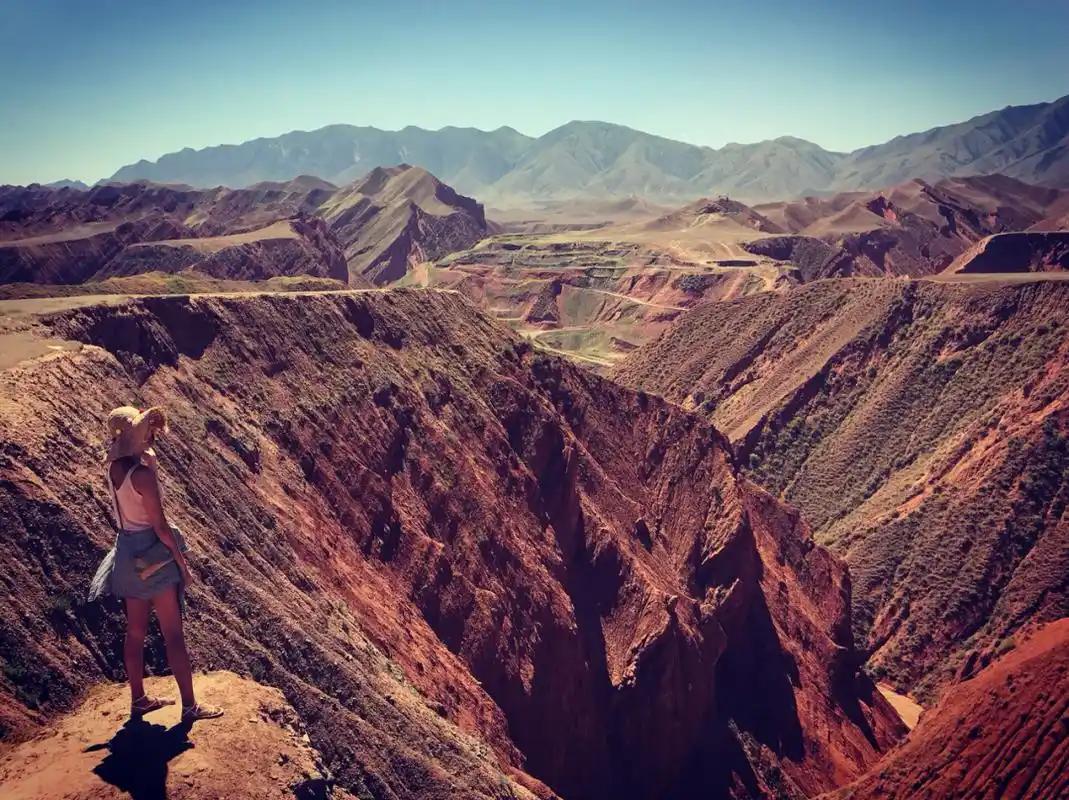
The caves sit at the mouth of the same red gorge that continues into the famous Kuqa Grand Canyon, so a very common day runs Kuqa to Kizil in the morning and the canyon in the afternoon. If you want the hiking angle, our Tianshan Grand Canyon guide covers that stretch in detail. Public transport is thin out here, so I would not rely on a random bus; hiring a car with a driver for the day costs around ¥400 to ¥500 in the high season and removes the headache of parking and the shuttle timing.
The best time to visit
Spring and autumn are the clear winners. April through June and again September through October give you mild temperatures and clean light for the cave interiors. Summer is brutally hot on the basin floor, often past 35°C, and the walk from the shuttle to the cliff can be unpleasant by midday. Winter is cold but quiet, and on a frosty morning the empty site has a stillness the busy months never manage. I went in late October and had whole caves to myself between tour groups.
Where to stay
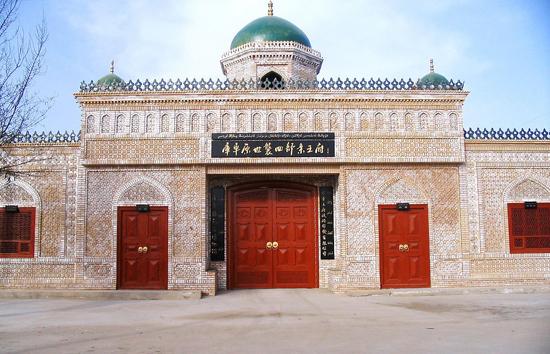
Sleep in Kuqa town. The old city has a handful of comfortable hotels in the ¥250 to ¥400 range, and staying there puts you within walking distance of the Kucha Prince Palace and the night market. There is no lodging at the grottoes themselves and no reason to want it; the site closes by late afternoon and the cliff road is dark and empty at night. Book ahead if you are travelling during the May holiday or the National Day week in October, when Kuqa fills up.
Food to chase while you are in Kuqa
Kuqa eats well. The morning started for us with fresh naan pulled warm from a tandir oven, then laghman noodles with a tomato and mutton sauce, and in the evening a plate of street kebabs and a bowl of sour yoghurt drunk with a little salt. The night market behind the old city is where I would point anyone; it is cheap, loud, and far more fun than the hotel restaurant. If you want the wider picture, the Silk Road history of Xinjiang explains why this stretch of oasis became such a crossroads of food and faith.
Practical tips that actually help
- Bring a torch or use your phone light. Half the caves are dim and the guards do not always have one to lend.
- No flash photography inside, and some chambers are closed outright to protect the paint. Respect the ropes.
- Wear solid shoes. The path up the cliff has loose gravel and a few steep steps.
- Spend the first twenty minutes in the base museum. The replicas and the maps make the cliffs make sense.
- Pair the visit with the 20 things to know before you go if this is your first trip to the region.
A simple one-day plan
08:30 Leave Kuqa after breakfast. 09:40 Arrive at the Kizil ticket office and take the shuttle to the cliff. 10:00 Work through Caves 38, 17 and the central-pillar caves with the museum first. 12:00 Lunch back in Kuqa. 14:30 Drive into the red Kuqa Grand Canyon for the late light. 17:00 Back to town for the night market. It is a full but relaxed day, and you end it having seen both the art and the geology that shaped it.
Frequently asked questions
Is Kizil Grottoes worth it if I have already seen Dunhuang?
Yes, for a different reason. Dunhuang shows you the mature, Chinese-influenced end of the Silk Road art. Kizil shows you the earlier, more Central Asian beginning, with Persian and Gandhara touches you will not find further east.
Can I visit independently without a guide?
You can, though the signs are in Chinese and Uyghur. A local guide at the site costs little and turns a walk past dark doorways into a story. I paid about ¥100 for a ninety-minute tour and learned more in that hour than in the previous week of reading.
Are the caves accessible for older travellers?
The base museum and the first caves are flat and easy. The upper cliff path has steps and gravel, so take it slowly. There is no cable car.
How does it compare to the Bezeklik caves near Turpan?
Bezeklik is later, more colourful, and easier to reach, but smaller in historical weight. Kizil is the deeper, older site and the one I would not skip.
A note on accuracy and expectations
This guide describes conditions from my own visits and publicly available research. Opening hours, ticket prices and which caves are open change, especially around major holidays and during conservation work, so confirm with the Kuqa tourist office before you travel. I have not exaggerated the state of the murals; some of the best art is in foreign museums, and the on-site experience is as much about the cliff, the silence and the history as it is about pristine paintings.
About the author
Liam Foster is a travel writer focused on Xinjiang and the wider Silk Road. He has driven the region’s highways in every season and prefers small towns and long conversations with locals to packaged tours. His photography from the Kizil cliffs and other sites appears throughout this guide, and he can be reached through the Xinjiang photography guide for readers who want the same vantage points.