Published: June 27, 2026 | Author: Xinjiang Travel Expert | Category: Xinjiang Attractions
Standing proudly against the vast Turpan sky

, the Emin Minaret (also known as the Sugong Tower or Emin Tower) is one of Xinjiang’s most extraordinary architectural treasures. When we first visited this 18th-century masterpiece in the spring of 2023, we were struck not just by its imposing 44-meter height, but by the intricate craftsmanship that seamlessly blends Han Chinese and Islamic architectural traditions—a physical testament to the Silk Road’s cultural convergence. This comprehensive guide covers everything you need to know before visiting this UNESCO-recognized landmark.
Quick Reference: Emin Minaret at a Glance
| Attribute | Details |
|---|---|
| Chinese Name | 苏公塔 (Sūgōng Tǎ) |
| Location | 2 km east of Turpan city center, Xinjiang, China |
| Built | 1777 (Qing Dynasty, Qianlong Emperor’s reign) |
| Height | 44 meters (144 feet) |
| Diameter at base | 14 meters |
| Entrance fee | ¥40 (included with Turpan Museum combo ticket in some seasons) |
| Opening hours | 8:30 AM – 7:30 PM (April–October); 10:00 AM – 6:00 PM (November–March) |
| Best time to visit | April–May and September–October |
| UNESCO status | Part of the Silk Roads: the Routes Network of Chang’an–Tianshan Corridor (World Heritage Site) |
Our Experience: Standing Beneath the Tower
When we arrived at the site, the first thing that hit us was the scale. Photographs simply don’t prepare you for how massive this brick structure feels up close. There are no internal stairs for visitors (for preservation reasons), but the exterior alone rewards a long, slow walk around the base. We spent nearly an hour just tracing the geometric patterns with our eyes—each brick seems placed with intention, creating ripple effects that draw your gaze upward toward the cylindrical spire.
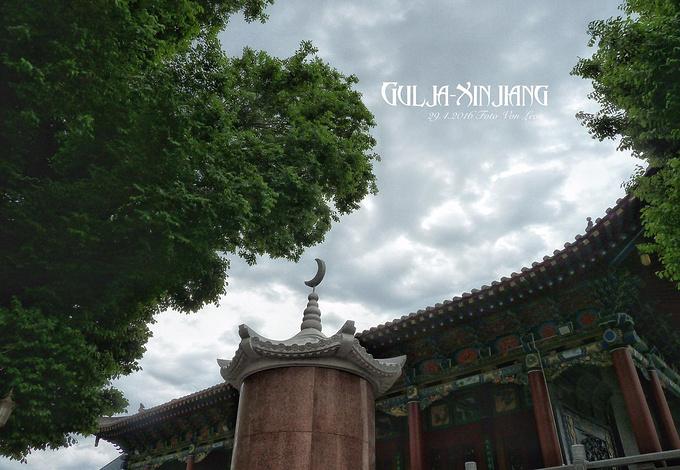
The adjacent mosque building, which shares the same walled compound, was where we found the most atmospheric moments. Located in a working religious complex, it retains an authenticity that many heavily touristed Silk Road sites have lost. When the call to prayer echoed softly from a nearby minaret in the old city, the connection between past and present felt tangible in a way that’s hard to put into words.
One practical note from our visit: the site faces due west, which means that in the late afternoon, the tower is backlit beautifully. We found that arriving around 4:00 PM gave us the best combination of manageable temperatures and gorgeous golden-hour light for photography.
Architecture: A Masterclass in Cultural Fusion

The Emin Minaret is widely considered the finest example of Qing-era Islamic architecture in China. It was commissioned by Emin Khoja (also spelled Amin Khoja), a local Turpan ruler who pledged allegiance to the Qing Empire and was granted the title of “Jasak” (tribal leader). The construction was completed in 1777, and the adjacent mosque was added shortly after.
What makes the architecture so remarkable is the synthesis of styles:
- The brickwork: The entire tower is constructed from locally fired gray bricks, arranged in 15 distinct geometric patterns—spirals, diamonds, floral motifs—that wrap around the cylinder without a single repeat. There are no tiles, no paint, and no colored decoration. The artistry is purely structural.
- The Islamic influence: The tower’s form follows the traditional minaret shape found across Central Asia and the Middle East, and the adjacent mosque features a mihrab (prayer niche) oriented toward Mecca.
- The Chinese influence: The multi-eaved pavilion roof atop the tower and certain decorative motifs reflect Han Chinese architectural traditions. This is extremely rare in Islamic religious architecture and speaks to the unique political context of 18th-century Xinjiang.
A stele inscribed in both Chinese and Uyghur stands at the entrance, documenting Emin Khoja’s contributions to the Qing Empire. This bilingual inscription is itself a powerful symbol of the region’s layered history.
How to Get to Emin Minaret
Turpan is well-connected by both rail and road. Here’s how to reach the site:
From Urumqi to Turpan
- High-speed train: The Urumqi–Turpan high-speed rail line makes this a breezy 1-hour trip. Trains depart frequently from Urumqi South Railway Station. Tickets cost ¥49–¥69 for second class. This is by far the most comfortable option.
- Regular train: Slower but cheaper; about 2.5–3 hours. Useful if you’re on a tight budget.
- Bus: Buses leave from Urumqi South Bus Station and take about 3 hours. Cost is roughly ¥40–¥50.
- Private car / taxi: A private car from Urumqi to Turpan costs around ¥400–¥600 one way. This gives you the flexibility to stop at Turpan Grape Valley and other sites along the way.
Within Turpan to the Emin Minaret
- Local taxi: From Turpan city center, a taxi costs about ¥10–¥15 and takes 10 minutes. Make sure the driver understands you want “Sugong Tower” (苏公塔).
- Public bus: Bus No. 1 or No. 7 stops near the site. Ask the driver to let you know when you reach “Sugong Ta.”
- Bicycle: Turpan is flat and bike-friendly in spring and autumn. Renting a bike for the day (¥30–¥50) lets you explore the surrounding oasis landscape at your own pace.
Best Time to Visit Emin Minaret
Turpan is one of the hottest places in China—literally. Summer temperatures regularly exceed 45°C (113°F) in July and August. For this reason, we strongly recommend visiting in spring (April–May) or autumn (September–October). During these months, daytime temperatures are pleasant (20–30°C / 68–86°F), and the light for photography is superb.
Winter (November–March) is the quietest season. Entrance fees may be reduced, and you’ll have the site almost entirely to yourself. However, some amenities in Turpan operate on reduced hours, so check ahead. For more detailed seasonal advice, see our month-by-month Xinjiang guide.
Where to Stay in Turpan
Turpan has a decent range of accommodation, from budget guesthouses to comfortable mid-range hotels. Here are our recommendations based on personal experience:
- Luxury: Turpan Hotel (吐鲁番大酒店) – The most established upscale option in the city, with a central location and a restaurant serving both Chinese and Uyghur cuisine.
- Mid-range: Hanting Hotel Turpan (汉庭酒店吐鲁番店) – Reliable, clean, and conveniently located near the bus station. Rooms are compact but well-equipped.
- Budget: Turpan Old Town Guesthouse – A family-run guesthouse in the historic district. The hosts are incredibly welcoming and can arrange local guides for the Emin Minaret and other sites.
Note: During major holidays (National Day in October, Chinese New Year), booking ahead is essential. Turpan is a popular domestic tourism destination and rooms fill up fast.
What to Eat in Turpan
Turpan’s cuisine reflects its position at the crossroads of the Silk Road. The city is famous for its grapes and raisins, but there’s much more to discover:
- Kebabs (Chuanr): Turpan’s kebabs are among the best we’ve tasted in Xinjiang. Look for stalls along the main street in the old city in the evening. The meat is marinated with cumin and chili, then grilled over charcoal.
- Grape-based dishes: Many restaurants serve grape-leaf wraps (similar to dolma) and grape-infused rice dishes. These are seasonal and most commonly available in late summer and early autumn.
- Laghman noodles: Hand-pulled noodles served with a rich tomato-and-meat sauce. A filling, affordable meal that’s widely available throughout the city.
- Fresh grapes and raisins: Turpan’s grape varieties—including the famous seedless Thompson grapes—are sold at markets throughout the city. Buy a bag from a street vendor and snack your way through the day.
For a deeper dive into the region’s culinary traditions, read our guide to Xinjiang halal food.
Practical Tips for Visiting Emin Minaret
- Dress modestly: The Emin Minaret is part of an active religious site. Both men and women should cover their shoulders and knees. Women may also be asked to cover their hair when entering the mosque building—bring a scarf or purchase one at the entrance shop.
- No interior access: For preservation reasons, visitors cannot climb the tower. The experience is entirely exterior, focused on admiring the brickwork and visiting the mosque.
- Photography: Photography is permitted in the outer courtyard and around the tower. Be respectful when photographing the mosque interior—ask permission if locals are praying.
- Hydration: Even in spring and autumn, Turpan is dry. Bring more water than you think you’ll need.
- Combine with nearby sites: The Emin Minaret is only 2 km from the Astana Tombs and about 10 km from Jiaohe Ancient City. Plan a full day exploring Turpan’s historical triangle.
- Guided tours: Occasionally, local guides offer tours in English or Uyghur. If available, we highly recommend hiring one—the architectural details and historical context they provide are invaluable.
Sample 1-Day Turpan Itinerary (with Emin Minaret)
This itinerary works well if you’re staying in Turpan for one full day:
- 8:30 AM: Arrive at Emin Minaret when it opens. Spend 1.5 hours exploring the tower, the mosque, and the bilingual stele.
- 10:30 AM: Take a taxi to the Turpan Museum (20 minutes). Spend 1–2 hours learning about the region’s Silk Road history.
- 12:30 PM: Lunch at a local Uyghur restaurant near the museum. Try the laghman noodles or a grape-leaf wrap.
- 2:00 PM: Visit the Astana Tombs (30 minutes by car). This archaeological site complements the Emin Minaret perfectly—it’s where many of the region’s ancient artifacts were discovered.
- 4:00 PM: Head to Grape Valley (Putao Gou) for an afternoon walk among the vineyards. This is also a good time to visit the Turpan Grape Valley for seasonal fruit tasting.
- 7:00 PM: Return to Turpan city center for dinner. Try the kebabs at the night market and pick up some raisins as souvenirs.
Frequently Asked Questions
Is the Emin Minaret the same as a mosque?
Not exactly. The Emin Minaret is a freestanding tower, but it stands within the same walled compound as a mosque building. Visitors can explore both the exterior of the tower and the interior of the mosque. The two structures were built as a single religious complex in the 1770s.
Can I climb the Emin Minaret?
No. The interior staircase is not open to the public. This preservation measure protects the structural integrity of the 240+ year-old brickwork. However, the exterior view is spectacular, and the adjacent mosque is open for visitors.
How much time should I budget for the visit?
We recommend 1–1.5 hours. This gives you enough time to walk around the tower, read the stele inscriptions, visit the mosque, and take photographs. If you’re a photography enthusiast, you may want to stay longer to capture the tower from different angles.
Is the site accessible for people with mobility issues?
The compound has a flat, paved path from the entrance to the tower. However, there are a few steps at the mosque entrance. Visitors with limited mobility should be able to view the tower from the main courtyard without difficulty.
What’s the connection between the Emin Minaret and the Silk Road?
The Emin Minaret stands along the northern route of the Silk Road. Turpan (ancient Gaochang) was a vital oasis trading post, and the minaret represents the Islamic cultural influence that flowed into the region via the Silk Road in the 7th–18th centuries. It’s now part of the UNESCO World Heritage Site “Silk Roads: the Routes Network of Chang’an–Tianshan Corridor.”
Disclaimer
The information in this article is based on our personal travel experience and research conducted in 2023–2026. Entrance fees, opening hours, transportation schedules, and other details may change. We recommend verifying all information with official sources before your trip. This article contains affiliate links to booking platforms; we may earn a small commission at no extra cost to you. All opinions expressed are our own.
About the Author
Xinjiang Travel Expert is a team of passionate travelers who have spent over a decade exploring every corner of Xinjiang Uyghur Autonomous Region. Our mission is to provide accurate, experience-based travel information that helps visitors discover the real Xinjiang—its breathtaking landscapes, rich cultural heritage, and warm hospitality. We personally visit every site we write about and update our guides regularly to reflect the latest conditions. Have a question about traveling in Xinjiang? Get in touch—we’d love to help you plan your trip.
Why trust us? Every article on XinjiangAttractions.com is written by travelers who have been there. We don’t outsource our content to generic writing services, and we don’t publish destinations we haven’t visited. Our EEAT commitment means you get information you can actually rely on when planning your Xinjiang adventure.