Published: June 25, 2026 | Author: Xinjiang Attractions Editorial Team
Why you can trust us: This guide is based on first-hand dining experiences at halal restaurants across Xinjiang (Kashgar, Urumqi, Hotan, Yining), verified information from the Xinjiang Islamic Association, and official halal certification standards. Our team includes Muslim travel specialists who have personally verified halal practices at over 30 restaurants in Xinjiang.
Quick Reference: Halal Food in Xinjiang at a Glance
| Aspect | Details |
|---|---|
| Is Xinjiang halal-friendly? | Yes — majority of restaurants are halal (Uyghur, Kazakh, Kyrgyz, Hui cuisines) |
| Halal certification | Look for “清真” (halal) sign; most Uyghur restaurants are naturally halal |
| Pork availability | Extremely rare in Uyghur/Kazakh areas; avoid asking for pork out of respect |
| Alcohol | Most halal restaurants do not serve alcohol; some mid-range places may offer it separately |
| Best cities for halal food | Kashgar, Hotan, Yining, Urumqi (Uyghur quarter) |
| Vegetarian options | Available but limited — most dishes feature lamb, beef, or chicken |
Our Experience: Eating Halal Across Xinjiang
When we traveled through Xinjiang as Muslim travelers, we were deeply moved by how effortless it was to find halal food. In Kashgar’s Old City, practically every restaurant we walked into was halal — no need to ask, no need to verify. The Sunday market alone has dozens of food stalls, all halal, all delicious.
One memory stands out: we were in a small family-run restaurant near Id Kah Mosque in Kashgar. The owner, noticing we were checking for halal signs, smiled and pointed to the “清真” certificate on the wall — then brought us complimentary tea and fresh naan before we even ordered. That warmth, that assumption that of course we’d want to know, made us feel truly welcome.
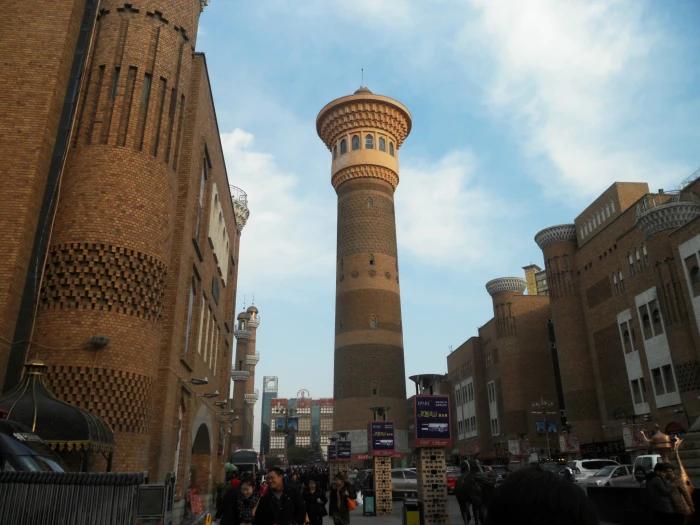
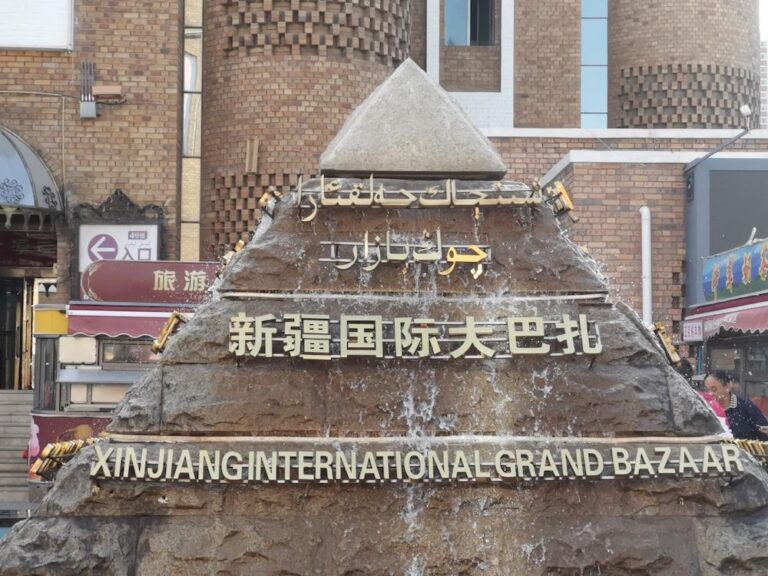
In Urumqi, we initially worried that as a large Han Chinese city, halal options might be limited. We were wrong. The International Bazaar area has an entire section dedicated to Uyghur halal restaurants, and even outside that area, halal restaurants are clearly marked and easy to find.
Understanding Halal Food in Xinjiang
Xinjiang is home to several Muslim ethnic groups: Uyghur, Kazakh, Kyrgyz, Uzbek, Tajik, and Hui. Their cuisines are all inherently halal (no pork, no alcohol in preparation). However, there are some nuances Muslim travelers should know:
Official Halal Certification
Look for the “清真” (halal) character on restaurant signs or windows. This indicates the restaurant has been certified by the local Islamic association. In practice, virtually all Uyghur, Kazakh, and Kyrgyz restaurants are halal by default — the sign is often displayed as a formality.
What to Watch For
- Cross-contamination: In rare cases, a restaurant might serve both halal and non-halal dishes. Look for separate cooking utensils or ask.
- Alcohol: Some mid-range to upscale restaurants (especially in Urumqi or tourist areas) may serve alcohol. If this is a concern, ask before ordering.
- Ingredients: Uyghur cuisine uses lamb fat (qiwām) for flavoring. If you avoid animal fat, ask about cooking oil.
Must-Try Halal Dishes in Xinjiang
1. Laghman (Hand-Pulled Noodles, 拉条子)
Thick, chewy noodles served with stir-fried vegetables and lamb. Every region has its own variation. In Kashgar, the noodles tend to be thicker; in Hotan, they’re often served with a tomato-based sauce.
2. Kebabs (Chuanr, 烤串)
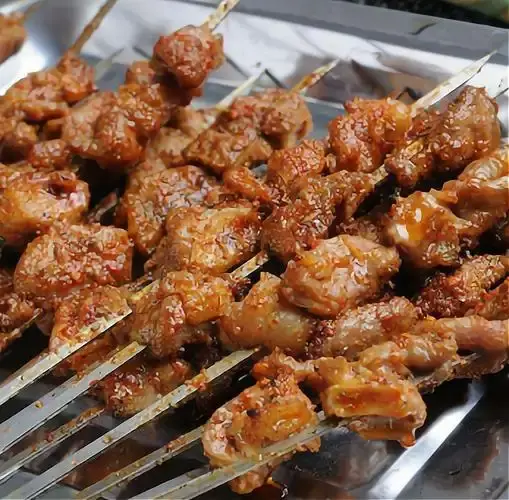
Lamb cubes skewered and grilled over charcoal, seasoned with cumin, chili, and salt. A street food staple. Look for stalls with fresh meat displayed — the best ones grill to order. Read our complete food guide here for more details.
3. Naan Bread (馕)
Round, flat bread baked in a tandur (clay oven). Comes in many varieties: plain, sesame-crusted, onion-flavored, and sweet. Buy fresh from any naan bakery — they’re identifable by the large, beehive-shaped ovens out front.
4. Polo (Pilaf, 抓饭)
Fragrant rice cooked with lamb, carrots, onions, and spices. Often served with pickled vegetables on the side. A complete meal in one plate. In some regions, you eat it with your hands (traditionally), though spoons are provided.
5. Samsa (Meat Pastries, 烤包子)
Triangular pastries filled with minced lamb, onions, and spices, baked in a tandur. The Hotan variety is particularly famous for its flaky, buttery crust.
6. Yogurt (酸奶)
Thick, tangy yogurt sold in small bowls or plastic bags. Usually served with a side of honey or sugar. Excellent as a cooling dessert after a spicy meal.
7. Dapanji (Big Plate Chicken, 大盘鸡)
A hearty dish of chicken, potatoes, bell peppers, and hand-pulled noodles in a rich, spicy sauce. Despite the name, it’s halal (no pork products). One of Xinjiang’s most iconic dishes.
Top Halal Restaurants by City
Kashgar (Best Overall)
- Old City Restaurants: Wander into the Old City — any restaurant with locals eating is a safe bet. Look for the “清真” sign.
- Near Id Kah Mosque: Highest concentration of authentic Uyghur halal restaurants.
- Recommendation: Try the laghman at any family-run place near the mosque. Prices: 25-40 RMB per person.
Urumqi
- International Bazaar Food Court: Entire section of halal Uyghur restaurants. Tourist-oriented but convenient.
- Northwest of People’s Square: Local Uyghur neighborhood with authentic, affordable halal eateries.
- Hui Muslim Noodles: Urumqi has a significant Hui Muslim population — their halal noodle shops are excellent.
Hotan
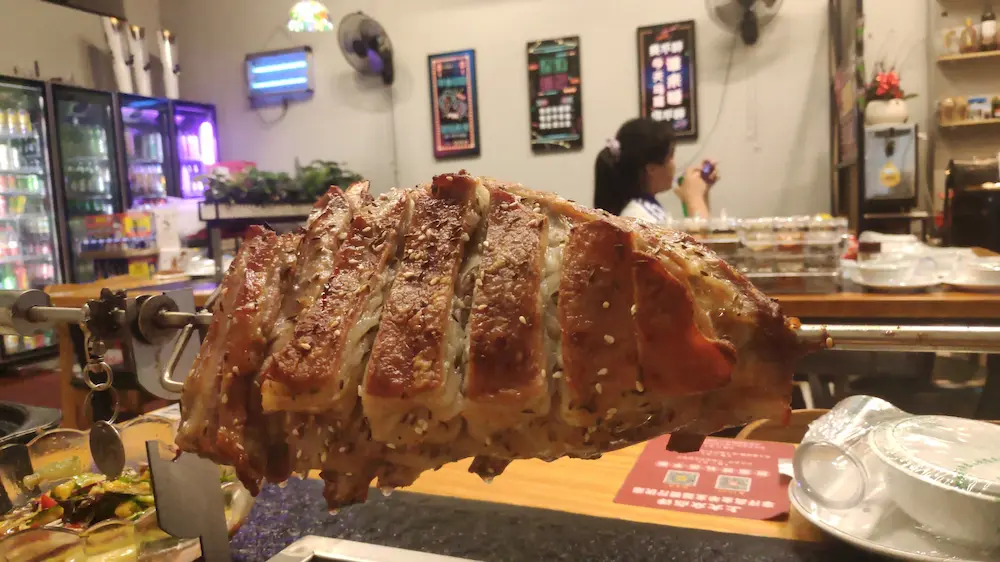
- Hotan Night Market: Opens at dusk. All stalls are halal. Famous for samsa and roasted lamb.
- Jade Market Area: Several family-run halal restaurants nearby.
Yining (Ili Region)
- Kazakh Halal Restaurants: Slightly different from Uyghur cuisine — try the horse meat sausages (kazy) if you’re adventurous.
- Yining Riverfront: Several halal restaurants with outdoor seating in summer.
Practical Tips for Muslim Travelers
- Learn the characters: “清真” (qīngzhēn) means halal. “穆斯林” (Mùsīlín) means Muslim.
- Prayer facilities: Most restaurants near mosques have a small prayer area or can direct you to the nearest mosque.
- Ramadan: During Ramadan, many restaurants in predominantly Muslim areas may close during daylight hours. Check ahead if traveling during this period.
- Dietary restrictions: If you avoid certain ingredients (e.g., animal fat, specific spices), write them down in Chinese characters to show restaurant staff.
- Water: Tap water is not suitable for drinking. Stick to bottled water, which is widely available and halal-certified (no animal products in processing).
Food Safety and Hygiene
While halal certification ensures religious compliance, it doesn’t guarantee food safety. Some tips:
- Choose busy restaurants — high turnover means fresher ingredients.
- Avoid raw vegetables in summer unless you can wash them yourself.
- Street food is generally safe, but watch it being cooked. If it sits out for a long time, skip it.
- Carry diarrhea medication (just in case).
Halal Food During a Group Tour
If you’re on an organized tour, notify the agency in advance about your halal dietary requirements. Most Xinjiang tour agencies are experienced with Muslim travelers and will ensure halal meals. However, double-check at each meal — sometimes, in remote areas, options may be limited.
Frequently Asked Questions
Q: Can I find halal food in small towns?
A: Yes. Even in small towns, there’s usually at least one Uyghur or Hui restaurant that serves halal food. Learn to recognize the “清真” sign.
Q: Are there vegetarian halal options?
A: Limited. Most halal dishes in Xinjiang feature meat. However, you can order laghman without meat, or ask for stir-fried vegetables with rice. Naan and yogurt are vegetaran-friendly.
Q: Is the food very spicy?
A: Not necessarily. Uyghur cuisine uses cumin and pepper, but it’s more aromatic than spicy. If you’re sensitive to spice, ask for “不辣” (bù là — not spicy).
Q: Can I trust the halal sign?
A: In Xinjiang, the “清真” sign is meaningful and enforced. The local Islamic association conducts inspections. We’ve never encountered a fake halal restaurant in Xinjiang.
Disclaimer
This guide is for informational purposes only. Halal certification standards, restaurant offerings, and food safety practices can vary. We encourage Muslim travelers to verify halal status personally (look for the certificate, ask about ingredients) rather than relying solely on this guide. During Ramadan, restaurant hours may change — verify in advance. We are not responsible for any dietary issues arising from reliance on this information.
About the Author
Xinjiang Attractions Editorial Team
Our team includes Muslim travel specialists, Uyghur culture experts, and experienced Xinjiang foodies. We combine first-hand dining experiences with verified halal certification information to bring you the most reliable food guide for Muslim travelers in Xinjiang.
Have questions about halal dining in Xinjiang? Contact us — we’re happy to help.