By Xinjiang Attractions Editorial Team | Last Updated: June 2026
Standing at the heart of Kashgar’s Old City, Id Kah Mosque is China’s largest mosque and a living center of Uyghur Islamic culture. Here’s everything you need to know before your visit.
45 RMB for foreigners; free for Muslim worshippers
Dress Code
Modest clothing required; headscarf for women
Best Time to Visit
Morning or late afternoon (avoid Friday prayer 1:00–3:00 PM)
Visit Duration
1–2 hours
Our Visit to Id Kah Mosque
When we first walked through the towering gate of Id Kah Mosque, the scale of the place hit us immediately. The courtyard was vast — nearly 14,000 square meters — and the yellow brick walls glowed in the late afternoon sun. We had arrived around 10:00 AM, before the midday heat, and the atmosphere was calm. A few local Uyghur men were washing at the ablution fountain; others sat quietly in the shade of the poplar trees.
What struck us most was the contrast: this is both a working place of worship and a major tourist site, yet it never feels like a museum. The prayer hall was hushed, carpeted in deep reds and greens, with columns that soared upward and intricate Arabic calligraphy covering the walls. We were asked to remove our shoes before entering — a small act that immediately shifted our mindset from “tourist” to “guest.”
We spent nearly two hours wandering the complex. The courtyard, with its ancient trees and the small religious school (madrasa) attached to the main building, rewarded slow exploration. If you go, don’t rush. Sit on one of the wooden benches along the courtyard wall for ten minutes. That’s when the place reveals itself.
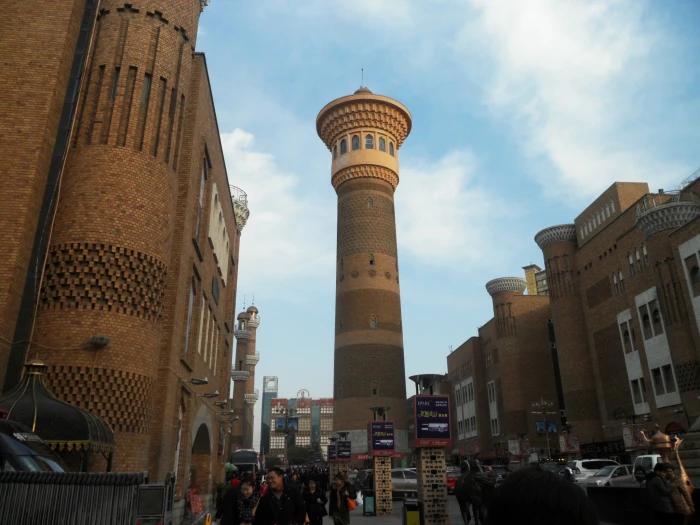
Traditional Xinjiang architecture
Getting to Id Kah Mosque
Id Kah Mosque is impossible to miss if you’re in Kashgar Old City. It sits at the western edge of the old town, right on Jiefang North Road (解放北路), the main thoroughfare that cuts through Kashgar.
On foot: If you’re staying anywhere in the Old City, it’s a 5–15 minute walk. Head toward the large open plaza — you’ll see the mosque’s distinctive yellow-tiled gate and the two tall minarets.
By taxi: Show the driver: 艾提尕尔清真寺. From Kashgar Airport, expect to pay 30–40 RMB and 25–35 minutes (depending on traffic).
By bus: Local buses 20, 23, and 28 stop at the “Id Kah Mosque” (艾提尕尔) stop, directly across from the entrance plaza.
Opening Hours & Entrance Fees
Opening hours are generally 8:00 AM to 8:00 PM, but they can shift slightly depending on the season and prayer times. The site is open every day of the year.
Entrance fee:
Foreign tourists: 45 RMB
Chinese citizens: 30 RMB (with ID)
Muslim worshippers: Free (enter via the side gate)
Tickets are purchased at the small kiosk on the right side of the entrance plaza. Keep your ticket — you may be asked to show it at the prayer hall entrance.
Visitor Etiquette: What You Must Know
Id Kah is an active mosque. Roughly 10,000 worshippers attend Friday prayers here. Respecting the space is not optional — it’s essential. Here’s what we learned:
1. Dress modestly. Shoulders and knees must be covered. Women should carry a headscarf; you may be asked to cover your hair before entering the prayer hall. If you forgot to bring one, scarves are sometimes available at the entrance for a small fee or deposit.
2. Remove your shoes. Before entering the prayer hall, you must take off your shoes. There’s a designated area near the entrance. Wear socks you don’t mind walking in — the stone floor can be cold in spring and autumn.
3. No photos inside the prayer hall. This rule is strictly enforced. You can take photos in the courtyard and the exterior, but once you step into the prayer hall, put the camera away. Even if you don’t see a sign, assume it’s not allowed — ask a staff member if you’re unsure.
4. Stay quiet. This is a place of worship, not a tourist attraction. Keep your voice down. Don’t call out to get someone’s attention for a photo. If you want a photo with a local, always ask first — and accept “no” gracefully.
5. Avoid prayer times. The main prayer times are at dawn, noon, afternoon, sunset, and night. Friday is the most important day — the congregational prayer (Jumu’ah) happens around 1:30–2:30 PM. The mosque is closed to tourists during Friday prayers. Plan your visit outside these hours.
6. Don’t walk in front of someone praying. If you see someone praying in the courtyard (it happens), walk behind them, not in front of their prayer mat.
Best Time to Visit Id Kah Mosque
Timing makes a big difference to your experience:
Morning (8:00–10:00 AM): Fewer tourists, soft light for photography, and a chance to see the mosque waking up. This is our top recommendation.
Midday (10:00 AM–12:30 PM): Tour groups start arriving. Still manageable, but the courtyard gets busy.
Friday 1:30–3:00 PM:Closed to tourists. Even outside this window, the atmosphere is intense — thousands of worshippers fill the courtyard. It’s powerful to witness from the outside, but you won’t be allowed in.
Late afternoon (4:00–7:00 PM): Second-best time. The light on the yellow brick is beautiful, and the heat of the day has passed.
Seasonal note: In winter (December–February), the mosque closes earlier (around 6:00 PM). In summer, the long daylight hours in Xinjiang (sunset after 9:00 PM) mean you can visit later in the evening.
The History of Id Kah Mosque
Id Kah (“Celebration” in Uyghur) has been a religious site for nearly 600 years. The original small shrine was built in 1442 on the site where a descendant of the Prophet Muhammad was believed to have died. Over centuries, it was expanded and rebuilt multiple times. The current structure — with its distinctive yellow brick, blue-tiled gate, and two 18-meter minarets — largely dates to the 1830s, during the Qing Dynasty.
The mosque covers 13,800 square meters and can accommodate up to 20,000 worshippers at once. The main prayer hall alone can hold 4,000 people. The architecture is a blend of Uyghur Islamic design and Central Asian influences — pointed arches, intricate tile work, and a courtyard layout that channels cool air and maximizes shade.
Beyond its religious role, Id Kah has been a cultural nerve center for Kashgar’s Uyghur community for generations. Important festivals — Eid al-Fitr (end of Ramadan) and Eid al-Adha (Festival of Sacrifice) — see the plaza outside the mosque fill with thousands of people dancing, eating, and celebrating.
What to See Inside the Mosque Complex
The mosque is more than just the prayer hall. Here are the key areas to explore:
1. The Main Gate (Iwan)
The yellow-tiled facade with two towering minarets is the iconic image of Id Kah. It faces west, toward Mecca. Take your photos here before entering — this is the best exterior view.
2. The Courtyard
A large open space with ancient poplar trees, a marble ablution fountain, and small gardens. The buildings on the north and south sides of the courtyard house a religious school (madrasa) where students study the Quran and Arabic. You can usually peek into the classrooms — rows of young boys reciting verses in unison.
3. The Prayer Hall
The heart of the mosque. Shoes off. Women should cover their hair. The hall is supported by 140 wooden columns, each topped with a carved wooden canopy painted in greens, blues, and golds. The mihrab (prayer niche) on the western wall indicates the direction of Mecca. The carpet — donated by the government of Saudi Arabia in the 1990s — covers the entire floor.
4. The Main Plaza (outside)
The open square in front of the mosque is where the big festivals happen. Even on a normal day, it’s a lively space — street vendors selling roasted nuts, families walking, and the occasional group of Uyghur musicians playing the dutar.
Combine Your Visit: What’s Nearby
Id Kah is perfectly positioned for a full day of sightseeing in Kashgar. Here’s what’s within walking distance:
Kashgar Old City (Livu Cheng): Enter through the East Gate (5 min walk). The maze of mud-brick alleys, rooftop teahouses, and centuries-old courtyards is unmissable. Allow at least 3–4 hours.
Kashgar Sunday Market: A 10–15 minute walk from the mosque. If you’re in Kashgar on a Sunday, do both in one day — mosque in the morning, market after 10:00 AM.
Handicraft Street (Bosi Road): A 5-minute walk. This is where you’ll find coppersmiths, woodcarvers, and embroiderers at work. Great for souvenirs and photography.
Apak Khoja Mausoleum: About 3 km from Id Kah. Take a taxi (10 RMB). This is the tomb of the ruler who built the original Id Kah shrine in the 17th century.
Where to Eat Near Id Kah Mosque
You’re in Kashgar — the food scene is exceptional. Here’s where we ate after our visit:
Old City rooftop cafés: After visiting the mosque, head into the Old City and climb to a rooftop teahouse. A pot of milk tea (nai cha) and a plate of naan costs about 25 RMB. The view over the Old City’s mud-brick roofs is worth it.
Polo (Uyghur pilaf): There are several small restaurants on Jiefang North Road, within 200 meters of the mosque. A plate of polo (rice with lamb, carrots, and raisins) costs 15–25 RMB and is filling enough for lunch.
Kebabs after sunset: The street food stalls around the Id Kah plaza come alive after dark. Lamb skewers (chuanr) are 3–5 RMB each. Pair with a nang (flatbread) fresh off the clay oven.
Frequently Asked Questions
Q: Can non-Muslims visit Id Kah Mosque?
A: Yes. Tourists of any faith (or none) are welcome, as long as you respect the dress code and visiting rules.
Q: Is it safe to visit Kashgar and Id Kah Mosque?
A: Yes. Kashgar is generally very safe for tourists. The area around the mosque is well-patrolled and busy with both locals and visitors throughout the day.
Q: Can I take photos at Id Kah Mosque?
A: Yes, in the courtyard and exterior. No photos inside the prayer hall. Also, always ask before photographing people — especially worshippers.
Q: What should I wear to visit Id Kah Mosque?
A: Long pants or a long skirt; shirts that cover your shoulders. Women should carry a headscarf. If you’re not sure, err on the side of more coverage — you can always buy a inexpensive scarf at the market nearby.
Q: How long should I plan for a visit?
A: 1–2 hours is enough to see the main areas and spend some time in the courtyard. If you’re combining it with the Old City, plan for half a day.
Q: Is Friday a good day to visit?
A: Complicated. Friday is the most important prayer day, and the atmosphere is incredible — but the mosque is closed to tourists during the main prayer (around 1:30–3:00 PM). If you go on a Friday, aim for before 11:00 AM or after 4:00 PM.
Sample Itinerary: A Day in Kashgar (Id Kah + Old City)
8:00 AM: Arrive at Id Kah Mosque right when it opens. Buy your ticket, enter, and spend 1–1.5 hours exploring the complex.
9:30 AM: Walk 5 minutes to the East Gate of Kashgar Old City. Enter the Old City and get lost in the alleys. Visit the Old City with a local guide if you can afford it — the history is layered and fascinatng.
12:00 PM: Lunch at a Uyghur restaurant on Handicraft Street. Try laghman (hand-pulled noodles) or polo.
1:30 PM: If it’s Sunday, head to the Kashgar Sunday Market. If not, continue exploring the Old City’s quieter western section.
4:00 PM: Climb to a rooftop teahouse in the Old City. Order a pot of tea and watch the light change over the mud-brick roofs.
6:00 PM: Walk back toward Id Kah Plaza. The light on the mosque’s yellow facade at this hour is spectacular — this is the best time for photos from the plaza.
7:30 PM: Dinner at a kebab stall near the plaza. Try the dapanji (big plate chicken) if you’re hungry, or just graze on skewers and nang.
Disclaimer
This guide is based on our team’s personal visits to Id Kah Mosque and extensive research. However, opening hours, entrance fees, dress code enforcement, and local regulations can change. The information provided here is for general planning purposes only. We are not responsible for any issues arising from reliance on this information. Always verify current conditions before your trip. Prices mentioned are approximate and based on our visits; actual prices may vary.
We do not have any commercial relationship with the ticket office, guides, or services mentioned in this article. Our recommendations are based solely on our experience as travelers.
About the Author
Xinjiang Attractions Editorial Team
Our team consists of travel writers and photographers who have spent extensive time exploring Xinjiang. We combine first-hand travel experience with deep local knowledge to bring you accurate, practical, and engaging travel guides.
Our expertise: We have collectively visited over 30 countries, with a focus on Central Asia and Western China. Our team members speak multiple languages including Mandarin, English, and have working knowledge of Uyghur cultural practices.
Jiaohe Ancient City is walked, not just seen. This on-site guide traces the avenues, temples, and cliff edges of the 2,000-year-old Turpan earthen ruins.
Anjihai Grand Canyon is a free, roadside red-rock gorge beside the G30 highway in northern Xinjiang. Here is how to reach it, when to go, and stay safe.
Barkol Grassland guide from four visits: getting there from Hami, when the pasture peaks, Barkol Lake tips, real costs and a two-day plan we would use.
Visit the Kashgar livestock market, the Sunday animal bazaar near Kashgar. Get the hours, how to get there, what to see, and tips from our own real trip.
Rawak Stupa is a sand-buried Buddhist temple east of Hotan. Learn how to visit, when to go, and why this Taklamakan desert ruin still draws travellers.