Published: July 24, 2026 | Author: Reyila Ablikim
For travelers who want more than a photo at a viewpoint, Xinjiang handicrafts offer something rare on the modern Silk Road: you can still stand inside a workshop and watch a craftsperson tie-dye silk the way it was done eight hundred years ago. I have spent the better part of a decade documenting these trades for a regional culture desk, and the three I keep returning to are Atlas (Etles) silk, the folding knives of Yingjisha, and the embroidered doppa hat. This guide explains what each one is, where you can watch it being made, and how to bring home a piece that will not fall apart in your suitcase.
Quick reference: the three crafts at a glance
If you only have a few days, these are the three Xinjiang handicrafts worth planning a workshop visit around. Prices are what I saw quoted in 2025–2026 and will shift, so treat them as a range rather than a quote.
| Craft | Main hometown | Where you can watch it made | Realistic price (2026) |
|---|---|---|---|
| Atlas (Etles) silk | Hotan, Geya township | Geya silk workshop; a few looms inside Kashgar Old City | ¥120–400 per metre |
| Yingjisha knife | Yingjisha County, Kashgar Prefecture | Yingjisha knife cooperative and small museum | ¥80–600 |
| Doppa hat | Kashgar, Hotan, Turpan | Old City embroidery lanes; bazaar stalls | ¥25–120 |
My first morning at the Geya silk workshop
I drove into Geya township, on the edge of Hotan, one October morning in 2019 with a notebook and no real plan. A weaver named Ayshem showed me the part most tourists never see: bundles of silk thread tied tight with cotton string before they ever touch dye. “The pattern lives in the binding, not the weaving,” she told me, and then pulled the string away to reveal a clean white stripe that would stay white through every colour bath. That single moment is why I trust Atlas silk more than any shop display. The city of Hotan has been a silk town since the Han dynasty, and Geya is where the old method survived.

How Atlas silk is actually made
Atlas (called Etles in Uyghur) is an ikat silk. The worker binds sections of the warp threads, dyes them, re-binds higher up, dyes again, and repeats through several colours. Only after the threads are fully patterned do they go onto a wooden loom, where weft silk fills in. The result is the slightly blurry, liquid look you cannot copy on a printed fabric.
The named patterns matter to locals. Daraz mimics flowing water. Qizil Gül is a red flower field. Bowayi uses fine lines said to echo an old man’s beard, and Zirë carries small round dots. A real metre of Atlas feels cool and a little stiff, smells faintly of the madder and walnut-shell dyes, and shows slight irregularities. Machine-printed copies feel lighter and too perfect.
You can buy finished Atlas as yardage, or as a dress (kelimtek) already sewn. For a traveler, a length of silk folded into a carry bag is the easiest thing to pack.
The knife makers of Yingjisha
Yingjisha County sits about forty minutes by car south of Kashgar, and its name is welded to one object: the small, sharp folding knife with the inlaid handle. The local craft goes back more than four hundred years, and the town still has a lane of forges plus a small museum that explains the folding-steel method.
What separates a good one from a souvenir is the handle and the spine. Masters inlay horn, bone, or brass into the grip and stamp a personal mark near the pivot. The blade itself is folded and ground by hand, so the edge holds in a way a stamped tourist knife never will. I once watched a smith named Memet re-grind a blade three times because the first two were not symmetric to his eye; that kind of stubbornness is the quality signal.
One hard rule about taking a knife home
In China these are treated as controlled blades. Do not try to carry one through airport or train security, even in checked luggage, because scanners will flag it and you may lose it. The practical move is to ship by courier from the shop, but confirm first — some carriers refuse knives entirely. I have seen travelers lose a knife they paid good money for because they assumed “checked bag” meant “fine.” Plan the shipping before you buy, not after.
Doppa: the hat nearly everyone is wearing
The doppa is the four-cornered embroidered cap you will see on men across the region, from Kashgar to Ili. It is made by stretching silk or black velvet over a rigid form, then covering it with silk-thread embroidery in cross-stitch or satin stitch. The most common motif is the badam (almond) pattern, but each oasis has a local variant: Kashgar’s is dense and geometric, Hotan’s uses more open flowers, Turpan’s runs tighter and smaller.
Women wear different, often rounder styles, and in many homes it stays on your head indoors — taking it off can read as rude. A doppa is the cheapest authentic craft to carry home and the easiest to pack, and if you want to match what locals wear, our guide to what to wear covers the etiquette.
Getting to the workshops
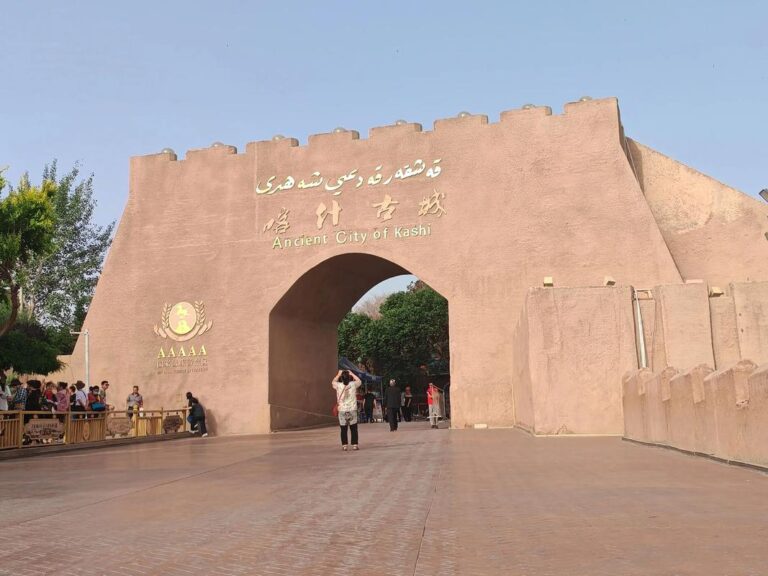
Kashgar is the easiest base. The Kashgar Old City is walkable, and doppa makers work inside the lanes year round. Yingjisha is a short hired-car or bus ride from Kashgar. For Atlas silk, fly or take the train to Hotan (an overnight train or a one-hour flight from Kashgar), then a local taxi to Geya township, about twenty minutes out.
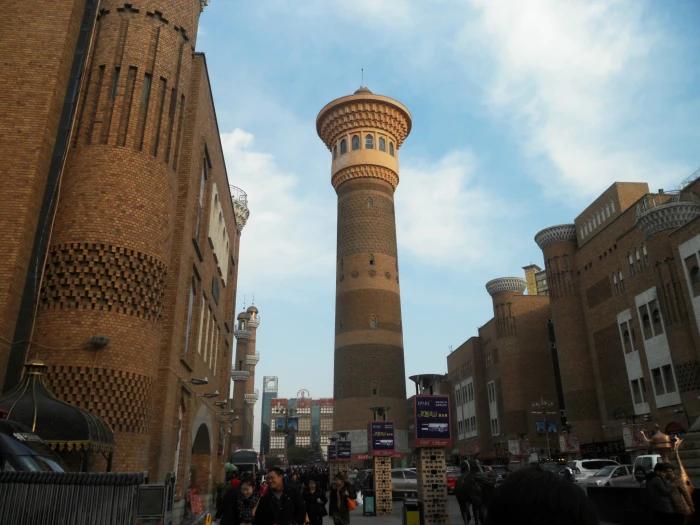
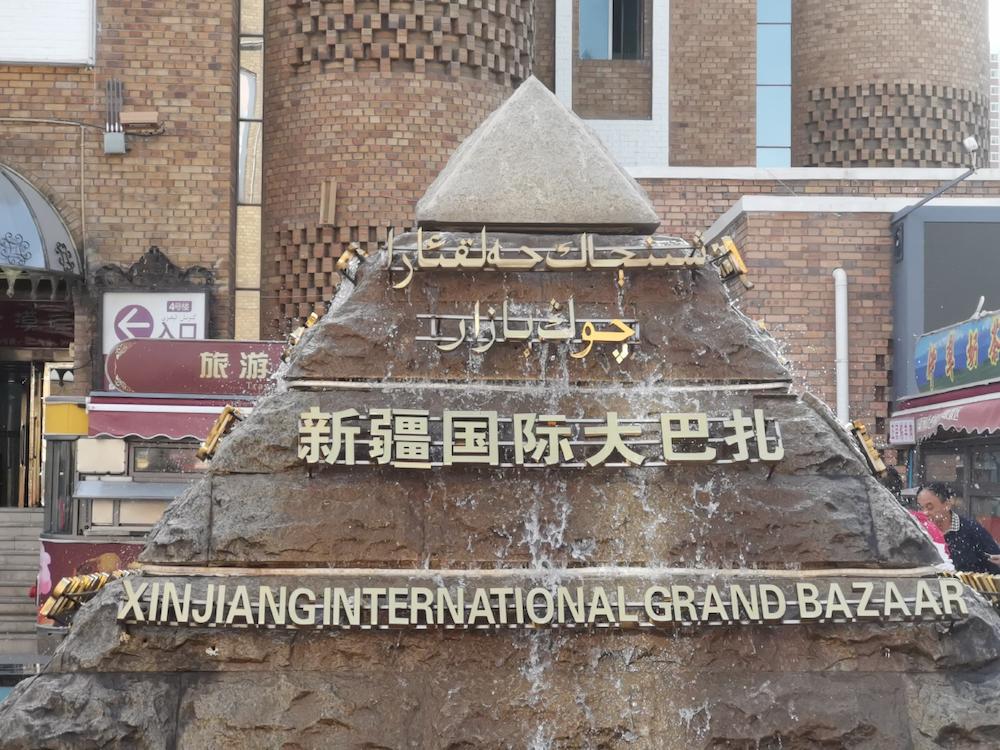
If you would rather see everything in one place first, the Urumqi International Bazaar stocks all three crafts, though you will not watch them made there. It is a good orientation stop before heading south.
Best time to go
Spring (April–May) and autumn (September–October) are kindest. Hotan bakes past 40°C in July and August, and the walk between workshops gets unpleasant. Most small workshops run through winter but keep shorter hours, and many close for the Friday midday prayers, so plan visits for the morning or early afternoon. Festival weeks (like the Hotan silk festival) are lively but crowded, and prices on ready-made pieces can rise.
Where to stay
In Kashgar, book a guesthouse inside the Old City if you can. Being able to step out at 8 a.m. and watch shutters open on the embroidery lane is the whole point, and you avoid a taxi each way. Hotan has a cluster of mid-range hotels near the bazaar; pick one within walking distance so you are not dependent on a driver between workshop stops.
What to eat between stops
You will be walking, and the food is part of the trip. In Hotan, order polo (rice with carrot and raisin, slow-cooked with lamb) from a hole-in-the-wall near the silk road, and wash it down with fresh kawa carrot juice. Kashgar’s night market does excellent samsa from the tandoor and every variant of nang you can name. Eating where the weavers and smiths eat is a small way to understand the craft — the same hands that tie silk eat the same street food as you.
Practical tips before you buy Xinjiang handicrafts
- Watch before you buy. If a shop cannot show you the making, the piece may be a factory import. The Kashgar carpet workshops follow the same rule — seeing the loom is the proof.
- Feel the silk. Real Atlas has weight and a faint natural-dye scent; printed copies feel thin.
- Ask about the knife’s shipping. Sort the courier before paying.
- Carry cash. Small workshops and old-city stalls often prefer it, and cash still gets a better price.
- Don’t over-bargain a master’s signed piece. On a knife with a smith’s mark, a hard haggle reads as disrespect and can end the sale.
For the wider picture of what else to shop for and how to negotiate, see our complete Xinjiang handicrafts shopping guide.
A 3-day craft route from Kashgar
Day 1 – Kashgar Old City. Morning in the doppa and embroidery lanes; afternoon at the Id Kah surroundings and a walk through the metalware stalls. Stay inside the city.
Day 2 – Yingjisha. Hire a car after breakfast, spend late morning at the knife cooperative and museum, buy and ship before lunch, back to Kashgar for the night market.
Day 3 – Hotan. Morning flight or train to Hotan, taxi to Geya silk workshop, watch a full binding-and-dye cycle, buy a metre or a sewn dress, fly back. This is tight but doable if you start early.
Frequently asked questions
Are Xinjiang handicrafts really handmade?
The three in this guide mostly are, especially when bought at the workshop. Bazaars also sell factory copies, which is why watching the making matters.
Can I take an Yingjisha knife home?
By shipping it through a courier that accepts blades, usually yes. Never carry it through airport or train security. Confirm the carrier’s rules on the day.
What is the difference between Atlas and ordinary silk?
Atlas is ikat-dyed before weaving, giving the blurred pattern; ordinary printed silk gets its design after the cloth exists and looks flat by comparison.
Is the doppa only for men?
The four-cornered doppa is mostly worn by men, but women have their own embroidered cap styles, and visitors of any gender can buy and wear one respectfully.
When are workshops closed?
Many close for Friday midday prayers and for major festival days. Mornings are the safest bet year round.
Disclaimer
The workshop details, prices, and travel notes in this article reflect the author’s visits between 2019 and 2026 and are shared for general guidance only. Opening hours, knife-shipping regulations, and craft prices change, and they vary by shop and by season. Always confirm current rules with the workshop, your carrier, and official tourism sources such as the Xinjiang Regional Culture and Tourism Department before you travel or buy. This article is not official legal or customs advice; for blade-transport questions, ask the relevant authority directly.
About the author
Reyila Ablikim is a Kashgar-born writer who has covered Uyghur and Kazakh craft traditions for a regional culture publication since 2014. She has documented silk weaving in Geya, knife forging in Yingjisha, and embroidery lanes across the old cities of southern Xinjiang, and prefers to write only about workshops she has stood inside.