Published: October 11, 2026 | Author: Karl Huang
Why you can trust this page: I drove the access road to the Baiyang River Grand Canyon north of Baijiantan on two trips, once in late September 2025 and again in April 2026, and I asked a Karamay-based geologist friend what the red walls are made of. The practical details below, the distances, the road numbers, the light windows, come from those visits and the signage at the Baijiantan turnoff. This is not a sponsored post, and I have no relationship with any business named here.
The Baiyang River Grand Canyon at a glance
| Item | Detail |
|---|---|
| Where | Baijiantan District, Karamay, northern Xinjiang, along the Baiyang River |
| What | A red sandstone gorge cut by the Baiyang River through the Gobi |
| Access | About 30 to 40 km north of Karamay city via G217 and district roads |
| Entry | Lightly developed, no major ticket gate at the rim we used |
| Best light | Late afternoon, roughly 17:00 to 19:30 in season |
| Nearest base | Baijiantan town for food and rooms; Karamay city for hotels |
| Combine with | Urho Ghost City, about an hour west |
What the Baiyang River Grand Canyon actually is
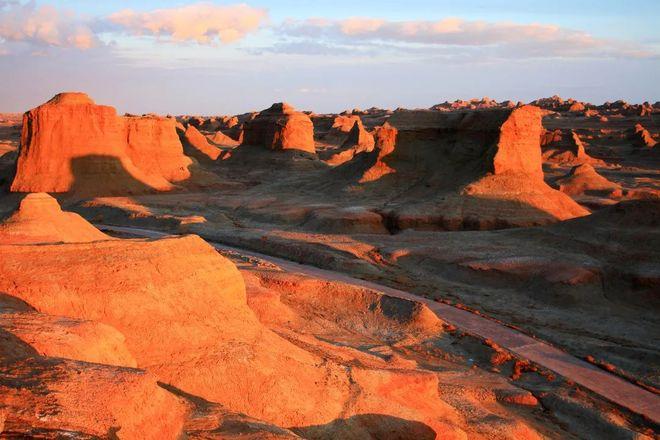
The Baiyang River Grand Canyon is the gorge the Baiyang River has cut into a band of red sandstone on the northern edge of Karamay’s Baijiantan District. The rock here is old sedimentary sandstone, oxidised to a deep rust colour by iron in the soil, and the river plus a few million windy seasons have stripped the soft layers into walls, slots and leaning pillars. It is the same family of red-rock geology you see at the Urho Ghost City further west, only here the river did most of the carving instead of the wind. Stand at the rim and the walls drop maybe thirty metres to a thread of green where the water runs, and the contrast between the red stone and the grey Gobi behind it is the whole point of the place.
The district name, Baijiantan, points to the pale, salty ground the oilfields were built on, and it is worth knowing the canyon sits inside an active oil landscape. Pumpjacks nod along the horizon within a few kilometres, and the red walls feel like the one piece of country the industry left alone. The Baiyang River itself is seasonal in places, a thin run in the dry months and a brighter thread after snowmelt, which is part of why the erosion looks fresh rather than ancient. The geologist I spoke with described the stone as Permian and Triassic red beds, soft enough that a hard rain can shift a ledge, which is one reason the rim is not fenced and why you should respect the edge.
How we found it on a detour north of Baijiantan
We were not looking for it. On the September trip we had driven from Karamay city toward the Baijiantan oil fields and noticed a red seam opening in the flat land about fifteen minutes past the last pumpjacks. A dirt pull-off let us stop, and the further we walked along the rim the more the wall unfolded, first a single red face, then a whole run of broken columns the colour of terracotta. There is no visitor centre and no sign calling it a scenic area, which is exactly why it felt like a find. On the April return the same wall was dusted with leftover snow on the shaded ledges, a completely different photograph, and we had the rim to ourselves both times.
What surprised us was the scale. From the road the wall looks like a low red ridge, but once you are standing on it the drop opens into a proper canyon, with side channels cutting back into the Gobi and a few narrow slots you can walk into up to your knees in red sand. Birds of prey ride the thermals along the rim, and in September the air smelled of sage and dust rather than anything industrial, which made the nearby rigs feel like a different planet.
Getting there from Karamay city
From Karamay city centre head north on G217 toward Baijiantan; the district sits roughly 30 to 40 km out, a drive of about 40 minutes depending on where you start. The canyon rim is reached by turning off onto the district access roads that follow the Baiyang River, then a final stretch of unpaved track that any normal car managed in dry weather on both our visits. In wet conditions that last section gets slick, so we would not attempt it after rain without a higher-clearance vehicle. There is no shuttle and no bus route to the rim; this is a self-drive stop. If you would rather not navigate the side roads yourself, the Karamay travel guide covers car hire and the main district roads in more detail.
An alternative is the G3014 Kuytun to Altay expressway, which skirts the area and lets you approach from the north if you are coming from the Burqin or Altay side. Either way you end on the same district roads, and we found the city-centre approach simpler to navigate the first time.
When the sandstone turns red
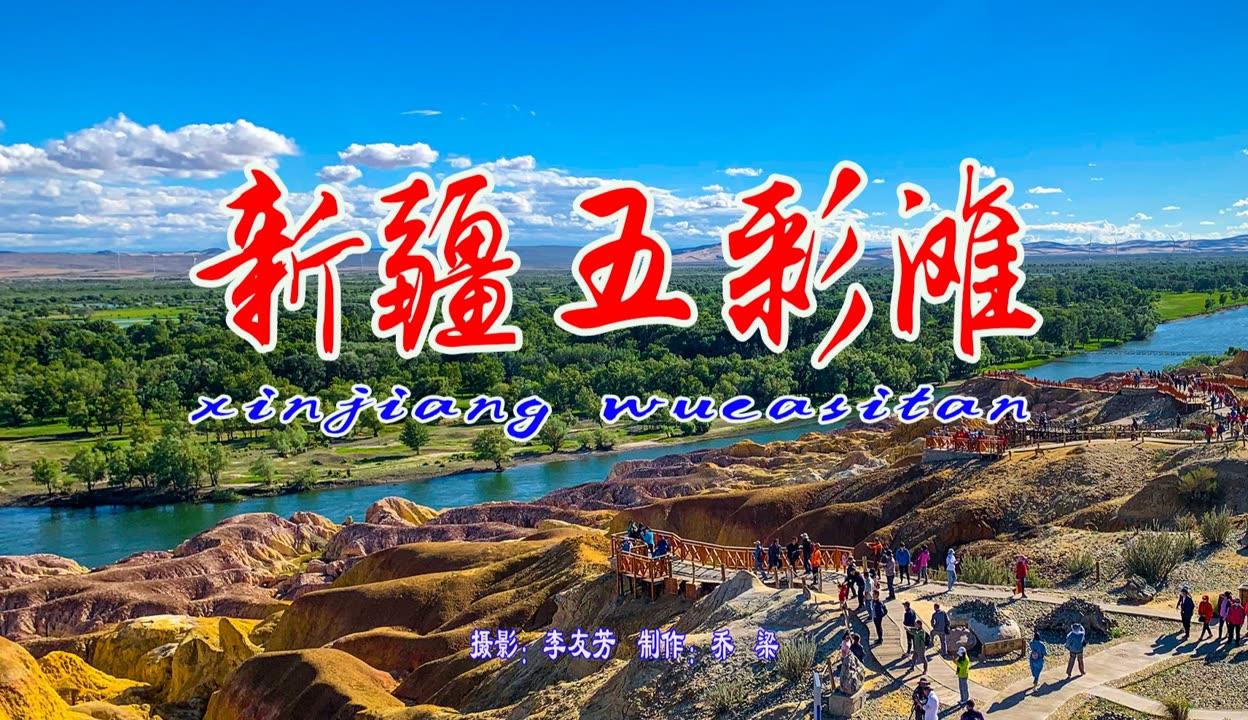
The colour is always there, but the canyon only earns its name in the right light. Midday sun flattens the walls to a dull brick and washes out the depth. The window we liked was the last two hours before sunset, when the low sun rakes across the sandstone and the red deepens to almost purple in the shadowed slots. Late September gave us warm, still afternoons and the clearest air; April was colder and windier but offered snow on the ledges. Summer afternoons are brutally hot and the Gobi glare is unforgiving, while deep winter means ice on the access track and temperatures that punish a casual stop. If your dates are fixed, aim for the late-afternoon slot and check the forecast before you leave the city.
For photographers, the practical move is a tripod and a polariser. The polariser cuts the glare off the bare stone and deepens the sky, and a slow shutter at dusk keeps the shadowed slots from going black. We shot at 35 mm for the wall-in-context frames and changed to a longer lens only for the leaning pillars. Drones are tempting over the open Gobi, but oil-field airspace is sensitive and we did not fly; check local restrictions first.
Sleeping and eating in Baijiantan
Baijiantan town has the practical stuff: simple hotels, noodle counters and the canteens that serve the oil-field crews. Rooms are basic and cheap, and they fill up less than Karamay city does during holiday weeks. For a better mattress and a wider dinner choice, stay in Karamay city and make the canyon a half-day outing, which is what we did on the April trip, commuting up in the afternoon and back after dark. Food in the district is straight northern Xinjiang: hand-pulled laghman, roast lamb skewers, and the flatbread-and-mutton stews that fuel the rigs. Do not expect a cafe at the rim; pack water and a snack, because the nearest shop is back in town.
One practical note about Baijiantan: it is a working district, not a tourist town, so the welcome is unglamorous and the evening streets empty early. That is part of the appeal if you like places that have not been styled for visitors. We ate at a corner noodle shop where the only English was on a soft-drink can, and the laghman arrived wider than my thumb and twice as good as the price suggested. Cash or a Chinese payment app both worked; a foreign card would not have.
What to pack for a place with no gate
Because there is no ticket office or staff, you are responsible for your own comfort and safety. Bring more water than you think you need; the Gobi eats it. Wear proper shoes, because the rim is loose red grit that slides under a smooth sole. A hat and sunscreen matter even on cool days, since the wind carries dust and the UV is high. Carry a downloaded offline map, because phone signal thins once you leave the district road. And tell someone your plan: the spot is open country, and a breakdown on the access track is a long walk to help. None of this is hard, but the people who struggle there are the ones who treated it like a staffed park.
A half-day loop with the Urho Ghost City
The canyon pairs naturally with Karamay’s Urho Ghost City, the wind-carved city of rock about an hour west of Baijiantan. We ran them as a single afternoon: leave Karamay city by mid afternoon, reach the Baiyang River rim first for the warm light on the red walls, then drive west to the Ghost City for sunset among the taller formations. If you want a third stop, the Dushanzi Grand Canyon lies south and suits a fuller day on its own. The Baiyang River stop costs nothing and needs only an hour, so it works as the easy opener before the paid sites.
Frequently asked questions
Is the Baiyang River Grand Canyon a paid scenic area? On our two visits there was no ticket gate at the rim we used, and access felt free, but arrangements at lightly developed sites change. Treat it as unstaffed and confirm locally before you rely on facilities being open.
Can any car reach it? In dry weather a normal sedan made the access track fine on both our trips. After rain or snow the unpaved final stretch gets slick, and we would only go then with higher clearance.
How long should I spend? An hour at the rim is enough to walk a stretch, take photos and feel the place. Pair it with the Urho Ghost City and you have a full afternoon.
Disclaimer
Information is based on visits in September 2025 and April 2026, local signage at the Baijiantan turnoff, and a conversation with a Karamay-based geologist about the sandstone. Road conditions, access arrangements and the state of the unpaved track change with weather and with local management decisions; verify the route and any entry status with your hotel or the Karamay tourism line before a long detour. The author has no commercial tie to any business mentioned.
About the author
Karl Huang is a Xinjiang-based travel writer living in Urumqi who has driven the Karamay to Baijiantan corridor more times than he can count. His northern Xinjiang notes include the Karamay travel guide, the Urho Ghost City write-up and the Dushanzi Grand Canyon guide, and he prefers the unsignposted stops to the crowded ones.