Published: October 16, 2026 | Author: Helen Marsh, travel writer covering the oases of the Turpan Basin since 2019
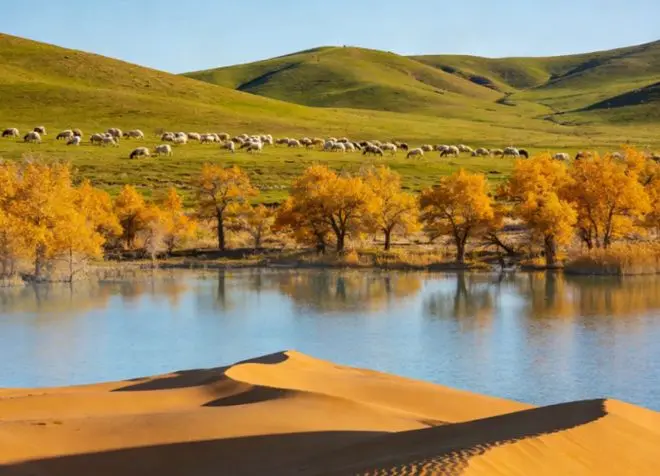
Most deserts keep a polite distance from people. The Kumtagh desert does the opposite: it walks right up to the last street of Shanshan town and stops, without much of a fence, and it has held that line for as long as anyone has written the place down. Locals sum it up in a phrase that translates roughly as the sand does not advance, the green does not retreat. I assumed this was tourism copy the first time I heard it. Then I stood on a dune at dusk, watched the town’s streetlights come on below me, and timed four minutes before a city bus rattled past the gate. It is one of the strangest and most likeable sights in Xinjiang.
Where this comes from: I have travelled the Turpan Basin in four different seasons since 2019 and reached Shanshan twice by train and once by road. What follows mixes my notes with details from park staff and the family I stayed with, and leaves out anything I could not pin down. If you are new to the region, our Turpan city guide covers the basin’s main sights before you push east.
Kumtagh Desert in numbers
| Detail | What to expect |
|---|---|
| Location | Park Road 999, southern edge of Shanshan town, Turpan |
| Distance | About 280 km from Urumqi; Turpan city is 90 km further west |
| Size | About 1,880 sq km, stretching 62 km east to west and 40 km north to south |
| Entrance | 30 yuan; about 60 with shuttle Line 1; about 90 with both shuttle lines |
| Hours | 8:30 to 22:00 from May to October; 9:30 to 19:00 from November to April |
| Best months | Late April to early June and late September to late October |
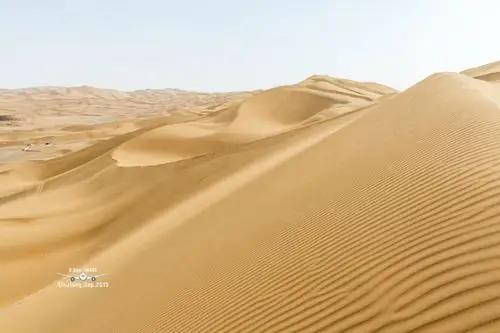
One clarification that trips people up: Kumtagh is Uyghur for sand mountain, and the name does real work here. This is not a flat plain but a range of dunes stacked as high as low hills, which is why the park calls itself, with some justification, the desert with a backbone.
How two winds raised the sand mountains
The formation story is the best thing about the Kumtagh desert, and it explains why the dunes sit where they do. Two strong air currents funnel into this corner of the basin from opposite directions: one through the Qijiaojing wind gap in the eastern Tianshan, the other through the Dabancheng gap near Urumqi. Each carries its load of sand. Where the two flows meet, the wind loses its grip and the sand comes down, grain by grain, century after century. The Kuruktagh mountains to the south act as a brake on the whole system, so the deposit keeps piling up in the same rectangle of ground. China’s Ministry of Natural Resources credits these two wind corridors with building the tallest stacked dunes in the basin.
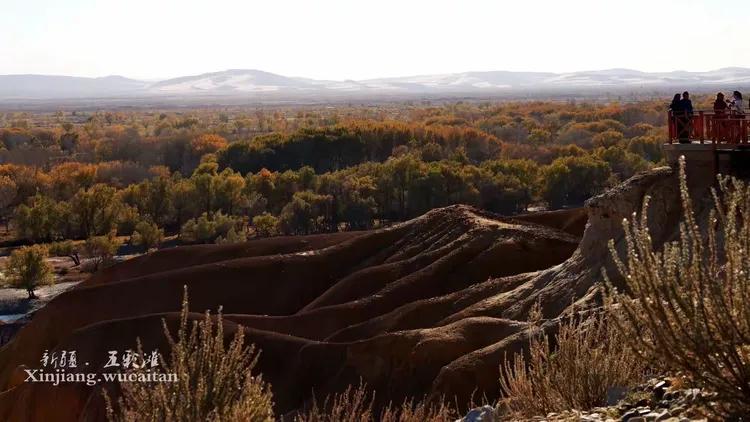
The rectangle measures about 1,880 square kilometres, and the dunes rose on the eastern foothills of the Flaming Mountains. Near the southern edge of the scenic area you can still see eroded red bedrock poking through the sand, red rock under yellow in the same frame.
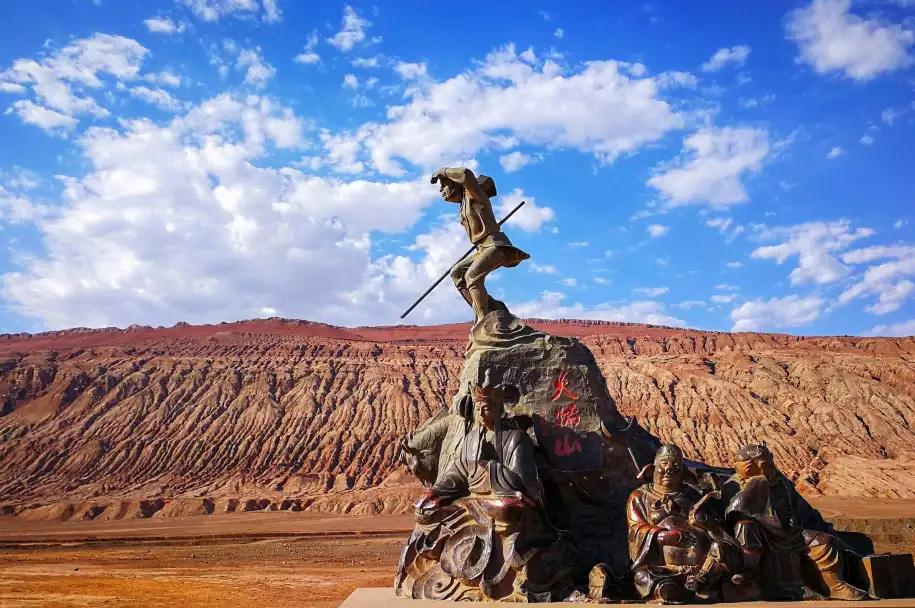
The crucial detail is where the meeting point of the two winds sits. It has held steady at the southern edge of the old town for as long as records exist. The dunes lap against the last line of poplar trees and stop. Why the line never drifts is still debated, but the result is visible any evening: vineyards on one side of a road, a wall of crested sand on the other, and a town that has never had to move.
Our first evening on the sand
We reached the gate just after five on the advice of our guesthouse owner, who said the sand would still be too hot to walk on any earlier. She was right. Sandboard rental cost 20 yuan, and we climbed the first crest with our shoes in our hands, the sand underfoot softer than any beach I have walked.
From the top the desert does something unexpected: it gets quieter and busier at once. Camel bells somewhere out of sight, the hiss of sand sliding off a slip face, and under all of it the ordinary noise of a county town finishing its day. We slid down four times, climbed up five, and stayed for the sunset, which turned the dune field the colour of strong tea. When the lights of Shanshan came on we walked down barefoot and were at a noodle shop within twenty minutes of leaving the sand. I have visited deserts that demanded a full day and a convoy. This one takes a bus.
Trains, buses and the road east
The easiest arrival is by rail. High speed trains leave Urumqi for Shanshan North several times a day, take about one hour and fifty minutes, and cost under 80 yuan in second class. From the station a short taxi ride reaches the gate, or city bus number 7, at 2 yuan, finishes its route by the park entrance. From Turpan, regular trains and shared vans cover the 90 km east in about ninety minutes, and most basin day tours add the desert for a fee. Our guide to the karez wells pairs well here, since those underground canals are the reason an oasis could grow beside a dune field at all.
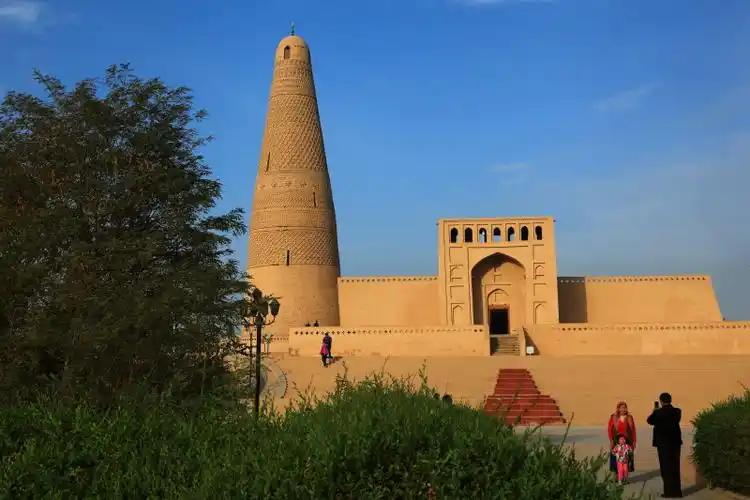
The last kilometres into town run through poplar shelterbelts with speed bumps and the occasional flock. Self-drive from Urumqi is roughly 280 km and three and a half hours on the expressway. Plenty of visitors pair the desert with Turpan’s other sights; the Emin Minaret, China’s tallest earthen tower, makes a natural stop on the way east.
Reading the seasons in the Turpan Basin
Timing matters more here than at most sights. From May to October the park stays open until ten at night, and that long evening is the whole point: locals enter after five, when the sand stops burning and the light goes golden. Midsummer in the basin is brutal, and both staff and visitors describe sand hot enough to scorch bare feet by noon, with surface readings in July reportedly above 80 degrees Celsius.
For full days out of the heat, aim for late April to early June or late September to late October. Autumn has a bonus, because the grape trellises around the basin are heavy and the harvest is under way; our guide to the Turpan grape harvest explains when the sweetest batches come in. Spring is lovely but windy, and the basin sits on real dust routes, so if you travel between March and May, read our guide to Xinjiang’s sandstorm season before locking dates. Winter shrinks the hours and empties the dunes, and snow on the crests is a rare photograph, though the cold bites.
Rooms between the vineyards and the sand
Shanshan town is small enough that location does the sorting for you. The main chain hotels and the better family guesthouses sit within ten minutes of the gate, some within sight of the dunes, and prices run clearly below Turpan or Urumqi. The place we used was run by a family who dried raisins on the roof and dropped us at the gate for free, since the market was on their way anyway.
For something different, the scenic area operates a camping ground just inside the entrance, with tents, bonfires in season and the loudest sky of stars you will see all trip. Book ahead on summer weekends, when tour groups claim the flat patches first.
Eating where the oasis feeds the town
Shanshan eats like the rest of the basin, which is to say well and cheaply. Polo, the carrot and raisin pilaf, anchors most lunches. Lamb skewers come off the grill all evening, and baked buns stuffed with onion and mutton, straight from the tandoor, are the best two yuan you will spend in Xinjiang. The town’s own fame is grapes. Trellises run along the streets and through the courtyards, and from August the market air smells faintly of drying fruit. Buy raisins by the kilo from the small shops a few streets in, and you will pay a third of the gate-stall price for better fruit.
Sand therapy, night sessions and other reasons to linger
The Kumtagh’s most curious trade is sand therapy, the Uyghur folk practice of burying the body in hot sand for twenty minutes at a time. It peaks in June, July and August, when surface sand is said to top 82 degrees, drawing people from across the region for aching joints and rheumatism. I will say plainly what practitioners themselves say: this is folk medicine with a long local history, not a substitute for a doctor. Our longer piece on Turpan sand therapy explains how the custom works across the basin.
Even without the therapy, the evenings justify a late stay: summer nights bring bonfires, camping and stargazing. Popularity is real too, with more than 1.1 million visits counted in the first nine months of 2019 alone, which is why entering after five matters. Daytime, the Thousand Springs Sand Lake at the desert’s edge gathers water from hundreds of small springs, and a lotus pond planted from Hunan in 2017 has somehow taken root in sight of the crests. In Happy Sand Valley, jeep dune runs cost around 150 yuan, sandboards rent for 20 to 30 yuan, and camel rides are priced by the circuit.
The small print that saves a trip
- Entrance is 30 yuan. Shuttle Line 1 brings it to about 60, both lines to about 90, and Line 2 runs deeper into the dune field where the crowds thin out.
- Enter after five in the warm months. You will see more and burn less.
- Buy water outside the gate, 2 or 3 yuan a bottle against 5 inside, and carry more than seems sane.
- Wear shoes you can shake out. Barefoot is glorious on the crests once the sand cools, but the climb up is hot work.
- Take sun protection seriously; a wide hat and a scarf for the wind beat sunscreen alone.
- Last entry in summer is around eight in the evening, and hours shrink to 9:30 to 19:00 from November to April.
- Signal holds near the gate and fades on the deeper dunes, so screenshot your return plan before you walk out.
A two-day plan without the rush
If you have a weekend, take the morning high speed train from Urumqi, stop in Turpan on the way east for the minaret and a karez channel, and continue to Shanshan by mid-afternoon. Check in, eat late, and walk into the desert at five for the long evening: shuttles, sandboards, sunset from the second crest. Sleep in Shanshan.
The next morning, let the tour groups have the sand. Walk the Thousand Springs Sand Lake path while it is cool, find a late breakfast of baked buns, and browse the raisin shops before the afternoon train back.
Questions we hear about Kumtagh
Is the desert really at the edge of the town? Yes. The scenic entrance sits on Park Road 999, minutes from the town centre, and the dunes press directly against the last streets. It is why the site is often called the only desert in the world that touches a city.
How much time should I allow? Three hours covers the shuttles and a couple of crests. Add two more for sunset, and more again if you are camping.
How does it compare with the Taklamakan? The Taklamakan is a sea crossing; the Kumtagh is a range of sand you can walk into after dinner. They are different experiences, not substitutes.
Is it suitable for children? Very much so. Distances are short, the rides are tame, and sliding down a dune is the kind of simple fun that outperforms most museums.
Do I need to book anything ahead? Only the camping ground in high season and, on summer weekends, your train tickets in both directions.
A note on accuracy and safety
Ticket prices, shuttle costs and opening hours here were checked against current listings in October 2026, but they shift with the seasons and with park policy, so confirm at the gate. Sand therapy is a folk tradition, not medical advice, and midsummer heat in the Turpan Basin is genuinely dangerous if you ignore it. Travel with water, follow the park signage, and give the deep dune field the respect you would give any wilderness.
The writer behind this guide
Helen Marsh is a travel writer who has covered the oases, railways and deserts of the Turpan Basin since 2019, with repeat field visits in four different seasons. She pays her own way and updates her guides when prices and timetables change.