Published: 2026-08-24 | Author: Karl Huang
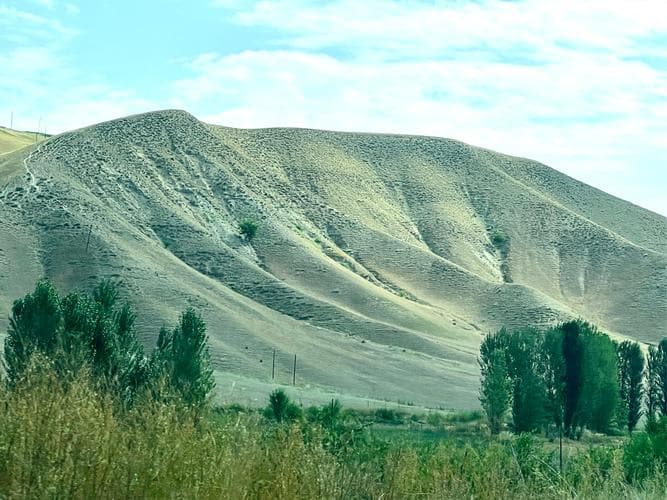
Most people drive through Yanqi on their way from Korla to the Duku Highway or Turpan without stopping. We did the same thing on our first three trips through southern Xinjiang. It was not until a friend who works at a vineyard near Bosten Lake told us about the county’s wine scene and its Tang-dynasty ruins that we decided to spend two nights there. What we found was one of the more surprising corners of Xinjiang: a Hui-majority county where ten thousand hectares of grapevines climb the basin slopes, Buddhist temple ruins sit above ancient canals, and the night market serves some of the best cold noodles we have eaten anywhere in China.
Quick reference: Yanqi Hui Autonomous County
| Item | Detail |
|---|---|
| Chinese name | 焉耆回族自治县 (Yānqí Huízú Zìzhìxiàn) |
| Location | Yanqi Basin, Bayingolin Mongol AP, ~55 km north of Korla |
| Ethnic makeup | Hui (~40%), Uyghur, Han, Mongol |
| Famous for | Wine grapes, Hui cuisine, Silk Road garrison history |
| Best months | May–June (vine green), September–October (harvest) |
| Time needed | 1–2 days (half-day if only passing through) |
| Getting there | Korla by car/bus/taxi (~50 min); nearest airport: Korla (KRL) |
Why we keep coming back to this county
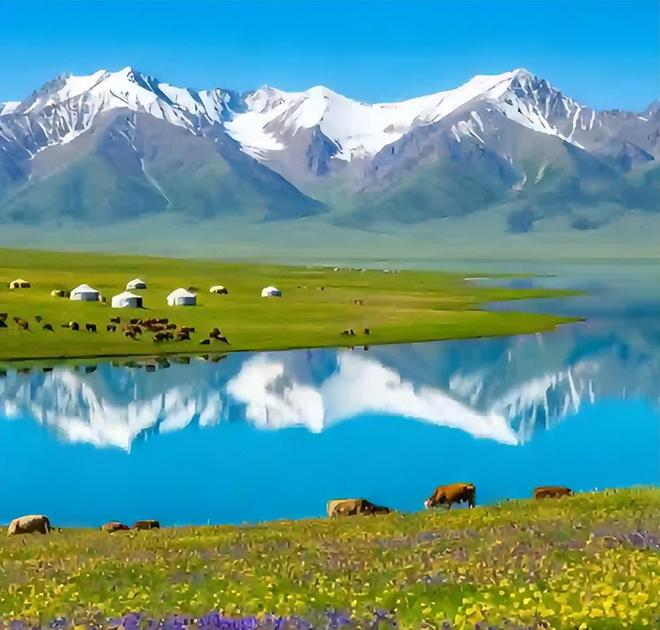
The first time we visited, it was late August and the heat hit us as soon as we stepped out of the taxi at the bus station. The driver had spent the whole ride telling us about his uncle’s vineyard and the “purple economy” that has reshaped the local landscape over the past fifteen years. At the time we thought he was exaggerating. He was not.
We spent the first afternoon walking along the Kaidu River as it winds through the county seat. The riverside park is nothing fancy — concrete paths, a few pavilions, but late-afternoon light is striking when the Tianshan sun drops behind the peaks and the whole basin turns amber. That evening at the night market near the mosque, a Hui stall owner switched to clear English she had picked up from foreign backpackers.
We returned in September during harvest. Roads to the vineyards were lined with trucks loaded with Cabernet Sauvignon and Merlot grapes; the air smelled of crushed fruit and yeast. That trip convinced us Yanqi deserves more than a gas-station stop.
Getting there and around
Yanqi sits at the crossroads of National Highway 218 (north–south) and Highway 314 (east–west), with the new Wuwei Expressway cutting through just east of town. Practically this means:
- From Korla: The most common approach. A taxi costs ¥60–80 and takes 45–55 minutes depending on traffic. Public buses run every 20–30 minutes from Korla’s long-distance station (¥12, ~70 min).
- From Urumqi: Take the high-speed train to Korla (3.5–4 hours) then transfer to a taxi or bus. There is no direct train to Yanqi.
- By car: If you are driving the southern loop, Yanqi is an obvious overnight stop between Korla and Kuqa. Parking in the county seat is easy; most hotels have free lots.
- Around town: The county seat is compact enough to walk. For the vineyards and Horlashan Ancient Village you need a car. Rental agencies in Korla offer day rates of ¥300–400; agree on the price beforehand.
The nearest airport with commercial flights is Korla Airport (IATA: KRL), roughly 35 km southeast of Yanqi. It receives daily flights from Urumqi and occasional connections to other provincial capitals.
Best time to visit
The timing depends on what interests you:
- May–early June: Vineyards are bright green. Daytime temperatures are pleasant (22–28°C). This is our favorite window for walking the basin roads.
- Late July–August: Hot (32–38°C) but lively. Grape maturation is underway. The lake beaches are open. Bring sun protection and plan outdoor activities for morning or evening.
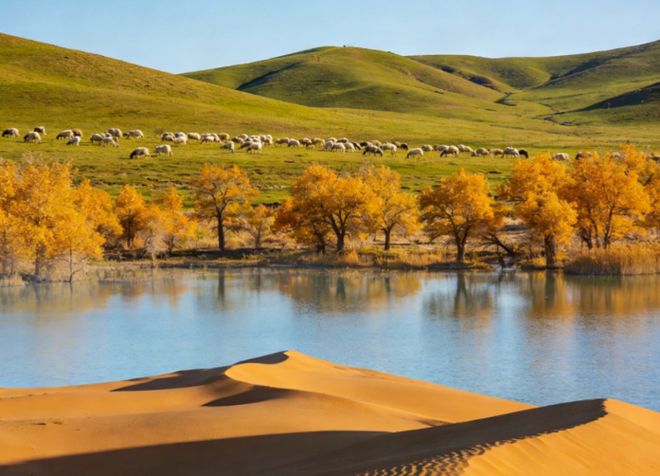
- September–mid October: Harvest season. Vineyard tours are at their best. Days are cooler (18–26°C). The poplar trees along the river turn gold.
- November–April: Cold. Some guesthouses and wineries reduce hours or close. Horlashan Ancient Village shuts down after mid-October. Only recommended if you are specifically interested in winter quiet.
Horlashan Silk Road Ancient Village
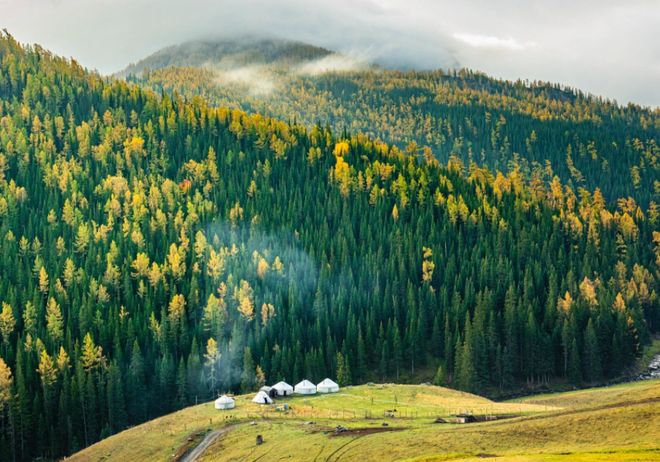
If you only visit one place in Yanqi County, make it this one. The Horlashan (Huola Mountain) Silk Road Ancient Village sits on the southern slope of the Tianshan range, about 30 km northwest of Qigexing Town. It was designated a national 4A scenic area in 2018.
The site is a genuine rarity: a living village built around Han- and Tang-dynasty remains. You can walk ancient irrigation channels still carrying spring water, see Buddhist temple foundations over a thousand years old, and rock carvings predating Islam. Exposed Jurassic formations and year-round springs keep the valley green even in July.
What surprised us most was how uncommercialized it feels. Entry is free. There is no ticket booth, no hard-sell gift shop. A small visitor center opened recently with basic facilities, but you can still wander into the old village and find yourself alone among mud-brick houses and walnut trees. About thirty family guesthouses operate in the village. We paid ¥180/night for a wood cabin with valley views, breakfast included (fresh naan and goat-milk tea).
Practical details: Open daily, May 1 – October 15 (the official operating season). Allow 3–5 hours. Wear sturdy shoes — the boardwalks and trails involve uphill walking. Bring water; shade is limited outside the village core.
Qigexing Buddhist Temple Ruins
About halfway between Yanqi town and Horlashan Village lies the Qigexing (Seven Stars) Buddhist Temple Ruins. A national key cultural relic since 2001, on the UNESCO World Heritage Tentative List (“Silk Roads: Tianshan Corridor”), upgraded to 4A status in December 2024.
The ruins consist of 18 building remnants divided into northern and southern zones. A modern museum opened in late 2023 covering the site’s role as a Buddhist transmission hub between India and China, with bilingual labels and a documentary film.
Plan 60–90 minutes here. Combine it with Horlashan Village in a single half-day trip from Yanqi town.
The wine country: what to taste and where
This is the reason many travelers now detour to Yanqi. The county sits within the Yanqi Basin, which has become Xinjiang’s premier wine region. Roughly 10,000 hectares of vineyards cover the basin slopes, fed by meltwater from the Tianshan and moderated by Bosten Lake‘s microclimate. Fifteen commercial wineries produce over 10,000 tons of wine annually, and the region holds China’s national certification for organic wine-grape production.
The continental climate — very hot summers, very cold winters — produces grapes with thick skins and concentrated flavors. Cabernet Sauvignon, Merlot, and Chardonnay dominate, Yanqi wines have won more than a thousand international awards over the past decade.
For visitors, the key names to know are:
- Tiansai Vineyards: Widely regarded as Xinjiang’s top estate with an impressive underground cellar. Tastings ¥80–250; book ahead for winemaker tours.
- Citic Niya Yanqi Estate: A large-scale operation showing the regional industry at scale. Their Bordeaux blends have won Decanter medals.
- Xiangdu Wine Castle: Closer to town, with a chateau-style building and basic tastings. A decent option if you have limited time.
For deeper background on Xinjiang’s broader wine geography, our guide to Xinjiang wine covers the northern regions as well.
Tasting tip: Pair the local white wines with Korla fragrant pears, which grow abundantly in the orchards between Yanqi and Korla. The pear’s crisp sweetness cuts through the oakiness of aged Chardonnay beautifully.
Hui food: what to eat in Yanqi
The Hui community gives Yanqi a food culture distinct from the Uyghur-dominated cities to the south. You will still find naan, kebabs, and pilaf, but the specialties here reflect Hui culinary traditions shaped by centuries of trade-route contact:
- Yanqi liangpi (cold skin noodles): The single dish we would cross the province for. Wide, chewy wheat noodles tossed in sesame paste, chili oil, vinegar, and bean sprouts. Every stall claims a secret recipe; the version at the main night market, served by the same woman since 2003, is the local favorite.
- Jiuwan Sanhangzi (“Nine Bowls Three Rows”): An intangible-cultural-heritage banquet: nine bowls in three rows (braised meat, meatballs, tofu, pumpkin, egg). For groups of 6+; order a day ahead.
- Yougao (fried cake): Deep-fried dough stuffed with sugar or red bean paste. Sold at breakfast stalls and street corners. Best eaten hot within minutes of frying.
- Jiaomo mutton (pepper-numbing lamb): Sichuan-influenced but adapted with local spices. Tender, spicy, and served with flatbread for dipping.
- Pigeon dishes: Yanqi’s annual Pigeon Culture Tourism Festival (2025 drew 200,000+ visitors) makes stewed pigeon widely available in season.
Where to stay
Yanqi is not a luxury destination. Accommodation ranges from clean business hotels (¥150–250/night) to family guesthouses (¥80–150). Options include:
- In town: Several business hotels along the main avenue offer standard rooms with AC, private bath, and free WiFi. They are functional but characterless.
- At Horlashan Village: Wood cabins and courtyard guesthouses. More atmospheric, but book in advance during summer weekends. Some do not accept foreign guests — ask before you arrive.
- Vineyard stays: Tiansai and a few other estates offer limited guesthouse accommodation. Inquire when booking your tasting. These fill up fast during harvest season (September–October).
- Base in Korla instead: If you want better hotel options, staying in Korla and day-tripping to Yanqi is perfectly reasonable. The drive is under an hour each way.
Bosten Lake: the backyard sea
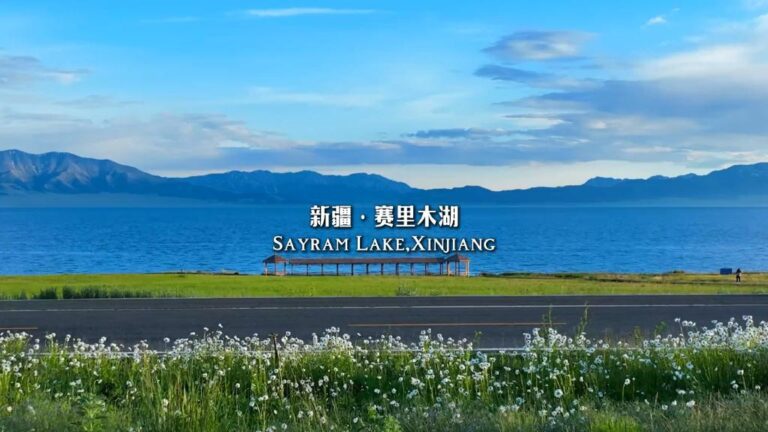
Technically in neighboring Bohu County, Bosten Lake is visible from the higher ground west of Yanqi and is the natural extension of any visit here. As China’s largest inland freshwater lake, it offers reed marshes, lotus lagoons, sandy beaches, and boat tours. Birders should note that the wetlands host large seasonal congregations of wild geese, egrets, and ducks — our birdwatching guide covers the best spots and seasons.
The lake moderates temperature extremes in the immediate basin, which is why northern-shore vineyards produce more balanced wines than plantations farther inland.
Sample itinerary: one full day in Yanqi
- 08:00 — Breakfast in town (try the fried cakes at any busy corner stall).
- 09:00 — Drive or hire a car to Qigexing Buddhist Temple Ruins (30 min from town). Spend 60–90 minutes at the museum and site.
- 11:00 — Continue to Horlashan Silk Road Ancient Village (another 25 km). Walk the boardwalks, visit the ancient canal system, have a simple lunch at a farmhouse restaurant.
- 15:00 — Return toward town, stopping at a vineyard (Tiansai if booked, otherwise Xiangdu) for a tasting.
- 17:30 — Back in town. Rest or walk the Kaidu River park.
- 19:30 — Dinner at the night market. Order liangpi, grilled lamb, and whatever looks busiest.
Iron Gate Pass and the wider Bayingolin context
Yanqi does not exist in isolation. It is part of the Bayingolin Mongol Autonomous Prefecture, a sprawling administrative division the size of Great Britain. To the south lies Iron Gate Pass (Tiemenguan), the narrow canyon that controlled the southern Silk Road route toward Kashgar for two millennia. To the west live the Torgut Mongols, whose ancestors completed an epic return migration from the Volga in the 18th century. Understanding Yanqi’s place within this larger tapestry makes the visit richer.
FAQ
Is Yanqi safe for foreign travelers? Yes. We encountered no issues beyond routine ID checks at hotel check-in. Carry your passport.
Do I need a car? For the town center, no. For Horlashan Village, the vineyards, and Bosten Lake, yes. Taxis can be hired for half-day trips (~¥300–400) but must return to town; they cannot wait indefinitely at each stop.
Can I visit without speaking Chinese? Basic navigation is possible with translation apps. Restaurant menus rarely have English, so point-and-smile (or photo-translate) is the norm. Younger people in shops and hotels often know some English words.
Is the wine expensive by Chinese standards? Mid-range bottles (¥120–280) compare favorably with equivalent-quality imports. Premium estate wines (¥400+) are priced for the domestic gift market and feel steep unless you are a serious collector.
Are there mosques worth visiting? The county seat has a prominent central mosque with distinctive architecture. Visitors are generally welcome outside prayer times. Dress modestly (cover shoulders and knees) and ask permission before photographing worshippers.
Disclaimer
All information in this article was accurate to the best of our knowledge at the time of writing (August 2026). Opening hours, ticket prices, and transport schedules can change. Verify critical details with official sources or current travelers before your trip. This article reflects our personal experiences and is not sponsored by any business or government entity mentioned herein.
About the author
Karl Huang has traveled extensively across Xinjiang since 2019, visiting all fourteen prefecture-level divisions and logging over sixty nights in homestays, guesthouses, and tents. He writes about Xinjiang’s landscapes, food cultures, and practical logistics for independent travelers who prefer firsthand information over recycled guidebook text.