Published: September 12, 2026 | Author: Karl Huang, travel writer based in Urumqi
Around the tenth of September, the orchards west of Korla start moving before first light. Buckets and short ladders come out, crates come off the trucks, and for two weeks the rhythm of this city on the northern rim of the Taklamakan is set by a fruit the size of a fist. The Korla pear is why this corner of Xinjiang calls itself Pear City. I spent four mornings in the Awati township orchards during the 2025 picking season, and this is what a visitor actually meets out there.
Why This Page Reads Like a Field Note, Not a Brochure
Crop and grading figures come from the Korla city government’s harvest briefing of 19 September 2025 and from the standard the local pear association published as T/XLXH 001-2019, which covers planting, processing, storage and sales. Orchard detail comes from walking rows with growers in Awati township and an hour beside a packing shed’s sorting table. Where an official number shifted between releases, I say so rather than picking the rounder version.
What this page leaves out matters too. It is not a city guide, and hotels, restaurants and the old gorge in one place live in our Korla travel guide.
The Harvest, in Numbers
| Where | Orchard belt 15 to 20 km west of central Korla, Bayingolin Mongol Autonomous Prefecture, on the northern rim of the Tarim Basin |
| Picking begins | Around 10 September in 2025; the association’s standard window runs from 5 September to 15 October |
| Main flush | Roughly 20 September, when most of the city’s crop comes off in about two weeks |
| City planting area | 40.2 wan mu, about 26,800 hectares, spread across 58 villages in the pear belt |
| Expected 2025 crop | About 370,000 tonnes |
| Graded fruit size | 80 to 150 g under the national product standard; the A, B and C grades all sit between 90 and 150 g |
| Orchard gate price | 10 to 20 yuan entry at Awati plots, with fruit at 8 to 12 yuan a kilo quoted to visitors in 2025 |
| Brand value | 17 billion yuan, ranked first among Chinese pear brands for seven consecutive years |
| Nearest airport | Korla Airport (KRL), a short drive from the city centre |
Why Korla Pears Only Taste Like This in Xinjiang
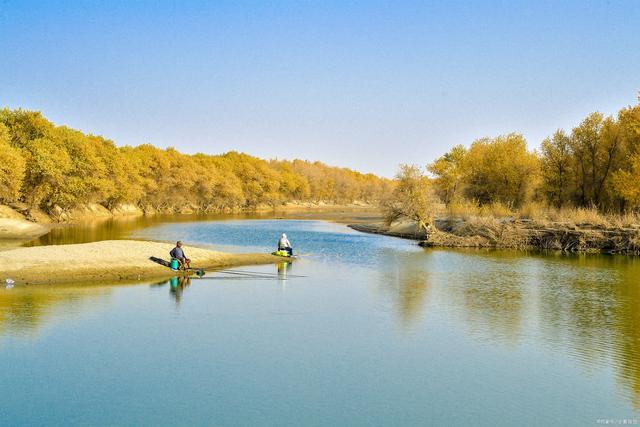
Geography does the work, and the paperwork agrees with the growers. The protected belt follows the Peacock River where it leaves the Tianshan foothills, and irrigation arrives as glacier melt that has passed through Bosten Lake, the largest inland freshwater lake in Xinjiang. Sandy loam with a pH between 7.8 and 8.5, long frost-free summers and a night-time drop of 15 to 20 degrees all push sugar into the fruit.
The state drew the boundary early. Korla pear became the first origin certificate mark registered in China in November 1996. On 13 December 2004 the quality watchdog approved it as a protected regional product across ten counties and cities. It joined the first China-EU geographical indication exchange list in July 2020, and in November 2025 the national IP administration approved Korla as a protection demonstration zone. Fruit sold as Korla pear from outside that mapped ground is a different proposition, as growers here will tell you within a minute.
What you taste in September is small, 80 to 150 grams, thin-skinned and coated in a heavy natural wax bloom. The standard sets picking at 140 days after full bloom, and the gap between that day and a week early is the gap between crunchy water and perfume.

Four Mornings in the Awati Orchards
My first morning went badly, which turned out to be useful. I arrived at eight expecting the tidy rows of a pick-your-own farm and found a commercial yard instead: netting over half the trees, a man on a ladder working with both hands, and crates stacked taller than me. On the second morning a grower in his fifties, who planted his block twenty years ago, handed me a bucket and told me to follow his daughter along the row. Picking is treated as work here, and turning up before nine may get you a bucket rather than a price list.
Two things surprised me. A ripe pear needs almost no force: cup and twist, and a bucket fills in minutes, while a straight pull bruises the stem end. And the orchard is quieter than you expect, with water running along concrete channels at the end of each block.
What Happens to a Pear Between the Branch and the Box
Two hours after a pear leaves the tree it is in a shed being sorted, and this is the part visitors rarely see. The standard splits the crop into A, B and C. Grade A must be uniform green or yellow-green with no scarring and no rough skin at all; grade B tolerates limited scarring; grade C allows rough skin in up to five percent of a batch and scarring in up to ten. Every grade lands between 90 and 150 grams.
On the city’s automated line an eight-hour shift sorts about 20 tonnes into twelve sizes. Rejects are not wasted. Six processing companies take roughly 14,000 tonnes of second-grade fruit a year and turn it into 25 products, from pear syrup and throat lozenges to candied sticks.
Reaching the Orchards Without a Car of Your Own
The pear belt sits 15 to 20 kilometres from central Korla, close enough to reach by bus and slow enough that most visitors hire a car. Bus 15 starts from the Awati fourth-team stop beside the fruit town, but you will transfer: change at the 36th residential compound onto bus 102 toward the railway station, and expect 60 to 80 minutes for about 16 kilometres. Buses 14 and 15 both serve the township. The city adds departures during the April blossom festival, but September brings no festival service, so allow the extra hour.
A car and driver costs around 300 to 400 yuan a day and buys flexibility the bus cannot: a stop at a packing shed, a second orchard, room for a crate. Baotouhu Farm, 30 kilometres west, runs a standardised orchard with parking and toilets for roughly 30 to 40 yuan, while Awati plots ask 10 to 20 yuan at the gate and many have neither. That is the trade you are making. With a spare half day, add the old pass 8 kilometres north of the city, which holds some of the region’s oldest pear ground and is covered in our guide to Tiemenguan.
Picking Your Week: The Calendar That Decides Everything
The association’s standard puts the best picking window between 5 September and 15 October, and in 2025 the city opened the season on 10 September with the main flush expected around the twentieth. Come in the first ten days and you meet the earliest blocks, crisp but quieter in aroma. Come in the week after the twentieth and the crop peaks, but so does the orchard traffic and the competition for rooms. Late September into early October gives the best eating without the crush, provided the weather holds.
Wind is the variable that can wreck a season. Pear branches carry a heavy load, and the trees are pruned low and wide to shed it, so one strong blow in the final fortnight before harvest knocks much of the crop to the ground.
Rooms, Drivers and the Question of Base Camp
Sleep in the city. The orchard belt has almost no accommodation, and the sensible base is around People’s Square and the Swan River, where you can walk to dinner after a day in the dust. Rooms in the 150 to 300 yuan band are plentiful in early September, but the last ten days fill with buyers and traders who arrive for the harvest, so book before you fly.
Eating Between Orchard Visits
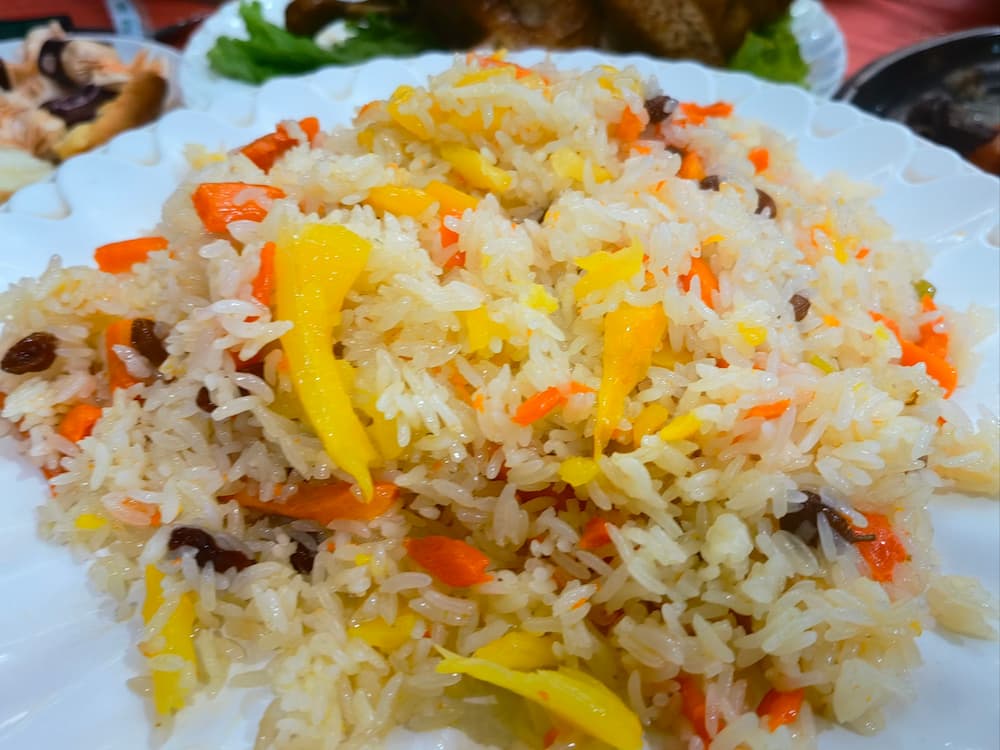
You will eat a great deal of pear, and that is no hardship, but Korla’s table is wider than its fruit. Polo, rice cooked with mutton, carrot and enough oil to stain your fingers, is the staple, and the yellow carrot grown south of the city tastes sweeter than the orange variety. Naan pit meat, lamb shoulders lowered into a tandoor and lifted out an hour later, appears on almost every evening corner. Fish arrives from Bosten Lake, and the local favourite is wuchanghei, a cold-water species best braised.
Where a city grows fruit, dessert solves itself. Buy at the end of the day, when growers sell the pick of the morning’s second-grade crates at the roadside for a fraction of what they ask for a graded box.
Getting Pears Home Intact
Buying is easy if you follow two rules. Buy where fruit is being packed, because a roadside seller with a table and no crates behind him may be selling pears grown somewhere else. Then check the stem, which should be fresh green, and the skin, which carries a natural waxy bloom; a pear that has sat in the sun for days looks dull and slightly sticky by comparison.
Pears travel well because they ripen slowly. At room temperature a Korla pear builds its aroma over seven to ten days, after which storage close to zero degrees keeps it in good condition for months. Airlines in China generally allow fresh fruit in checked luggage on domestic flights, but many countries restrict fresh produce on arrival, so if you are flying home to a strict biosecurity regime, buy the dried products instead.
Small Things That Save You Trouble
- Go early. Orchards start at first light and slow down after eleven, when heat builds under the netting.
- Wear long sleeves and closed shoes. Irrigation channels and ladders both punish sandals.
- Carry water and a hat. Most Awati plots sell neither.
- Ask before photographing pickers at work. A short conversation usually gets you a yes.
- Do not add fruit from the ground to a crate. Growers watch for it, and it ends the visit.
A Two-Day Plan Built Around the Harvest
Day one. Arrive and spend the afternoon on scale rather than picking. Walk the city’s pear avenue, spend an hour at the evening market watching crates come in from the township, and eat polo somewhere busy. Sleep near the Swan River.
Day two. Leave at half past seven with a driver and reach Awati township before nine, while picking is at full speed and the light is still soft. Two hours in the rows, an hour at a packing shed if the owner lets you watch the graders work, then lunch in the township. In the afternoon drive north to the old pass at Tiemenguan for the gorge and the ancient pear trees, and be back in the city by dusk with a crate in the boot. A third day belongs to Bosten Lake, an hour east, where the reed beds and the bird numbers deserve a full morning; our guide to the lake covers the shoreline properly.
Frequently Asked Questions
Can tourists pick pears in Korla orchards?
Yes, though not at every plot. Commercial blocks are working farms with no visitor setup. Look for plots advertising picking, mostly in Awati township, and expect a small entry fee plus a price per kilo.
When exactly is the harvest?
Picking starts in the first ten days of September and runs into the middle of October. The 2025 season opened on 10 September, with the main flush around the twentieth.
Is it worth visiting if farming does not interest me?
The harvest changes the city in ways that have nothing to do with agriculture. Markets run later, roadside stalls appear, and the pear avenue fills with people. If you want an itinerary built around other interests, our Xinjiang harvest calendar shows what else is ripe in the same weeks.
Disclaimer
Details here reflect the 2025 harvest and conditions as of September 2026. Picking dates, gate fees and transport shift with the season and with the city’s arrangements, so confirm the current position locally before you travel. Figures come from official releases and from the local pear association’s standards, and documented corrections are welcome.
About the Author
Karl Huang has written about Xinjiang from Urumqi since 2017, with a particular interest in the working side of the region: orchards, canals and the fruit country of the southern oases. He travels these routes in person and revises these pages whenever the picture on the ground changes.