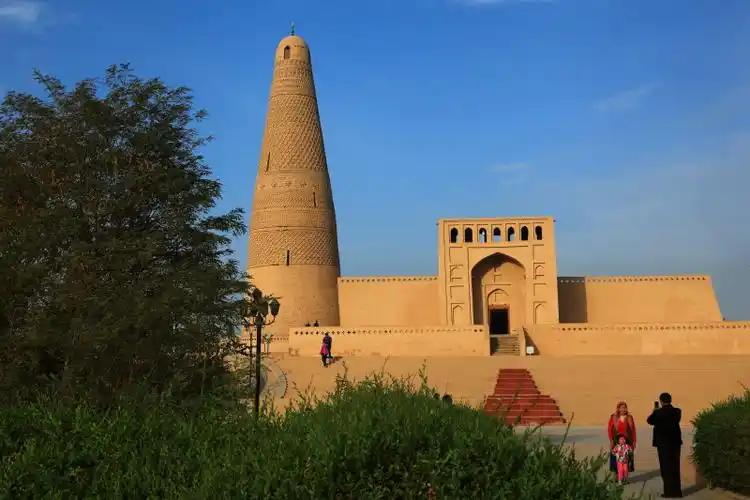
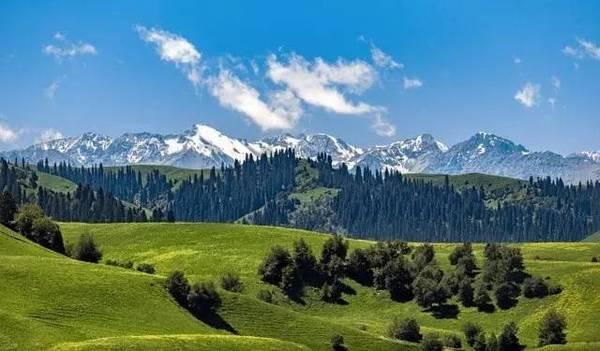
Kuqa (also spelled Kuche) is one of the oldest and most important towns on the southern Silk Road — the ancient kingdom of Qiuci, a Buddhist centre that flourished for over a thousand years. Today it is a relaxed oasis county in central Xinjiang, the gateway to the stunning Kizil Caves and the red Kuqa Grand Canyon, and a key stop on the northern Xinjiang route. This guide explains what to see, how to get there, and why Kuqa punches above its size.
Why visit Kuqa
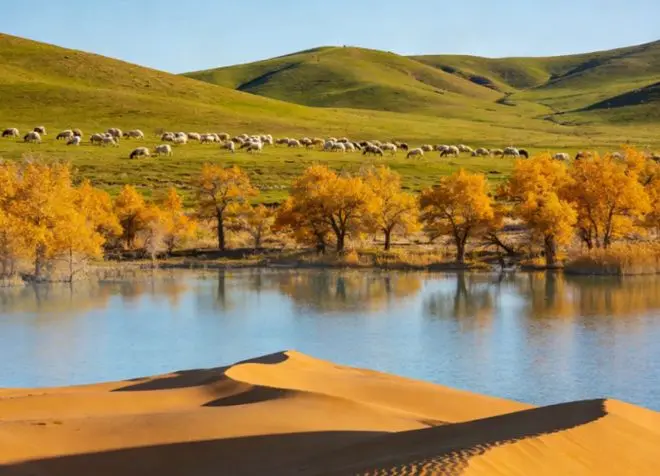
Kuqa’s claim to fame is depth of history. As Qiuci it was a powerhouse of Buddhist art and translation — the monk Kumarajiva, one of the most influential translators of Buddhist texts into Chinese, was born here in the 4th century. The town sits where the Taklamakan desert meets the northern foothills of the Tianshan, so it has both oasis greenery and dramatic mountain backdrops. It is also genuinely Uyghur in character, with a lively old town, good food, and none of the over-tourism of bigger names. For travellers on the Xinjiang itinerary circuit, it is a highlight.
How to get to Kuqa
Kuqa has a train station on the southern Xinjiang railway and an airport (Kuqa Qiuci Airport) with flights from Urumqi. By road it sits on the G217 and the upgraded expressway network, making it reachable from Aksu, Korla and Kashgar. Many visitors combine Kuqa with Aksu to the west and Korla to the east. The airport guide covers the flight map, and the visa and permits page is worth a look if you plan to push into remote county areas.
Top things to do
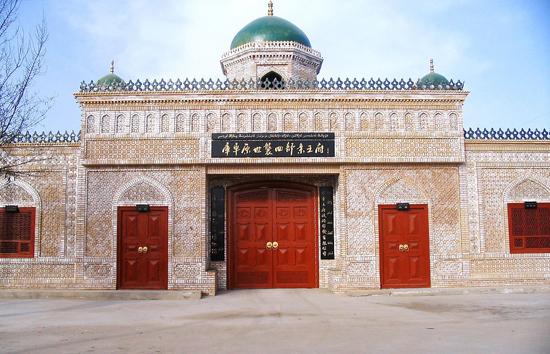
The Kizil Caves are the headline: a cluster of several hundred rock-cut Buddhist caves, some with vivid murals, dating from the 3rd to 8th century, set into a cliff above the Muzat River. They are among the earliest and most important Buddhist cave art in China, predating the more famous Mogao caves at Dunhuang. The Kuqa Grand Canyon (Tianshan Grand Canyon / Kizil Valley) is a red-rock wonder, with walking trails through towering formations. Back in town, the Kuqa Palace (王府) is a restored princely residence, and the old town has the usual pleasures of a southern oasis — tea houses, markets and mud-brick lanes. The nearby Subashi ruins are the remains of a great monastic city.
Food in Kuqa
Kuqa eats like the best of southern Xinjiang: polu (pilaf with carrot and lamb), laghman (hand-pulled noodles), kawap (grilled skewers), and samsa from the tandir oven. The local nang bread is excellent. Evening is the best time, when the night market fills with smoke and sizzle. Pair a meal with the region’s dried fruit from our dried-fruit guide for dessert.
Where to stay
Kuqa has a solid spread of hotels, from comfortable mid-range properties to budget guesthouses, mostly near the centre and the train station. It is a good place to break a long overland drive, with reliable hot water and food after the remote stretches.
Best time to visit
Late spring through early autumn is best; summers are hot but the canyon and caves are manageable, and the oasis is green. Winters are cold but quiet. The Kizil Caves are open year-round but check opening times, as they are a managed heritage site with limited daily tickets.
A practical Kuqa checklist
Before you go: book the Kizil Caves early in the day to beat heat and crowds; carry water and sun protection for the canyon; keep cash for small stalls; and link Kuqa with Aksu and Korla for a proper southern loop. Kuqa rewards a full day, not a drive-through.
FAQ
Are the Kizil Caves worth it?
Yes — they are earlier and less crowded than Dunhuang’s caves, and the setting above the Muzat River is spectacular.
How long do I need?
A full day covers the caves, the canyon and the old town comfortably; two days lets you add Subashi and relax.
Is Kuqa on the main route?
It sits on the southern Xinjiang rail and road network, easy to reach from Urumqi, Aksu and Kashgar.
Getting around Kuqa
Kuqa’s centre is walkable and taxi-cheap, but the headline sights are outside town: the Kizil Caves are about 70 km west, the Grand Canyon roughly 70 km north, and Subashi is northeast. The practical move is a hired car or driver for a day, or join a tour from town; public buses exist but are slow and infrequent for a tight schedule. A driver also lets you combine Kizil and the canyon in one long day. The airport guide helps if you fly in, and trains serve the town if you are on the southern rail line between Urumqi and Kashgar.
Money, SIMs and practicalities
As elsewhere in Xinjiang, mobile payment dominates; carry some cash for cave-site tickets and small stalls. ATMs in town handle major cards with varying success, so stock up in Urumqi. A working SIM or eSIM with offline maps is essential because signage outside town is minimal. The visa and permits page matters if you plan to wander into the mountain counties north of the canyon. Hotel check-in needs your passport; this is standard, not a problem. The Kizil Caves ticket is a managed heritage entry, so buy ahead in peak season.
What to buy in Kuqa
Kuqa is a good place for carpets and jade from the southern tradition, and for the usual dried fruit and nuts. The old town market is the place to look, and prices are softer than the tourist markets up north. A small carved item or a length of local textile makes a light, genuine souvenir. For serious shopping, link Kuqa with a Kashgar or Hotan stop, but Kuqa itself is a pleasant, low-pressure place to start.
Extend your stay: the southern loop
Kuqa sits naturally between Aksu to the west and Korla to the east, with the epic Tarim desert highway and the Kuqa–Baicheng mountain road offering dramatic drives. Two or three days lets you add Subashi, the canyon and a Korla side trip without rushing. If your route is Kashgar–Kuqa–Urumqi, Kuqa is the cultural peak of the middle section and worth a full day rather than a photo stop.
Etiquette and safety
Kuqa is safe and welcoming. At the caves and canyon, stay on marked paths and respect the no-flash, no-touch rules — the murals are fragile and irreplaceable. Dress modestly in the old town and religious sites. Ask before photographing people. Carry your passport, and keep the permits note in mind for any push into restricted county areas north of the Tianshan.
A sample Kuqa day
Start at the Kizil Caves early (they open in the morning and the light is best), allow 2 to 3 hours for the cliffs, murals and museum, then drive to the Kuqa Grand Canyon for the afternoon and golden-hour walking. Back in town, dinner in the old town and a stroll through the night market round the day. If you have a second day, add Subashi in the morning and the Kuqa Palace and old town lanes in the afternoon — a relaxed pace that beats a rushed highlights dash.
Common mistakes to avoid
Do not rush Kizil in an hour — the setting and the few open caves reward slow looking, and the Muzat River gorge below is part of the experience. Do not skip the Grand Canyon because “it is just red rock”: the scale is the point, and the trails are easy. Do not photograph the murals with flash or touch the surfaces — they are fragile and guarded. And do not treat Kuqa as a drive-through between Aksu and Kashgar; it is the cultural peak of the middle section and deserves a full day.
When not to go
Winter is cold but the canyon and caves stay open; summer is hot but manageable with early starts and water. The Kizil Caves are a managed site with limited daily tickets, so book ahead in peak season (May to October). Spring sandstorms are possible but rarely ruin a visit. The shoulder months — late April to May and September to October — are the most comfortable for walking and photography.
Seasonal calendar for Kuqa
Kuqa’s year splits cleanly. April to May brings mild weather and green oases, ideal for the canyon and old-town walks. June to August is hot (often above 35°C) but the caves and canyon stay open; start early and carry water. September to October is the most comfortable window — warm days, cool nights, and the desert at its photographic best. November to March is cold, with occasional snow on the Tianshan behind town, but hotel prices drop and the sites are quiet. The Kizil Caves run a managed ticket system year-round, so in peak season (May to October) book ahead to avoid a sold-out day. Pack a layer even in summer, because the canyon and caves sit at elevation and the evenings cool fast.
Further reading: the history is summarised on the Wikipedia Kucha page, and practical notes are on Travel China Guide.