Published: August 06, 2026 | Author: Li Wei (李伟), Xinjiang-based travel writer
Every guidebook mentions the Taklamakan Desert. Far fewer mention the small desert lakes that sit at its edge, where sand meets irrigation water and the boundary between wasteland and oasis shifts with the wind. Dawakul (达瓦昆, sometimes written as Dawakur) is one of these places: a desert resort built around a shallow lake near Kashgar, where you can ride a camel across dunes in the morning and eat fresh fish from the same water by noon.
We first visited in October 2020 on a rainy day that cleared to brilliant sun by mid-morning. The contrast was stark: wet sand reflecting clouds, then blinding gold an hour later. That experience — desert weather changing faster than you can repack your bag — is what this page is about.
Dawakul at a Glance
| Location | Yopurga County (岳普湖县), ~35 km southeast of Kashgar city |
| Type | Desert lake surrounded by dunes (desert park/resort) |
| Lake size | Varies seasonally; roughly 1–2 sq km in summer |
| Entry fee | CNY 40–60 (includes basic activities) |
| Best months | April–June (comfortable heat); Sept–Oct (cooler, photogenic) |
| Time needed | 3–5 hours; half-day trip from Kashgar |
| Heat warning | July–August daytime temps can exceed 38°C; carry 2+ liters of water per person |
The Desert-Oasis Boundary
Dawakul occupies a specific geographic niche: the transition zone where the western edge of the Taklamakan meets irrigated farmland fed by the Kashgar River system. Water from irrigation channels leaks into depressions in the sand, forming shallow lakes that persist through summer because of constant seepage. These are not spring-fed; they are farming byproducts that became attractions.
The result is a landscape that feels contradictory in an interesting way. On one side of the lake you see poplar trees and cotton fields. On the other, bare dunes rise thirty meters with nothing growing on them. Walk for ten minutes and you cross from one environment into the other. That line — where the last tree stands before open sand begins — is what photographers come for.
Getting from Kashgar to Dawakul
Hire a taxi or use a ride-hailing app from Kashgar city center. The drive takes 40–50 minutes on paved roads the entire way. Cost should be CNY 80–150 round-trip if you negotiate waiting time (ask the driver to wait 2–3 hours; most will agree for a small extra fee). There is occasional public minibus service from Kashgar’s East Bus Station, but schedules are unreliable for non-Chinese speakers.
If you are driving yourself, head southeast on the G3012 toward Yopurga. Signs for 达瓦昆 appear about 30 km out. The final few kilometers are straight across flat desert — impossible to get lost.
What You Can Do There
Camel riding: The classic desert experience. Camels are led by handlers along a marked circuit that takes roughly 20–30 minutes. Cost is around CNY 50–80 per person. The animals generally look well-cared-for compared to some tourist sites we have seen, but if an animal appears distressed, do not ride it.
Dune bashing: Motorized buggies and modified SUVs offer rides over the dunes. Fun, noisy, and hard on the spine. Not suitable for anyone with back issues or pregnancy. About CNY 80–150 per vehicle depending on route length.
Fishing and boating: The lake supports both. Fish are farmed locally (not wild-caught, despite what some vendors claim). Pedal boats are available for families.
Photography: The best subjects are the tree-line/dune boundary in morning side-light, camel silhouettes against the dune crest at sunset, and the reflection of dunes in the still lake water at dawn. A 70-200mm lens is more useful than a wide-angle here; the compositions are about layering, not expanse.
When to Go (and When to Skip It)
April and May: Comfortable temperatures (20–28°C), occasional sandstorms. Poplar trees are fresh green. Good balance of pleasant weather and manageable crowds.
June: Increasingly hot but still bearable if you stick to morning and late-afternoon activity. The lake is at its fullest from irrigation runoff.
July and August: Seriously hot. Midday temperatures on the sand can reach 45°C. Only visit if you arrive by 08:00, bring 3 liters of water per person, and plan to leave by 11:00 before the worst heat. Or go after 17:00 for sunset — the evening light on the dunes is excellent and the temperature drops fast.
September and October: Our recommended window. Days are warm (22–28°C), nights are cool, the sky is often crystal-clear after the monsoon retreats, and the angle of light is lower. Cotton harvest is underway in the adjacent fields, adding white patches to the oasis side of the view.
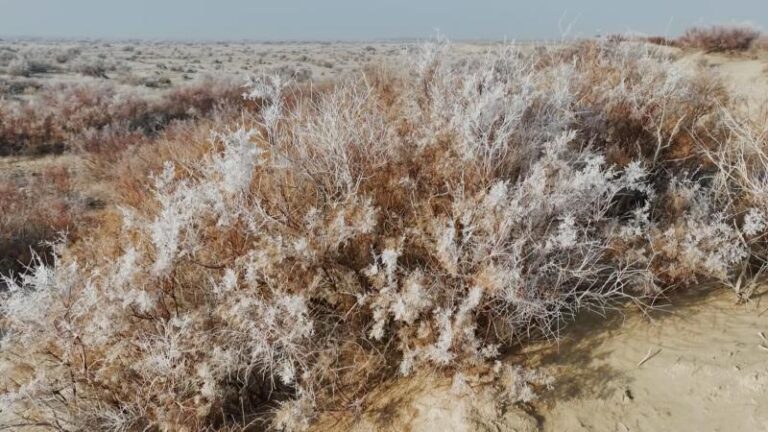
November–March: Cold and quiet. Some facilities close. The desert has its own stark beauty in winter — frozen lake, snow-dusted dunes — but transport becomes harder to arrange and there is essentially nothing open on-site.
Food at and Near Dawakul
The resort area has several restaurants serving standard Xinjiang dishes: laghman (手拉面), kebabs (烤羊肉串), and pilaf (抓饭). Quality is acceptable for a tourist site — not memorable, not bad. Prices are 20–30% higher than equivalent meals in Kashgar city, which is normal for remote scenic spots.
The one dish worth seeking out is the whole roasted fish from the lake (达瓦昆烤鱼). It is prepared Uyghur-style: gutted, scored, coated in a spice paste of cumin, chili, garlic, and Sichuan peppercorn, then roasted over charcoal. A medium fish (1–1.5 kg) costs CNY 80–120 and feeds two. Eat it with fresh naan bread and raw onion — the traditional accompaniment that cuts through the richness.
Practical Advice
- Bring more water than you think you need. Dehydration creeps up fast in dry heat.
- Wear closed-toe shoes. Sand gets extremely hot in summer; flip-flops are a mistake.
- A scarf or buff is useful for wind-blown sand on breezy days.
- Sunscreen and sunglasses are mandatory. UV is intense at this latitude and altitude combination.
- If you have asthma or respiratory issues, check the air quality forecast. Dust storms can develop with little warning.
- Negotiate all prices before agreeing to activities. Some operators quote different rates to foreign-looking visitors.
How Dawakul Compares to Other Desert Experiences in Xinjiang
Xinjiang has several desert tourism sites, and choosing between them depends on what you want:
- Kumtag Desert (near Turpan): Closer to a “pure” dune field with no lake. Better for serious dune photography and off-roading. Hotter and more austere than Dawakul.
- Desert Highway (Tarim): The experience of driving through the Taklamakan itself, with planted shelterbelts lining the road. Not a destination but a transit adventure.
- Dawakul: The easiest desert experience to combine with a Kashgar-based itinerary. The lake adds visual variety and the round-trip time from the city is under two hours. Best for casual visitors, families, and photographers who want the dune/oasis juxtaposition without camping overnight.
Sample Half-Day Schedule from Kashgar
- Depart Kashgar by 08:00 (beat the heat and the tour buses).
- Arrive Dawakul by 08:45. Enter and walk directly to the dune crest for morning light on the sand patterns.
- Camel ride or dune buggy circuit (09:30–10:15).
- Walk the lake perimeter and photograph the tree-line boundary (10:15–11:15).
- Early lunch: roasted fish at the lakeside restaurant (11:30–12:15).
- Optional: short boat ride or rest in a shaded pavilion (12:15–13:00).
- Return to Kashgar by 14:00, in time for an afternoon in the old city or a nap.
Frequently Asked Questions
Is Dawakul worth the trip from Kashgar? If you have at least two full days in Kashgar and have already seen the old city, Id Kah Mosque, and Sunday livestock market, then yes — it adds a dimension (desert landscape) that you cannot get within the city. If you only have one day in Kashgar, spend it in the old city instead.
Can I camp there? Camping is technically possible but not officially organized. A few hardy travelers have bivouacked on the dunes with permission from resort management. Do not just pitch a tent without asking — this is still a managed scenic area.
Is the lake natural? The depression is natural. The water level is sustained by agricultural irrigation runoff, so in drought years the lake shrinks noticeably. It is not pumped purely for tourism — the water would be there regardless — but modern farming practices affect how much water reaches it.
Disclaimer
Information current as of August 2026. Desert conditions, entry fees, and activity availability can shift rapidly. Always verify on-site. The author has no commercial relationship with Dawakul Resort or any operator there.
About the Author
Li Wei (李伟) has traveled extensively in southern Xinjiang since 2017 and considers the desert-oasis margin the most visually underrated part of the region’s geography.
Photography: The Desert-Oasis Line
The most photographically interesting zone at Dawakul is not the dunes themselves and not the open water — it is the narrow band where poplar trees meet bare sand. This line shifts with wind and water level, so no two visits look identical. We have shot it four times and gotten four different compositions: once with morning fog clinging to the tree crowns while the dunes behind stood in full sun; once with a dust storm turning the background orange while the foreground stayed green; once in flat overcast light that killed all contrast; and once in the golden hour when every tree cast a shadow forty meters long across the sand.
The practical lesson: arrive early and stay mobile. The light changes fast at desert edges because there is no atmospheric haze to soften transitions. A scene can go from unusable to extraordinary in fifteen minutes as a cloud passes or the sun drops below a ridge.
Health and Safety
Two issues come up more often than visitors expect. First is dehydration: dry desert air wicks moisture from your body faster than humid heat does. You may not feel thirsty but you are losing water. Drink before you feel the urge. Second is sun exposure: at this latitude UV index regularly exceeds 10 on clear days. Sunburn can occur in under thirty minutes on exposed skin. Wear a hat, use SPF 30+ sunscreen, and consider lightweight long sleeves rather than short sleeves plus lotion.
If you have any respiratory condition, check the local air quality forecast before setting out. Dust storms develop quickly in this region and PM2.5 levels can spike to hazardous values within an hour. Most guesthouses and hotel front desks in Kashgar can show you the current reading on their phone.