Published: July 26, 2026 | Author: Marcus Feld, Berlin-based urban travel writer
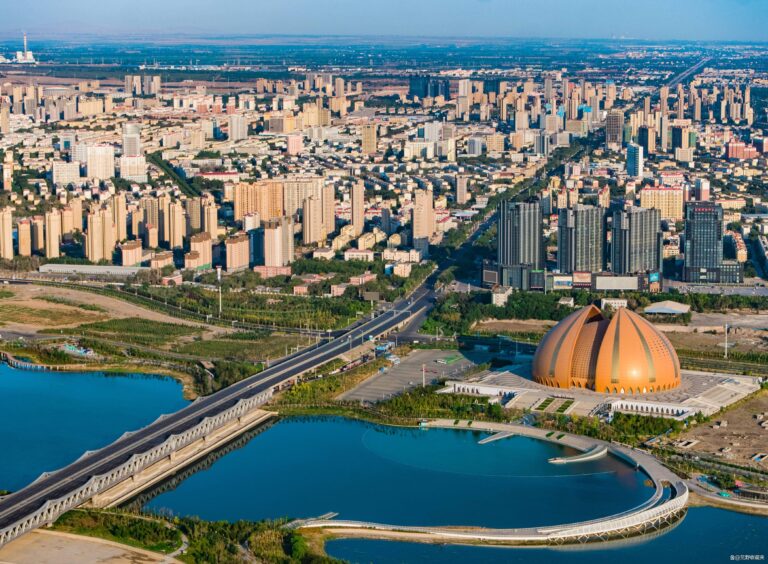
Most people treat Urumqi as a place to sleep off jet lag before racing to Kashgar or Kanas. I did too, on my first pass in 2022. Then I got stuck here for nine days waiting on a permit, and the city grew on me in a way I did not expect. This Urumqi city guide is what I wish someone had handed me back then: how to eat well, get around a place that runs on two different clocks, and use the capital as a smart base rather than a chore. I came back in the spring of 2025 to double-check prices and opening hours, so the practical bits below are current as of my last visit.
Why trust this Urumqi city guide
I write about mid-sized Asian cities for a living, and I keep a stubborn habit of walking neighborhoods on foot before I judge them. In Urumqi I logged somewhere north of 90 kilometers across two trips, rode Metro Line 1 end to end just to see who used it, and ate at the same lamb-skewer stall on Xinhua South Road often enough that the owner started saving me a corner stool. None of that makes me a local. But it means the advice here comes from repeated, boring, on-the-ground checking rather than a press trip.
Quick reference: Urumqi at a glance
| Detail | What to know |
|---|---|
| Best months | May–June and September–October (mild, dry) |
| Elevation | ~800 m; dry air, sun is stronger than it feels |
| Getting there | Urumqi Tianshan International Airport; high-speed rail from Lanzhou/Turpan |
| City transport | Metro Line 1, buses, ride-hailing (Didi) — all cheap |
| The clock trap | Official Beijing time on tickets; locals often use unofficial Xinjiang time (−2 hrs) |
| Days needed | 1.5 in the city, plus 1–2 for day trips |
| Cash vs app | Bring some cash; most places take WeChat/Alipay, small stalls prefer it |
Getting your bearings (and the clock thing)
The single most confusing thing about Urumqi has nothing to do with maps. It is time. All official schedules — flights, trains, business hours posted on doors — run on Beijing time. But the sun here rises and sets roughly two hours behind the east coast, so a lot of locals quietly run their lives on “Xinjiang time,” which is Beijing time minus two. When a shopkeeper tells you they open at ten, ask which ten. I missed a museum slot my first week because of exactly this. My rule now: confirm every appointment in Beijing time, since that is what your phone and tickets use, and just accept that dinner at 8pm will feel like late afternoon.
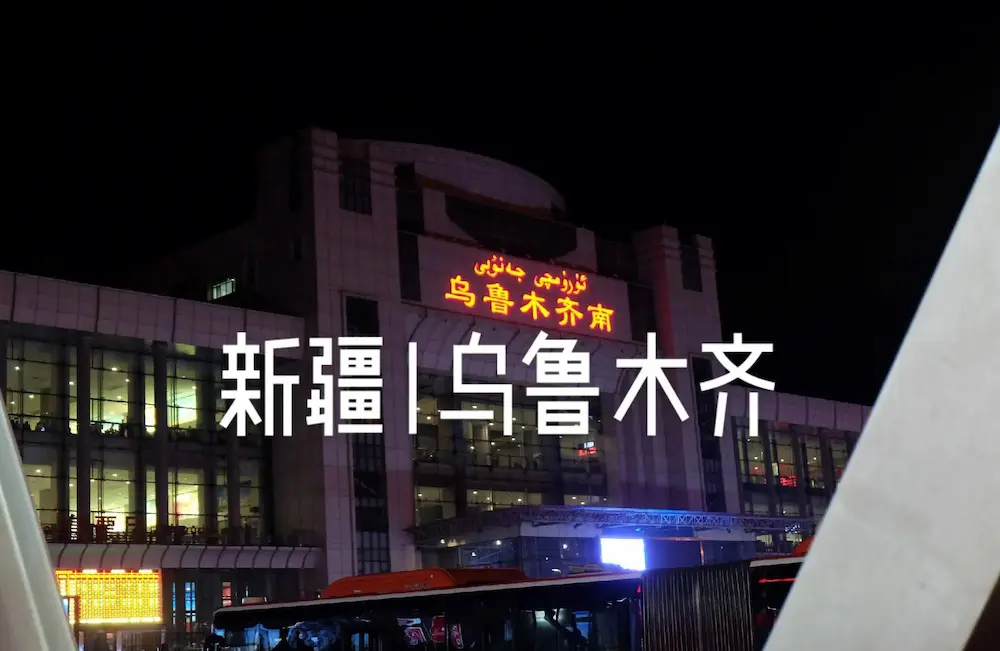
The airport, now called Urumqi Tianshan International, sits about 16 km northwest of the center. A metered taxi to downtown ran me around 40–50 CNY in 2025; the airport bus is far cheaper if you are not loaded with bags. Trains arrive at Urumqi Station (the big new one south of the city) rather than the older Urumqi South, so double-check which station your ticket names — they are not close together. Metro Line 1 connects the airport area, the main station, and downtown, and at 2–5 CNY a ride it is the easiest way to skip traffic.
What is actually worth your time in the city
Skip the checklist mentality. Two or three things done properly beat six done in a hurry.
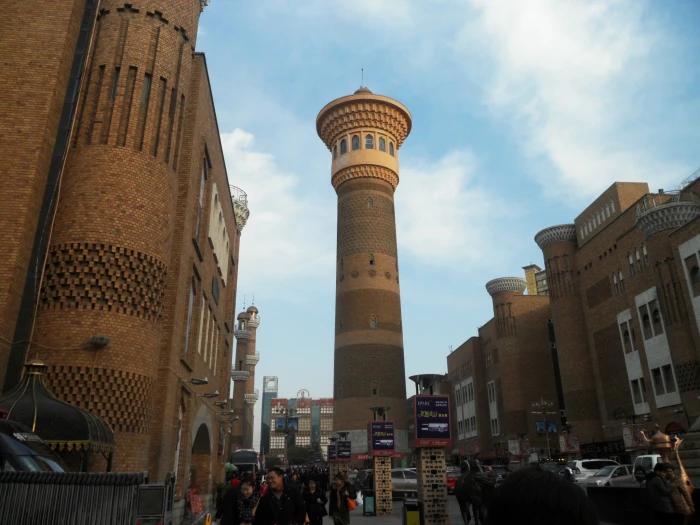
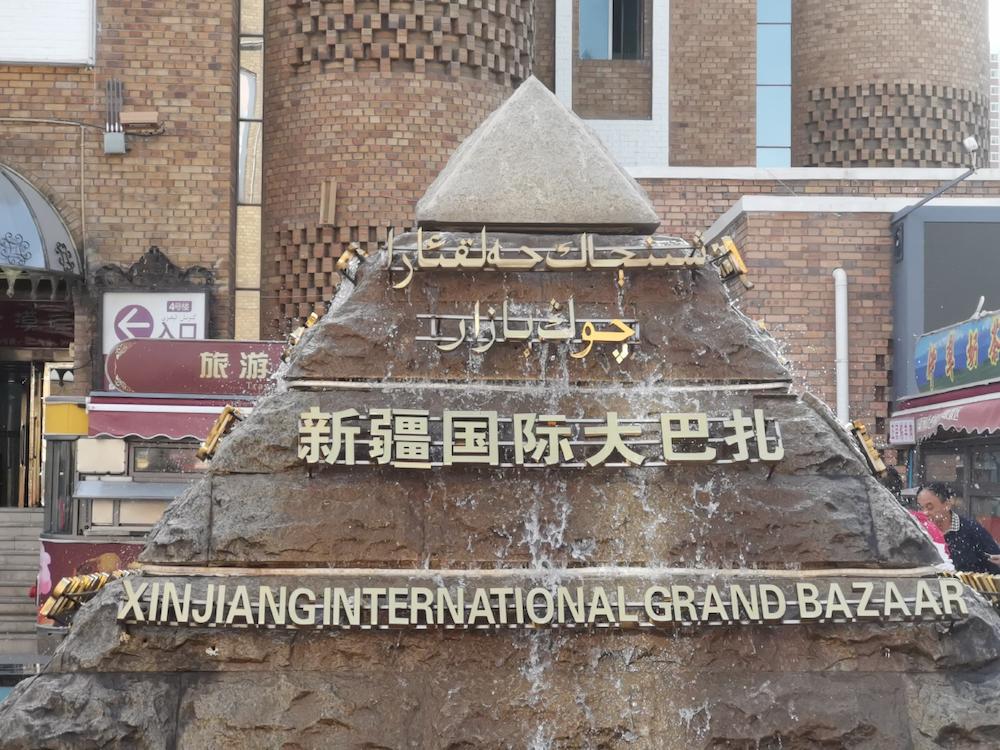
The International Grand Bazaar at Erdaoqiao is touristy, yes, but it earns its reputation at the edges. The main plaza is a photo op; the real interest is in the lanes behind it where dried-fruit vendors let you taste before you buy and knife-makers still work at the back of their shops. Go late afternoon, climb the observation tower for the skyline against the Tianshan, then eat at the open-air food court as the light drops. I paid 5 CNY a skewer and about 25 CNY for a plate of laghman there in spring 2025 — not the cheapest in town, but fair for the setting.
For a genuine surprise, give the Xinjiang Regional Museum a full morning. The Tarim mummies — including the famous “Loulan Beauty” — are extraordinary and oddly moving, and the Silk Road galleries put every ruin you will later visit into context. Entry was free when I went, but you need to book a slot in advance through the museum’s mini-program, and passports are checked at the door. Hongshan Park is the local shorthand for a city view: an easy climb, a red pagoda on top, and grandparents doing tai chi at dawn. It is not spectacular, but it is honest Urumqi, and it costs nothing.
Using Urumqi as a base: the day trips
This is where the capital really pays off. Two mountain escapes sit within a couple of hours, and both are worth building your itinerary around.

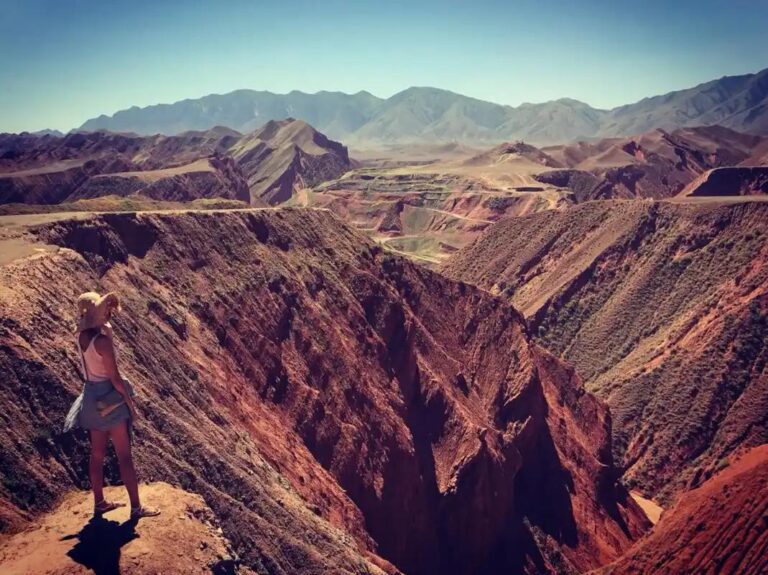
Tianchi (Heavenly Lake) is the postcard one — an alpine lake ringed by spruce and snow peaks, about 110 km east. It gets busy, so go early and midweek if you can; I cover the logistics in my Tianchi Lake travel guide. For something quieter and more pastoral, Nanshan pasture south of the city gives you Kazakh grasslands and horse-riding without the crowds. Hikers should look at the Tianshan Grand Canyon, which is a full day but leaves the tour buses behind. If you have a rental car, the wind farms and salt flats of Dabancheng make an odd, photogenic detour on the way toward Turpan.
Best time to visit
Late May through June, then September into mid-October, are the sweet spots — dry, sunny, and comfortable, with the Tianshan still holding snow on the peaks in early summer. July and August are hot and dusty in the city and packed at the lakes; if you come then, plan the mountains and use midday for the air-conditioned museum. Winter is cold (nights well below freezing) and the air can get heavy with coal smoke, but flights and hotels are cheap, and it is your gateway to the ski fields. Spring wind can be fierce, so pack a windbreaker regardless.
Where to stay
Base yourself near the Grand Bazaar / Erdaoqiao if you want food and atmosphere on your doorstep, or around the Xiaoximen and People’s Square area for a more central, business-district feel with easy metro access. I stayed both places; the bazaar district was livelier at night, the central area quieter and closer to the museum. Whatever you book, remember that hotels here must register foreign guests, so a few can only take Chinese ID — filter for ones that explicitly accept foreign passports before you pay, or you will be turned away at check-in. Mid-range chains around the center ran me 250–400 CNY a night in 2025.
Eating in Urumqi
Urumqi is where northern Xinjiang’s kitchens collide, and you should eat like it. Da pan ji (big plate chicken) is the dish to order with a group — chicken and potatoes in a spiced broth, with hand-pulled belt noodles thrown in at the end to mop up the sauce. Get laghman (pulled noodles) for one, samsa (baked lamb pastries) from a tandoor for a snack, and grilled lamb skewers everywhere. The night stalls around Erdaoqiao are the obvious hunting ground, but I had my best meal on a nondescript block of Xinhua South Road where a family runs a laghman counter with no English menu and no need for one. Wash it down with brick-tea milk tea or a bottle of the local yogurt drink. Vegetarians will work harder here, but naan, cold noodles (liangpi), and vegetable laghman are reliable.
Sample 2-day city plan
- Day 1: Morning at the Xinjiang Regional Museum (pre-booked slot), lunch nearby, afternoon walk up Hongshan Park, evening at the Grand Bazaar for the tower view and a skewer dinner.
- Day 2: Early start to Tianchi or Nanshan for the day; back in the city by evening for da pan ji with whoever you have met along the way.
Stretch it to three days if you want a slower pace or a second day trip. Most travelers pair the capital with a longer route — see my 7-day Xinjiang itinerary for how Urumqi fits the bigger picture, and the first-time visitor guide if this is your first trip to the region.
Practical tips I learned the hard way
- Carry your passport, always. There are ID checks at stations, some attractions, and hotel check-in. A photo on your phone is not enough.
- The air is dry. At 800 m with low humidity, you dehydrate faster than you notice. Lip balm and a refillable water bottle earn their place in your bag.
- Set up mobile payments before you arrive. WeChat Pay or Alipay linked to a foreign card now works widely, but keep 200–300 CNY cash for the stalls that still prefer it.
- Book museum and popular-attraction slots ahead through their mini-programs; walk-ups are often turned away.
- Give yourself buffer time at the airport and stations — security here is thorough and lines move slowly.
FAQ
How many days do I need in Urumqi? A day and a half covers the city itself. Add one or two days for Tianchi, Nanshan, or the Tianshan Grand Canyon, which is really why you base here.
Is Urumqi worth visiting, or just a transit stop? It is a solid base rather than a headline destination. The museum, the bazaar food scene, and the nearby mountains justify two full days.
What is the deal with the two time zones? Official schedules use Beijing time; many locals informally use Xinjiang time (two hours behind). Trust your ticket, and confirm any appointment in Beijing time.
Do I need special permits for Urumqi? No permits for the city or the standard day trips. Some border and remote southern areas require them, but nothing around the capital does.
Can I get to Turpan easily from Urumqi? Yes — high-speed rail reaches Turpan in about an hour, which makes it an easy add-on; see my Turpan city guide.
Disclaimer
Prices, opening hours, transport names, and booking procedures in Xinjiang change often. Everything above reflects my own visits in 2022 and 2025 and is meant as general guidance, not a guarantee — always confirm current details, entry requirements, and any permit rules through official channels before you travel.
About the author: Marcus Feld is a Berlin-based travel writer focused on the overlooked mid-sized cities of Central and East Asia. He has made two extended trips to Xinjiang and walked most of Urumqi on foot across both. He writes about how cities actually function for the traveler passing through, not how brochures wish they did.