Published: July 20, 2026 | Author: Liam Foster
Most visitors to Kashgar point their cameras at the old city’s mud-brick lanes and call it a day. I almost did the same — until a Kyrgyz driver named Nurbek pulled his Land Cruiser off the G314 and said, “You’ve seen the town. Now I’ll show you why this road is worth driving.” Twenty minutes later we were standing under a wall of red rock with a glacier glowing behind it. That was my first afternoon at Oytagh Red Mountain, and it remains one of the easiest, least-crowded glacier views I’ve found anywhere in Xinjiang.
This guide is built from two trips I made to the area — one in late June 2023, when the glacier road was open and the meadows were green, and again in early October 2024, when the poplars had turned gold but the high track was closed by early snow. Both visits taught me things the brochures leave out, and I’ve put the practical stuff first.
Quick Reference: Oytagh Red Mountain at a Glance
| Location | Akto County, Kizilsu Kyrgyz Autonomous Prefecture, ~110 km southwest of Kashgar |
|---|---|
| Scenic type | Red sandstone cliffs + alpine glacier park |
| Entrance altitude | ~2,800 m |
| Glacier viewpoint altitude | ~3,400 m |
| Drive from Kashgar | ~2 hours |
| Ticket | Around ¥40–50 (subject to change) |
| Best season | June–September (green + open glacier road) |
| Lodging | None on site; stay in Kashgar |
Why you can trust this Oytagh Red Mountain guide
I’m not a tour-company script. I’ve driven the G314 more times than I can count and have slept in yurts on the Pamir at 3,600 m, so I know the difference between a postcard and a place you can actually reach. Everything below — the ticket price, the drive time, the fact that the glacier road closes with snow — came from being there, not from a wiki. Where I’m unsure, I say so.
What Oytagh Red Mountain actually is
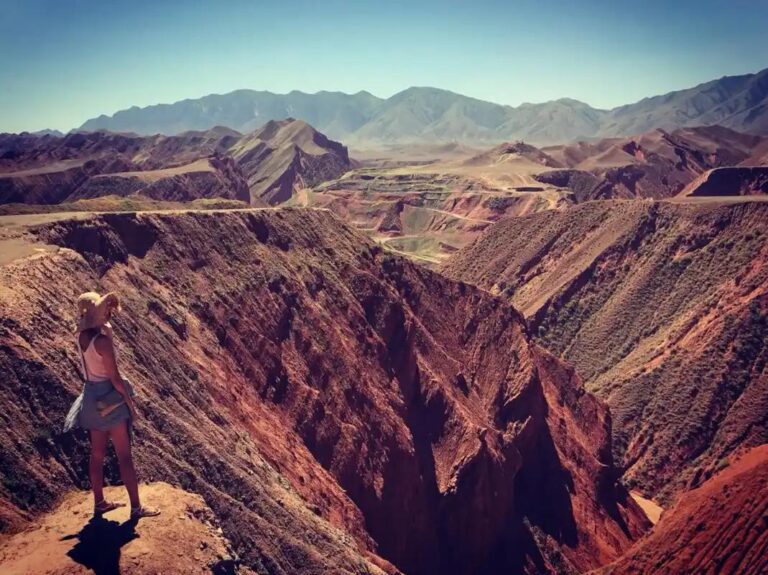
The name trips people up. “Oytagh” (奥依塔克) is Kyrgyz for a mountain hollow or depression, and the place is really two sights run as one scenic area. The first is the Red Mountain — a band of crimson cliffs where iron in the sandstone has oxidized into rust-red and orange striations. Stand in the right spot and the rock looks lit from within. The second, further up the valley, is the Oytagh Glacier Park, where the Kingur glacier spills down off the Pamir spur toward the tree line. Between them runs the Oytagh River, lined with spruce, poplar, and the kind of meadow where Kyrgyz herders still bring sheep in summer.
We reached the gate at about 2,800 meters, paid the entrance fee at a small window, and followed a wooden boardwalk that runs parallel to the Oytagh River. Within ten minutes the red cliffs rose on our left — not a single hue but a stack of rust, ochre, and deep maroon bands, wet-looking where a spring leaked down the face. Nurbek, who’d done this road since he was a boy, pointed out the spot where a Kyrgyz family keeps a summer yurt and promised we’d be offered kumis whether we wanted it or not.
What makes it special is access. To see a real glacier near Kashgar you normally drive four hours to Karakul Lake beneath Muztagh Ata. Oytagh gets you to ice in under two.
How to get to Oytagh Red Mountain
There is no public bus that drops you at the gate. The realistic options:
- Charter a car or 4WD from Kashgar. This is what nearly everyone does. Expect to leave the city around 8 a.m., reach the entrance by 10, and be back before dinner. A round trip with a couple of hours on site runs roughly ¥400–600 depending on the vehicle and season.
- En route to the Pamir Plateau. If you’re already driving the G314 toward Tashkurgan, Oytagh sits right on the way. We built it into a Kashgar–Tashkurgan drive as a half-day stop rather than a dedicated outing.
- By train? No. The nearest station is Kashgar, and from there you still need wheels. Our Xinjiang high-speed rail guide explains how to reach Kashgar by train first.
The last stretch from the highway to the glacier viewpoint is an unpaved track. In dry summer a normal SUV manages it; after rain or in late autumn, only a 4WD with clearance will get you up. On my October trip the track was closed at the 3,000 m mark by fresh snow, and that’s normal.
Best time to visit
For the full experience — red cliffs and a visible glacier — aim for June through September. The glacier road is open, the river is full, and the meadows are green. My June visit was the better of the two: clear skies, the icefall fully in view, wildflowers along the boardwalk.
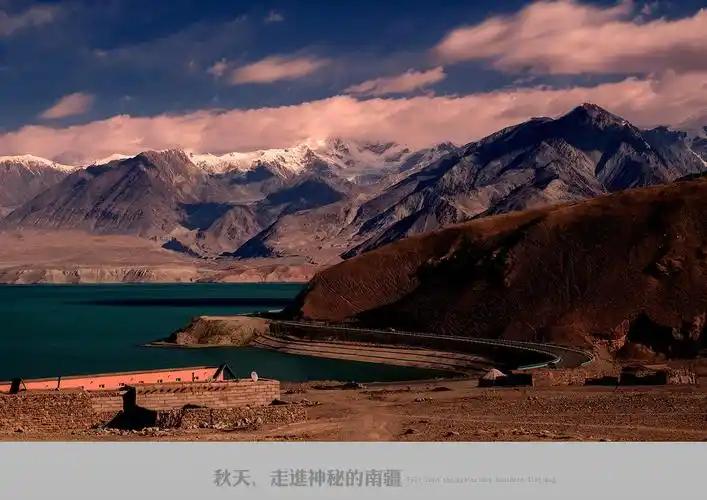
October is still beautiful for the autumn colors — the poplars go gold and the light on the red rock is flat-out spectacular — but the high track often closes, so you’ll see the cliffs and forest without reaching the ice. Winter is possible for hardened photographers but bitterly cold and largely inaccessible.
Photographically, the red cliffs face west, so they catch the best light in the mid-to-late afternoon. If you want both good glacier light and red-rock color, arrive by early afternoon and stay until the sun drops behind the ridge. Our Xinjiang photography guide has more on timing mountain light.
Where to stay
Don’t plan to sleep at Oytagh. There’s no hotel at the park, and the nearest real beds are back in Kashgar, about two hours east. I stayed in the old city both times and made it a day trip — early start, late return. Staying in Kashgar’s old city also means you can eat well and sort permits the night before. If you’re continuing to the Pamir, Tashkurgan is the next logical overnight, but that’s a longer push best done as its own leg.
Food and what to bring
There is no restaurant inside the scenic area. At most you’ll find a herder’s tent selling warm milk tea or kumis, and on my first trip a family by the river pressed a bowl of hand-pulled laghman on us for almost nothing. Plan to bring your own water and food, or eat a big breakfast in Kashgar before you leave.
What to pack for the half day:
- Water and a lunch — there’s nothing reliable past the entrance.
- A windbreaker. At 2,800–3,400 m it’s 10–15°C cooler than Kashgar and the wind off the glacier is sharp.
- Sunscreen and sunglasses. The altitude and the pale ice bounce a lot of light back at you.
- Sturdy shoes. The boardwalk is easy, but the glacier track is loose rock.
Practical tips I wish I’d known
- Altitude is mild but real. The entrance is around 2,800 m. Most people are fine, but if you’ve just flown into Kashgar (1,300 m) give yourself a day to adjust first. Our altitude sickness guide covers the basics.
- The glacier is weather-dependent. Clouds and afternoon storms hide it completely. My October trip saw nothing but grey; June gave us a clear icefall. Build in flexibility.
- Cash helps. The ticket window and any roadside stalls may not take cards or foreign cards. Small RMB notes smooth the way.
- Go early, stay past noon. Tour groups from Kashgar tend to arrive around midday; arriving at 10 a.m. bought me an hour of empty boardwalk.
- Pair it with the Pamir. Oytagh is the warm-up act for Karakul Lake and Baisha Lake, both farther up the same highway. Seeing them on one trip makes the long drive worth it.
A sample day trip from Kashgar
- 7:45 a.m. — Leave Kashgar with a packed breakfast and full water bottles.
- 9:45 a.m. — Arrive at the Red Mountain viewing area; walk the boardwalk, photograph the cliffs while the light is soft.
- 11:00 a.m. — Drive the track up to the glacier viewpoint (~3,400 m); short walk to the icefall overlook.
- 12:30 p.m. — Lunch by the river (bring your own; accept tea if a herder offers).
- 2:00 p.m. — Back at the red cliffs for afternoon light, then begin the return.
- 4:30 p.m. — Back in Kashgar; early dinner in the old city.
Frequently asked questions
Is Oytagh Red Mountain worth it if I’m going to Karakul Lake anyway?
Yes, for two reasons. It’s half the drive, so it fits a tight schedule, and the red cliffs are a completely different landscape from the high Pamir lakes. If you have time for both, do both.
Do I need a border permit?
The Red Mountain and glacier park themselves don’t require the Pamir border permit that Tashkurgan does. But if you continue past Oytagh toward Tashkurgan, you’ll need it — sort that in Kashgar beforehand.
Can I visit independently without a driver?
Not easily. There’s no public transport to the gate. You’ll need a chartered car, or join the Oytagh stop as part of a Pamir-bound private trip.
How cold does it get at the glacier?
Even in July, expect 5–15°C at the viewpoint with a hard wind. Bring a real jacket; the “Xinjiang is hot” assumption dies quickly at 3,400 m.
Disclaimer
Prices, opening hours, ticket costs, and road conditions at Oytagh Red Mountain change, and the glacier access track closes with snow and weather without notice. The figures above reflect what I paid and saw on specific trips in 2023 and 2024 and may be out of date. Always confirm current conditions with your Kashgar hotel or a local driver before setting out, and respect any closure signs — the terrain is remote and help is far away. This article is for trip planning only and is not official advice.
About the author
Liam Foster is a travel writer who has spent the last six years covering the roads, mountains, and bazaars of Xinjiang for international visitors. He prefers getting to a place under his own steam — and asking the driver to pull over when the light is right.