By Karl Huang · XinjiangAttractions Editorial Team · November 2026
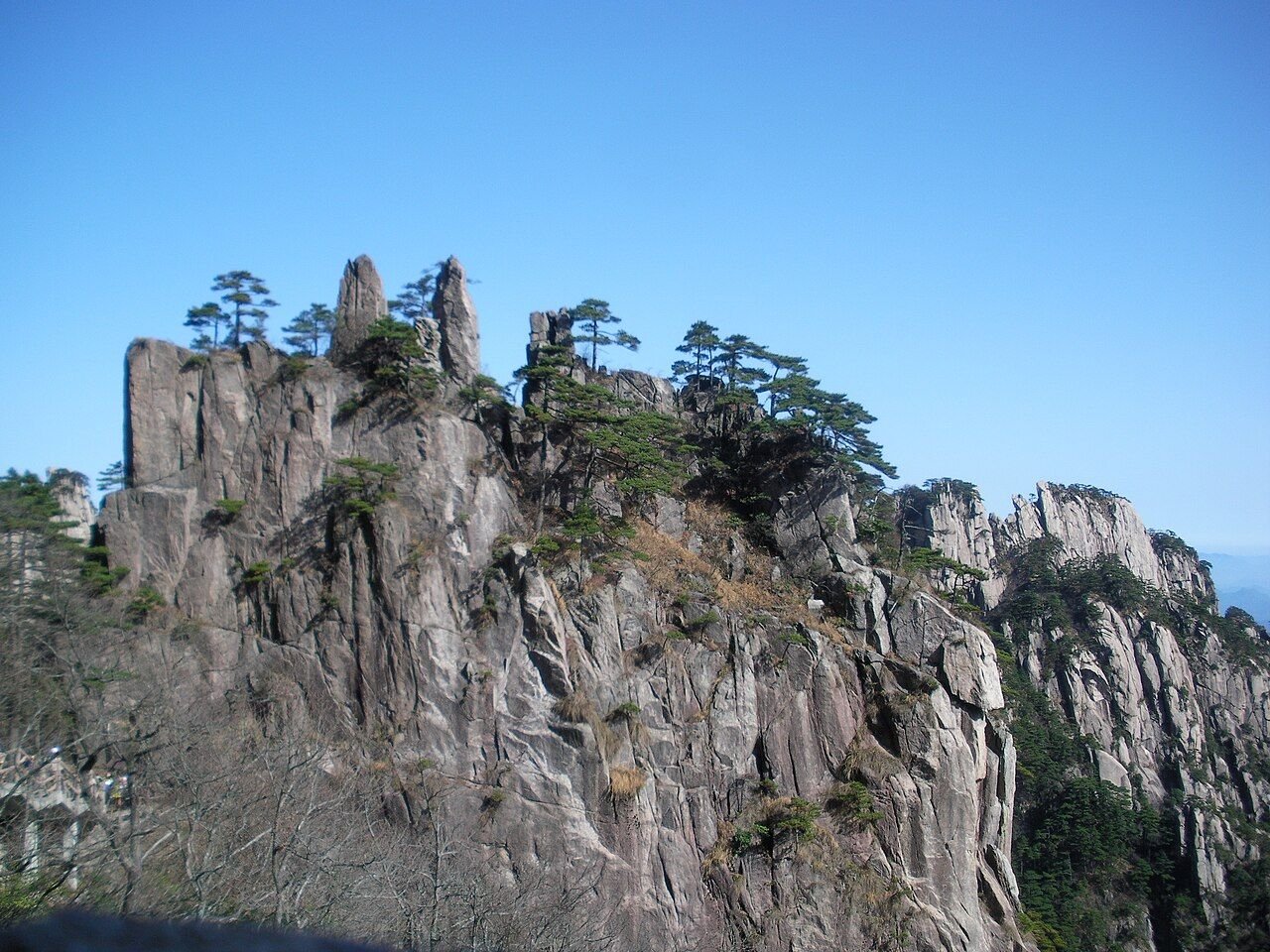
Huangshan (黄山), the Yellow Mountain, is the landscape Chinese art has been chasing for centuries: granite summits thrust above a rolling sea of cloud, with gnarled pine trees clinging to the rock. I spent a night on the summit to catch sunrise from Bright Summit, and when the cloud below lit up pink I finally got the postcard I had seen in ink paintings my whole life. A UNESCO mixed World Heritage site, Huangshan is strenuous but deeply rewarding, and the infrastructure (cable cars, paved paths) makes the high country reachable even for visitors who do not consider themselves mountaineers. The saying goes that after seeing Huangshan you need not look at other mountains — an exaggeration, but you will understand the sentiment at the top.
At a Glance
| feature | Detail |
|---|---|
| Location | Southern Anhui province |
| Status | UNESCO mixed World Heritage (1990) |
| Main peaks | Lotus (1,864 m), Bright Summit, Celestial Capital |
| Access | Cable cars on several faces |
| Best season | Apr-May, Sep-Nov (also snow in winter) |
| Stay | Summit hotels for sunrise |
Why Huangshan Is Legendary
The mountain’s fame rests on what the Chinese call its “four wonders”: oddly shaped pines, rocky granite peaks, a sea of clouds, and hot springs. The vegetation and the weathering create the iconic silhouette — a smooth granite dome capped with a single contorted pine. Historically it inspired the “Huangshan School” of painting and the saying that after seeing Huangshan you need not look at other mountains. For a coastal-China pairing, our Mount Putuo guide is a short region away; for dramatic rock, the Zhangye Danxia guide offers a different palette entirely.
Cable Cars and Trails
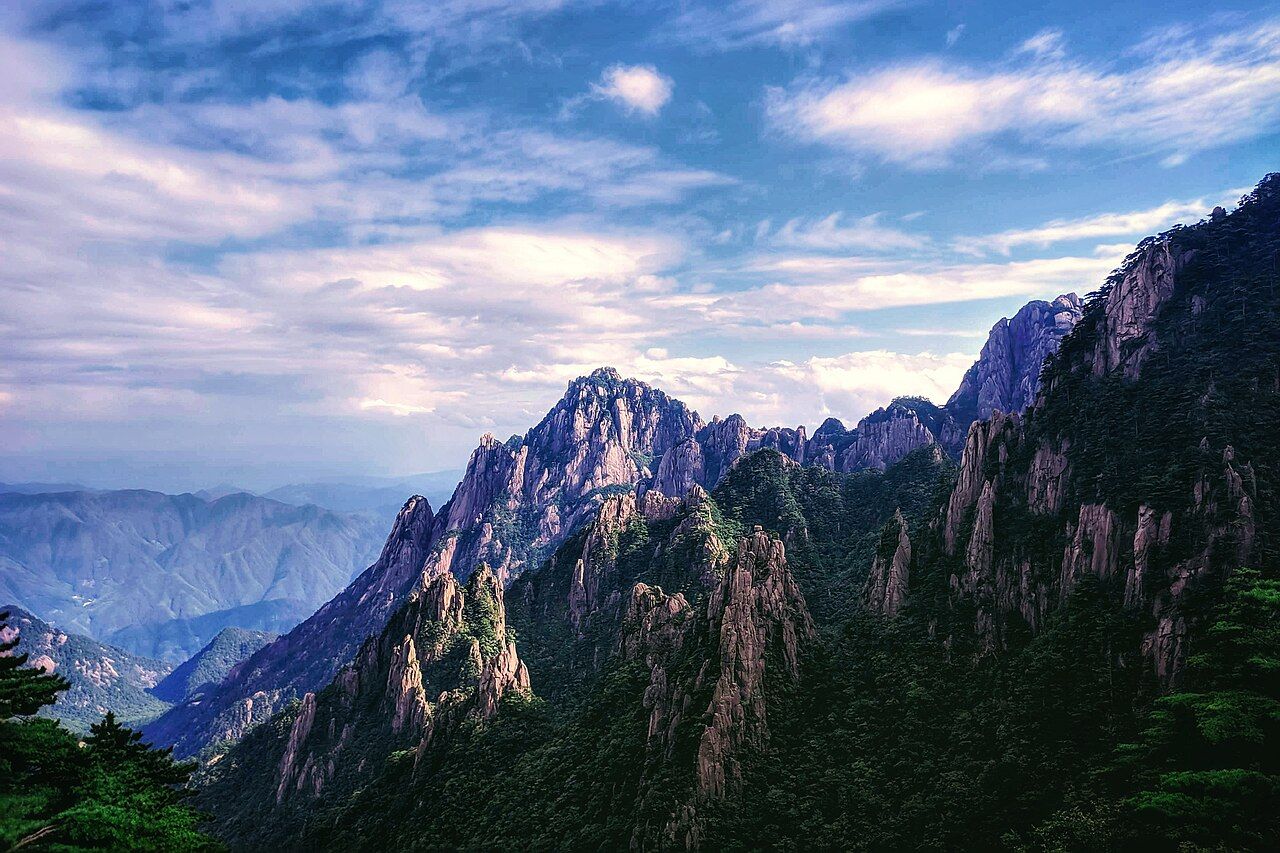
Several cable cars reduce the climb: the Yungu (east) and Yuping (south) lines are the main ones, each reaching near a summit area. From there, paved and stepped paths connect Bright Summit, the Lotus Peak (open in rotation with Celestial Capital to protect the trail), and the West Sea Canyon. Walking the full circuit is demanding — thousands of steps — so most visitors ride up and walk a loop, or stay overnight to split it across two days. The West Sea Canyon in particular is a highlight: a descent into a maze of granite spires that feels like the mountain’s secret core.
Sunrise and the Sea of Clouds
The classic experience is sunrise from Bright Summit or the Dawn Pavilion near Beihai. Arrive 30-45 minutes early, as the viewing decks fill. The sea-of-clouds phenomenon needs the right conditions — often after rain when low cloud sits in the valleys — and is never guaranteed, but Huangshan delivers it more reliably than most peaks. Even without it, the granite and pines are enough, and the sunset from the western ridges is nearly as good as the dawn. Cloud that drifts through the peaks is itself the show on many days.
Best Time to Visit
Spring and autumn are the most comfortable and scenic. Winter brings snow and ice and fewer crowds but requires crampons and care on the steps. Summer is green and busy, with afternoon thunderstorms that can obscure the view. The mountain weather changes fast at altitude; pack layers regardless of season. Avoid Golden Week if possible, as the summit lodging and cable cars reach capacity.
Where to Stay
Summit hotels (Beihai, Bright Summit area) are the key to sunrise and let you avoid a pre-dawn climb, but they are pricey and book out months ahead in peak season. Staying at the base (Tangkou or the hot-spring area) is cheaper; you then start early and ride up. The hot springs at the foot are a worthy reward after a long descent, especially in cool weather.
Practical Tips
- Overnight: Book a summit hotel months ahead for sunrise; they are pricey but save a pre-dawn climb.
- Footwear: Grippy shoes; the steps are steep and can be slick, especially after rain or in winter.
- Water and food: On-mountain prices are high; carry what you can comfortably.
- Timing: Ride up early to enjoy viewpoints before the day-tripper wave arrives around mid-morning.
A Two-Day Plan
Day 1: cable car up (Yungu), walk to Beihai, watch sunset, overnight summit. Day 2: sunrise at Bright Summit, cross to the West Sea Canyon or Lotus Peak, descend by the Yuping cable car. That balances effort and the signature views and leaves time for the hot springs at the base.
The Hot Springs and Food
At the foot of the mountain, the Huangshan Hot Springs (Wenquan) are a reward after a long descent, especially in cool weather when soaking outdoors while mist rises is its own kind of peak experience. The town of Tangkou, near the south gate, has the most lodging and dining and is where most visitors base if they are not on the summit. Local Anhui cuisine is subtle and fresh rather than fiery: stinky mandarin fish (臭鳜鱼) is the famous specialty, an acquired but beloved fermented dish, alongside bamboo shoots, mushrooms from the hills, and clear-stream river fish. On the mountain itself, food is limited and pricey, so carry snacks and water and plan a proper meal at the base.
Lotus Peak, Celestial Capital, and the Rotation
Huangshan’s three main summits are managed to protect the trails: Lotus Peak (the highest at 1,864 m) and Celestial Capital Peak alternate opening every few years, so only one is open at a time while the other rests. Bright Summit, centrally located, is always accessible and is the usual sunrise spot. Climbing Lotus or Celestial Capital is a tougher, more exposed push with steep steps and railings, best saved for clear, dry days — they are the mountain’s “summit challenge” for fit visitors. Knowing which peak is open shapes your route, so check on arrival. Either way, the granite-and-pine panorama from the top is the payoff, and the descent past the hot springs closes the loop nicely.
Frequently Asked Questions
Which is harder, Huangshan or Mount Tai?
Huangshan is generally the tougher climb because of its longer, steeper stepped routes and higher, more exposed summits, though both offer cable-car shortcuts. Mount Tai’s 7,000 steps are relentless but lower and more continuous; Huangshan demands more route planning and has more vertiginous sections.
Do I have to climb on foot?
No. Cable cars reach the summit areas; you then walk paved loops. Fully climbing from the base is possible but very strenuous and best done over two days.
Is it worth staying overnight?
For sunrise and the sea of clouds, yes. A day trip misses the best light and rush-hours the trails with the largest crowds.
How cold is the summit?
Noticeably colder than the base, often 5-10 °C cooler, and windier. Bring a warm layer even in spring, and proper gear in winter.
Which peak is highest?
Lotus Peak at 1,864 m, open in rotation with Celestial Capital to rest the trail and prevent erosion.
Costs, Tickets, and the Cable Cars
Huangshan’s entry is priced by season, with a separate charge for each cable car (Yungu and Yuping are the main lines) and for the West Sea Canyon shuttle if you take it. A two-day ticket is better value if you are staying overnight and splitting the climb. Summit hotels are the biggest cost and book out months ahead in peak season; the hot springs at the base are a moderate add-on and a worthwhile reward after the descent. Food on the mountain is limited and expensive, so carry water, snacks, and a packed lunch if you want to avoid the summit restaurants. If budget matters, a day trip using one cable car up and one down, with a packed meal, keeps the cost reasonable while still delivering the sunrise if you start very early.
Frequently Asked Questions
Can I do Huangshan on a day trip from Hangzhou or Shanghai?
It is a stretch. The mountain is a few hours from Hangzhou by high-speed rail plus a transfer, so a day trip means a very early start and a late return. Most visitors either overnight at the base or on the summit to make it enjoyable rather than rushed.
Packing and Etiquette
Huangshan rewards preparation. The steps are steep and, after rain or in winter, slick, so grippy shoes are essential and crampons help in icy months. A headlamp matters if you are attempting sunrise from a summit lodge, and a warm layer is non-negotiable at the top regardless of season. Carry water and a packed meal, because on-mountain food is limited and pricey, and the summit hotels are basic. Etiquette is simple: stay on the paved paths to protect the granite and the twisted pines, do not queue-jump at the cable cars, and keep the viewing decks considerate at sunrise — everyone is there for the same first light. The effort is repaid by the sea of clouds and the silhouettes that have defined Chinese landscape art for centuries.
Frequently Asked Questions
Is Huangshan safe for solo travelers?
Yes. The routes are well patrolled and busy in season, the cable cars and paved paths remove most exposure, and the main risk is simply fatigue and slippery steps — manageable with good shoes and a measured pace.
Disclaimer
Cable-car operations, ticket prices, hotel availability, and opening hours change by season and were approximate at the time of writing. Confirm with the official scenic-area office before travel.
About the author: Karl Huang is a travel writer for the XinjiangAttractions Editorial Team, covering China’s sacred and scenic mountains. This article covers mainland China only.
Photo Credits
All photographs in this article are sourced from Wikimedia Commons and are used under free licenses (CC BY, CC BY-SA, or Public Domain). Image authors and licenses:
- China Anhui Huang Shan scenic view 2.JPG — Wikimedia Commons contributor / CC BY-SA 3.0.
- Anhui Huangshan.jpg — Wikimedia Commons contributor / CC BY 2.0.