Published: November 9, 2026 | Author: Karl Huang
Most travelers who come to Kuqa for Buddhist art know one name: Kizil. We did too, on our first drive west along the Muzat River. But Kumtura Caves sit a short distance downstream, quieter and far less photographed, and they hold something Kizil does not — a whole layer of murals painted in a straight Tang-dynasty Chinese hand. This guide comes from a visit we made to the site in spring, then cross-checked against the published materials of the Qiuci Grottoes Research Institute and the UNESCO Silk Roads nomination file. If you care about the moment Han and Kuchean painting met on the same cliff face, Kumtura is the place the bus tours skip.
Kumtura Caves in Brief
Kumtura is the second-largest of the ancient Qiuci (Kucha) grotto groups, after Kizil, and one of three Kuqa-area sites on the 2014 Silk Roads World Heritage list. The name is Uyghur for “watchtower in the desert,” and locals have long called it the “Han people’s caves” because of the Chinese manner of its best paintings.
| Fact | Detail |
|---|---|
| Location | East bank of the Muzat (Weigan) River, about 28 km west of Kuqa town, southern Xinjiang |
| Scale | 112 numbered caves; roughly 32 keep murals; about 4,000 m² of painting survives |
| Period | Carved from the 5th century, faded after the 11th; the Tang phase is the highlight |
| Style | Mahayana subjects in a Tang central-plain (“Han”) manner, beside older Kuchean work |
| Status | First batch of National Key Cultural Relics Units (1961); UNESCO World Heritage component (2014) |
| Access | Protected grotto, not a walk-up ticket site; view from outside or see murals at the Kuqa Museum |
What We Found on the Muzat River Cliffs
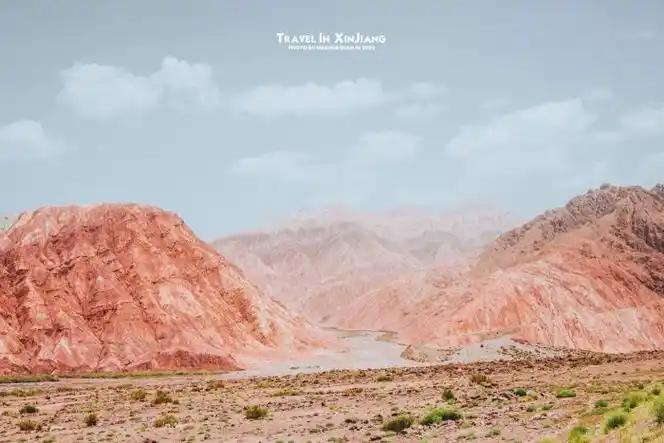
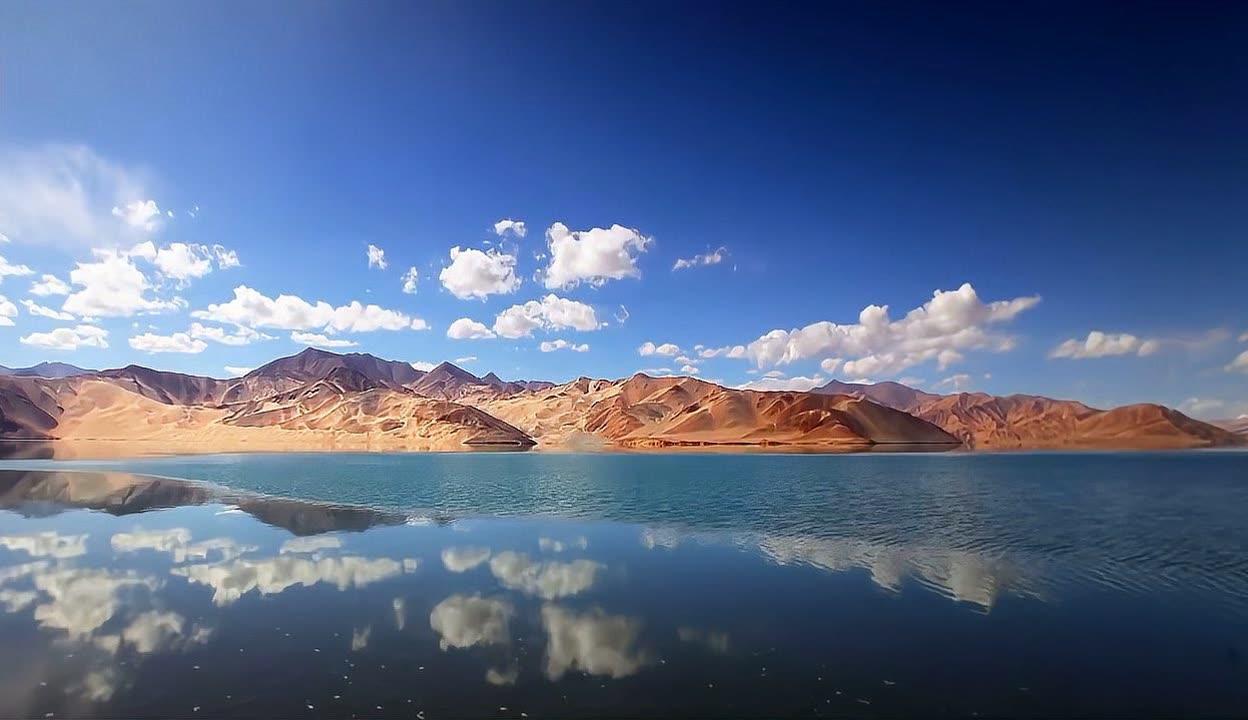
We left Kuqa at first light and followed the river west, past the orchards that give the oasis its green stripe, then into bare red hills where the road narrows. The site is not announced. A low fence, a caretaker’s hut, and a wall of weathered sandstone cut with dark cave mouths are all there is to see from the track. We stood for a long time. What you feel at Kumtura is not spectacle but restraint: a place guarded rather than sold, where the cliff itself is the exhibit and the art behind it is kept for its own sake.
Our driver, who grew up in Baicheng, pointed out the “five joined caves” high on the rock — five openings knocked side by side and linked by a passage, the signature of the site. From the ground you cannot read a single brushstroke. That is the point. Kumtura asks you to come for context, not for a photo of a flying apsara. A pair of swallows circled the cave mouths while we watched, and the only sound was the river moving over stone. It is the kind of quiet that makes you lower your voice without being told.
The Han-Style Caves: When Tang China Painted the Desert
Kizil, upstream, is the older and more famous sister, and its murals lean Indic and Sogdian — the diamond grid of single-panel Jataka tales, the Prussian-blue that came from afar. Kumtura tells the later chapter. From roughly the 7th century, after the Tang court moved the Anxi Protectorate to Kuqa, painters working in a central-plain idiom arrived and decorated caves here in a frankly Chinese way.
The evidence is specific. Cave 15 keeps a flying apsara whose line and drape a scholar will tell you rivals the best Tang work at Dunhuang. Cave 16 carries a Medicine Buddha (Bhaisajyaguru) Pure Land scene — a large Mahayana sutra illustration in the Tang mode. Cave 79 shows Uyghur donors in round-collar Tang robes, painted beside inscriptions in Chinese, in the old Kuchean script, and in Uyghur. Stand in front of that wall and you are looking at three languages and two painting traditions sharing one room. That overlap is why Kumtura matters more than its fame suggests.
Reaching Kumtura: The Muzat River Road West of Kuqa
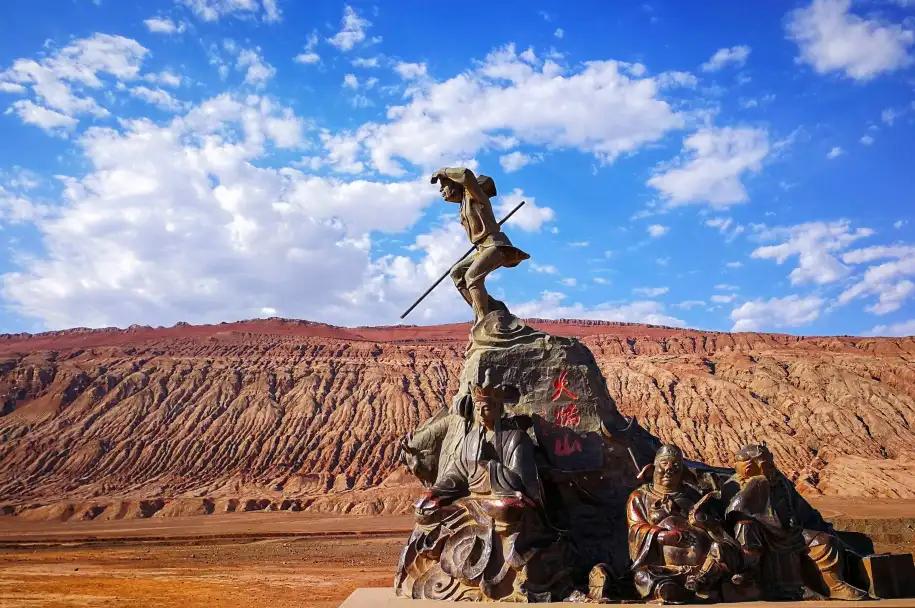
Kumtura is about 28 km from Kuqa town, a 40-minute drive in good weather. You take the road toward Baicheng and turn off at the Muzat river crossing; there is no bus that delivers you to the cliff, and no ticket window. The realistic way is to hire a car in Kuqa or to book a Kizil Caves day tour and ask the driver to add Kumtura as a roadside stop on the way back. We did the latter and it worked well.
Kuqa itself is easy to reach: the Southern Xinjiang railway stops at Kuqa station, and Kuqa Qiuci Airport has flights from Urumqi and a few other cities. From the airport or station, give yourself an hour of buffer before any grotto visit, because the last stretch is slow.
When to Plan Your Visit (and Why the Site Closes)
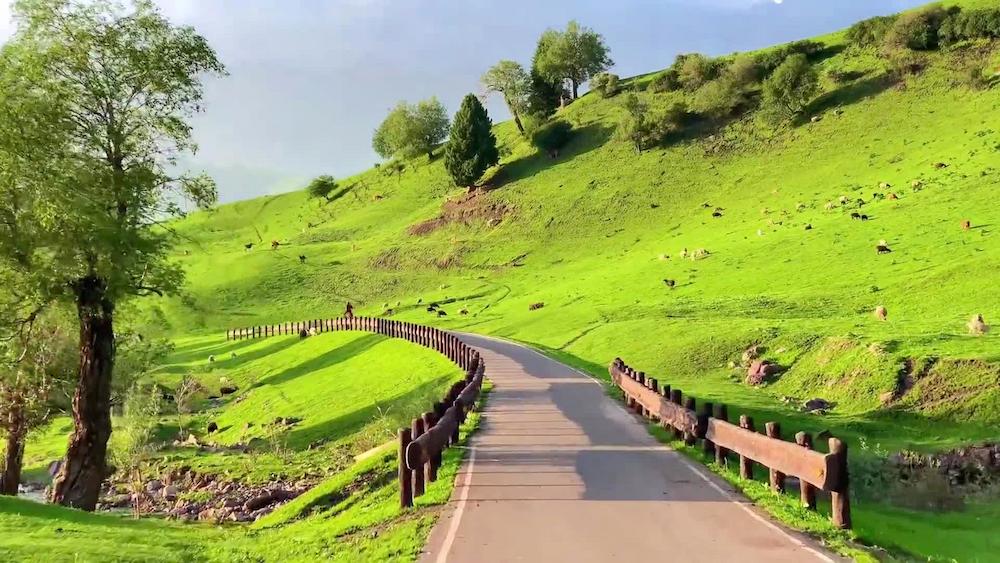
Spring (April to May) and autumn (September to October) are the comfortable windows — mild, with good light on the red rock and the river running. Summer is brutally hot; we measured shade temperatures over 40°C on a June afternoon and would not recommend midday walking. Winter brings its own problem: the access road can be closed by cold or snow, and the Kuqa Museum may keep reduced hours. If your dates are fixed, check both the road and the museum before you commit a day to it.
Where to Base Yourself: Kuqa Town
Stay in Kuqa town. There is no lodging at the grotto, and the town puts you within an hour of every site in this guide. The range runs from the long-established state-run Kuqa Hotel in the center to mid-market chains and a scattering of small guesthouses near the old city. Pick something walkable to the night market; you will want to be outside after dark when the heat drops.
Eating in Kuqa Between Cave Days
Kuqa eats well, and the old town is the place to do it. The local naan is unusually large — the “Kuqa big naan” is a flat disc you can barely get through a doorway — pulled laghman noodles, lamb kebabs, polo (rice with carrot and lamb), and tandoor samsa are the everyday rotation. We ate most nights at the bazaar stalls, where a plate of kebabs and a round of naan cost less than a coffee back home. For a slower meal, the Uyghur restaurants around the old city serve hand-made noodles and a cold tomato-onion salad that cuts the heat. Ask the stallholders for the walnuts and raisins they pile beside the bread; the local dried fruit makes a good snack for the next day’s drive west.
Five Rules Before You Approach the Cliff
1. Do not expect to walk inside the caves. Kumtura is a protected grotto; casual entry is not permitted, and the realistic plan is to view it from the fence and see the art at the museum.
2. Pair it with Kizil Caves, which is open and about 90 minutes further west, so you actually stand inside a Qiuci grotto.
3. Put the Kuqa Museum on your list — that is where Kumtura’s murals, replicas, and a scale model live.
4. Hire a local driver. Public transport does not reach the cliff, and the last turn is unsigned.
5. Respect the fence, the no-drone rule, and the no-flash understanding. The paintings are fragile and the site is under active conservation.
A Day Linking Kumtura and Kizil
This is the loop we would run again. Leave Kuqa at 08:30 and drive west along the Muzat River. Reach Kumtura around 09:30 for an exterior look and photographs from the fence — budget 45 minutes, no more. Continue to Kizil Caves for a proper 2.5 to 3 hour visit inside the open grottoes. Eat lunch in Baicheng or on the return. Back in Kuqa by mid-afternoon, spend an hour at the Subashi Temple Ruins if you have energy, or save it. End the day at the Kuqa Museum to close the loop on Kumtura’s art, then dinner in the old town. If you are building a wider Tarim route, Aksu makes a logical next base.
Questions Travelers Ask About Kumtura
Can I go inside Kumtura Caves? Generally no, for casual visitors. It is a protected site. See the Kuqa Museum for the murals and Kizil for grotto interiors.
Is Kumtura on the UNESCO list? Yes — as a component of the 2014 “Silk Roads: the Routes Network of Chang’an-Tianshan Corridor” (the Kucha group, with Kizil and Subashi). See the UNESCO listing for the official scope.
How is it different from Kizil? Kizil is upstream, earlier, Indic-leaning, and open to visitors. Kumtura is downstream, carries the strong Tang Han-style layer, and is closed.
How do I get there? Drive from Kuqa (about 28 km), or add it as a stop on a Kizil day tour.
A Note on Access and Preservation
Opening status, fence lines, and which caves are shown at the museum change with conservation decisions. Verify with the Qiuci Grottoes Research Institute or the Kuqa Museum before you travel. This piece is a travel account, not official guidance, and we visited in spring 2026; details such as road conditions and museum hours may have shifted since. The murals that left for Berlin in the early 1900s were badly damaged in the 1945 bombing of that city, a loss worth remembering when you weigh what survives on the cliff today.
Karl Huang is a travel writer focused on Xinjiang’s cultural routes. He has spent multiple seasons documenting the Silk Road sites of the Tarim basin, and his articles are cross-checked against official heritage sources and UNESCO records.