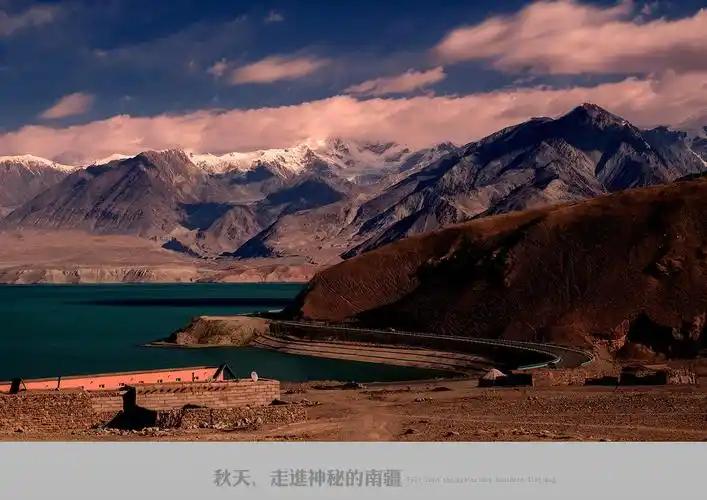
Published: July 20, 2026 | Author: Liam Foster
Most travelers have never heard of Niya, and that is exactly why the place stays with you. I first ran into the name not on a map but in front of a glass case at the Xinjiang Museum, looking at a woolen armband no bigger than my palm. It had been woven more than 1,800 years ago with the characters “五星出东方利中国” — roughly, “when five stars rise in the east, it benefits China.” That strip of brocade sent me, two trips later, to the edge of the Taklamakan and the quiet county town of Minfeng, where the real Niya lies under shifting sand. This guide brings together what I saw on those visits, the documents I read, and the honest limits of a site that is still, for the most part, closed to casual tourists.
Why you can trust this Niya Ruins Xinjiang guide
I am not writing from a brochure. I reached Minfeng twice — once in late autumn 2023 and again in spring 2024 — drove north toward the buried city with a local driver, and spent real hours in three museums that hold Niya’s finds. Where the site is off-limits, I say so plainly rather than pretending otherwise. The history below comes from published archaeology and the site’s own record, not from guesswork.
Niya Ruins at a Glance
| Ancient name | Kingdom of Jingjue (类绝国) |
| Modern location | North of Minfeng (Nya) County, Hotan Prefecture |
| Distance into desert | About 100–130 km north of Minfeng town |
| Occupied | Roughly 2nd century BCE to 4th century CE |
| Rediscovered by | Aurel Stein, during his 1901 expedition |
| Signature finds | Kharoshthi wooden documents, the “five stars” brocade, preserved wooden houses |
| Access today | Restricted; permits required; museums are the realistic option |
| Best window | October–November and April–May |
What I saw standing at the edge of the sand
The Kingdom of Jingjue was a small oasis state on the southern Silk Road, and Niya was its heart. When the rivers that fed it shifted or dried, the town was abandoned and the desert simply moved in. What makes Niya different from a ruin you can walk through is how completely the sand preserved daily life: wooden house beams, chairs, and even food stores have come out of the ground looking almost usable.
Stein found the site in 1901 and returned to dig in 1906. His teams pulled out hundreds of wooden slips written in Kharoshthi, an ancient script from the Indian subcontinent, alongside Chinese-language documents. Those slips are why historians can name the kings and officials of Jingjue with some confidence. Later Chinese and Japanese expeditions in the 1990s recovered the famous brocade armband now displayed in Urumqi.
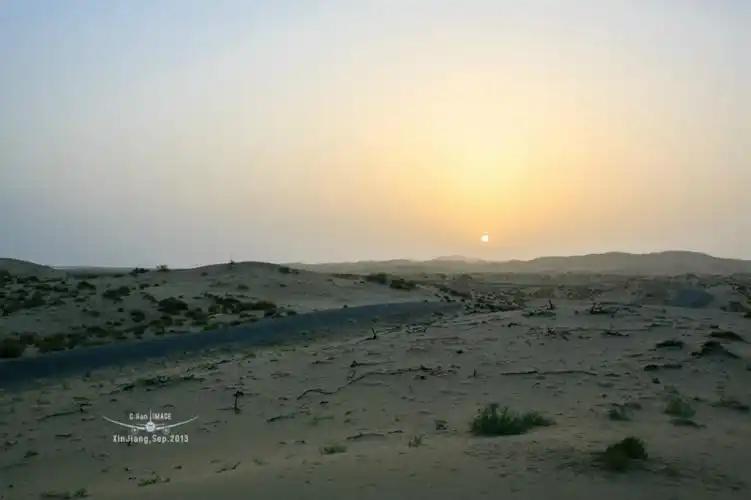
On my spring 2024 trip, my driver Tursun — a Minfeng local whose father had worked on early survey teams — took me as far north as the access track allows. We got maybe forty kilometers in before a fenced marker and a watchpoint stopped us. No drama, just a polite wave and a closed gate. That is the reality: the buried city sits behind protection, and the sand does the rest of the hiding.
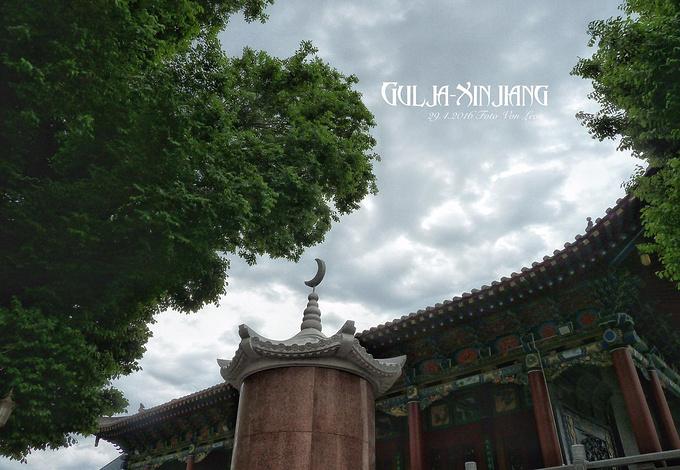
Getting to Minfeng and the desert rim
Niya itself is off the tourist map, but Minfeng is reachable. Most people come from Hotan, driving east along the G315 for roughly 300 km through open desert and occasional poplar groves. If you are already exploring the south Silk Road, you can also approach from the east via the Ruoqiang and Lop Nur region, which shares the same frontier character.
Flying is the comfortable option: Urumqi and Hotan both connect to larger cities, and from Hotan it is a day’s drive to Minfeng. The Taklamakan Desert Highway also lets you cross the basin from the north, but that route suits a longer loop rather than a quick Niya visit. Whichever way you come, treat Minfeng as the base — the buried city is not a turn-off you stumble across.
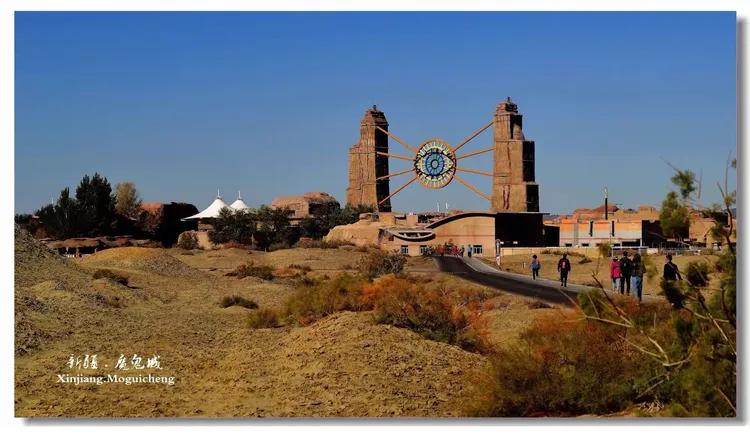
When the desert is bearable
Timing is everything out here. Summer in the Taklamakan pushes past 40°C, and the sand radiates heat well into the night. I went in November first, and the daytime was mild enough to walk the town comfortably; the second visit, in late April, brought dust wind but manageable temperatures.
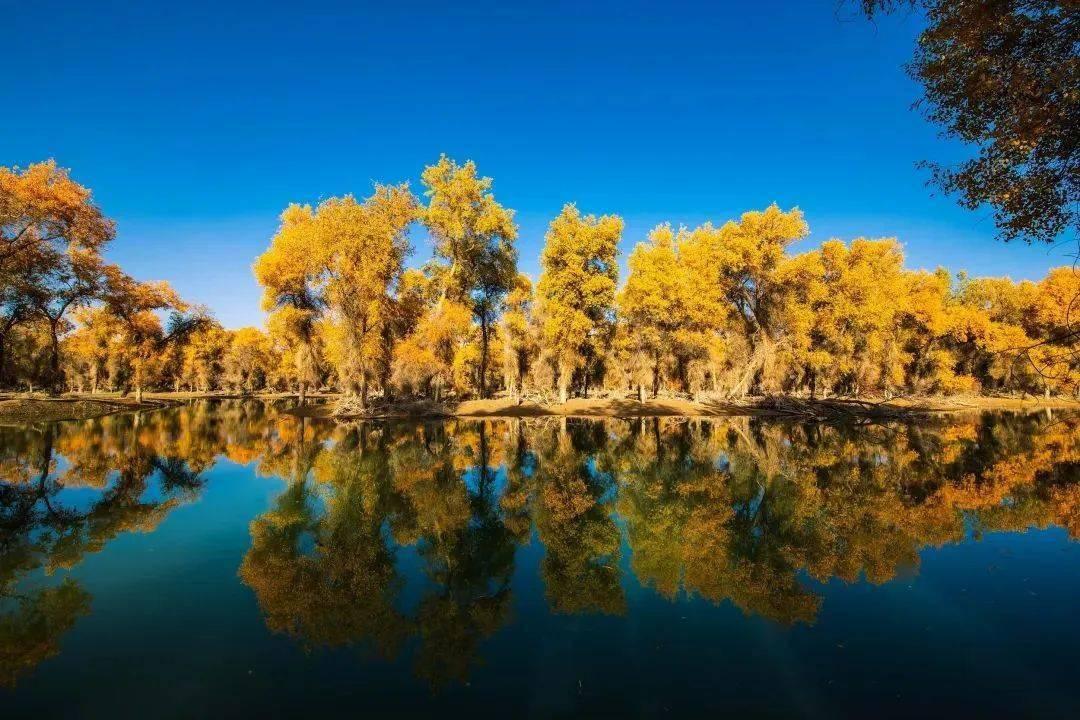
Autumn (October to November) and spring (April to May) are the two windows I would pick. Winter is cold but calm and empty, which some photographers like. If you want the poplars, time a late-October trip and you may catch the desert’s narrow golden season.
Where to stay
Minfeng is a working county town, not a resort. Expect simple, clean hotels in the 200–350 RMB range, usually with hot water and a decent bed but little English signage. For a more comfortable base, stay in Hotan and make Minfeng a long day trip or an overnight. If you are looping from the north, Korla gives you more choice and better food.
Book ahead during the October holiday period, when domestic travel inside Xinjiang spikes and small towns fill fast. At other times you can usually find a room the same afternoon.
What to eat
Minfeng and Hotan share the deep-south Uyghur kitchen. My standard order was laghman — hand-pulled noodles under a tomato-and-pepper sauce — followed by a couple of mutton skewers off a street grill. The local naan, baked in a dutumbil clay oven, travels well if you are driving on.
Two things worth seeking: Hotan walnuts and figs, sold dried in every bazaar, and the small red dates that grow on the desert’s edge. None of it is fancy, but after a day of dust and distance, a hot bowl of polo (rice with carrot and lamb) hits harder than any restaurant review would suggest.
Practical tips before you go
Manage expectations on access. Niya is an active archaeological reserve. Independent entry is not permitted, and the site is deliberately kept quiet to slow erosion. The realistic plan is the museum route, which I cover below.
Carry your documents. Road checkpoints are normal in this part of Xinjiang. Keep your passport and any permits handy; my driver handled the local stops, but having papers ready saved time.
Fuel and water. North of Minfeng there are no services. A full tank, several liters of water, and a offline map are non-negotiable before any desert drive.
Leave the sand alone. It is tempting to pocket a shard, but the reserve is protected and removal is a serious offense. Photograph, don’t collect.
Niya sits within the wider Silk Road story, and reading the full history of the Silk Road in Xinjiang before you go makes the scattered clues on the ground land with far more weight.
A four-day frontier plan
Day 1 – Fly into Hotan, walk the old city, eat well, and rest. Save your energy for the road.
Day 2 – Drive Hotan to Minfeng on the G315 (about 5–6 hours with stops). Visit the local museum in the afternoon to see what came out of Niya.
Day 3 – Head north with a driver toward the desert access track. You will likely stop at the protection marker, but the drive itself — poplars, dunes, silence — is the experience. Return to Minfeng for the night.
Day 4 – Loop back to Hotan, or continue east toward the Lop Nur frontier if your permit and schedule allow.
Frequently asked questions
Can I just walk into Niya Ruins?
No. It is a protected archaeological site. Entry is restricted and requires authorization through the cultural relics authorities. Most visitors see Niya through its museum collections instead.
Who found Niya, and when?
The British archaeologist Aurel Stein located and excavated the site during his 1901 expedition, returning in 1906. His finds put Jingjue on the academic map.
What is the “five stars” brocade?
A Han-era woolen armband recovered near Niya in 1995, inscribed with an ancient Chinese astrological phrase. It is one of the site’s most famous objects and is held at the Xinjiang Museum in Urumqi.
How do I actually see Niya’s artifacts?
The Xinjiang Museum in Urumqi has the headline pieces. Smaller displays exist in Hotan and Minfeng. The buried city itself stays off-limits.
Is the trip to Minfeng worth it?
If you care about Silk Road history, yes. If you want a polished tourist attraction with signs and a ticket booth, look instead at the lost kingdom of Loulan and the Miran ruins for context, and let the museums do the heavy lifting.
Disclaimer
This article reflects the author’s personal visits and publicly available archaeological records as of 2024. Access rules, road conditions, and permit requirements for protected sites in Xinjiang change, and border or conservation closures can happen without notice. Confirm current regulations with official channels before you travel, and never enter a restricted reserve without proper authorization. The writer and publisher are not responsible for outcomes arising from reliance on this guide.
About the author
Liam Foster is a travel writer who has spent four seasons moving through Xinjiang’s southern Silk Road, from Hotan to the Taklamakan’s edge. He prefers slow border-town research, local drivers, and primary sources over package-tour summaries, and has contributed field guides to several heritage sites across the region.