Published: July 28, 2026 | Author: Karl | Guest field notes by Marisol Duarte, pastry chef, Lisbon
I make desserts for a living, so I judge a place by its sugar. My sister Ines and I spent twelve days in August 2025 eating our way through Xinjiang desserts, from hand-churned ice cream in Kashgar to slabs of nut brittle in Turpan, and I came home with a notebook full of prices, mistakes and one recipe I am still trying to copy. This guide covers what the sweets actually are, what they cost, where the good stalls hide, and the one weight-pricing trap that catches almost every foreign visitor.
Quick reference: Xinjiang desserts at a glance
| Sweet | What it is | Typical price (2025) | Where we found the best |
|---|---|---|---|
| Uyghur ice cream (marojan) | Hand-churned in a brass drum over ice, egg yellow, faintly custardy | 3 to 5 RMB a cone | Kashgar old town, evening |
| Matang | Dense slab of walnuts, almonds and raisins bound with boiled syrup | 15 to 30 RMB per 100 g | Urumqi Grand Bazaar |
| Halva (halwa) | Crumbly flour-and-butter confection, sometimes with saffron | 10 to 18 RMB per 100 g | Kashgar Sunday market |
| Sanzi | Pyramid of thin fried dough strands, crisp and lightly sweet | 10 to 15 RMB a bundle | Turpan bazaar |
| Yogurt shaved ice | Homemade yogurt over hand-planed ice with honey syrup | 5 to 8 RMB a bowl | Turpan, midday |
| Nabat | Rock crystal sugar on a string, dropped into tea | 8 to 12 RMB a bag | Any bazaar spice row |
The ice cream that made me question my training
On our second evening in Kashgar old town, we followed a metallic scraping sound to a cart where a man in a white cap was turning a brass drum inside a barrel of ice and salt. No machine, no stabilisers, no cream base as I know it. Eggs, milk, sugar and patience. The result is what travelers call Uyghur ice cream: pale yellow, slightly chewy at the edges, with an eggy warmth that reminded me of frozen custard from old Lisbon parlours but lighter.
A cone cost 3 RMB. I went back four nights in a row and watched him work. He cracked fresh eggs into the drum at around 7 pm, churned for the better part of an hour, and sold out by 10.30. When I asked, through a translation app, how he kept it from turning icy without a stabiliser, he laughed and pointed at his forearm. The answer is constant scraping. My pastry school would have charged me a semester’s fees for that lesson.
Matang and the weight trap you must understand
Matang is the sweet you will see stacked in glossy amber blocks on nearly every bazaar counter: walnuts, almonds, sesame and raisins pressed into a slab with boiled grape or honey syrup. It is delicious, dense and heavy. That last word matters, because matang is priced by weight, and a modest-looking wedge can weigh 400 grams.
Here is the mistake Ines made at the Urumqi Grand Bazaar so you do not have to. She pointed at a block, the vendor asked how much with a gesture, and she drew a small square in the air. The blade came down, the scale read 460 grams, and the bill was 92 RMB. The sign said 20, but per 100 grams, not per piece. Nobody cheated us. We simply had not read the unit. If you want a taste, say or type 50 grams (50 克) and hold up your phone with the number. Every vendor we met accepted a small cut without any fuss, and several added a free sliver of a second flavour. The same weight logic applies to qiegao, the pressed walnut cake with a bad online reputation. Agree the weight before the knife moves and it is just a normal, honest purchase.
Prices ranged from 15 RMB per 100 grams for basic sesame matang to 30 for versions thick with whole almonds. It keeps for weeks, survives a suitcase, and passed through our airport screening without questions. For what other food souvenirs travel well, our Urumqi International Bazaar shopping guide goes deeper.
Halva, sanzi and the quieter sweets
Xinjiang halva is closer to the Central Asian style than the Middle Eastern sesame version: flour toasted in butter, sweetened, sometimes tinted with saffron, sold in crumbly golden wedges. The texture is somewhere between fudge and shortbread that has given up its structure. I found it too rich to eat alone, and then I watched an older woman at the Kashgar Sunday market eat hers between sips of black tea and understood. The bitterness of the tea is the missing ingredient. There is a whole ritual around this pairing, which we wrote about in our Xinjiang tea culture guide.
Sanzi is the celebration sweet: hair-thin ropes of dough fried into a golden pyramid, crisp and only faintly sugared. Families stack it for festivals and weddings. We bought a bundle in Turpan for 12 RMB and ate it like crisps on the train. My professional note: the strands stay crunchy because the dough is rested and pulled rather than rolled, which keeps gluten development even. Whoever standardised that technique without a thermometer deserves more credit than most pastry chefs I know.
Turpan: where the sugar actually comes from
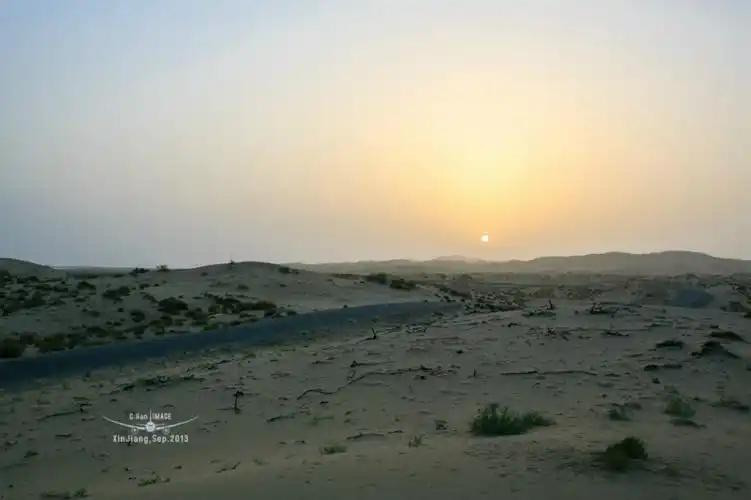
Spend one hot afternoon in Turpan and the whole dessert tradition explains itself. The oasis grows grapes so sweet that raisins here need no added sugar, and those raisins end up in matang, in sanzi dough, on yogurt, in everything. At a stall near the main bazaar we paid 6 RMB for a bowl of homemade yogurt over hand-planed ice with a spoon of grape syrup. At 41 degrees outside, it was the single best thing I ate on the entire trip, and I say that as someone who plates desserts for a Michelin-listed room.
The yogurt itself deserves its own paragraph, and in fact it has a full article: see our guide to Xinjiang dairy, milk tea, kumis and yogurt. The short version is that bazaar yogurt is set in wide enamel bowls, tangier than supermarket versions, and pairs with honey or syrup rather than sugar granules. If you are planning a day around it, the Turpan city guide covers the logistics.
When and where to hunt for sweets
Timing matters more than I expected. Ice cream carts follow the evening crowd: in Kashgar they appear around 7 pm and the good ones sell out by 11. Yogurt ice is a midday business tied to the heat. Matang and halva counters run all day, but bazaars are calmest and vendors most patient between 10 am and noon, before tour groups arrive. August gave us peak grapes in Turpan and peak melon everywhere, though it also gave us the 41 degree afternoon. June or September would deliver the same sweets in kinder weather.
City by city, this is how I would rank the sweet hunting. Kashgar wins for ice cream and atmosphere. Urumqi’s Grand Bazaar has the widest matang and dried fruit selection under one roof. Turpan owns the yogurt ice and anything grape-based. Smaller towns often surprised us: the best halva of the trip came from an unnamed counter in Kuqa’s old bazaar, 14 RMB per 100 grams, wrapped in paper that turned translucent with butter before we reached the hotel.
A one-day sweet tooth itinerary (Kashgar)
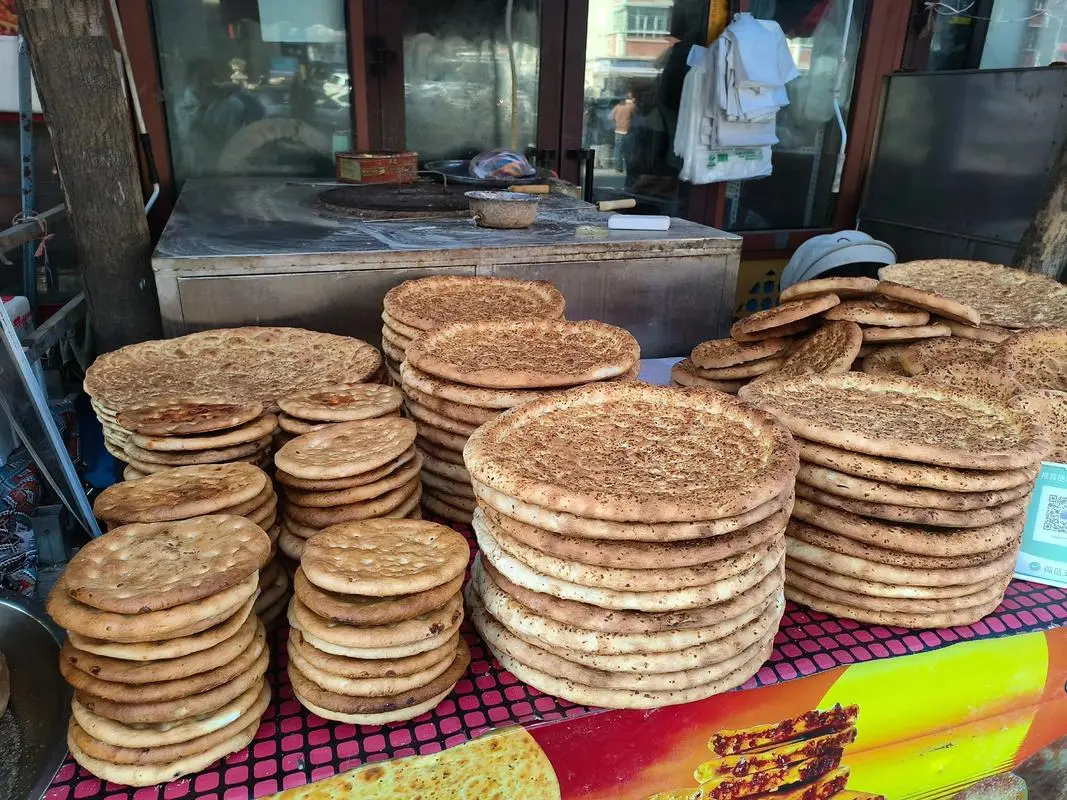
This is the day I would repeat. 9.30 am: breakfast naan from an old town oven, choosing the sweet version studded with raisins and walnut, about 5 RMB. 11 am: walk the Sunday market food rows, sample halva and buy 100 grams of the saffron kind. 1 pm: lunch, then black tea with a nabat sugar crystal dropped in, the local way to sweeten without stirring. 4 pm: nap, because August. 7 pm: follow the scraping sound to an ice cream cart and order the first of two cones. 9 pm: night market for a yogurt drink and a last wedge of matang negotiated at exactly 50 grams. Total sugar budget for the day: under 60 RMB. Budget planners can see how this fits a full trip in our Xinjiang travel cost breakdown.
Practical tips from a professional sweet eater
Carry small notes. Ice cream carts and yogurt stalls deal in 5s and 10s, and while most accepted phone payment, two carts in Kashgar were cash only. Confirm the weight unit before anything is cut, every time. If you have a sensitive stomach, treat hand-churned ice cream the way you would treat any unpasteurised product and make your own call; we ate it daily without trouble, but my sister skipped the yogurt ice after a rough first week. Diabetics should know that matang and halva are far denser in sugar than their size suggests. And bring a hard-sided container if you want matang to arrive home as a slab rather than a mosaic. More general trip questions are answered in our Xinjiang travel FAQ.
FAQ
Is Uyghur ice cream safe to eat?
It is made fresh daily from eggs and milk and churned over ice. We ate it repeatedly with no issues, but it is not pasteurised in the industrial sense, so travelers with fragile stomachs should start with one small cone.
How much should matang cost?
Between 15 and 30 RMB per 100 grams depending on nut content. The price is per weight, never per piece. Agree the amount in grams before the vendor cuts.
What is the difference between matang and qiegao?
They are close cousins. Qiegao is the pressed, denser walnut cake usually sold from a single massive block; matang tends to be pre-formed into smaller slabs. Both are priced by weight.
Can I bring Xinjiang sweets home through customs?
Sealed or dry sweets such as matang, halva and dried fruit travel well and cleared checks for us in both Chinese and EU airports. Dairy-based items should be eaten before you fly.
Are there sugar-free options?
Plain yogurt without syrup, unsweetened naan and fresh fruit are everywhere. The dessert tradition leans hard on natural grape sugar, so genuinely sugar-free sweets are rare.
Disclaimer
Prices and stall locations reflect our visit in August 2025 and spot checks in mid 2026. Street vendors move, seasonal fruit changes what is on offer, and exchange rates shift. Verify current conditions before you travel, and consult a doctor about dietary concerns. This article contains no sponsored placements.
About the contributors
Marisol Duarte has worked as a pastry chef in Lisbon for 14 years, most recently at a Michelin-listed restaurant. She traveled through Xinjiang with her sister in August 2025, paying her own way with no sponsorships. Field notes edited and fact-checked by Karl, founder of XinjiangAttractions.com, who has documented food and travel across Xinjiang since 2020.