Published: July 28, 2026 | Author: Karl Huang, with field notes from Callum Whitfield
My juice bar in Melbourne sells cold-pressed everything at prices that still embarrass me a little. So when my brother Dominic and I spent three weeks in Xinjiang in August and September 2025, I made it a personal project to try every local drink I could point at. This guide to Xinjiang drinks covers the ones worth crossing a city for: kumis in the Ili grasslands, boza at the Kashgar night market, hand-pressed pomegranate juice, and the barrel kvass of Yining. I paid for every glass myself and wrote the prices down the same evening.
A quick note on scope. Milk tea and brick tea are a whole world of their own, and this site already covers them in the Xinjiang tea culture guide. Yogurt and the dairy side of kumis get detailed treatment in the Xinjiang dairy guide. Here I stay on the drinking side: what each drink is, where we actually found it, what it cost, and whether your stomach will thank you.
Quick reference: Xinjiang drinks at a glance
| Drink | What it is | Where we found it | What we paid |
|---|---|---|---|
| Kumis (kymyz) | Fermented mare’s milk, lightly fizzy, mildly alcoholic | Kazakh yurt near Nalati | 10 RMB a bowl |
| Boza | Thick fermented millet drink, tangy and filling | Kashgar night market | 5 RMB a glass |
| Pomegranate juice | Pressed to order on iron hand presses | Kashgar old town, autumn | 8 to 20 RMB |
| Kvass (gewasi) | Bread-fermented soft drink, Russian heritage | Yining, draft from barrels | 6 RMB a cup |
| Doogh / ayran | Salted yogurt drink, served with noodles | Everywhere laghman is sold | 3 to 5 RMB |
| Mulberry and apricot juice | Seasonal, June and July mostly | Ili valley, Turpan | 10 to 15 RMB |
| Sea buckthorn juice | Sharp orange berry juice, bottled | Supermarkets, highway stops | 6 to 12 RMB |
How a juice guy ended up in a yurt at 7 a.m.
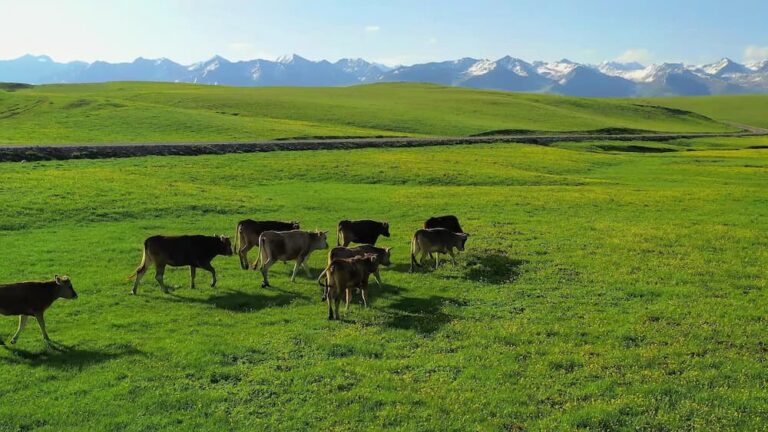
The kumis came first, and it was not my idea. Our driver on the Nalati leg, a Kazakh man named Erlan, mentioned that his cousin’s family summered in a yurt forty minutes off the main road and kept eleven mares. Dominic asked one polite question too many, and the next morning we were sitting on a felt rug at seven, watching Erlan’s aunt work a wooden plunger inside a leather bag the size of a wine barrel. The bag is called a saba, and the sour smell coming off it filled the whole yurt.
She ladled the kumis into bowls without asking whether we wanted any. It arrives cloudy, faintly grey, with a fizz that prickles the tongue before the sourness lands. There is alcohol in it, usually somewhere between one and two percent, enough that you notice a warmth but nowhere near enough to call it drinking. I finished my bowl and accepted a second. Dominic took one sip, smiled the way you smile at a dentist, and passed his to me when nobody was looking.
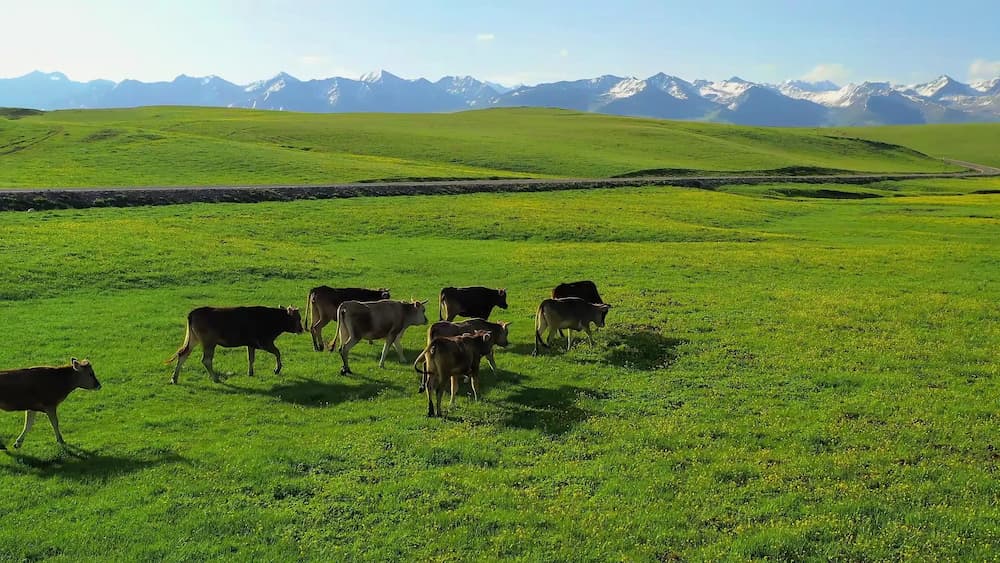
My advice, having now converted several skeptical friends back home with a bottled version: start with half a bowl. The live cultures are intense if your gut has never met them. The family charged us 10 RMB per bowl and would only take money because Erlan insisted on our behalf. Bottled pasteurized kumis exists in Urumqi supermarkets for around 15 RMB, and it is a different, tamer product. Fine as an introduction, but the yurt version has a wildness the factory cannot copy.
Boza: the drink that is nearly a meal
Boza took me three tries to find in Kashgar because I kept asking in the afternoon. It is a night market drink. The vendor we settled on, an older man with a steel pot the size of a washing machine drum, set up around 8 p.m. near the food rows east of Id Kah and sold out by eleven.
Boza is fermented millet, thick enough that the ladle leaves a trail, sour and grainy and very slightly sweet. His version came with a spoon of thick cream floated on top and a dusting of something I never identified, possibly ground chickpea. One glass cost 5 RMB and genuinely dulled my appetite for dinner, which annoyed me because Kashgar dinners deserve full attention. Fermentation gives boza a trace of alcohol, well under one percent in most batches, and locals of all ages drink it without a second thought.
If you are heading to the night market anyway for samsa and kebabs, order the boza first and share one glass between two people. It pairs weirdly well with the hand-churned ice cream sold three stalls down, an observation I stand behind professionally.
The fruit juice stalls: pomegranate, mulberry, apricot
Here is where my day job made me insufferable. Xinjiang fruit is exceptional, the dry heat concentrates sugar in a way Victorian orchards can only dream about, and the juice stalls sell it pressed to order for less than I pay for the raw fruit at wholesale.
Pomegranate is the king, and autumn is its season. Around Kashgar old town in September, men stand behind iron hand presses stacked with fruit split to show the seeds. Watch the press, not the sign. You want the juice squeezed in front of you, into a clear cup, with nothing added. Near Id Kah we were quoted 20 RMB, obvious tourist pricing. Two alleys south, Dominic paid 8 RMB for a bigger cup from a stall where the local queue was four deep. The flavor is sharper than supermarket pomegranate juice at home, almost cranberry-tart, and it stains everything it touches.
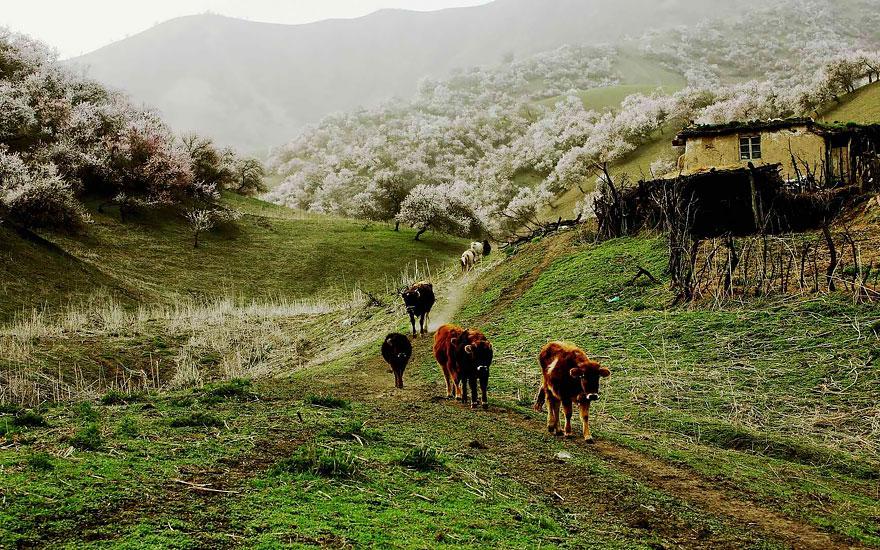
Apricot juice belongs to the Ili valley, where spring blossom covers whole hillsides and the summer crop gets pressed, dried, or boiled into compote. In Yining we drank a cloudy apricot juice at a Uyghur restaurant for 12 RMB a jug, closer to nectar than juice, served cold with lunch. Mulberry juice is the one that got away: the season is June into early July, we arrived in August, and every vendor we asked shook their head and said next year. Consider that a reason to time your trip early in summer, alongside the other arguments in the Xinjiang travel FAQ.
Kvass and the Russian corner of Yining
Yining surprised both of us. The city sits close to the Kazakhstan border, and its Russian layer is still visible in blue-shuttered houses and in gewasi, the local kvass. It is brewed from dark bread and honey, barely carbonated, sweet with a rye edge, and sold on hot afternoons straight from chilled barrels on the street.
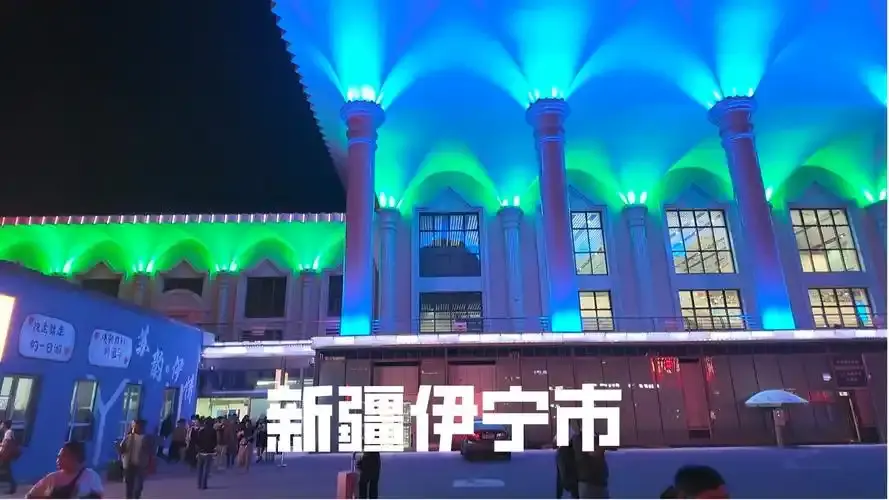
We paid 6 RMB a cup near the Liuxing Street area and went back twice the same day, partly because it was 34 degrees and partly because it is simply good. Bottled kvass from Xinjiang brands sits in every supermarket in the region, and it travels well, but barrel kvass has a fresh-bread aroma the bottles lose. If you make it to Yining, drink it there. The one-day price of our kvass habit came to less than a single smoothie costs at my own shop, a fact Dominic has not let me forget.
Everyday drinks you will meet without trying
Doogh, sometimes called ayran, is the salted yogurt drink that shows up beside laghman and kebabs across the south. It reads strange to a palate raised on sweet drinks, but on a 40-degree Turpan afternoon the salt makes sense fast. Expect 3 to 5 RMB. Sea buckthorn juice, pressed from a sharp orange berry that grows wild across the north, comes bottled everywhere; it tastes like passionfruit crossed with a vitamin tablet, and I mean that kindly. Museles, a homemade Uyghur fermented grape drink from the Awat area, is something you may hear about but will rarely find for sale openly; we never managed to try it, so I will not pretend to review it.
Watermelon and honeydew stands deserve a mention as the cheapest refreshment in the region. In Turpan a vendor sold us a quarter of an ice-cold melon for 5 RMB and looked mildly offended when I tried to tip. Turpan generally punishes anyone who ignores fluids, something the Turpan city guide makes clear in more detail.
When to go if drinks are the point
June and July bring mulberry juice and the first melons. August and September are peak kumis season, since the mares are milking on summer pasture, and the earliest pomegranates arrive in the south by mid September. October is the pomegranate high point in Kashgar and Hotan. Winter thins the street options considerably, though bottled kvass, sea buckthorn, and hot milk tea carry you through. If I went back purely to drink, I would pick mid September: kumis in the grasslands during the first week, pomegranate presses in Kashgar the second.
Prices and how to order
Street drinks run 3 to 20 RMB, and the 20 RMB end usually means a tourist corridor. Ordering is mostly pointing. Two phrases helped: “bu jia shui” (no added water) at juice presses, and “shao tang” (less sugar) at the blended fruit stalls, where sugar syrup goes in by default. Small notes matter; a 100 RMB bill at a 5 RMB boza stall creates a neighborhood event. Alipay and WeChat Pay worked at roughly half the street stalls we used, cash covered the rest. Budget-wise, 30 RMB a day funded a genuinely silly quantity of drinks for two people. For the broader picture of daily costs, the Xinjiang travel cost breakdown is the reference I wish we had read before arriving.
Stomach safety, honestly
Between us we drank from more than thirty street vendors over three weeks and had one bad afternoon, which we traced to a buffet, not a drink stall. Still, some sense applies. Fermented drinks like kumis and boza carry live cultures; ease in with small amounts on a full stomach. At juice stalls, glance at how cups and presses are rinsed, and skip added ice unless you can see it came from a bag. Bottled water is cheap and everywhere. If your constitution is delicate, start with bottled kvass and sea buckthorn juice, then work up to the yurt-fresh kumis. Anyone with dairy trouble should note that kumis, despite fermentation eating much of the lactose, is not lactose-free.
A one-day drinks crawl in Kashgar
9 a.m.: Pomegranate juice from the alleys south of Id Kah, where local buyers keep prices honest. 11 a.m.: Walk the old town with a bottle of sea buckthorn juice from any corner shop. 1 p.m.: Laghman lunch with a cold doogh, salt and all. 4 p.m.: Tea house on the teahouse street for brick tea and people-watching, the slow kind of drinking. 8 p.m.: Night market for a shared glass of boza, then ice cream, then a second boza to settle the argument about the first. Total spend for two people on our version of this day: 74 RMB.
FAQ about Xinjiang drinks
Is kumis halal, given the alcohol? It occupies an accepted traditional category for the Kazakh and Kyrgyz herding families who make it, with alcohol as a natural byproduct of fermentation. Practices vary between families and travelers should simply follow their own convictions.
Can children drink boza and kumis? Local kids drink boza routinely. Kumis, with its higher alcohol trace and stronger cultures, is one I would keep to adults and older teenagers, and in small amounts first.
Are the juice stalls safe for travelers? The busy ones with visible pressing were fine for us across three weeks. Choose stalls with local queues, watch the press, and skip loose ice.
What is the best non-alcoholic option on a hot day? Doogh if you want function, fresh melon juice if you want pleasure, kvass in Yining if you want both.
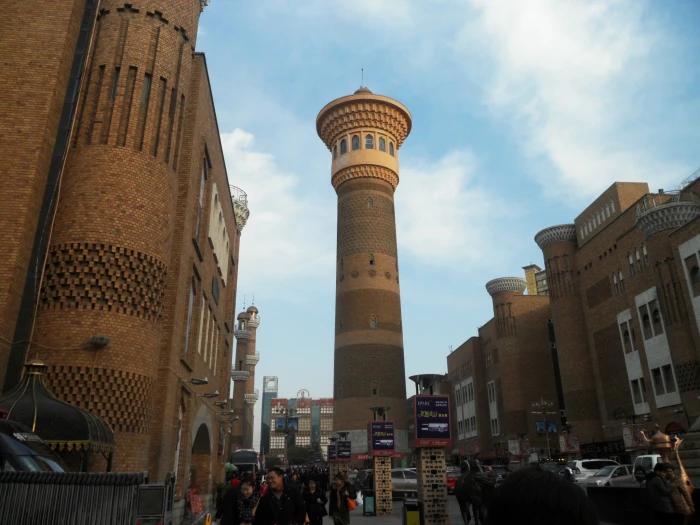
Where can I buy bottles to take home? Urumqi supermarkets stock bottled kvass, sea buckthorn juice, and pasteurized kumis. The International Grand Bazaar sells gift-boxed versions of most of them, at gift-box prices.
Disclaimer
Prices, vendor locations, and seasonal availability reflect our trip in August and September 2025 and normal year-to-year variation applies. Fermented drinks contain trace alcohol and live cultures; travelers with health conditions, pregnant travelers, and anyone with dietary restrictions should use their own judgment. Nothing here is medical advice. We paid for everything ourselves and have no relationship with any vendor mentioned.
About the authors
Callum Whitfield has run a juice and smoothie bar in Melbourne for eleven years and judges every drink he meets against a cost spreadsheet he refuses to share. He traveled through Xinjiang with his brother Dominic in August and September 2025, self-funded. Karl Huang is the editor of Xinjiang Attractions and fact-checks routes, prices, and place names against current local information.