Published: 15 October 2026 | Author: Karl Huang
The Plateau That Named Itself After Swans
Most people who hear the name Bayinbulak grassland picture a single sunset photograph: a river bending back on itself so many times that the sky seems to drop nine separate suns into the water. That image is real, but the place behind it is larger and wetter than the postcard suggests. Bayinbulak sits in the Bayinbulak Basin of the central Tianshan, inside Hejing County in Xinjiang’s Bayingolin Mongol Autonomous Prefecture. The Mongolian name translates roughly to “abundant spring water,” which is no exaggeration. Meltwater from the surrounding snow peaks feeds more than twenty rivers, seven lakes, and countless marshes across an alpine plain that averages around 2,500 metres above sea level.
This is not a small scenic spot. At roughly 23,000 square kilometres, Bayinbulak is the second-largest grassland in China and the core of the Torghut Mongol pastoral homeland. In 2013 the area was included in the Xinjiang Tianshan UNESCO World Heritage listing, mainly because of its high-altitude wetland ecosystem and its importance as a water tower for southern Xinjiang. The reserve’s best-known resident is the whooper swan, and the wetland is protected as China’s first national swan nature reserve, upgraded from a regional reserve in 1980 to national status in 1986.
Bayinbulak Grassland by the Numbers
| Item | What we verified |
|---|---|
| Chinese name | 巴音布鲁克草原 (Bāyīnbùlǔkè) |
| Location | Hejing County, Bayingolin Prefecture, Xinjiang |
| Elevation | Grassland ~2,500 m; Swan Lake wetland 2,400–2,600 m |
| Grassland area | About 23,000 km² |
| UNESCO status | Part of Xinjiang Tianshan World Heritage (2013) |
| Swan reserve | China’s first national swan nature reserve (1986) |
| Best season | June to September |
| Gateway cities | Korla (~300 km south) or Urumqi (~500 km north) |
What We Found Standing at 2,500 Metres
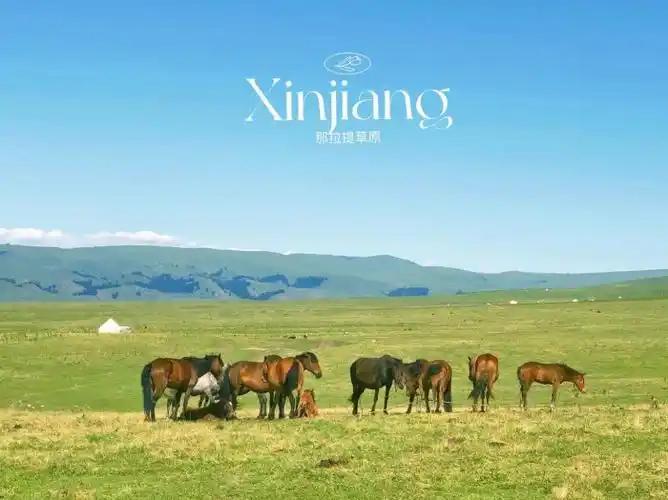
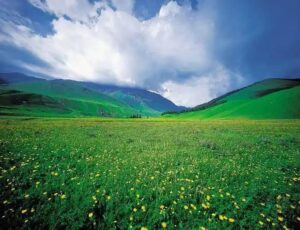
We visited in late June, entering from the north after a long descent along the Duku Highway. The first thing that struck us was the temperature drop. Urumqi had been warm, but here the wind carried a bite even at midday, and the staff at the park gate were wearing padded jackets. The second thing was the scale. The plateau rolls outward in every direction, cut by silver threads of water and dotted with the dark shapes of horses and sheep. Snow mountains frame the horizon like a low wall.
We walked the boardwalk at the Swan Lake section early the next morning. The water was still, and a small group of whooper swans was visible at the far end of the lake. They were not close, and they were not performing. They simply drifted, preened, and occasionally flapped their wings. That is the reality of a nature reserve: the animals are not props. We also saw coots, grebes, and a harrier quartering the reed beds. The smell of the marsh was strong, a mix of wet grass and minerals, and the mosquitoes were already out in force by 9 a.m.
The afternoon was reserved for the viewpoint above the Kaidu River. We climbed the steps to the platform around two hours before sunset, carrying a fleece each and a thermos of tea. The river below moved slowly, coiling across the grassland in loops so wide that the bends caught the light like separate mirrors. When the sun finally dropped, the colour changed from white-gold to deep orange, and for a few minutes we could count three clear reflections of the sun in the nearest bends. We did not see the legendary nine suns. Our guide said he has seen it twice in fifteen years, and only when the water level, the sky, and the season line up perfectly.
Reaching the Wetland From Urumqi and Korla
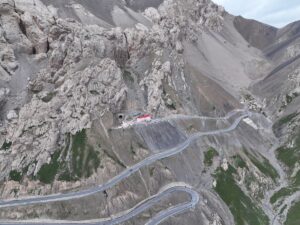
The most common approach is by road. From Urumqi, the route runs roughly 500 kilometres south-west via Dushanzi and the Duku Highway, then drops into the Bayinbulak Basin. This is the scenic option, but the Duku Highway closes from around October to June depending on snow and avalanche risk, so it cannot be relied on outside summer. From Korla, the drive is about 300 kilometres north through Hejing County on the G218, which stays open longer and is the safer bet in shoulder season.
Independent travellers without a car can take a bus from Hejing County to Bayinbulak town, then arrange a local taxi or guesthouse transfer to the scenic area entrance. Inside the park, a mandatory shuttle bus covers the long distances between the ticket gate, the Swan Lake boardwalk, and the Nine-Bend viewing area. The last shuttle stop is still a few kilometres short of the sunset viewpoint; an electric cart, a horse, or a walk on a gravel track covers the remaining distance.
When the Snow Melts and the Swans Return
The practical travel window runs from June to September, when the roads are reliably open and most guesthouses and restaurants in Bayinbulak town are operating. July and August are the warmest months, but “warm” here means pleasant daytime temperatures and cool nights. Rain can arrive quickly, and fog sometimes hides the sunset entirely.
For birdwatchers, the more interesting months are April and May, when the swans arrive from wintering grounds as far away as India and southern Africa, and September, when the autumn colours turn the shrubs along the river bronze. We were told that mid-June to mid-July is the peak mosquito season, which does not stop the views but can make the boardwalk unpleasant if you are not prepared. Winter is beautiful but not practical for most visitors: many guesthouses close, the Duku Highway is often shut, and daytime temperatures stay well below freezing.
Sleeping on the Steppe Edge
Most visitors stay in Bayinbulak town, a small settlement just outside the scenic area with a handful of hotels, restaurants, and convenience stores. The standard is simple but adequate. A few properties offer heated rooms, which are worth the extra cost even in summer. During the high season, prices rise and rooms fill, so booking a day or two ahead is sensible.
In summer, some families on the grassland rent yurts to tourists. The experience is memorable, waking up to the sound of horses and the smell of burning dung stoves, but the facilities are basic. If you prefer reliable plumbing and a private bathroom, stay in town. For those combining grasslands, Nalati grassland to the north has a wider range of accommodation and can be visited on the same loop.
Meals at the Foot of the Tianshan
Bayinbulak town is not a culinary destination, but it is a satisfying one. The local population is Mongol, and the food reflects that heritage. Expect lamb prepared in several forms: boiled, roasted, and in hearty noodle soups. We ate hand-pulled noodles with mutton at a small restaurant near the bus stop, and grilled fish from the Kaidu River at a yurt camp. Milk tea, yoghurt, and flatbread are standard accompaniments. Prices are modest compared with larger cities, and portions are generous.
If you have dietary restrictions, stock up in Korla or Urumqi first. Vegetarian options exist but are limited, and outside town there is almost no choice.
Hard-Won Tips From a Windy Afternoon
- Dress in layers. The plateau can drop from twenty degrees to single digits within a few hours, especially after sunset.
- Bring serious mosquito repellent. The marsh breeds clouds of them in summer; long sleeves and a head net help at dawn and dusk.
- Book the shuttle in advance during holidays. Queues at the ticket gate can be long, and the last bus back from the sunset viewpoint leaves not long after dark.
- Carry cash. Some yurt camps and small restaurants do not take mobile payments.
- Do not fly a drone. The area is a nature reserve, and rangers enforce the ban.
- Keep your distance from wildlife. The boardwalk is there for a reason; swans and nesting birds are easily disturbed.
- Watch the weather. A clear morning does not guarantee a clear sunset. We met a photographer who waited three evenings for one good shot.
A One-and-a-Half-Day Route We Actually Walked
Afternoon of day one: Arrive in Bayinbulak town, check in, and eat an early dinner. Take the shuttle to the Kaidu River viewpoint at least two hours before sunset. Walk the gravel track rather than taking the electric cart; it gives you time to watch the light change and to claim a spot before the platform fills. Return on the last shuttle.
Morning of day two: Start early at the Swan Lake boardwalk, when the birds are active and the mosquitoes are fewer. Spend two to three hours walking slowly and using the viewing hides. After a late lunch in town, drive out toward Korla or continue north to Nalati, depending on your onward route.
Questions Travellers Ask Us
Are there actually swans at Swan Lake? Yes, but they are wild birds in a protected reserve, not a zoo. Expect to see them at a distance, especially early in the morning.
Can you camp inside the reserve? Officially, no. Camping is restricted to protect the wetland. Some yurt stays operate just outside the core zone.
Is the Duku Highway the only way in? No. The G218 from Korla through Hejing County is open longer and is the route most local buses use.
Do you need a guide? Not for the main scenic area, where the shuttle system is straightforward. A guide is useful if you want to understand the birdlife or the Torghut Mongol history.
A Note on Conditions and Accuracy
Road closures, ticket prices, shuttle schedules, and accommodation availability change from year to year and sometimes from week to week, especially on the Duku Highway. Wild bird numbers and sunset visibility vary with weather. This guide is based on a visit in late June and on publicly available official sources, but you should confirm current conditions with the reserve management or a reliable local operator before travelling.
About This Guide’s Writer
Karl Huang is an independent Xinjiang travel writer based on the ground in the region. He researches routes through field visits, official reserve records, and local transport timetables, aiming to give travellers practical, first-hand information rather than recycled brochure copy.