By Karl Huang · XinjiangAttractions Editorial Team · Last updated October 2026
On a map, Chengde looks like a quiet county town two hours north of the capital. In reality it was the summer command center of the Qing empire. The Chengde Mountain Resort (Lúnhuá Shān Zhuāng) — literally the “Temporary Palace for Pleasure Trips in the Mountains” — sprawls across 5.6 square kilometers, making it the largest classical garden in China and roughly twice the area of the Forbidden City. For half the year, Kangxi and Qianlong governed from here, receiving Mongol princes and Tibetan lamas among artificial lakes and replicated mountain scenery, holding the frontier together through ceremony rather than war.
A Garden Built to Mirror an Empire
Kangxi began the resort in 1703 as a health retreat (the local springs and cool air suited his ailments) and a base for managing the northern frontier. Qianlong doubled its size during his long reign, treating landscape design as statecraft: every hill and pond was a miniature of a province he wanted his guests to feel they belonged to. The design is a deliberate miniature of China itself: a lake district evoking the south, a vast grassland plain recalling the Mongolian steppe, and wooded hills standing in for the southwest. The emperor could “tour his realm” without leaving the valley, receiving tributary leaders in settings that flattered their own homelands.
Surrounding the resort to the north and west sit the Eight Outer Temples (Wài Bā Miào), a ring of Buddhist monasteries built to honor tributary peoples. The most famous, Putuo Zongcheng, is a deliberate copy of the Potala Palace and is often called the “Little Potala.” Together the resort and temples form one of the most complete expressions of Qing multicultural rule anywhere in the country.
| Zone | What it mimics |
|---|---|
| Lake area | Jiangnan water towns of the south |
| Plain area | Mongolian steppe, with yurts and herds |
| Mountain area | Southwestern peaks and forests (80% of the grounds) |
| Palace area | The administrative and living quarters |
| Eight Outer Temples | Tibetan and Mongol sacred architecture |
How to Actually See It
The resort is too big to walk end to end. Most visitors enter at the palace area, stroll the lake district (rent a paddle boat or just circle on foot), then take the shuttle bus up into the mountain area for panoramic viewpoints. The mountain road alone is a 40-minute drive with several pull-offs; without it you miss the scale entirely, since the hills make up four-fifths of the grounds but are almost invisible from the entrance. The lake area is the prettiest and most manageable in a half day, especially at dawn when mist sits on the water.
For the temples, Putuo Zongcheng (Little Potala) and the nearby Puning Temple — which houses a 22-meter wooden Guanyin, the tallest of its kind — are the two worth the climb. They sit a taxi ride north of the resort gate, and each deserves at least an hour. A third, the Pule Temple, has a round pavilion modeled on the Tibetan cosmos that photographers love.
A Slow Morning on the Lake
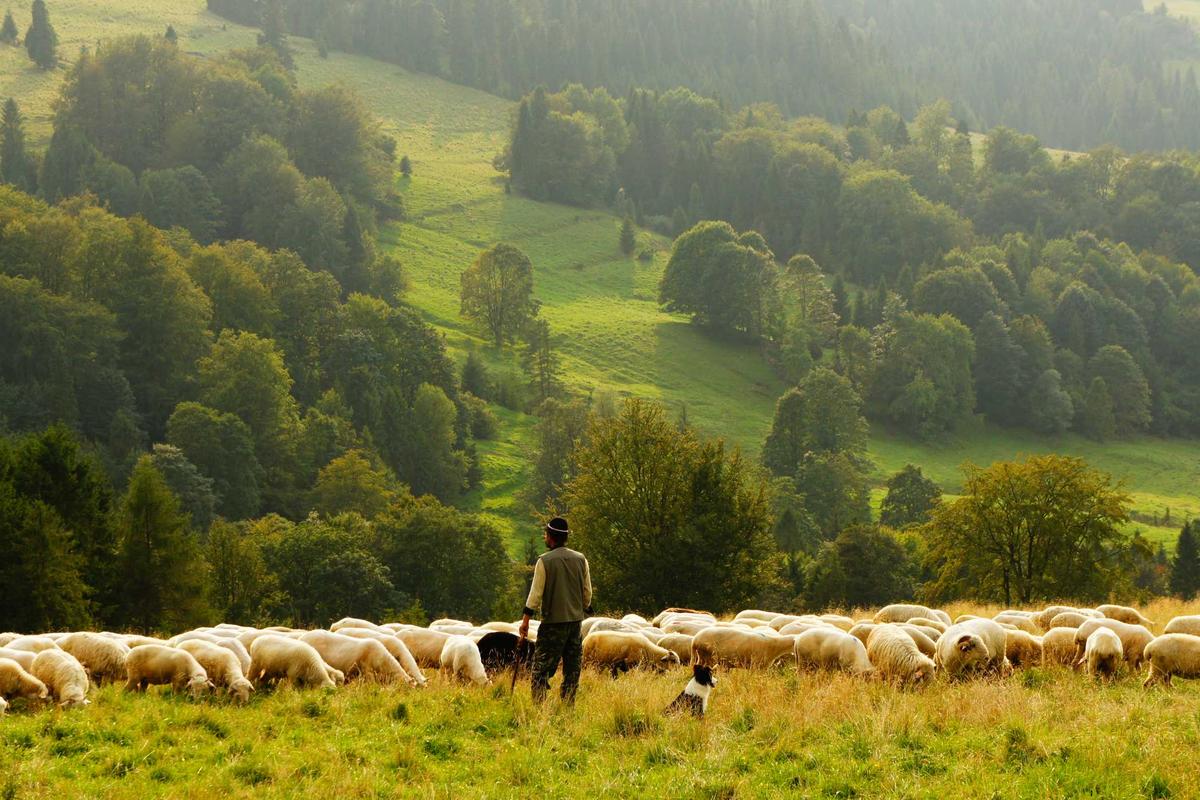
I reached the lake area at opening and had the causeways almost to myself. An old man was practicing tai chi on a stone bridge, and a pair of swans drifted under the willows that Qianlong planted three centuries ago. Renting a small boat turned out to be the right call: from the water the replica bridges and islands line up exactly as they do in the Suzhou gardens they copy, and you understand the emperor’s nostalgia for the south. By ten the tour buses arrived and the magic thinned, which is the lesson of Chengde — early, always early.
Getting to Chengde from Beijing
Chengde is the classic Beijing side trip. High-speed trains from Beijing run frequently and take about an hour to 90 minutes to Chengde South Station; from there a bus or taxi reaches the resort in 20–30 minutes. Driving takes two to three hours depending on traffic, and the highway north passes through increasingly rugged hills. Many travelers do it as an overnight from the capital, pairing it with a stop at the Forbidden City beforehand to appreciate the contrast between the two Qing seats — one built to intimidate, the other to relax and persuade.
Best Season
Summer (July to August) is the reason the place exists — while Beijing bakes at 35°C, Chengde stays in the low 20s. This is peak season, so book early and expect company at the lake. September brings crisp autumn color in the mountain area, the best month for photography. Winter is silent and frozen, with very few visitors and a stark beauty, but some facilities and the mountain shuttle may close. Spring is windy and dusty, and the newly green hills are pleasant but not dramatic.
Where to Stay
The town of Chengde has grown up around the tourism. Mid-range hotels line the roads near the east palace gate; a few heritage-style courtyard inns offer a taste of Qing lodging. Staying overnight lets you catch the mountain area at opening before the tour buses, and the temples at golden hour when the white stupas glow. Avoid the generic new blocks far from the gates if you want to walk to dinner; the good eats cluster near the old city wall and the night market by the river.
Food in Chengde
Chengde cooking is Hebei northern style with Manchu and Mongol notes. Try the “Eight Bowls” (bawan), a set of braised and steamed dishes once served to the court, and roasted chestnuts in autumn. Mongol-influenced hotpot and hand-pulled noodles appear in the town’s older lanes. The surrounding hills produce good wild mushrooms in late summer — order them braised with chicken — and the local millet porridge makes a warming breakfast before a cold morning in the mountains. A pot of chrysanthemum tea rounds off a heavy meal.
Practical Advice
- Buy the through ticket that includes the resort and the main temples; individual tickets add up fast.
- The mountain area is only reachable by the resort’s own shuttle — budget for the fare and time.
- Wear real walking shoes; the lake loop alone is several kilometers of uneven stone.
- Come on a weekday in July if you can; weekends flood with Beijing escapees.
- Bring a layer even in summer — evenings in the hills turn cool and the lake breeze bites.
- Carry water and a snack; food options inside the resort are limited and pricey.
A Two-Day Plan
Day one: morning in the palace and lake area, afternoon shuttle through the mountains, evening in town. Day two: taxi to Putuo Zongcheng and Puning Temple, lunch, and the afternoon train back to Beijing. If you have only one day, skip the mountain drive’s far end and focus on the lake plus one major temple, saving the rest for a return trip.
Why the Emperors Chose This Valley
Chengde was no accident. The valley sits where the Mongolian plateau meets the North China plain, a natural meeting ground for the emperor and the steppe peoples he needed to keep close. Kangxi prized its cool summers and its mineral springs, and the surrounding mountains offered hunting that recalled the Manchu homeland. Just north, the Mulan paddock — a vast imperial hunting ground — was where the court staged the autumn hunt (shoulie) that doubled as military drill and diplomacy, hosting Mongol nobles in tented camps. The resort, then, was the soft-power headquarters of the empire: a place to receive allies without the stiffness of Beijing, to blend landscapes from every province into one garden, and to remind visitors, gently, of the breadth of Qing rule. Understanding that purpose changes how you see the place — every hill is a sentence in a very long political argument.
Reading the Garden as a Map
A useful trick is to treat the resort as a three-dimensional atlas. The lake area in the southeast compresses the canal towns of the Yangzi delta into a few acres; the open plain in the north evokes the grasslands where the court’s allies lived; the wooded hills to the west and northwest stand in for the sacred mountains of the southwest. Qianlong even had miniature versions of famous southern buildings reconstructed here so he could “return” to Hangzhou or Suzhou without leaving his northern retreat. When you know this, a simple boat ride on the lake becomes a tour of the south, and the empty plain becomes the steppe — the garden stops being decorative and starts being legible. Bring a map that labels each borrowed scene; the on-site signs only hint at the fuller geography.
FAQ
How much time do I need?
A satisfying visit is one full day; two days lets you see the temples without rushing.
Is it really twice the size of the Forbidden City?
In area, yes — about 5.6 km² versus the Forbidden City’s 0.72 km² — though much of it is woodland and water rather than buildings.
Can I visit the temples separately?
Yes, they have their own entrances and tickets, but a combined pass is cheaper.
Is Chengde doable as a day trip from Beijing?
Barely. A day trip works if you focus on the lake area and one temple, but an overnight is far better.
Is the mountain shuttle worth it?
Absolutely — most of the grounds are hills you cannot otherwise reach, and the viewpoints explain the resort’s scale.
Disclaimer: Shuttle fares, combined-ticket rules, and temple opening times change. Check with the scenic-area ticket office or your hotel before travelling.
Karl Huang is a travel writer for the XinjiangAttractions Editorial Team, writing practical guides to China’s heritage sites for international visitors.