Published: August 25, 2026 | Author: Karl Huang
Why you can trust this guide
I first passed through Hoxud (Heshuo) county by accident. We were driving the Korla–Heshuo leg on the way north and pulled off the expressway because a road sign promised “Bosten Lake North Shore” and we wanted to see the water without the ticket gates of the main scenic area. What we found was a working lakeshore: fishing boats, stacked reed bundles drying in the sun, and one grilled-fish restaurant whose owner knew the lake better than any guidebook. I have since returned twice, once by train and once in late September, and talked my way onto a small fishing skiff. This guide pulls together what I learned, checked against the published figures from the Bayingolin prefecture tourism board and the Bosten Lake management office.
What Hoxud (Heshuo) county actually is
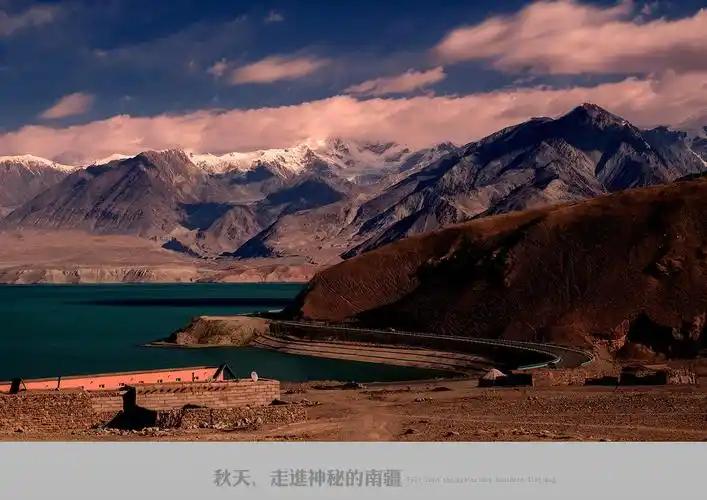
Most travellers who plan a trip to Xinjiang have heard of Bosten Lake, but few realize that Hoxud (Heshuo) county is the town that holds its north shore. Bosten is the largest inland freshwater lake in China, fed mainly by the Kaidu River and drained by the Peacock River, which runs on past Korla toward the Tarim system. Hoxud sits on the open northern edge, where the lake widens and the reed beds thin out. The county is part of Bayingolin Mongol Autonomous Prefecture, and the seat, Heshuo Town, is about 80 km north of Korla by road.
Unlike the developed Bosten Lake Scenic Area over in Bohu county on the lake’s reedy southern shore, the Hoxud shore is low-key. There are no big ticket offices here, just villages, fish ponds, and a long grass verge where you can stand and watch the water. Yanqi, the wine country on Bosten’s western shore, sits where the Kaidu River enters the lake and makes a good add-on if you are already in the area.
| Item | Detail |
|---|---|
| Where | Hoxud County (Heshuo / 呩字县), Bayingolin Mongol Autonomous Prefecture, Xinjiang |
| On the map | North shore of Bosten Lake, roughly 80 km north of Korla |
| Best months | May to October; September gives clear water and thin crowds |
| How to arrive | Train to Heshuo station, long-distance bus from Korla, or self-drive on the G3012 expressway |
| Local specialty | Bosten Lake grilled fish (热鱼) and reed-bed waterfowl |
| Time needed | Half a day for the shore; a full day if paired with Korla |
Our time on the north shore
We came in by mid-morning train, the kind where the carriage is half empty and the conductor knows every stop. Heshuo station is small, and the taxi rank outside had exactly two drivers, one of whom agreed to take us to the lake for a flat fare. The drive took about 25 minutes across flat farmland, then the land opened and there was the water, grey-blue and bigger than it had any right to be this far inland.
A local fisherman named Ablet waved us over to his skiff. For a small fee he took us out past the reed line, where the lake turns deep and the only sound is the outboard and the wind moving the stalks behind us. He pulled up a net and showed us the catch: small silvery pond smelt and a couple of perch the locals call “five-black” (五道黑). He grilled two on a portable stove right there on the bank, salt and cumin only, and it was the best fish I ate that whole trip.
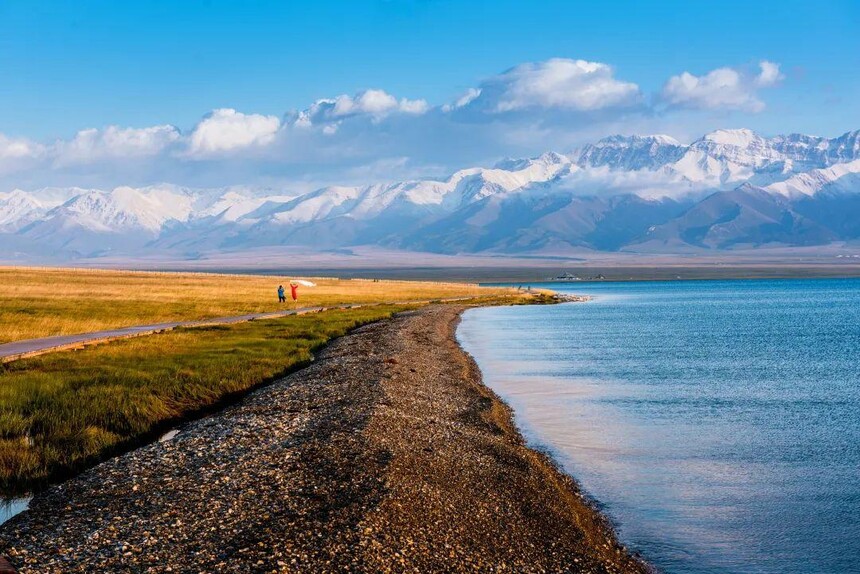
My one mistake was the first visit, in early April, when I expected spring. The shore was windy, the lake was a cold slate colour, and two lakeside guesthouses were still boarded up for the season. If you go, aim for late spring onward.
Getting to Hoxud (Heshuo) county
There are three realistic ways in. The train is the easiest: Heshuo station sits on the Southern Xinjiang Railway, with frequent services from Korla (about one hour) and connections up the line through Turpan to Urumqi. The Korla long-distance bus station also runs coaches to Heshuo through the day. If you are driving, the G3012 Turpan–Korla–Hotan expressway has a Heshuo exit, and the shore links neatly to the Duku Highway if you are coming down from the north.
One thing to know: once you are off the train, transport gets thin. Taxis in Heshuo Town are few, and ride apps are unreliable at the lake. Either arrange a driver through your hotel or rent a car for the day. We pre-booked a Korla-based driver who waited at the station, and it removed every headache.
Best time to visit
Late May through June is when the reeds go green and the shoreline birds are active. July and August are hot on the steppe but the lake keeps a breeze, so it stays bearable. For my money, September is the sweet spot: the water is clear, the light is flat and photographic, and the summer crowds have gone home. October is cool and quiet. Skip November through April unless you like wind and closed guesthouses.
If you want the full seasonal picture beyond this one shore, our season-by-season guide to Xinjiang lays out the trade-offs province-wide, including the off-season windows most itineraries miss.
Where to stay
Heshuo Town has a handful of mid-range hotels that are clean and functional but unremarkable. For comfort and a wider choice of food, I would base in Korla and make Hoxud a day trip, since the two are only an hour apart by train. Simple lakeside guesthouses open on the Hoxud shore in summer, letting you catch the sunrise over the water, but they shut with the cold. Book ahead in July and August, when Korla fills with domestic tourists. See our hotel booking guide for travellers abroad for the platforms that actually take foreign cards.
What to eat
The reason to stop is the fish. Bosten Lake grilled fish (热鱼) is the local signature, cooked over charcoal with nothing more than salt, cumin, and chili. The perch and the small pond smelt are the ones to try; the smelt are eaten whole and taste of the clean lake. Lakeside restaurants in both Hoxud and neighbouring Bohu serve them, and the ones with boats out front are usually the freshest. Around town you will also find standard Xinjiang staples: hand-pulled laghman, zhua fan (rice with lamb), and samsa from the bakeries. Bring cash for the small lakeside vendors, who often do not take international cards.
Practical tips
- Bring a windbreaker even in summer. The lake wind picks up by midday and it cuts cold.
- Carry your passport or ID. Xinjiang has routine checks, and the lake shore is no exception.
- Do not walk into the reed beds during nesting season. Bosten is a major stop on the Central Asian flyway; our birdwatching guide to Xinjiang’s lakes and wetlands lists what you can see and when.
- Mobile data works in Heshuo Town but gets patchy at the open shore. Download your maps beforehand.
- Boat trips are seasonal and informal. Agree the price before you step on the skiff.
One-day sample itinerary from Korla
08:00 – Train from Korla to Heshuo (about 1 hour).
09:30 – Taxi or pre-booked driver to the north shore; walk the reed verge.
12:00 – Grilled-fish lunch at a lakeside restaurant.
14:00 – Short boat trip or a slow drive along the shore road.
16:30 – Back to Heshuo Town; train to Korla or overnight if you booked a lakeside room.
FAQ
Is Hoxud worth a dedicated visit?
As a half-day lakeside stop paired with Korla or Bohu, yes. The developed Bosten Lake Scenic Area is in Bohu county to the southwest, but Hoxud gives you the open north shore and quieter fishing villages without the gates.
Can you swim in Bosten Lake?
Not really. It is a working fishery and a protected wetland, so swimming is discouraged and the water stays cold. A short boat ride is the better way to be on it.
How far is it from Korla?
Around 80 km. Roughly one hour by train or about 70 minutes by car on the expressway.
Is the area safe for foreign travellers?
Yes. It is normal Xinjiang travel with the usual ID checks. Keep your documents handy and you will be fine.
Disclaimer
Travel conditions in Xinjiang shift with the season. Train times, guesthouse opening dates, boat availability, and restaurant hours change year to year, and some shore access depends on water levels and wetland protection rules. Verify schedules and any local permits with the operators or the Bayingolin tourism board before you go. This article is informational and not official advice; prices and services are approximate and not guaranteed.
Karl Huang is a Xinjiang-based travel writer who has covered the province’s lakes, grasslands, and silk-road towns since 2019. He researches each guide on the ground, rides the local trains, and eats at the places he recommends. His writing focuses on practical, first-hand detail for independent travellers, and he contributes regularly to XinjiangAttractions.com.