Published: August 30, 2026 | Author: Karl Huang
Most travel writing about southern Xinjiang stops at the mosques and the bazaars. It misses the quieter layer underneath: the Xinjiang mazar shrines, the tomb-shrines of Muslim holy people that dot the oasis belt from Kashgar down to Hotan and up into the Turpan depression. A mazar is not a mosque and not quite a museum. It is a place where Uyghur folk Islam meets local memory, where a saint’s tomb becomes a destination for ordinary families on a spring weekend. If you only see the big tiled mausoleums, you miss the part that actually shapes how people here travel. This guide is about that landscape, and how a visitor can move through it without getting the etiquette wrong.
The shrine map in brief
Before the details, here is what you are looking at. The word mazar (from Arabic/Persian, “place of visitation”) covers everything from a walled royal tomb complex to a flagpole in a cotton field. The table below keeps the categories straight.
| Aspect | What to expect |
|---|---|
| What a mazar is | The tomb or shrine of a revered Muslim figure — a Sufi master, an imam, a local saint — treated as a site of ziyarat (visitation). |
| Where they cluster | The Tarim oasis towns (Kashgar, Yarkand, Hotan, Kuqa) and the Turpan/Hami corridor; desert shrines sit well outside town. |
| Best window | Late winter through spring for the shrine festivals; otherwise any cool, calm weekday. |
| Who goes | Local Uyghur families, pilgrims, sometimes whole village groups; few foreign tourists. |
| Visitor status | Most are open to respectful observers; inner tomb chambers may be restricted or men-only. |
The morning a shrine stopped me cold
I first understood mazars the wrong way. On a trip east of Hotan we hired a driver to take us to a desert shrine associated with a legendary figure; I had pictured an admission desk and a plaque. There was neither. We parked where the paved road ended, walked past a line of poplar trees hung with knotted cloth, and came out into an open yard of packed earth where a few old men sat against a low wall. A metal flagpole topped with faded banners leaned over a small domed building. Nobody asked for tickets. A woman in a headscarf glanced at my camera, shook her head once, and went back to her prayer beads. I lowered the camera. That was the lesson: this was not a sight, it was someone’s Thursday.
What I had stumbled into was the living end of a tradition that runs through every oasis in the south. The famous, photographed shrines — the tiled mausoleums you see in guidebooks — are only the visible tip. Underneath them is a much older habit of visiting the graves of holy people for blessing, healing, and a sense of continuity. Once you notice it, you see the markers everywhere: a roadside pole with colored flags, a tree tied with string, a small room kept by a family.
Where Xinjiang mazar shrines actually stand
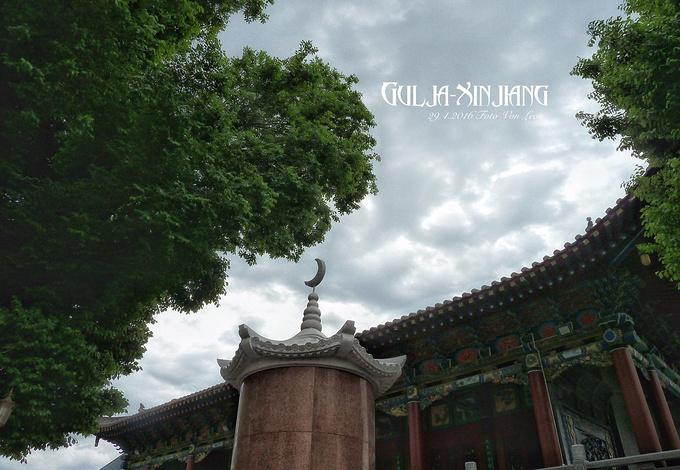
The shrines are not scattered at random. They follow the old oasis logic of the Tarim Basin. Kashgar is the densest cluster and the easiest to reach — the Apak Khoja Mausoleum sits in the city’s northeast, and smaller neighborhood shrines sit inside the old town you can walk through on a Kashgar city visit. Move south and the shrines thin out into the desert: the Hotan-side shrines lie tens of kilometers out, reached by chartered car on straight roads that end at a gate or a village. East of Kashgar, the Turpan corridor holds its own set, including the holy canyon at Tuyoq, where a shrine sits at the mouth of a ravine locals treat as sacred.
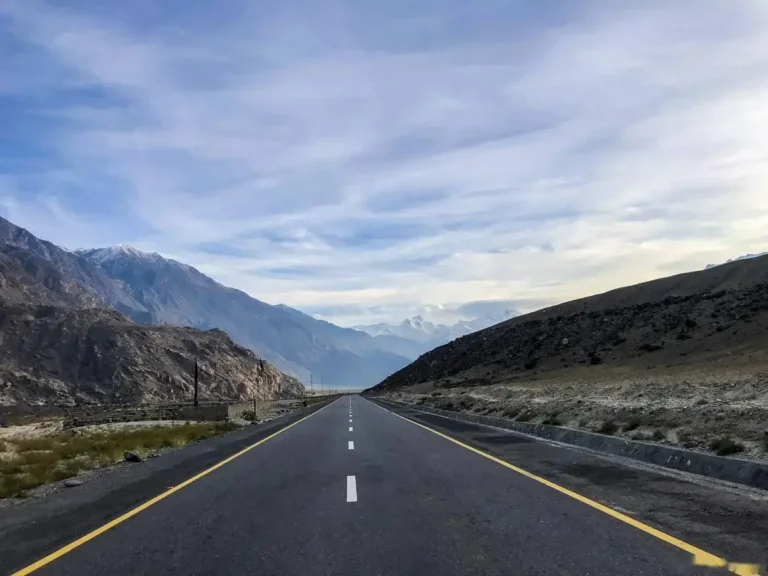
Getting between them is the real planning work. Public buses reach the oasis towns but not the shrines outside them; for the desert ones you need a driver for the day, arranged in town. We found it simplest to treat one oasis as a base and make a single outing, rather than trying to chain several shrines in one day. Distances look small on a map and feel long on dirt. The shrine that stopped me cold was barely forty kilometers from Hotan, and the drive still took most of a morning.
When the shrine fairs actually happen
If you want to see a mazar at full volume, time it to a shrine festival — locally a mazar tüyi, a fair held at the tomb. The largest ones fall in late winter and spring, often tied to Navruz and the turning of the planting season. At the big Hotan-region festivals the dry yard fills with stalls, drum music, cooked lamb, and families who have driven for hours. It is part religious observance, part regional fair, and the crowds are real.
For a quiet look at the architecture and the daily rhythm, skip the festival. A cool weekday in autumn or early spring means you may have a small shrine to yourself, or share it with a single family tending a grave. I would not plan a first visit around a festival unless you are comfortable in large, loud, devout crowds where you are clearly the outsider. The payoff of the off-season is exactly that stillness — the chance to stand in the yard and actually read the place.
Basing yourself in the oasis towns
You do not stay at a mazar; you stay in the town that feeds it. Kashgar is the obvious base for the south, with the old town, the mausoleum, and the airport all close together. Hotan works as a base for the desert shrines, though the shrines themselves are out of town and need a day driver. Turpan is the base for the northern set, including Tuyoq. Yarkand and Kuqa are smaller and better as stops on a longer loop than as shrine-hunting headquarters.
Wherever you base, book inside the old town or near the bazaar if you want to feel the religious calendar rather than just see it. The call to prayer, the Friday crowds, the sudden quiet of a holy day — these are the context the shrines live in, and a chain hotel on the ring road misses all of it.
Food on the shrine circuit
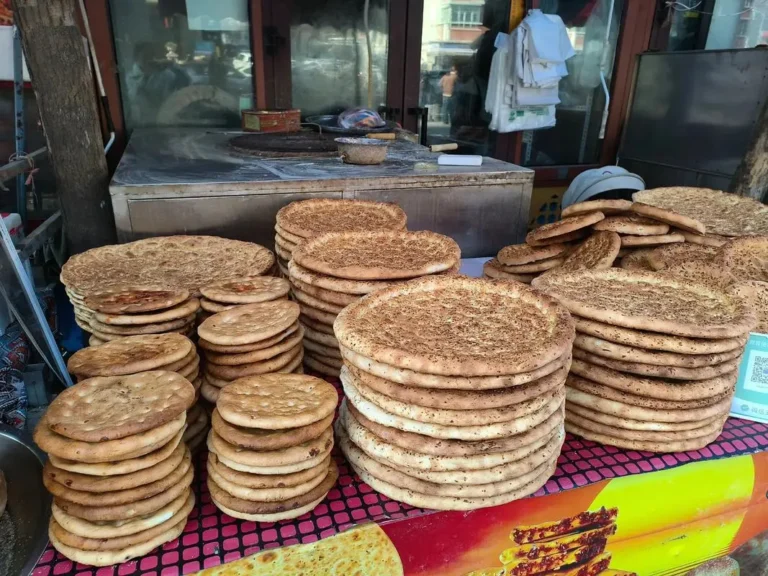
The food around shrines is just the food of the oasis, only more concentrated on festival days. At a spring fair you will find whole lambs turning on spits, trays of polo (the local pilaf), blocks of naan, and sweet milky tea served from dented thermoses. On an ordinary day the shrine yard is empty of food; you eat in town beforehand. We made the mistake once of arriving at a desert shrine at midday with no plan to eat, and the only option was the driver’s oranges.

The better move is to treat the bazaar as part of the shrine visit. The mosques and mausoleums of a town and its market are usually a short walk apart, and the same families who keep a shrine often run the stalls. Sit, buy something small, and the geometry of the place starts to make sense.
Reading shrine etiquette without a guide
Nobody hands you a rule sheet at the gate, so here is what we learned by getting it wrong and watching. Dress modestly — shoulders and knees covered, a scarf for women at the more active sites. Ask before photographing people, and assume the tomb building itself is off-limits to your lens. Do not walk in front of anyone at prayer. At the desert shrine, the single head-shake that stopped my camera was the whole etiquette in one gesture: read the room, then decide.
Some inner chambers are men-only or closed to visitors entirely, and that is not a slight — it is how the site is kept. A useful wider read on behavior is our visitor etiquette guide, which covers the everyday do-and-don’ts that apply just as much at a shrine as at a home. When in doubt, follow the family nearest you and keep your voice down.
A southern-oasis shrine loop
If you want a route rather than a single stop, here is the one we would run with five unhurried days:
- Day 1 — Kashgar. Walk the old town, visit the Apak Khoja Mausoleum, note the small neighborhood shrines on side streets.
- Day 2 — Kashgar outskirts. Hire a driver for a half-day to a nearby desert or village shrine; go early, bring water and food.
- Day 3 — Yarkand (Shache). Morning bus or car; see the royal tombs and the slower old town.
- Day 4 — Hotan. Base here; if the season is right, ask about the spring shrine fairs — otherwise visit a town shrine and the jade market.
- Day 5 — Turpan via flight or train. End at Tuyoq’s holy canyon and its shrine, a clean northern bookend to the Tarim sites.
This is a cultural route, not a checklist. Some shrines will be locked, some will be busy, some will be a single pole in a field. All of them are someone’s prayer, and the loop is really an excuse to move slowly through the south.
Before you set out: common questions
Are mazars the same as mosques? No. Mosques are for the five daily prayers; mazars are tombs visited for blessing and remembrance. You will often find both in the same town, but they are different kinds of place.
Can a non-Muslim visitor go in? At most shrines, yes, as a respectful observer. The outer yard is usually open. Inner tomb chambers may be restricted, and during festivals the crowd is there to worship, not to host tourists.
Is it safe? The sites themselves are calm and family-oriented. The usual travel cautions for the region — carry ID, sort transport in advance, watch the heat — apply. We never felt unwelcome when we behaved like guests.
Do I need a guide? Not for the famous mausoleums, which have signage and staff. For the desert shrines, a local driver who knows the way is close to essential, and a Uyghur-speaking companion turns a silent yard into a conversation.
On belief, accuracy and who this guide speaks for
This is a travel account, not religious instruction, and I am a visitor, not a scholar of Islam. Details here — festival dates, which shrines are open, whether a chamber allows visitors — shift with the season, local policy, and the families who keep each site. Treat the specifics as a starting point and confirm on the ground. The mazar tradition is documented in the work of anthropologists and folklorists who study Uyghur religious life; where I describe belief, I am reporting what I observed and was told, not prescribing it. If a custodian asks you not to do something, that request overrides anything written here.
About the author
Karl Huang is a travel writer who has spent several seasons moving through Xinjiang’s southern oases, from Kashgar’s old town to the desert shrines east of Hotan. He writes practical, first-hand guides for independent travelers and prefers slow routes over checklist tourism.