Published: November 7, 2026 | Author: Karl Huang
There is a county in southern Xinjiang that most foreign itineraries skip, and I think that is a mistake. I first reached Makit (Maigaiti) on a slow drive east out of Kashgar, expecting a dusty desert town, and left three days later with a phone full of music recordings and a small farmer’s painting rolled in my backpack. For readers planning Makit travel, the surprise is not a single sight but a whole culture that refuses to be ordinary: the Dolan (Daolang) tradition of the Uyghur people, alive in song, dance, and paint on the edge of the Taklamakan.
Makit travel at a glance: a short profile
Before the stories, the facts we could verify. Makit County sits in Kashgar Prefecture, on the alluvial plain where the Yarkand River (Ye’erqiang He) bends north. It covers about 10,900 square kilometres, and roughly nine tenths of that area is desert. The county town lies around 175 kilometres east of Kashgar along the G315, a straight shot that still takes three to four hours because the road shares the land with tractors, sheep, and the occasional sand drift.
| Fact | Detail |
|---|---|
| Administrative home | Kashgar Prefecture, Xinjiang |
| Area | About 10,900 km² |
| Main river | Yarkand River (Ye’erqiang He) |
| Distance from Kashgar | ~175 km east on the G315 |
| Known for | Dolan culture, poplar forests, grey jujube |
| Best window | April–May and September–October |
What we found standing where the river meets the sand
We arrived on a Wednesday and went straight to the Yarkand River’s wooded belt at the county’s edge. The water was low and brown, pushing under a wall of poplar (huayang) whose leaves had just started to turn. A man was unloading watermelons from a three-wheeled cart; when he saw us with cameras he waved us over and pressed a slice into my hand without a word. That small, unarranged kindness is the part of Makit I remember better than any postcard.
The next morning we drove out to the poplar belt again, this time at first light. Mist hung over the wetland and a single heron stood in the shallow water. I have seen more famous forests in Xinjiang, but none where the desert and the river felt so close to swallowing each other.
The Dolan Muqam: a hunt told in music
Dolan culture is the reason Makit matters. At its centre is the Dolan Muqam, a cycle of song, instrumental music, and dance that local tradition traces back to hunting life on the river. The rhythm builds like a pursuit: a slow call, a rising pace, then a burst of drums. UNESCO listed the Uyghur Muqam of Xinjiang as a Masterpiece of Intangible Heritage in 2005 and moved it onto its Representative List in 2008; the related Meshrep gathering was added in 2010. You can read the official entry at the UNESCO intangible heritage list.
Local lore names Makit as the homeland of Amannisa Khan, the 16th-century princess and musician credited in Uyghur tradition with gathering the Twelve Muqam. Historians more often place her in neighbouring Yarkant, so treat the Makit claim as local pride rather than settled fact. Either way, the music here is performed by people who learned it from their fathers, not from a stage script.
Dolan farmer paintings: the oasis Picasso
The second surprise was the painting. In Kumukusa’er township, about seven kilometres south of the county seat, farmers put down their hoes and pick up brushes. The style is flat, bright, and completely untrained: deserts, poplars, weddings, and bazaars rendered in reds and yellows. China’s Ministry of Culture named the township a “modern folk painting township” back in 1996, and today the county counts roughly 300 recognised peasant painters and around 3,000 enthusiasts. Their work has travelled to exhibitions in Paris and New York, according to China Youth Net’s report and the Makit government site.
We watched a woman in her forties paint a golden poplar from memory, then bought a small piece for a few hundred yuan. The Uyghur Muqam and daily life piece on our site explains more of the musical side if you want the background.
The Yarkand River and the poplar belt
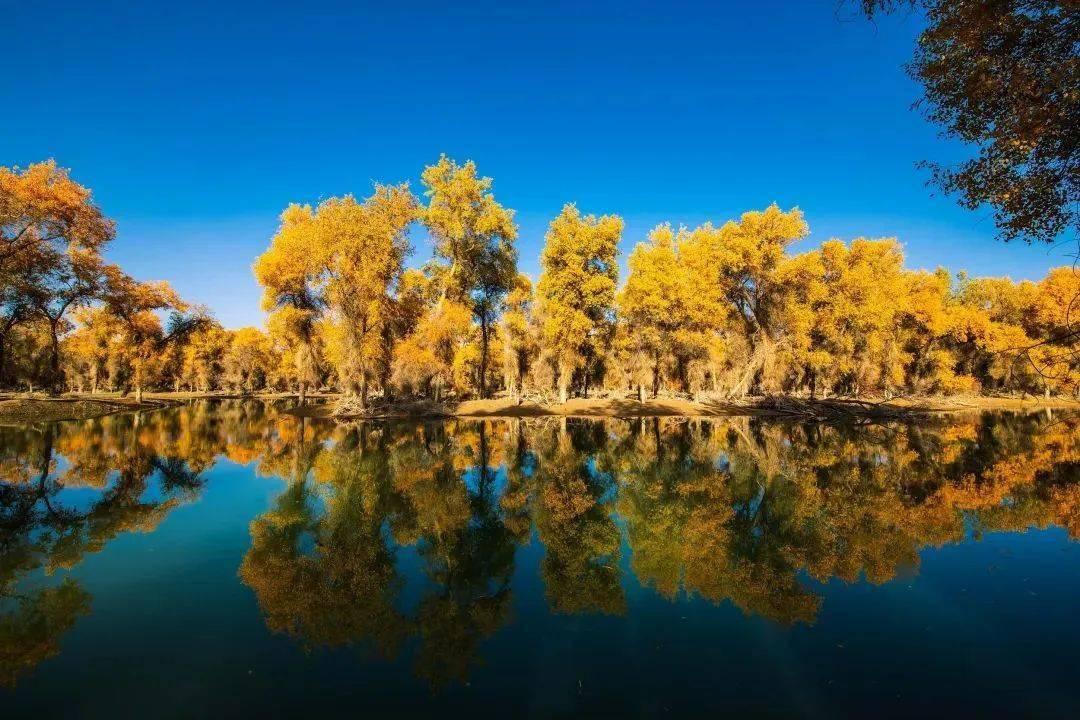
Makit’s green heart is the strip of land the Yarkand River feeds. Along it grows one of the largest stands of primitive poplar in the region, somewhere near 260,000 mu by local count, a woodland people here describe with the old line about trees that live a thousand years, stand a thousand more, and refuse to fall. Behind the forest sits the East Beach wetland, a patch of reed and open water that pulls in birds most travellers never hear about.
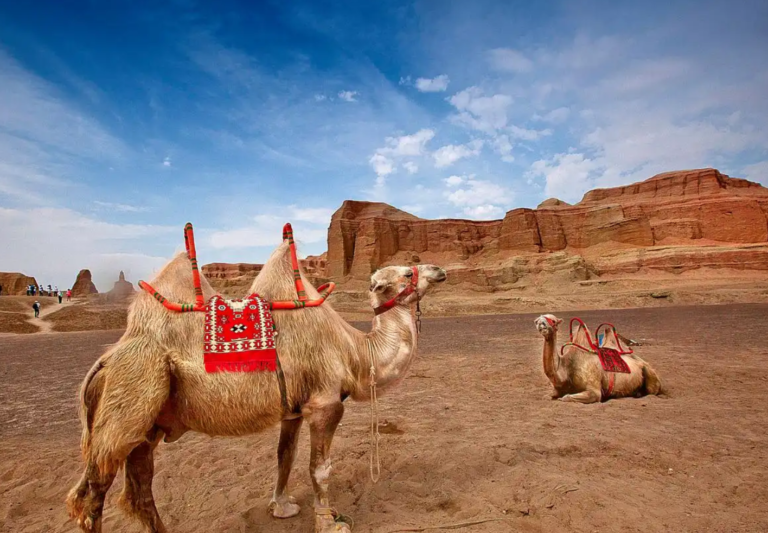
This is also the desert’s edge. Drive twenty minutes from the county seat and the poplars give way to dunes. The contrast is the whole point of the place: an oasis that the sand is always trying to take back.
Reaching Makit from Kashgar and Hotan
Most visitors come from Kashgar. The G315 runs east and the drive is about 175 kilometres; buses and shared cars leave the Kashgar long-distance station, but a private car or driver gives you far more freedom to stop at the river and the painting village. From Hotan you approach from the west on the same highway, roughly four to five hours. The nearest airport with regular flights is Kashgar Airport (KHG), about 175 kilometres away; Shache (Yarkant) Airport to the west is a closer alternative for some routes. Our Kashgar travel guide covers the gateway city in detail.
No border permit is needed: Makit is well inside the checkpoint line. Fill the fuel tank in the county town before any desert side trip, because stations thin out fast once you leave the plain.
When the Dolan calendar opens up
Spring, from April to May, brings mild heat and, in wet years, a scatter of desert flowers along the G315. Autumn, from September into October, is the better window: the jujube harvest, painting-village festivals, and cooler air make the long drive worthwhile. The poplars begin to gold out around mid-October. Skip deep summer. June through August pushes past 40°C in the shade and the desert wind carries grit into everything; we once spent a July noon indoors for exactly that reason. For region-wide timing, our season-by-season guide is worth a look.
Sleeping in the county seat and the painting village
The county seat has the most choice: clean mid-range hotels in the 200 to 350 yuan range, hot water, and no international chains. A few guesthouses sit near the painting village if you want to be close to the morning light and the teahouse. Book ahead only in October, when the jujube festival fills rooms; in the shoulder months we never had trouble finding a bed. If you are building a longer southern loop, pair Makit with Yarkand (Shache) county to the west, another Yarkand-river town with its own Khanate past.
Eating in Makit: jujubes, river fish and the Dolan table
The local table leans on what the land gives. Dolan-style hand-pulled noodles come with a darker, gamey broth than the version up north. Grilled fish from the Yarkand River is a street staple, and the grey jujube (huizao) is the dried-fruit claim: smaller and denser than the Ruoqiang kind, sold by the bag for the road. The painting-village teahouse does a basic clay-pot tea that is worth the stop more for the company than the cup. For the wider cultural frame, our Uyghur culture overview walks through the music, food, and daily rhythm of the region.
Things worth knowing before you drive out
A few practical notes from the road. Bring your own transport for the outer sites; no public bus reaches the poplar belt or the desert edge. Carry some cash: Alipay works in the county seat, but villages and roadside stands often want paper. Learn two words of Uyghur — a greeting opens more doors here than on the main tourist routes. Signal is patchy beyond the plain, so download maps before you leave Kashgar. Fuel up early, and tell someone your route if you go past the green strip.
A two-day route through the Dolan heartland
Day one. Leave Kashgar after breakfast, reach Makit by early afternoon, and spend the rest of the day at the Dolan Painting Village and the riverside poplar belt. Catch a muqam performance if one is scheduled at the cultural hall.
Day two. Morning at the East Beach wetland and the poplar forest for photos, then the Dolan Culture Park on the river for the dance shows. Run back to Kashgar by evening, or continue west to Yarkand if your schedule allows.
Questions travellers ask us about Makit
Is Makit safe for independent travellers? The county seat and the main sites are calm and welcoming. As anywhere remote, keep your fuel, water, and a charged phone, and tell someone your plan before desert side trips.
Do I need a guide for the poplar forest? Not for the accessible belt near the road, but a local driver helps with timing and language. The deeper desert edge is best with someone who knows the ground.
Can I buy a farmer’s painting? Yes. Small pieces at the painting village run from a few hundred yuan; gourd paintings and larger works cost more. Prices are set by the artist, not a shop.
A note on accuracy and changing conditions
Figures in this guide — county area, jujube output, painter counts, festival dates — come from Makit government releases and regional news reports current to 2024–2026, and some are promotional round numbers that shift year to year. Roads, opening hours, and performance schedules change, so confirm the specifics with your hotel or the county tourism desk before you commit. We have described what we saw and verified; we have not been paid to recommend any operator. Background was also drawn from reporting by the People’s Daily Overseas Edition.
About the writer
Karl Huang is a travel writer focused on Xinjiang’s southern counties and Silk Road heritage. He has driven the G315 between Kashgar and Hotan more times than he can count, and prefers the towns that don’t make the brochures. He writes for Xinjiang Attractions to help independent travellers find the region’s quieter corners.